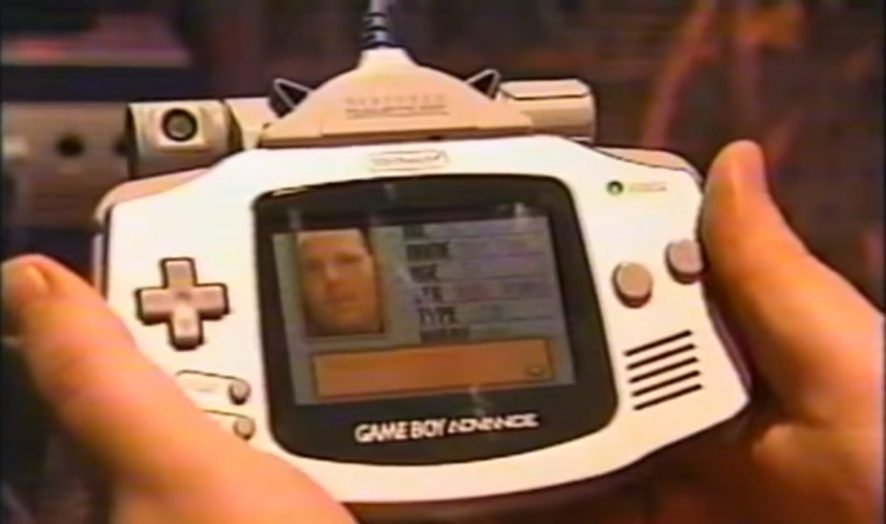
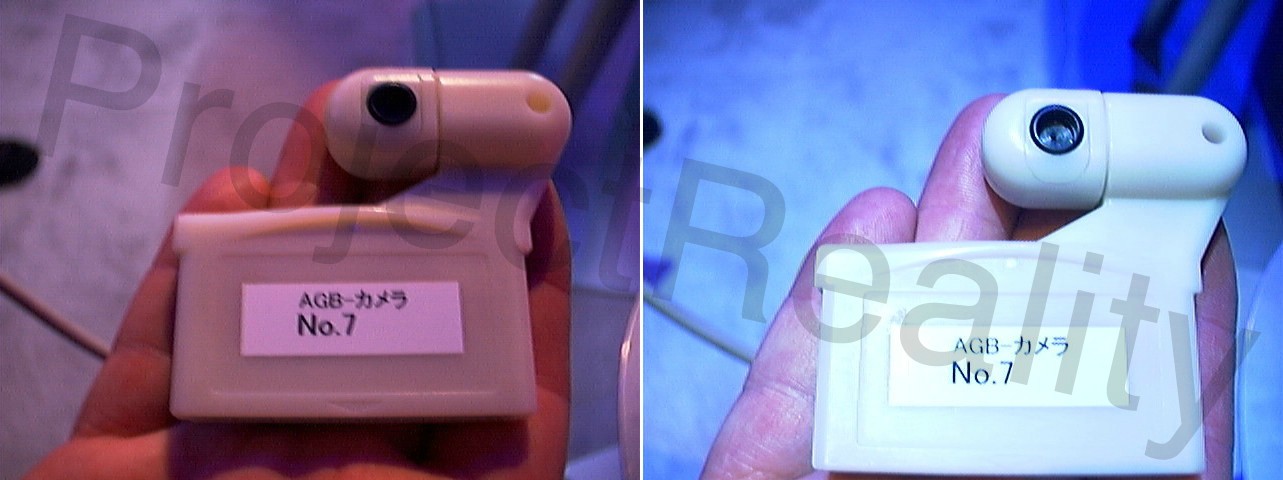
Having discussed the Game Boy Camera quite a bit lately, I’ve only ventured further into the rabbit hole of dead Nintendo peripherals. Somewhere along my research on the Game Boy Camera, I came across a fleeting mention of something called the Nintendo GameEye, which seemed strangely familiar.
I think what fascinates me more than the accessory itself is just how little coverage of it there is out there. I had completely forgotten about this thing, and it seems as though much of the internet has too.
In an article from 2002, IGN went hands-on with the peripheral at the E3 convention that year. Craig Harris describes the GameEye as Game Boy Camera’s spiritual successor for the Game Boy Advance, with “a much higher resolution and color depth.”
The GameEye was also another means of connecting the Game Boy Advance to the GameCube (after the official link cable, which had just released not long before IGN’s report). This connectivity between the GameEye and the GameCube was fundamental for the planned (but also canceled) GameCube title, Stage Debut.
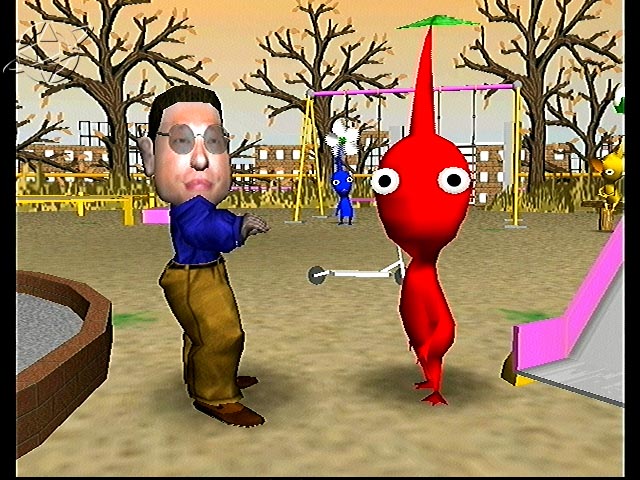
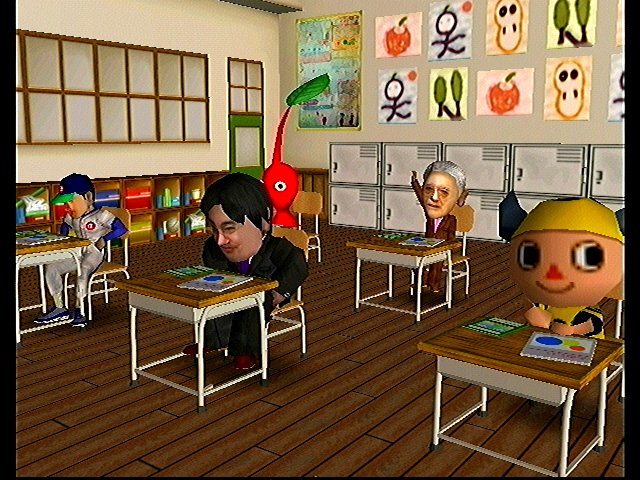
Stage Debut saw the player take a picture of themselves using the GameEye and linking the peripheral to the GameCube to insert their face onto a 3D model within the game’s world. IGN noted in the aforementioned article that, “There wasn’t much to Stage Debut other than changing the actors and the scenarios,” but the game was shown again the following year, with its 2003 presentation having a lot more to show off.
The game also featured familiar faces from the Super Mario Bros., Animal Crossing and Pikmin series. Your character, equipped your real-life face, could interact with these characters in different ways.
Stage Debut was originally planned for a 2004 release, but with the cancellation of the GameEye, the title was put on indefinite hold. Though it, too, never released in its original form, a lot of its ideas live on in other Nintendo titles. In a 2008 article, IGN followed up with Producer Shigeru Miyamoto on the peripheral.
“In my mind, it’s still alive,” he said. “There’s a portion of the Stage Debut game, which essentially became the Miis and the Mii Channel.”
The face-importing concept also became the core appeal of the pre-installed 3DS software, Face Raiders, while Tomodachi Life also continued some of Stage Debut’s ideas (such as the unique personalities of the players’ avatars and the leisure activities they can engage in).
Researching the Nintendo GameEye was a real nostalgia trip for me; it wasn’t until I saw screenshots of Stage Debut that I recalled seeing the game and the concept back in an old issue of Nintendo Official Magazine back in the day. I had forgotten all about the device and the game since then, and it was only by chance that I rediscovered it now.
The GameEye lives on not only through the preservation capabilities of the internet, but in all of the wonderful games that Nintendo has made since its reveal. I’ll end this in the same way Miyamoto ended the last report on the GameEye: “in my mind, it’s something that’s always alive.”