Never in my life did I imagine I would ever have a chance to play Famicom Detective Club. Never would I have imagined that Nintendo would remake them and localize them in the west. Never would I imagine I’d be here, writing a review of what is to most westerners an interesting side game that no one ever had the chance to play and only knew about thanks to a trophy in Super Smash Bros Melee.
And yet, it’s 2021, and here I am, reviewing a Famicom game that most people in the western world probably don’t even know exists.
Full disclosure
Nintendo graciously gave Zelda Universe a review code for both Famicom Detective Club: The Missing Heir and Famicom Detective Club: The Girl Who Stands Behind.
The Famicom Detective Club games are visual novels that, to no one’s surprise, were released on the Famicom in Japan. There are two games in the series; The Missing Heir and The Girl Who Stand Behind. Both games have been remade and localized for the first time, and I had the opportunity to be able to play both. The stories of each game tie into each other. Although you can play them in any order, it is recommended to start with The Missing Heir first.
A puzzle game while not being a puzzle game
Both games play similarly to each other except for a little nuance. In both games, you follow a protagonist whom you name as he solves cases as an employee of the Utsugi Detective Agency. These cases, however, aren’t your typical detective cases, as there are a lot of twists, turns, and surprises waiting in store.
The Missing Heir has a very slow start; in fact, it begins with the protagonist having amnesia! While I’ll admit I was initially turned off by this — the amnesia trope is overdone beyond belief in Japanese games as a convenient plot point to create mystery — thankfully, it’s handled well enough in this game.
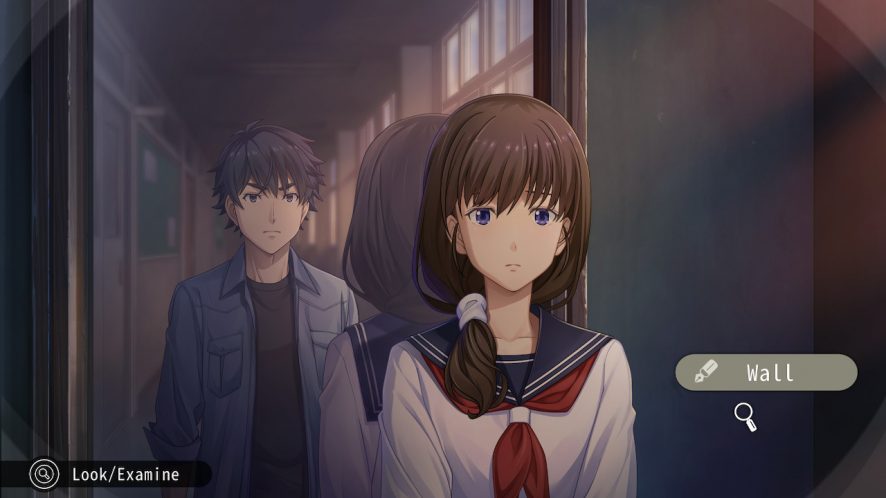
On each screen, you’re presented with a set of options. Some options are exclusive to certain screens such as “Talk” or “Take”, but you always have the choice to “Remember”. On occasion, you’ll be expected to choose this as the protagonist slowly pieces his memories back together to figure out details he’d forgotten. A nice touch is that a couple of instances require you to select “Remember” so that your protagonist will recall an event that happened prior to the loss of his memory. This is a really cool touch, and it gives that option a lot more weight, though I found that more often than not, I would just make it a point to select “Remember” as it was seemingly at random when it was necessary to do so.
Most of the game is spent talking to people, examining things, remembering, or thinking.
Puzzle-centric Gameplay
Despite this being a visual novel, there are some important gameplay elements in Famicom Detective Club. In addition to being able to Remember and Talk as mentioned earlier, you can also switch between locations to gather more information from more characters. That being said, this game has some mechanics that haven’t aged well. While the game occasionally tells you what you need to do to advance the story by marking text in yellow, more often than not you’ll have to choose various options or examine specific things to move on.
In some ways, this almost feels like a logical puzzle game. Depending on what you ask, you can gain information, but most of the time choosing a topic to talk about will result in three ellipses or the character saying they don’t know anything. In some cases, you have to ask a character about a topic further down on the list, and once you gain that information, you must then talk about a previous topic you might have already talked about. The game mostly doesn’t tell you this, so oftentimes you can feel stuck, thinking you’ve done everything that needs to be done, usually resulting in just picking every option until something happens.
As I mentioned before, sometimes text will be marked in yellow to tell you what needs to be selected, but how often this happens tends to feel inconsistent. While you can brute force most of these situations, there were a few instances in both games that were quite frustrating and I came very close to just looking up what to do.
A presentation to die for
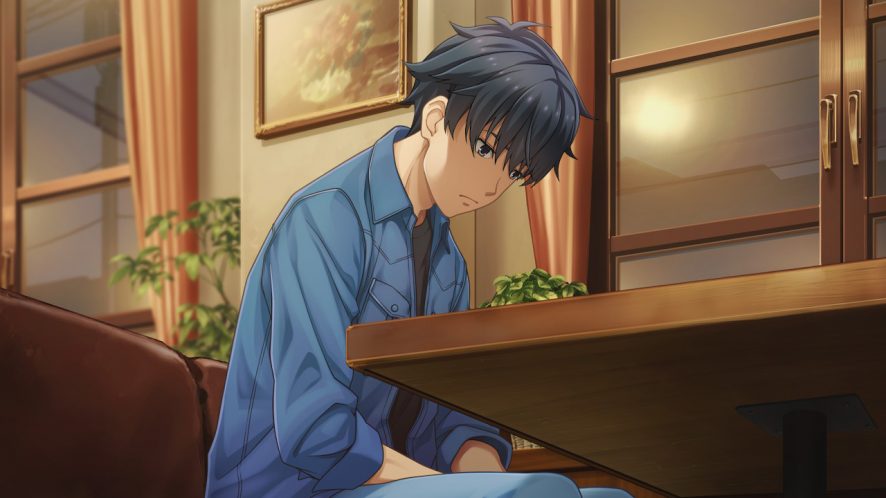
Perhaps one of the best elements of this game is the presentation. The hand-drawn style is excellent, and I found myself looking forward to seeing each new area just to see more fantastic artwork. The art design makes everything feel very alive, and you can tell with just a glance that this game was a labor of love.
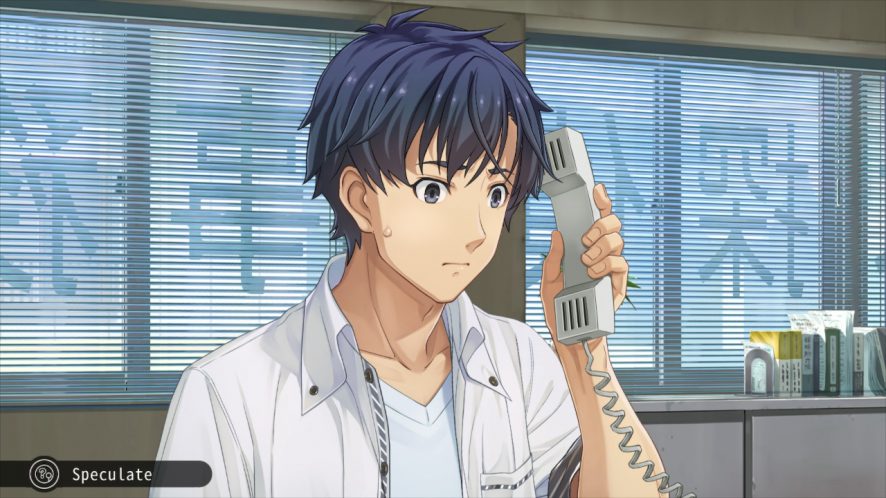
There are some sections where characters are animated, and this is done in what feels like an almost flip book-style form of animation. It works very well with the anime aesthetic and enhances the overall game without feeling needless. Characters and their portraits have a lot of animations and facial expressions as well, showing that every little line was given amazing detail and attention. Again, the game is absolutely a labor of love.
The phone scenes in particular were some of my favorites, presentation-wise.
A Serviceable Soundtrack
The music is serviceable between both games. I didn’t find any particular track extremely memorable, and I only found one track grating, if only because you hear it many times and some of the more frustrating investigation sections occur while that song plays.
This is not to say the soundtrack is bad, not by any stretch. It simply felt exactly like background music would; music that is just there. I actually had to go and re-listen to some tracks to even recall what the music sounded like. Overall it’s not bad, but it definitely won’t have any tunes stuck in your head for days like a Phoenix Wright game might.
Full Voice Acting for Two Full Stories
On the other end, the entire game is voice acted. Every single line, even the ellipses, has a voice line. The audio is Japanese only, and while I don’t speak or read Japanese, the voice acting was never irritating and the characters sounded a lot like you’d expect them to. If you want to go for a more purist approach, however, you can turn off the voice acting in the options menu. In addition, you can change the soundtrack to the original Famicom version or, in the case of The Girl Who Stands Behind, either the Famicom or the Super Famicom port.
Every part of this game has beautiful and detailed artwork. Every scene was clearly hand-crafted, between every written line of dialogue and the voice acting.
Famicom Detective Club is an absolute treat, both for those interested in older Nintendo history and those looking for a good visual novel. The story manages to hold up even after all this time, the graphics and voice acting are top-notch, and it’s just a joy to experience. There are some gameplay issues due to the nature of the game being a straight port, but ultimately it didn’t completely detract from the story or experience. If you’re looking for an engaging visual novel or are interested in a game from Nintendo’s past, you should look no further than Famicom Detective Club.


 by Zack Hubbard on June 26, 2021