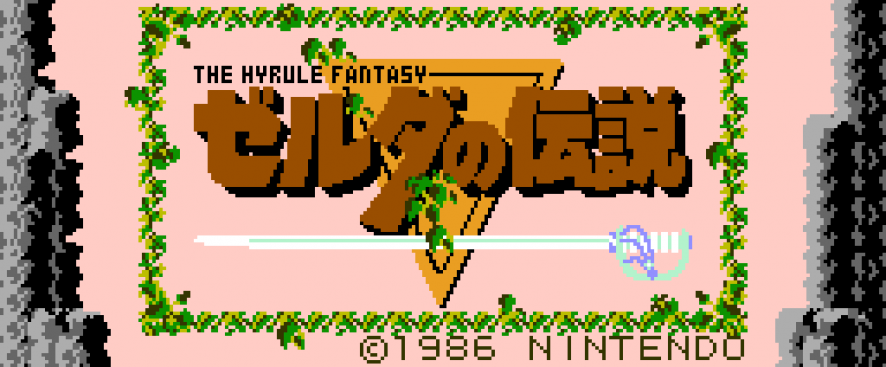
Ah, the title theme of the original Legend of Zelda. It’s a wonderful piece, gracefully using the overworld theme to set you up for the adventure ahead. You might also be aware that it was originally supposed to be an arrangement of Ravel’s Bolero, but that’s not what we’re talking about today. (For details, check our previous coverage on this topic.) Instead, we’re talking about a slightly different version of this theme: the one that Japanese players heard when they first booted up their copies.
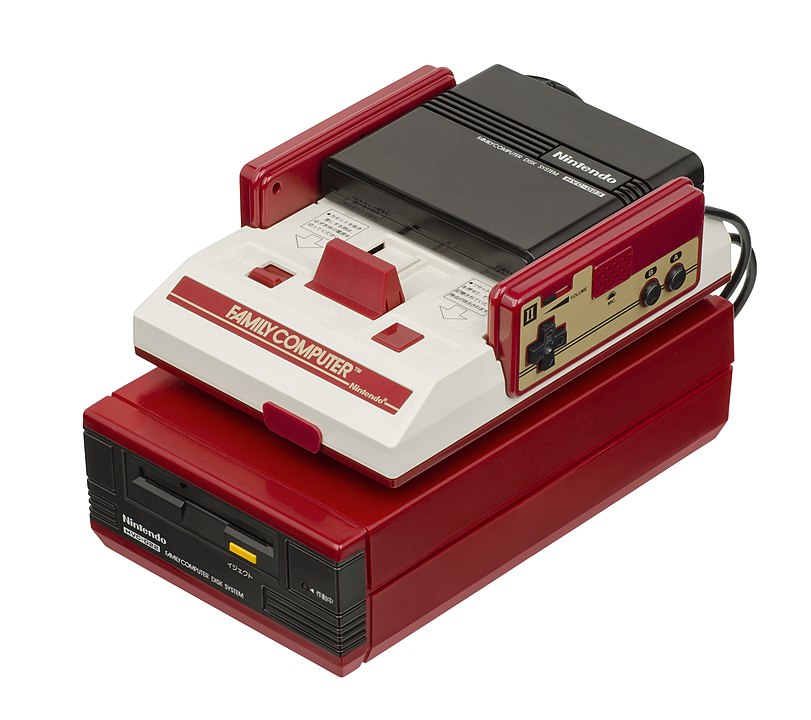
For those uninitiated, the big brick underneath the Famicom pictured here is a Famicom Disk System, or FDS for short. The Legend of Zelda was one of the launch titles for the add-on, and as such got to benefit from its many new features. The FDS accepted special floppy disks (remember those?) instead of cartridges, which meant that those games could save their progress before overseas copies of Zelda introduced the battery save. In fact, the Japanese cartridge version wasn’t released until 1994!
Another feature, more important for this discussion, was an extra sound channel in addition to the base hardware’s five: two square, one triangle, one noise, and one sample channel. This sound channel had the capability to customize its wave shape, so a sound programmer could make more unique soundwaves than your standard square or triangle shapes. Games like The Mysterious Murasame Castle would take advantage of this channel for some unique-sounding “instruments,” but Zelda would mostly reserve it for the sound effects. However, there were a few tracks where the channel was used musically, and at the forefront is the Title Theme.
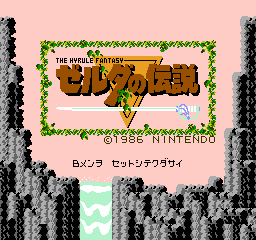
So what’s different in this version of the song? You could probably guess that with an extra channel to work with, the song would sound like there’s more going on. And you’d be right! Right from the beginning, you get to hear some extra harmonies, as well as an added bell chime to echo along with the melody. And it actually sounds a bit like a bell, or at least an ’80s synthesizer version of a bell.
The other major “instrument” in this version kind of sounds somewhere between a Chinese erhu and an electric violin. It’s very distinct from that classic NES square wave sound and it adds a dash of character to the piece that we don’t get in the NES version. While the NES version feels monolithic, boldly proclaiming that what you are about to experience once you press Start is something special, the FDS version has more tact in its invitation: “Do you want to go on an adventure? Why don’t you flip that disk to Side B so we can get started?”