One of the most enticing things about Breath of the Wild’s Hyrule is the way local legends merge with ancient history, enriching a world that the player is free to explore. An amazing example of this is the fountain of the Horse God, Malanya.
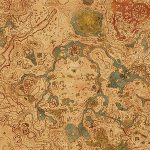
Its location is moderately out-of-the-way for the player, being in the Faron region. The character Suzuna, who Link can run into just outside of the Faron Woods, is actively searching for Malanya, having recently lost her horse. “A fountain that can revive lost horses,” eh? Hmm, intriguing.
The fountain is just beyond Highland Stable, past the bridge that overlooks the Lake of the Horse God. When Link encounters the fountain, it’s in a bulb state similar to that of the Great Fairy Fountains before Link offers some Rupees to their inhabitants. Malanya requests the same sacrifice in order to make use of his powers.

The theme that plays when approaching the fountain is pretty indicative of its purpose, as it mixes Epona’s Song with the Great Fairy Fountain theme. In contrast to the warm and inviting colors of the rest of the fairy fountains, Malanya Spring is awash in purple luminescence. It’s almost spooky, especially considering what the colors purple, pink, and magenta tend to symbolize throughout the game. Kilton’s shop glows purple (especially at night), and monsters poof into violet smoke upon death. Ganon’s Malice is, of course, a big contributor to the dark symbolism here.
But Malanya subverts this expectation: Despite threatening to eat Link on occasion, it’s all merely in jest. Malayna describes himself as the protector of horses, both wild and domesticated. He will bring one of your deceased horses back to life for the price of one Endura Carrot (though he’ll give you the first one for free). Malanya’s eccentric and goofy sense of humor is very typical of a Zelda game, and even with his ghostly form emerging from an insidious purple pool, I found his presence to be a comforting one.

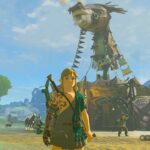
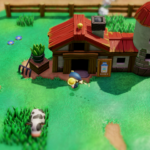
After reviving Malanya and learning the truth about the Horse God, the fountain feels like a secret space, welcoming to a weary traveler. Similarly, the stables provide shelter and warmth, forming small communities within. Atop each of the stables is an effigy of Malanya, a sort of tribute to the mythical Horse God. Once the player meets with Malanya himself, it serves as an Easter egg, one that pops up all around Hyrule as a symbol of safety. It’s a way for post-Calamity Hyrule to keep its legends, even the small ones, alive and well among one another. With this, it feels like we the players are witnessing the continuation of a culture that, somewhat refreshingly, has little to do with Hyrule’s ancient curse (though Malanya’s protective presence feels like something just as ancient).
Horses have always been a symbol of friendship and freedom throughout the Zelda series. Breath of the Wild allows the player to choose their own horse to bond with, and they are free to roam the continent with their trusty steed. And so, whenever I visit Highland Stable, I always bring my horse by Malanya Spring to say hello.