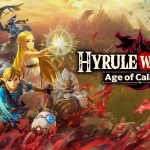
With its Definitive Edition being released last year, and the original being over five years old at this point(!), Hyrule Warriors is — spinoff or otherwise — one of my favorite Zelda games. Originally a Wii U exclusive and released in the Fall of 2014, Hyrule Warriors mashed together Koei Tecmo’s Dynasty Warriors and our beloved locales and denizens of Hyrule into a single product packed with content and quality. The game’s use of HD visuals, its addictive gameplay, and a staggering amount of extra content and features, come together in a celebration of (almost) all things Zelda, displaying an immense amount of dedication and passion for the franchise as a whole.
This being a Medli’s Melodies piece, one of the aspects that I feel is equally phenomenal is, of course, the game’s soundtrack. Working in unison with the gameplay, Hyrule Warriors‘ soundtrack infuses tradition and familiarity with elements far removed from them. It not only offers an array of timeless pieces Zelda enthusiasts have enjoyed for years, which have been reimagined as hard rock songs to fit the faster pace of a Warriors title, but also a collection of brand new arrangements that stand just as strong as the rest. Together, the musical pieces of Hyrule Warriors keep you humming, long after you’ve claimed victory over an army of Bokoblins.
The piece of music that gets the spotlight today, however, is one of those wholly original tracks. Titled “Psychostorm,” this battle theme is easily my favorite of that particular bunch. Its instrumentation, composition, and even its title and meaning (more on that later), manage to make this track stand out amongst an already stellar playlist. It even makes for some great food for thought, if the listener is hungry.
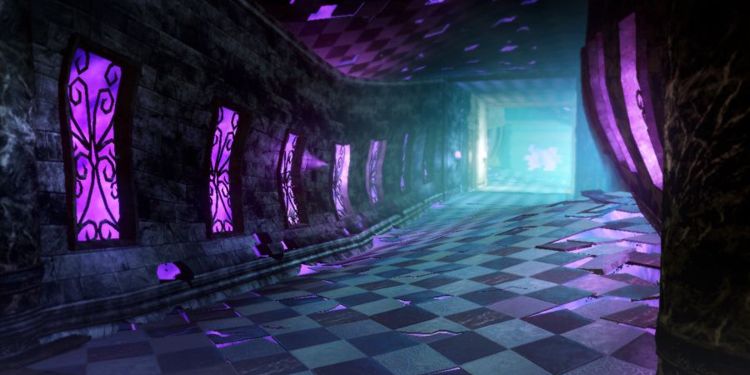
To start with a bit of context, “Psychostorm” makes its debut during Warriors‘ Legend Mode, as the background music for the stage “A War of Spirit.” Link and his allies arrive at the Temple of Souls after claiming the Master Sword and driving off Wizzro and his troops at the Temple of the Sacred Sword in the previous chapter. Though prepared to take Cia and her forces head-on, our heroes soon realize that the temple is no normal battlefield. At the mercy of Cia, its walls and floors have become twisted and distorted, worse so the deeper inside one goes. The tiles on the ground are cracked, and an ominous purple haze envelops the view from the windows and walls, seeping through the aforementioned cracks on the floor.
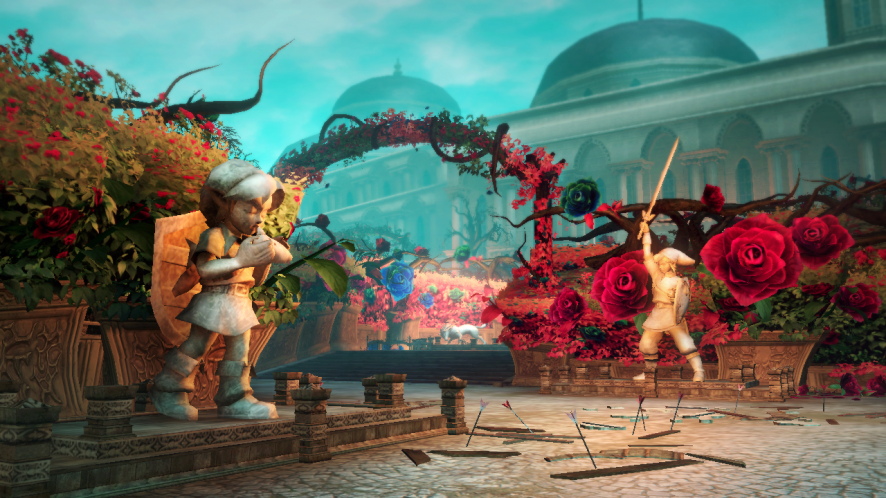
Most notable, however, is the outer garden. Unaffected by the distortion inside the temple, it still manages to be equally as unsettling. The archways and walls are entangled in overgrown thorns and roses in varying degrees of decay. Multiple statues, depicting the previous incarnations of the Hero of Legend, stand tall amongst the flora. To put it bluntly, the entire location is a not-so-subtle representation of Cia’s constant vying for Link’s love and affections over Princess Zelda; the very same that, as we learn, drives her to madness.
But it isn’t just the reflection of Cia’s twisted visions that takes the forefront here. As the chapter continues, Link is beckoned by Cia to confront her within the Sorceress’s Keep. Given his string of victories at the forefront of Hyrule’s army and increase in power thanks to the Master Sword, Link heads straight for her, believing he can take her on alone. A victim of his own ego and overconfidence, he falls right into a trap devised by Cia herself. Taking advantage of the growing darkness within him, she summons none other than Dark Link from Link’s shadow, siccing the evil doppelganger on him while she makes her retreat.

What follows is a battle between light and dark with various respawning Dark Links that lasts for most of the chapter. It also — the way I interpret things — acts as a means to show how “Psychostorm” is an absolutely perfect musical fit for this entire scenario.
Having a name like “Psychostorm” inherently makes the music denote some sort of mental breakdown, but when brought into the context of the chapter, it’s a wonderful use of symbolism and the classic rule of “show, don’t tell.” The Temple of Souls has become a broken, desolated, and warped husk of a building that seems lost within itself. “Psychostorm” begins with a foreboding introduction with cascading strings and an organ playing in the background, helping paint the image of confusion and dread of what’s to come, before delving straight into a percussion-heavy, increasingly dire-sounding chorus.
Could these descriptions match both army leaders’ current mental states any better? Literally a fragment of her former self, Cia is succumbing; losing her internal battle to the darkness that has already eaten away at her and twisted her thoughts and desires throughout the story. She beckons for Link from the center of the temple — perhaps a metaphor for the center of her mind — so enraptured by the thought of her end goal that she’s far removed from who she once was.
And what of Link’s battle with his dark counterpart(s)? Despite his valiant heroism, he too finds himself locked (literally) in combat with his inner demons, forced to see what his reckless pride and inflated ego has the potential to mold him into. Sure, this being Link, it’s rather obvious he won’t suffer the same fate Cia has with the darkness within, but again, the music frames his fights so well. Yes, he’s physically fighting a manifestation of his innermost evils. But from his perspective? He’s fighting to keep his mind from devolving and sinking into that darkness, and the music ramping up in brass instrumentation while being pounded by drum beats as it continues further emphasizes his pushback against the darkness.
Soon enough, though he becomes dogpiled and overwhelmed by his copies and almost falls to them, Link is saved by Lana and the rest of his allies. Coming to grips with himself and realizing the error of his prideful ways, Link confides in his friends and once more takes up the Master Sword, unlocking its true power.
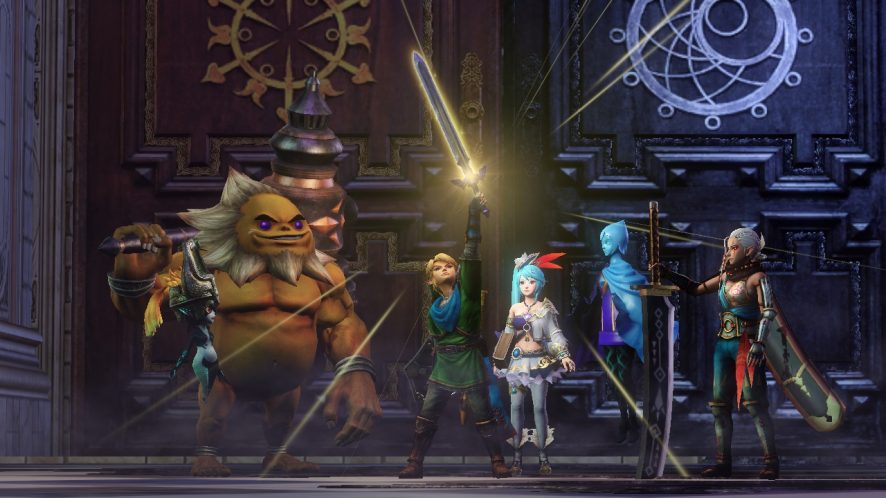
Link is able to triumph over the darkness that was surrounding him and his mind, and find the inner power necessary to expel it entirely (or, at the very least, for the time being). “Psychostorm” encapsulates this moment as precisely as it does the others. Past the one-minute mark, the backing instruments pull back, leaving the two primary verses to go back and forth with one another. A set of strings play first, followed by three notes from the brass, and this repeats three more times before the main instruments swell back in along with a small-yet-effective choir voice in the background.
This is a fantastic means of symbolizing a battle through sound; not just a battle of power, but of determination, inner strength, and the ability to surpass one’s inner demons and come out a better person because of it. In some sense, it’s even somewhat relatable on a personal level. I find the strings to be the darkness, Dark Link, while the hits from the brass are Link, the hero and the light that fight back against said darkness. All the other instruments — much like Link’s allies — are gone for these few moments; this is solely a battle of the mind for Link, and given how it’s the brass instrumentation that wins out and leads back into the main melody, it’s clear that it’s Link who emerges the victor.
“Psychostorm” is a Zelda musical piece I wholeheartedly adore for its deeper meaning beyond the great listen that it already is, and I implore readers to go back and listen to it during their next battle within the Temple of Souls.