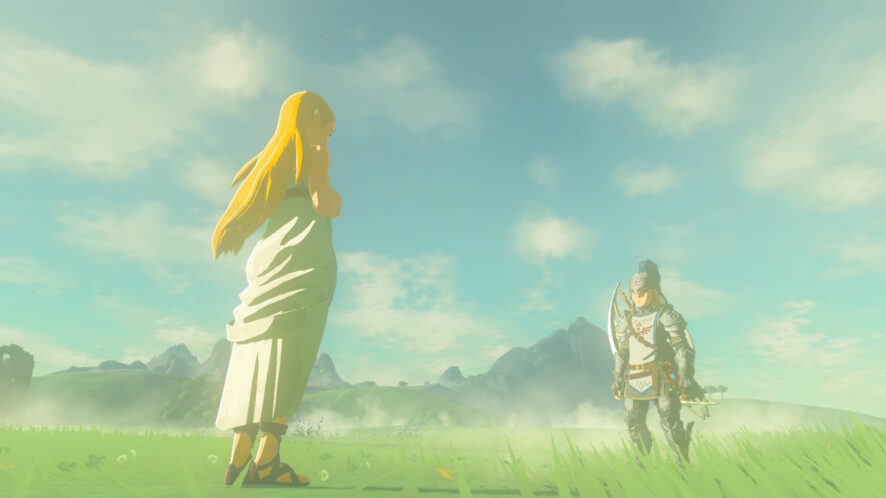
As detailed in the latest Nintendo earning’s report, Tears of the Kingdom has officially sold more than 20 million copies worldwide dating to December 31st, 2023. It’s the second 3D Legend of Zelda entry in a row to hit that sales milestone, proving for the umpteenth time that the Era of the Wilds formula is a box office juggernaut.
Breath of the Wild’s ridiculous legs were still at work throughout 2023, adding another 1.8 million copies sold for a game that’s well over six years old. At lifetime sales of nearly 32 million, and arguably the single most important piece of software for Nintendo’s most successful home console of all time, it’s funny to think that Breath of the Wild originated on a console that was a commercial flop.

That brings up the question, and one of the greatest “what if?”s in Nintendo history — what if Breath of the Wild had released exclusively on the Wii U as originally planned? Just how different would the landscape look for The Legend of Zelda, and Nintendo as a whole, had it remained the true “Zelda Wii U”?
The most entertaining part of this hypothetical question is determining how much of a boon the game would have been to the beleaguered Wii U. Breath of the Wild was instrumental in getting the Switch off to a red hot start that the hybrid console has never really cooled off from. Could Breath of the Wild, a game that eventually was regarded as one of the greatest games of all time, have saved the Wii U?
In the Switch’s case, it was a piece of hardware that had appeal from the very get go, regardless of its software. Breath of the Wild benefited from being on a likable platform just as much as the Switch benefited from having an all time classic in its launch lineup. The situation would have been very different with releasing exclusively on the Wii U, which quickly defaulted into an afterthought for much of the market. Any game releasing on it, no matter how prestigious, first had to overcome that stigma. No single piece of software, even one as illustrious as Breath of the Wild turned out to be, was ever going to suddenly turn the Wii U around into a 100 million+ unit seller.
All of that said, the Wii U did show flashes of success when it was graced with high quality releases. For a few weeks following the launch of Mario Kart 8 in May of 2014, and then again for multiple weeks following Splatoon’s release in May of 2015, the Wii U actually outsold Xbox One. High profile software was often able to elevate the Wii U to respectable, even solid sales figures. That makes it fair to wonder just how sustained the boost would be from a game as monumental as Breath of the Wild.

The earliest realistic release for Breath of the Wild would have been sometime in 2015, which was its first official release window as stated by Nintendo, and the Wii U had a bit of momentum going into that year after finishing strong in 2014. Mario Kart 8 was a resounding success in Summer 2014, giving the system a much needed shot in the arm, and then Nintendo followed it up with perhaps their best showing at E3 during that generation. Between the hilarious stop motion animation sketches with Reggie Fils-Amie, the introduction of amiibo, the Super Smash Bros. Invitational Tournament, and the promise of a far more bustling release schedule going forward, there was finally some optimism around the Wii U’s future.
Most important of all, that was when the key software started hitting. Following Mario Kart 8 in 2014 was Hyrule Warriors, Bayonetta 2, and especially Super Smash Bros. for Wii U to finish out the year. 2015 then saw Splatoon, Xenoblade Chronicles X, Super Mario Maker, Yoshi’s Woolly World, Kirby and the Rainbow Curse, and Mario Party 10. Add in the biggest, most ambitious Legend of Zelda game of all time, and maybe, just maybe, the Wii U is reinvigorated enough to thrive for another year or two. The console had great games during its brief run, but it never had a bona fide blockbuster that captured the gaming world’s attention. Breath of the Wild may very well have earned just as vaunted a Metacritic score and just as many Game of the Year awards as a Wii U exclusive, bringing the kind of publicity that the system desperately needed during its time.
A release any later than Holiday 2015 might have been a futile effort, as the Wii U once again began to cool off dramatically in 2016, to the point that Nintendo decided to bet its future on the development of the Switch by then. But that then introduces another question. If the Wii U survived for a while longer, would that have changed when the Switch was introduced to the world? Were that to have been the case, is it possible that some of the Switch’s earliest software, like Arms, Splatoon 2, Fire Emblem Warriors, and all of the content added in Mario Kart 8 Deluxe would have turned out to be Wii U software to bolster its lineup in the first half of 2017? Would a delay on the Switch launch also have forced Nintendo to continue supporting the 3DS with more abundant releases for longer than they ultimately did?
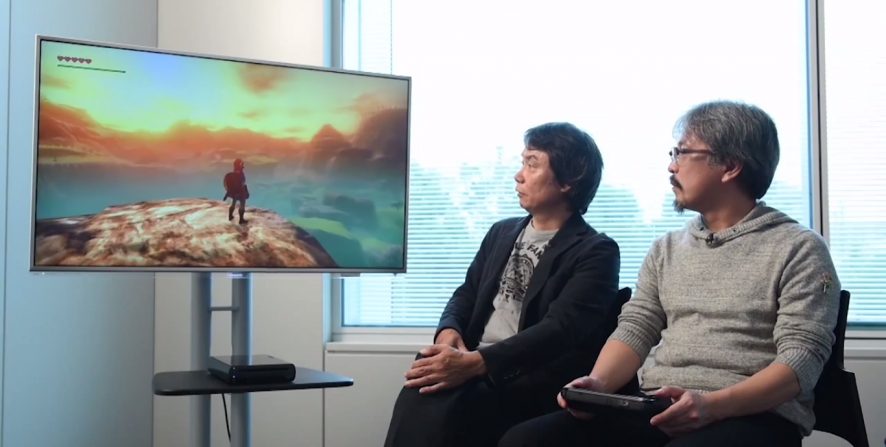
Another point of intrigue is how much different Breath of the Wild might have played had it been developed solely with the Wii U’s GamePad in mind. The debut gameplay footage from the 2014 edition of The Game Awards showed the GamePad’s touchscreen being used for map interaction, and the gyroscope aiming in both the first person view and while firing the bow and arrow, but what else, if anything, might have been planned? Maybe those infamous “Apparatus” Ancient Sheikah Shrines weren’t the only challenges originally built around motion control. Shrines and Divine Beasts filled with puzzles built around the GamePad’s unique applications might have been incredibly creative, and unlike anything else in the action/adventure genre. They just as well could have been incredibly polarizing, being too unwieldy for many gamers.
Add all of that to the lengthy list of things that we will only ever be able to speculate about with the game once known as “Zelda Wii U”.