There are only three Zelda games. Thirty-five years, and only three games have been released. A ridiculous-sounding statement, I know, but the truth of it begins to make sense when you examine the Zelda series’ actual progress and advancements.
Despite all of the creativity and breakthroughs that fans have seen and enjoyed in every entry in the series, Nintendo tends to play it safe with the Legend of Zelda on the larger scale of innovation. The design patterns of the majority of the games closely follow each other, often only adding smaller changes to distinguish themselves from previous titles and to take advantage of new technology. The newer technology is where most of the distinguishing features of any new game come from. Nintendo regularly uses Zelda games to put a spotlight of sorts on whatever new mechanic they have, no matter how potentially gimmicky they might be.
But, as much as these attempts to pack in new mechanics might add new outer layers to the experience, each Zelda game at its core still follows the same beats of what came before it. Ocarina of Time to Majora’s Mask and Phantom Hourglass to Spirit Tracks are two very obvious examples of this. More subtle ones would be Ocarina of Time to Skyward Sword or A Link to the Past to Four Swords Adventures. The latter games follow so closely that Four Swords Adventures actually uses the same assets as its predecessors. The former example is less obvious, but the groundwork for games such as Skyward Sword was clearly laid by Ocarina of Time.
What makes a Zelda game a truly “new” part of the series is when it creates, changes, or challenges the franchise’s conventions. Such a game finds what the players have learned to be the series standards and challenges their significance. Maybe not always to an extreme degree, but the changes will definitely be enough to force the player to rethink what they believe they know. A true evolution in the series ignores our assumptions and expectations while still delivering a fun and new yet familiar enough experience.
Some of these changes are easy to see at the outset of a game, such as changes to graphics or controls. Others are more subtle, and are not apparent right away. You start to piece things together as you progress through the game, typically once the game gives you full control of Link.
A series full of such magic and wonder shouldn’t stay the same forever.
People will always develop a specific thought process for every game or type of game they play. It’s how our minds work for every aspect of our lives. They program themselves to save time and to achieve a higher rate of success while performing repetitive tasks. “Skill” is the simple (and flattering) way to put it.
We develop our skills once an action becomes predictable. While playing games, this ability is invaluable. Players begin to complete tasks with little effort. And even when they play a new game, if that game has a similar design methodology as the previous one, the skills transfer. The player begins to complete the challenges in the new game without the same amount of difficulty that they encountered in the previous one.
One example any Zelda fan would understand is when we find a locked door but can’t find a chest with a key. The first time it may take us a moment to realize the key might be hidden in an unconventional location, like on an enemy. It was something we didn’t think of, because we had yet to see it happen. By the time we reach the end of the game, and when playing other Zelda games after, we instinctively clear out all enemies in the area the second we find a locked door and no chest. It is something we have come to expect. What we come to expect, that’s the key (pun partially intended).
Things need to come along that challenge our understanding of how to beat these games.
That’s why some players like to say games are too easy nowadays. It is true in certain cases, but in many others, the issue is that those players are just too good at what they do. This is when both the players and the developers know it’s time to mix things up.
Now, before I continue, I want to address a game that some fans might think fits into this category: Zelda II: The Adventure of Link. The Adventure of Link is a game that challenges convention, but it should be considered more of an experiment than a true advancement. Its mechanics have not had a major influence on subsequent games, and it never became a template as the aforementioned three did.
Everything Needs To Start Somewhere
To understand what each game brings to the series, we need to examine them individually. And we should do so chronologically, which means we’ll start with the original, The Legend of Zelda.
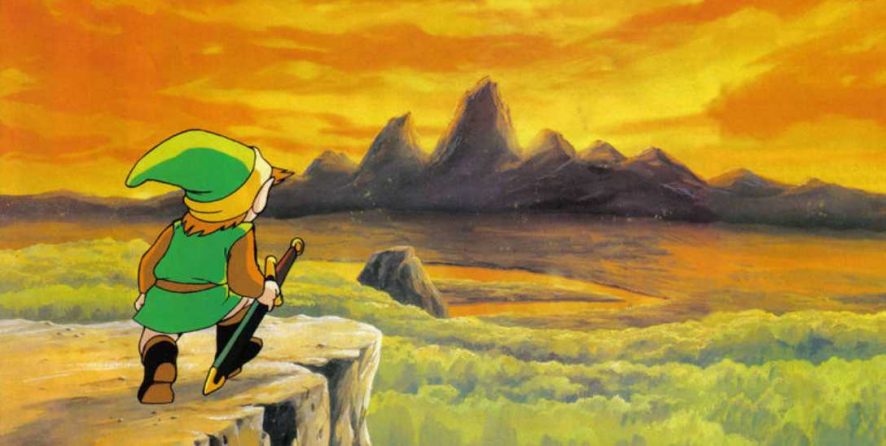
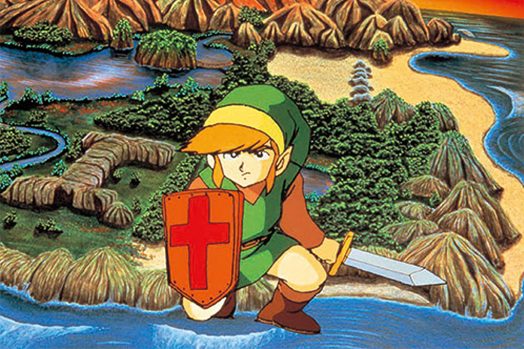
It’s almost difficult to find a starting point. What details need to be given about The Legend of Zelda that fans don’t already know? This game started it all. It established the genre, the objectives, the tropes, the conventions, the narrative, the characters — the franchise itself. This is the game that made Zelda everything we know it to be. Its influence will never fade.
From the very first screen, we are taught how to play and what to expect during our time playing. The player is going to be exploring, exploring, and exploring. Starting from the beginning of the game, there are four ways to go from that first square chunk of Hyrule: north, west, east, or into a small cave. Once the player walks into the cave, Link can get a sword — the first clue that the exploration will be paired with combat. From there, the exploration and combat lead the player to the first dungeon. It’s here that they meet the third and final of the game’s main components: puzzles. Exploration, action, and puzzles all work together like chemicals in a beaker to create a unique reaction. That reaction is entertainment, and it grows and develops as the game progresses and more of each component is added to the concoction.
The Legend of Zelda was the map that led to a greater world.
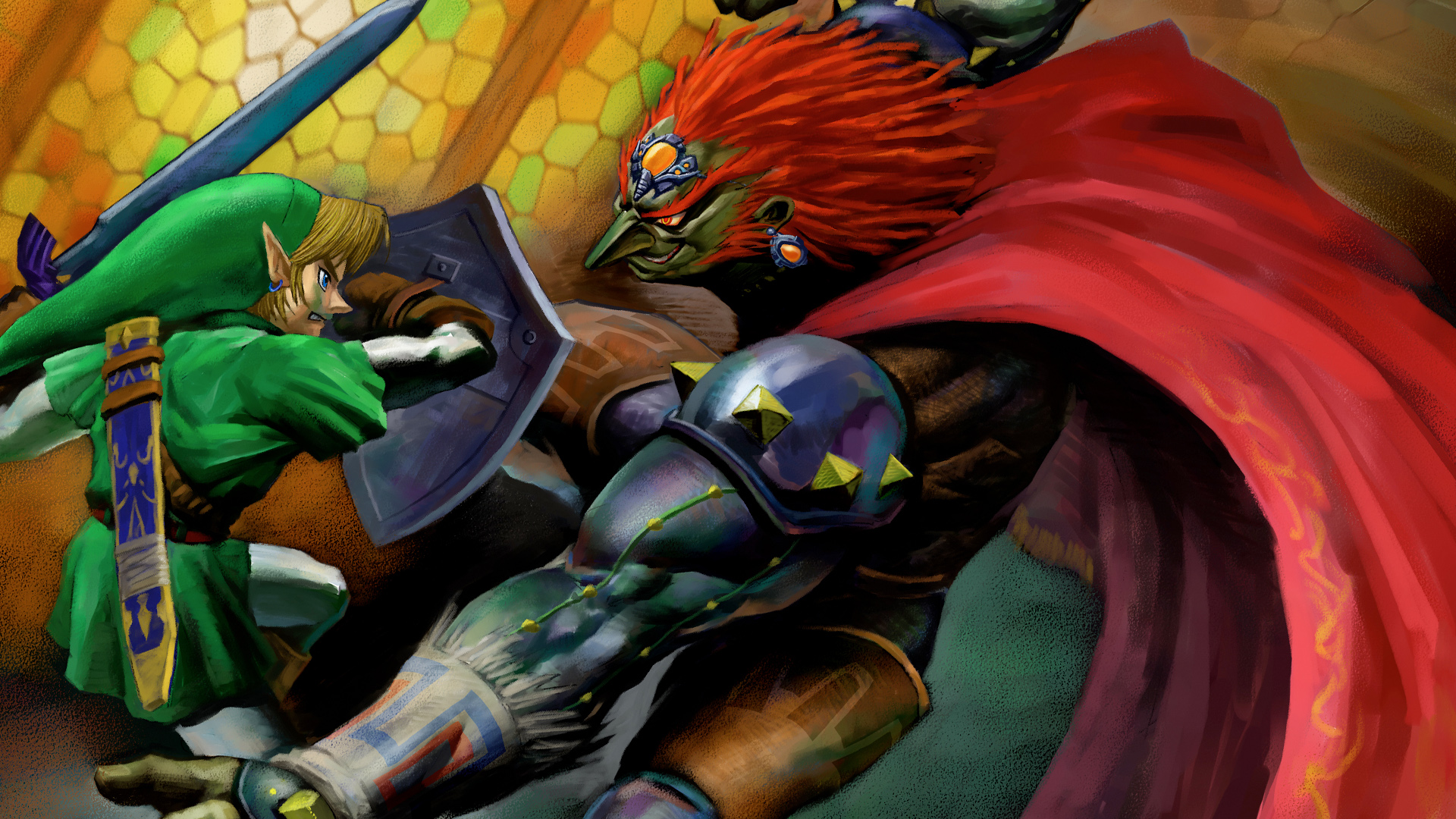
The fun grows, but it also becomes familiar. The player kills enemies, figures out the specific way to kill more difficult enemies, solves puzzles, finds items, unlocks doors, kills a boss, and clears the dungeon. This process is repeated a number of times, Link defeats Ganon at the end, and the day and the princess are saved. This the pattern. This is the full Zelda pattern, and though most Zelda games try to mix it up when possible, it is still seen and experienced in almost the same way to this day. Sameness is not an inherently bad thing, since having each new game being too disconnected from the preceding one would prevent the franchise from growing as a strong and coherent brand. The important factor is how fresh those familiar elements feel, like an old coat that’s been professionally cleaned but still has a comfy and familiar fit.
All of the most iconic elements in the series can trace their origins back to this game as well, not just the gameplay. Link, Zelda, Ganon, the Triforce, the kingdom of Hyrule, and many of its friendly and non-friendly inhabitants come from this first game. Portrayals and visuals do change, but this game is still their roots.
The Legend of Zelda is the most obvious game on this list, and I don’t know what more to explain about it. It is the genesis that cannot be overlooked.
It Was Time For A Change
The next game to create a shift in the dynamics was Ocarina of Time. After the first game, the franchise only saw one deviation from the foundational formula and two games that expanded upon it. A Link to the Past and Link’s Awakening started many new tropes and progress patterns for Zelda, but they were still primarily expansions of what The Legend of Zelda was.
The Legend of Zelda was the high point of 2D adventure games, but other important adventure games did come first. Ocarina of Time, however, was the first substantial step into 3D adventuring. Other 3D games led the way to an extent, such as Super Mario 64 and Banjo-Kazooie, but those were level-based platformers, not true exploration-focused adventures. Ocarina of Time did it first, did it right, and showed everyone how it should be done.
This transition to 3D and its heavy emphasis on narrative are what make Ocarina of Time earn its distinction as the second Zelda game. Until Ocarina of Time’s release, the primary perspective used by Zelda games was the 2D, top-down view. After three games, we knew what to expect. By the time Link’s Awakening, the third top-down game, was released, fans were prepared for what ways the games desired them to interact with its environment. Ocarina of Time added some much-needed depth and shifts in the expectations.
The perspective changed after the move to 3D, and with it so did all preconceived notions. Sure, there were homages to the past, but the new complexity of being in a 3D realm meant players could no longer depend on knowledge learned from the older games. This is something gamers begin to understand the moment Link steps foot outside of his treehouse home during Ocarina of Time’s opening moments.
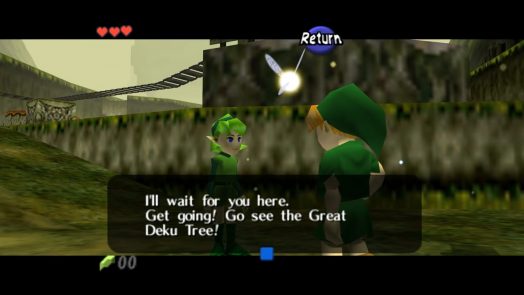
The game shows a cutscene that gives a view of the Kokiri Village, followed by a greeting from Link’s friend, Saria. This is the start of game’s attempt to beat it into the player’s mind that this is an open 3D environment. It also wants the player to understand that the game will be cinematic and focus on the story. The player then makes Link step down a ladder, which is the first taste of depth as well as the game saying, “Hey look at that, you are actually moving up and down in a Zelda game. No more single plane of existence.” After that comes the conversation with Saria, which serves two primary functions. First, it’s partly a tutorial that stresses the importance of following directions by repeating an earlier prompt to visit the Great Deku Tree. Second, it highlights the narrative’s importance by showing the bond that Saria and Link have.
Ocarina of Time demanded that the player keep up with the changing times.
Five minutes into the game, and the player already understands that they will be moving all around to explore the environment, and that the characters and story elements are critical to the full experience and should not be ignored. Previous Zelda games definitely did not need to introduce you to the concept of moving around, and, aside from Marin’s story in Link’s Awakening, they did a poor job of trying to make one feel invested in the narrative. Ocarina of Time makes it clear what the game is all about from the outset.
As I mentioned, this is only the first part of the game. Once we get further in, we begin to see everything else that has changed. The updates to the dungeons and puzzles can’t be ignored. Each dungeon’s rooms and open areas flow together, even when they are technically different floors on a map. They don’t feel sectioned off like they do in the 2D games. The dungeons behave like real locations rather than grid-like gauntlets.
Puzzles are updated as well. Now we have to face the challenges from multiple angles. Sure, there are still puzzles that simply require us to push blocks, but others require us to move the camera around or even go into first-person view to find the solution. We need to spot a switch on a wall and shoot it with the bow and arrow. We need to think about everything that is around us, even when we can’t see it.
Ocarina of Time was a point of no return for the series, and the risk paid off beautifully.
Ocarina of Time was a true evolution of the experience that the series offered. Following up the 2D Zelda games with Ocarina of Time was like finishing a jigsaw puzzle and then moving onto a Rubik’s Cube.
A Breath Of Fresh Air
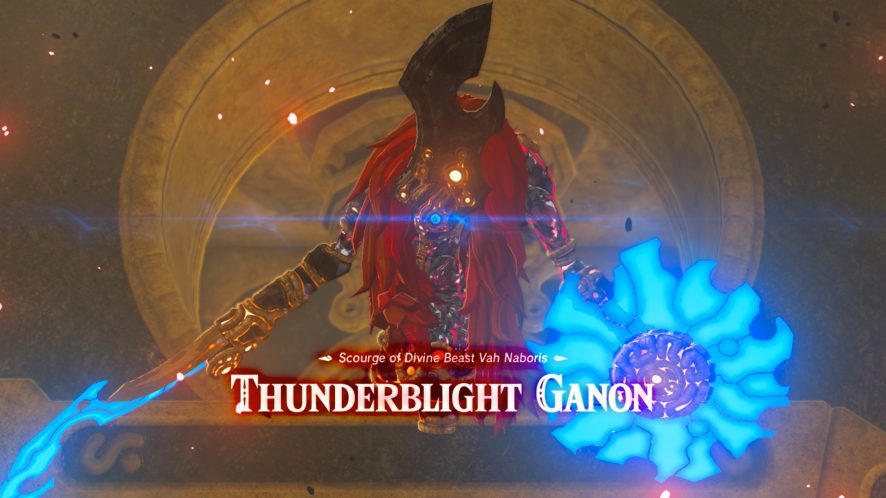
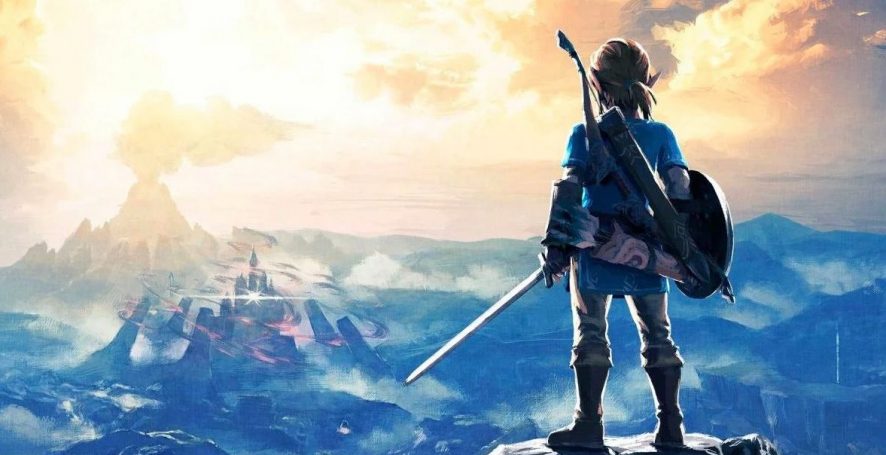
Now for the third and most recent game. It was one of the most anticipated games for nearly three years before its release, and was well worth the wait. You know I’m referring to TheLegend of Zelda: Breath of the Wild. This game revolutionized its genre, evolved the Zelda series, catapulted the Nintendo Switch’s successful first year, and was rightfully-so 2017’s Game of the Year across multiple rating systems. It’s a good game, if I haven’t made that clear.
The first and most obvious change found in Breath of the Wild is the shift to a true open-world environment. Other games had large worlds to explore, but the options for how you traversed them, where and when you could visit locations within them, and how you interacted with what you saw were limited and linear. In Ocarina of Time, if you saw a massive mountain out in the distant background of Hyrule Field, that was just a nice visual detail. In Breath of the Wild, a mountain such as that could be reached, explored, and scaled.
Breath of the Wild provides what feels to us like endless options. You want to go explore anything you see? Go ahead. Do you want to ignore the game’s suggested route and explore Hyrule in any way you see fit? I don’t see why not. Is there an enticing narrative to experience, but you want to collect a few hundred Korok seeds before tackling it? By all means, do as you wish. How anyone plays the game and where they go is entirely up to them.
Almost everything you do in this game is up to preference.
What else Breath of the Wild does is put forth an effort to challenge the series’ conventions. And the amount of effort taken is unprecedented for any other game in the series. Changing the format to open-world was a big part of this goal, but it was also a natural progression that was more than likely going to happen regardless. It’s just one of the major trends of modern gaming, and without the challenge of rethinking everything that goes into making a Zelda game, Breath of the Wild would have just been a hollow expansion of the old formula.
Relying on past experiences from older games doesn’t help much in Breath of the Wild. I’ll use myself as an example of how harsh of a lesson this can be to learn. This change in the convention became clear to me around 10 minutes into playing the game for the first time, when I fought my first batch of Bokoblins. I approached the situation like I would in a game such as The Wind Waker or Twilight Princess. I was stealthy in my approach, but once I was close, I just started to hack and slash. I hit one enemy, and continued to assault it as I thought, “OK, I hit it. Now I can just keep it in hit stun until it dies—,” That’s when the Bokoblin reared up its club, hit me, and killed me. I was shocked, then embarrassed. I couldn’t understand what happened. That is because I had assumed the game would behave like all the games that had come before it. You hit an enemy in Twilight Princess, they act hurt. If you hit an enemy in Breath of the Wild, and your weapon is as measly as mine was, they just get ticked off.
Breath of the Wild managed to turn even basic nuisances into threats that should be respected.
There are so many examples of how the game has changed in Breath of the Wild, it wouldn’t make sense to try to cover them in only a portion of an article. I could go on about how most of the staple weapons, upgrades, and items from the older games are absent, and how you realize they aren’t necessary inclusions in every game. Traditional dungeons are gone as well, but in their place are Shrines and Divine Beasts, which deliver the same puzzle-solving thrills while at the same time avoiding many of the clichés and tropes repeated in the past. I could also talk about the long-awaited inclusion of full voice acting in the game’s narrative and how that has permanently changed how stories will be created and presented in future games. Breath of the Wild did a lot to make the Zelda franchise and the genre it reinvigorated in the first place feel new again.
A Bright Future Built On A Firm Foundation
With each new advancement in the series, we see many updates and additions made to the gameplay and lore, but these games still stay “Zelda” at their core. They are all about exploration, solving challenges, defeating obstacles, and how you and Link grow through the adventure. The only things that should change are how we reach and interact with these objectives.
No one style is better than another, either. The games inspired by the mechanics that Ocarina of Time introduced are not better than the 2D ones birthed from The Legend of Zelda, and Breath of the Wild has not made Ocarina of Time’s conventions irrelevant. They work together, and Nintendo has proved this with continued use of older formulas, like with what we saw in the 2019 Link’s Awakening remake or in A Link Between Worlds, which is inspired by A Link to the Past, which was a follow-up to The Legend of Zelda.
Here’s hoping that the series will continue to keep us thrilled and engaged.
Everything is connected and related, but everything still needs to be new and unique as well. Shifts in game design objectives simply create new options, and those lead to more variety in future games. It guarantees a series as great as Zelda is not going to become tired and stale any time soon.
Zac Pricener
Zac Pricener has been an avid Zelda fan for twenty years. The series has been a source of creative inspiration for him and fueled his desire to become a writer. That desire to write in turn led him to now serve as the Features Manager, Assistant Columns Manager, and Assistant News Manger for Zelda Universe.


 by Zac Pricener on February 21, 2021