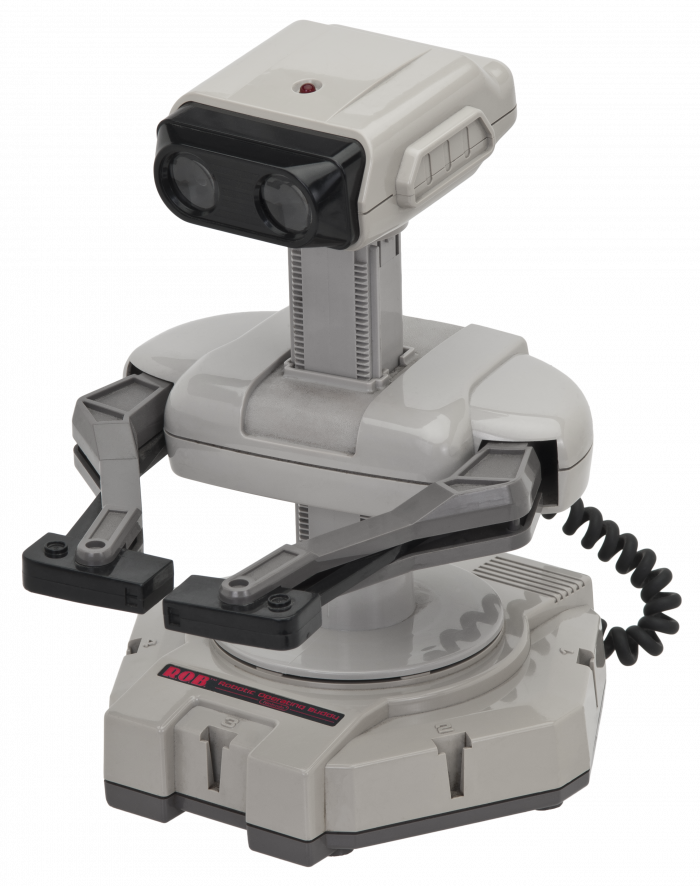
Nintendo is not a company that likes to grow stagnant. Starting from their earliest console, the Nintendo Entertainment System, Nintendo has found ways to make gaming more than just pushing the buttons on a controller. Look no further than R.O.B, the light gun, or the Power Glove for examples of Nintendo has pushed the idea of playing video games forward. They wouldn’t rest either, releasing new and varied consoles every few years for the last 35 years.
Interestingly, The Legend of Zelda, one of Nintendo’s premier properties, is often at the forefront of these innovations. Unlike their other landmark series Super Mario, Nintendo has consistently used Link and the Zelda series at large to sell the public whatever odd new gimmick or technical breakthrough the company has come up with. Why is this though? Why is it that Nintendo has consistently trusted Link over Mario to shepherd in a new era of technology or show off a shiny new gimmick? I think that it harkens back to the first entry in the series and what the Legend of Zelda at its heart is about: innovation, exploration, and the link between avatar and player.
A Brief History of Innovations and Gimmicks
As soon as the first full-fledged Zelda title, The Legend of Zelda, was introduced, the series already carried with it a technological innovation. The game was designed to use battery-backed memory, which would allow you to save your game. Gone were the days of the password or the arcade-style, put-your-quarter-in-to-continue style of games such as Super Mario. Zelda allowed gamers to save their progress and pick the game back up from where they left off. The Legend of Zelda gets the battery pack because the game itself requires it, which is in line with the innovations introduced in Ocarina of Time.Ocarina of Time was one of the first large-scale 3D adventure games and, in many ways, the first to do it correctly (Sorry Quest 64 and Goemon). The major innovation associated with Ocarinaof Time is the Z-Targeting system. The Z-Targeting system allowed Link to lock on to whatever he was looking at and be able to do so with a fixed camera. This solved a lot of the issues that early cameras in 3D titles had. Additionally, the game made use of the N64 Rumble Pak via an in-game item known as The Stone of Agony. When found, the stone would rumble in your hands when you were near secrets.
Not long after Ocarina,Majora’s Mask came along. The darkest entry in the series also used a technological innovation: The Expansion Pak. The Expansion Pak was a red and black insertable RAM that you put into a slot on the front of your Nintendo 64. Necessary for playing the game, the pack gave Majora’s Mask an added boost to better process the graphics and decrease loading time. Three years later, The Wind Waker was one of the first games to heavily use the GameCube/Game Boy link cable. With the cable, you could get second-player controls and use the Tingle Tuner, which would help you find various things you’re looking for in-game. Shortly after, The Wind Waker, Four Swords Adventures used it exclusively.
Link was employed as a showcase for all that the Nintendo DS could handle and do. This is one of the best examples of Nintendo trusting the Zelda franchise to make use of their new gimmicks as opposed to other stalwart series. Looking at what Nintendo launched the DS with, you’d think they didn’t believe too much in the odd features that it had. Its big launch offering, Super Mario 64 DS was a remake of the N64 classic. The game didn’t require much use of the hardware’s unique features. The same could be said, for the most part, about the pack-in demo of Metroid Prime Hunters: First Hunt. You used the stylus to move the gun around, a lot like a mouse, but other than that, the quirks of the hardware were not utilized. Enter Phantom Hourglass. Here you’ll draw all over the screen using the stylus, and you control Link with it as well. You blew into the microphone and at one point even closed the system to mark one screen with the info that was on the other. They were unique and wonderful uses of the hardware. With Mario being such an accessible series, why wouldn’t Nintendo try to use some of these innovations in the Mario games instead of relying on the Zelda team to make the best use of them?
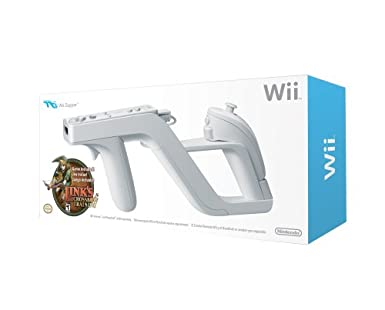
When the Wii came out, Link was once again tasked to show off the hardware of a system. A swan song for the GameCube that was ported to Wii, Twilight Princess featured Link swinging his sword with the patented Wii motion controls. It was a perfect selling point, along with the system’s pack-in game, Wii Sports, to show what the system could do. And when the Wii got a Zapper-style plastic gun, the pack-in software was none other than a Zelda spin-off, Link’s Crossbow Training.
While the Wii was fun, we can all admit now that the motion controls weren’t amazing. Nintendo got another shot to pull it off when they released the Motion Control Plus, and Skyward Sword took great advantage of it. With Skyward Sword, your movements needed to be more precise.
For an introduction to 3D on the 3DS, there was no Mario game at launch. Instead, there was a 3D remake of Ocarina of Time, the most famous of all Zelda titles. The follow-up to that was A Link Between Worlds, a game that uses 3D to a far greater extent than anything that was in Super Mario 3D Land or any other first-party Nintendo game. Majora’s Mask 3D was released as a launch game for the New 3DS line of systems after that.
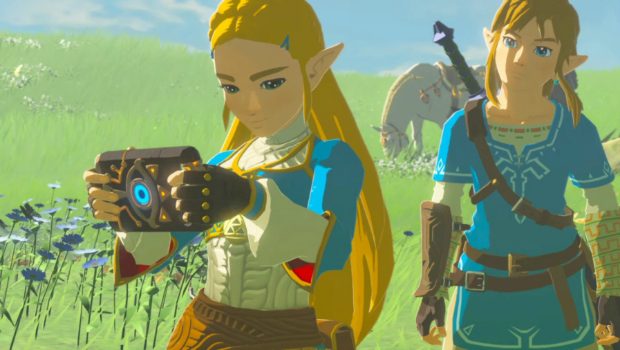
Lastly, for the Wii U’s swan song, we got Breath of the Wild. It was ported and released at the same time on Switch, but the legacy of the tablet is there as Link has his own peripheral in the Sheikah Slate. The slate, shaped like a Switch, most likely looked like a Wii U Gamepad before the game became multiplatform. While it came at the end of the Wii U’s cycle, and thus wasn’t available for innovation, it still fully embraced the technology in a way that Super Mario 3D World never did.
Mario and Zelda
Believe me, this isn’t a case where I am dumping on Mario. I’m more pointing out that the mascot of their entire brand has played it relatively safe, with the notable exception of Super Mario Sunshine. That title made use of the pressure-sensitive triggers on the GameCube controller. That was the extent of the innovation and leaning into the design of the hardware.
So why is it this way? You can look at various Mario and Zelda games and see that they are formulaic. Often, each new entry can play like a series of greatest hits, usually offering at least one new, different thing. Nintendo seemingly banks on nostalgia or spaces releases out enough that each entry feels fresh.
Miyamoto initially said that the name Link comes from the bond between gamer and avatar, and I think this plays into the idea that Zelda games feature hardware innovations and gimmicks. If Link is the visual representation of the gamer, and as the player has access to a unique feature or tool, then it would make sense that Link would also have access to it as well. This is most apparent in the Sheikah Slate, where he is literally holding and accessing what you are holding and accessing. There is a metagame involved with the series at large, most especially in the entries where the hardware innovations take front and center.
Is that a Wii U you’re holding?
There can be a new Zelda game released every year, Nintendo’s stated goal, and yet each new title feels fresh. I think the embrace of the gimmicks and new technology help the series to overcome any feelings of being too formulaic. This is why no other company has had the success of making a Zelda-style game the way that Nintendo has. The series is much more than the sum of its parts, and one ingredient is gimmicky innovation. In contrast, the Mario team focuses on the perfection of simplicity and game design. One game is supposed to open the door to you, the other, Zelda, is supposed to wow you with all that it is capable of. It’s not surprising that at the end of any given console generation, whatever Zelda game or games that came out are ranked among the best of that period’s games.
Legendary Risk
Why would Nintendo risk one of it’s most valuable and respectable franchises with gimmicky add-ons? The answer is right there in the asking. Zelda is one of the most widely known and respected franchises, so it will always be a system mover. When the series isn’t innovating, it’s launching consoles. It’s getting paired up with a camera so that you can take needless, but fun, pictures in a monochromatic Game Boy game. It is a mini-game bundled with a piece of plastic that you insert a Wii Remote into to make it look vaguely gun-like. You know exactly what I’m talking about because you have purchased each and every one of these so that you can get the most fleshed out Zelda experience possible. Nintendo is trading on our goodwill and money that we will turn out in force to buy something that is only barely part of the game that we actually want to play, and we do! And I have no problem with it. There has not been an innovation thus far, shoehorned into the game or not, that hasn’t at least worked in the way that it is supposed to. This is far from the days of gimmicky Kinect features or even those from mid-era Wii ports that would tack on motion controls and did nothing for the game.
Additionally, the push for gimmicks definitely does not come from the Zelda team. The developers are not asking for these innovations, rather, Nintendo is presenting these to the team and requesting that they be incorporated. There are few pieces of technology that Nintendo has introduced that haven’t gotten a pass by the Zelda team: the Gameboy Advance E-Reader and the Virtual Boy. Neither had the lifespans typically required for something to come from the Zelda franchise. This is a testament to how talented the Zelda team is overall. They are able to take whatever is thrown at them, innovate with it, and make something memorable; gimmicky or not. In the future, as we bate our breath in anticipation for the next mainline entry in the series, there is a good chance we’ll know when it is due to come out: when Nintendo has a new product it wants to show off.


 by William Wright on November 23, 2020