A return to the top-down perspective of 2D Legend of Zelda, a return to classic dungeon design, the introduction of the Echo mechanic — there were plenty of reasons why Echoes of Wisdom promised a very different experience from what Legend of Zelda fans enjoyed with the other, larger entries that have defined the franchise’s era on Nintendo Switch. But the one change that captured fans’ attention the most, and turned heads all across the pop culture sphere, was the spotlight being cast onto Princess Zelda herself.
The series’ namesake finally being the playable hero in a canon entry from Nintendo was momentous enough on all its own to ensure that Echoes of Wisdom would stand out from the rest of the franchise. Both narratively and mechanically, Zelda acting as the protagonist suggested a pivot from what Link was best known for in the same role.
This wasn’t just a change from Breath of the Wild and Tears of the Kingdom, this was a change from every canon Legend of Zelda game. As Link, players took control of a largely anonymous peasant boy who overcame all obstacles with his physical aptitude and unmatched swordsmanship. Assuming the role of Zelda meant taking control of a member of royalty, a revered figure in the land of Hyrule, who would meet her challenges primarily using sorcery.
Just how different would the adventure feel with players controlling the regal, spellweaving princess rather than gallant knight in Echoes of Wisdom?
As it turned out, the adventure felt surprisingly (and for many, refreshingly) familiar.
Echoes of Wisdom may have chosen to make Zelda the playable hero, but the journey that players guided her throughout was much like any other that we had guided the many incarnations of Link throughout. Replacing Link as our avatar character didn’t suddenly remove dungeon crawling, tricky puzzle solving, exploration, character-driven quests, or any of the other staple elements that have shaped The Legend of Zelda’s identity.
Following entries like Breath of the Wild and Tears of the Kingdom, which shook up the formula by championing open-ended solutions and nonlinear progression, Echoes of Wisdom clearly aimed for an experience that more closely resembled the classic Legend of Zelda design. The game placed great emphasis on traditional dungeons, and told its story in a structured, linear fashion.
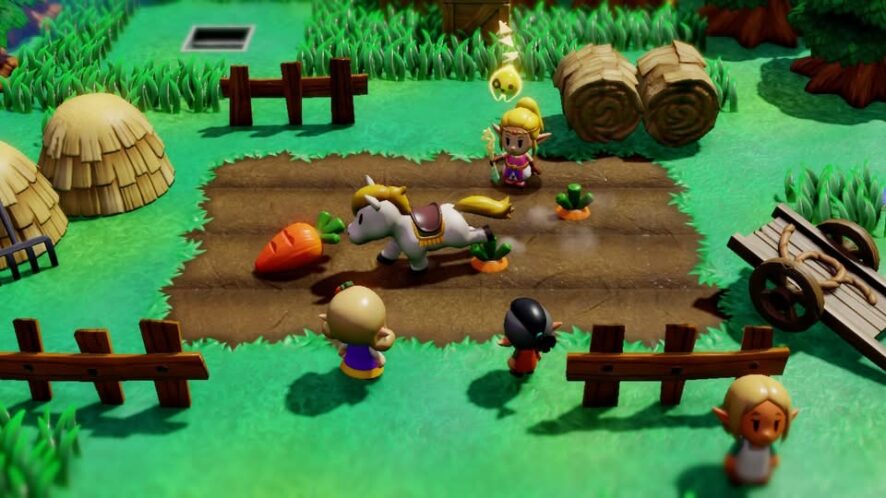
In keeping with tradition, Nintendo and Grezzo presented the playable-for-the-first-time-ever Zelda similarly to how they have always presented Link. Despite being Princess, Zelda doesn’t have a security detail of Hylian soldiers at her side wherever she travels. For the vast majority of the game, she’s going it alone as she braves the wilds of Hyrule and the chaotic Still World, with Tri as her only constant companion, and who acts as her helpful guide the same way that Navi, Tatl, or Midna did for Link. In fact, the game eschews her royal status for a portion of the story by making her a fugitive hiding under the guise of anonymity to all but a handful of NPCs.
Even as royalty, Zelda is a completely down-to-earth, unpretentious hero.
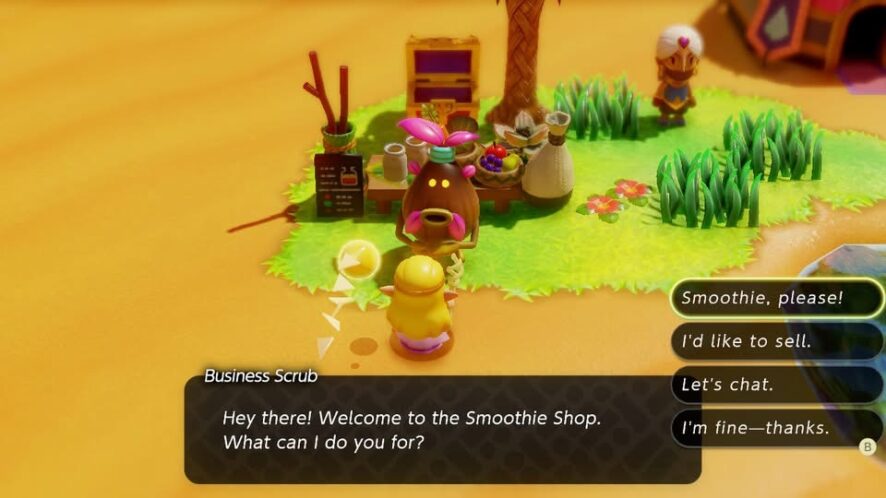
Even once her name is cleared, we often find that the different races don’t treat Zelda with heightened decorum or reverence as you might expect for a person of royalty. Some NPCs don’t even recognize her for being the princess of the Hylian people. Most citizens across Hyrule speak to her very casually and cordially. Aside from an exception here and there where they acknowledge her royal status and emote a little bit, the average NPC engages in every day chit chat with her no differently than they did with Link in other games. Zelda still has to pay for her items or to participate in mini games. She still has to do busywork to earn rewards or to glean useful information. It’s not as though the people of Hyrule hand her everything she could ever want just because she’s their princess. At one point she is imprisoned by the Deku Scrubs due to a misunderstanding.
Nintendo and Grezzo went as far as to make Zelda a silent protagonist in Echoes of Wisdom, allowing the player to impart their own thoughts and emotions onto her. As a character, Echoes of Wisdom’s Zelda is just as much the humble, unassuming hero who must work her way up to being the savior of the kingdom as Link was in his many adventures.
A hero who is open to interpretation
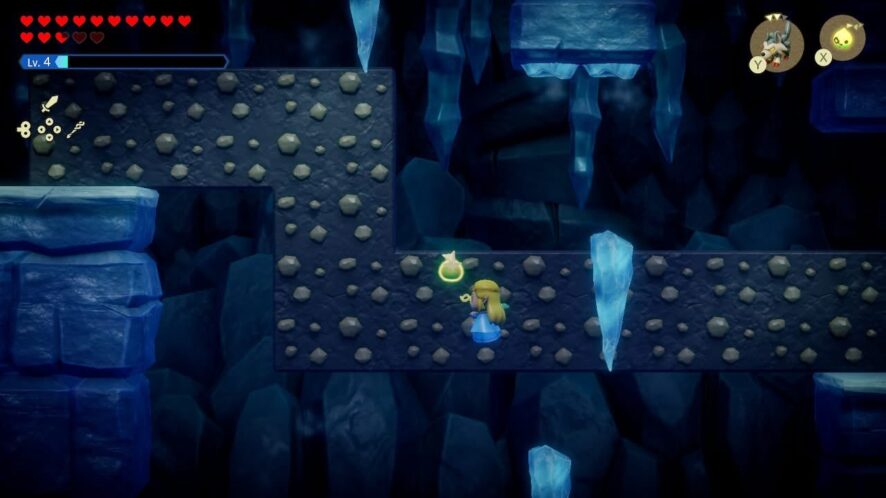
The Tri Rod and the ability to summon Echoes resulted in a creative, fresh way to play as the hero in a Legend of Zelda game, but it hardly felt like something that would be incompatible with an incarnation of Link. The concept of consolidating magical powers and the abilities traditionally associated with items into one gameplay mechanic could be seen in Breath of the Wild’s Sheikah Slate, and Tears of the Kingdom’s Purah Pad. Mechanically speaking, all that would need adjusting for Link to feel right at home in Zelda’s Echoes of Wisdom role is the matter of Swordfighter Form. But that could easily be explained by a bit of background writing on why this particular Link requires that to be a formidable swordsman.
What we have in Echoes of Wisdom is a case where Link was swapped out for a completely different hero, yet the game still offered the same Legend of Zelda experience that fans have known and loved for nearly forty years. The change from Link to Zelda as the playable character was seamless, because Link’s identity as the hero of the series isn’t rooted so much in a specific personality, perspective, or backstory, but in his presentation. Zelda was written to behave very similarly to how Link always has, while completing the same kind of challenges he has long tackled. Going from one stoic, noble hero to another was a whole lot less jarring than what Metal Gear fans experienced going from Solid Snake to Raiden, or the tonal whiplash that ensued from switching between Bayonetta and Viola in Bayonetta 3.
Even Link’s appearance is no longer set in stone. While the long hat and green tunic might be his most recognizable look, the games released during the Switch era introduced a new default appearance. Gone was any kind of a hat and any shade of green, replaced by bare, blonde locks and the sky blue Champions’ Tunic (with some extra leather armor pieces in Tears of the Kingdom). For at least this generation of gaming, that was his definitive appearance, being his depiction on the box art of Legend of Zelda games, in the amiibo released for those games, and his default character skin in Super Smash Bros. Ultimate.
Link’s appearance was a malleable element in the Era of the Wilds games.
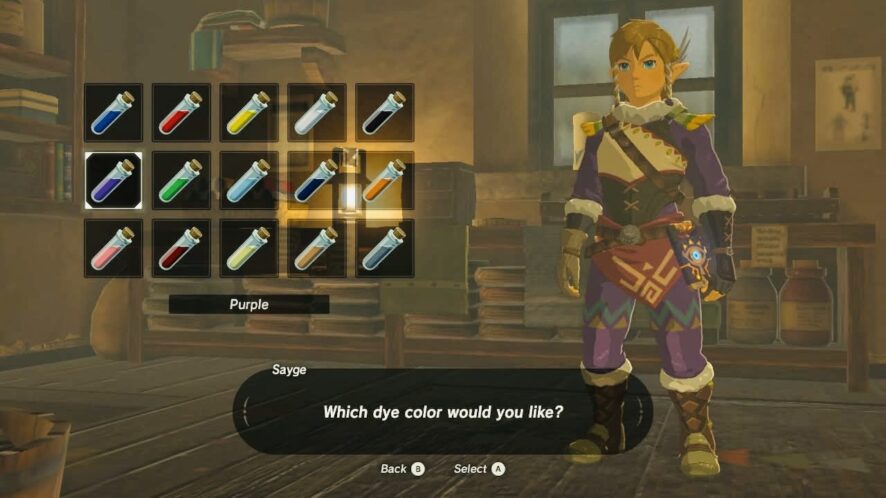
The Era of the Wilds games also normalized the image of Link in any number of other different outfits, many being dramatic departures from his longstanding garb (a feature that would return in Echoes of Wisdom, but for Zelda). There was the hooded cloak from the Hylian Set, the suit of armor with the Soldier’s Set, the plumed body suit of the Rito Set, the luchador-inspired costume that was the Radiant Set, among many more. On top of that, players had the option to alter the color schemes of individual outfit pieces at the Kochi Dye Shop. It made for innumerable combinations when it came to Link’s clothing, giving players free reign to determine his appearance. So much so that he could save Hyrule in nothing but his undergarments if the player wanted it.
That would make it very easy for Nintendo to introduce a brand new playable hero with all their own physical features and outfit. If Nintendo prefers to let fans decide who that character is and what they look like, it would be just as fitting to have us create a custom avatar character — a true empty canvas for fans to impart their thoughts and emotions upon. As proven by Zelda’s portrayal in Echoes of Wisdom, the spirit of the series is alive and well so long as the central character–whoever they may be–embodies that aforementioned humble, unassuming hero.
Seeing things from a different perspective
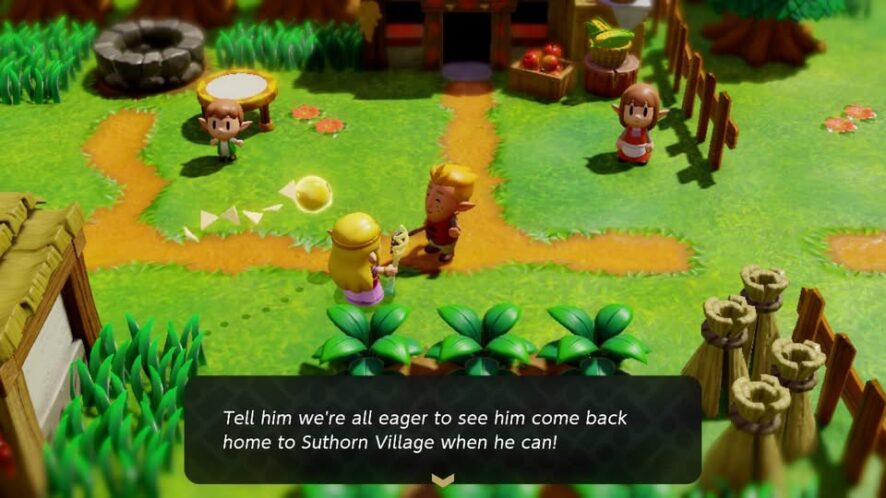
Both Link and Zelda can of course still have pivotal roles in a story without being the playable character. If anything, being in supporting roles allows for some compelling narrative opportunities, exploring who they are as people from an outside perspective. No better example of this exists than Link’s characterization in Echoes of Wisdom, which is told almost entirely through the accounts of NPCs who have known him his whole life. By visiting his quiet, secluded hometown, hearing the way that his friends and neighbors speak of his selflessness, and reading Lueberry’s notes about the effects that entering the Still World seemed to have on him, we get a fair amount of insight into Link as a person, including a rather clever in-game explanation for why he doesn’t talk.
Should a day ever come where Nintendo decides to finally let Link speak in a Legend of Zelda video game, it might be more appropriate to ease fans into the idea while Link is in a supporting role, rather than the hero we play as. There is no telling with even a hint of certainty when or if this will ever actually happen, but, at the very least, Shigeru Miyamoto, Eiji Aonuma, Hidemaro Fujibayashi, and the other minds behind the series have probably opened discussions on the subject. If they haven’t yet, they will soon, and it’s not necessarily because of anything related to the video games.
It’s because of the upcoming Legend of Zelda movie. That’s a Hollywood blockbuster they’re prepping, a production whose purpose is to draw mainstream attention to the Legend of Zelda name. For it to be a successful business venture, it has to appeal to far more than longtime Zelda fans, far more than longtime gamers, for that matter. It feels very unlikely that this big-budget, live action film, which exists to broaden the franchise’s appeal, will have a hero who doesn’t utter a single word on camera.
One way or another, Nintendo and Legend of Zelda fans are eventually going to have to reconcile with the idea of hearing Link speak, regardless of what type of media that occurs in. If the theatrical film ultimately enjoys a warm reception from audiences and performs well at the box office, perhaps that compels Nintendo to carry over some parts of the film’s presentation into the video games, including Link having audible dialogue.
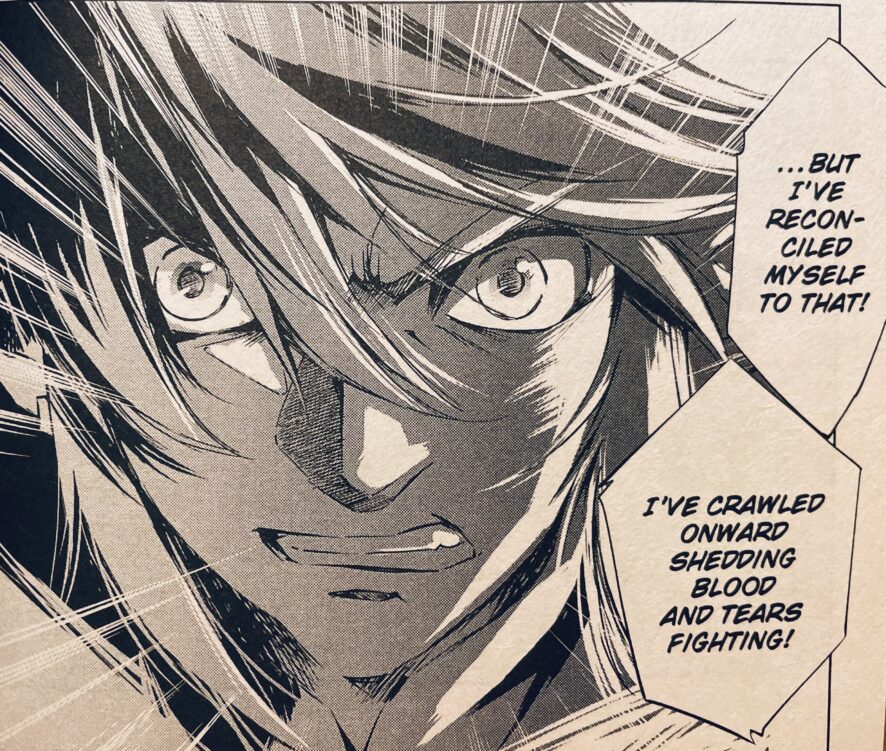
There is no reason why the ceiling for Link speaking has to be the overconfident meathead seen in the 1989 Legend of Zelda cartoon. Those fans who shudder at the thought of Link having dialogue and a distinct personality because of that ridiculous portrayal from the animated series would do well to take in some of the abundant literature where he enjoys far more flattering depictions. Whether it’s some of the earliest manga publications by Ataru Cagiva, the A Link to the Past comic that Shotaro Ishinomori drew for Nintendo Power, or any of the manga adaptations by Akira Himekawa, Legend of Zelda comics and manga have consistently shown that an emotive Link can be done right.
After committing to the silent protagonist for nearly forty years, that may seem like an impossibility in a Legend of Zelda video game. But then again, there was a time where we could have said just the same for the idea of someone other than Link being the hero who saves the day.
Jeffrey Pawlak
Jeffrey Pawlak is the Features Director for Zelda Universe, and has been a member of the website's community for more than 20 years. He is also a high fantasy author and an aspiring comic book artist.


 by Jeffrey Pawlak on January 3, 2025