For a few years now, I feared that Tri Force Heroes was the last new 2D Zelda game that would ever be made. The size and scope of Breath of the Wild meant Nintendo combined their Zelda teams into one, making them singly focused upon creating massive, open-world 3D worlds. These 3D experiences are great, mind you, but having grown up with 2D Zelda, there’s a special place in my heart for it.
Echoes of Wisdom puts those fears to rest. Not only has this game proven that 2D Zelda is alive and well, but it also pays homage to and incorporates classic Zelda themes and structures. For a long-time fan, it feels ever so familiar. Yet Echoes of Wisdom is more than that. It also feels modern, a nod to Tears of the Kingdom’s gratuitous experimentalism. This also marks Princess Zelda’s debut appearance (at least officially) as the savior of Hyrule, and Echoes of Wisdom does an exceptional job in making her abilities and character shine.
Grezzo’s first foray in telling their own Zelda tale is nothing short of great. After remastering several older games, they intuitively know all the right things to do. While there are flaws and a few rough edges, Echoes of Wisdom’s gameplay is fun and engaging in all the right ways. It’s an incredibly solid game, and Grezzo should be proud of the work they put into making it.
Linked to the past, but not bound by it
Echoes of Wisdom allows near infinite ways to solve any problem.
The last decade of Zelda has all but been repudiation of the “Zelda formula,” those classic plot structures, character archetypes, and dungeon designs that repeated throughout much of the franchise’s history. Those structures weren’t bad, but the creative minds at Nintendo aren’t known for enjoying mindless sequels. And while Breath of the Wild wore the original NES Legend of Zelda’s sense of exploration proudly on its sleeve, it also shunned so much of the done and redone formula. Since then, everyone — Eiji Aonuma included — wondered if traditional Zelda would ever see the lights of day again. In an interview with IGN, Aonuma posited the question, “‘Why do you want to go back to a type of game where you’re more limited or more restricted in the types of things or ways you can play?’”
Echoes of Wisdom keeps some of the new trappings of Zelda while also connecting with the series’ origins. It takes inspiration, samples the greatest hits, and then remixes them together into a fun and addictive experience. Veterans will be able to pinpoint direct references and subtle winks to much earlier games, but newer players won’t find Echoes of Wisdom a radical departure from the likes of Breath of the Wild and Tears of the Kingdom.
Echoes of Wisdom takes inspiration, samples the greatest hits, and then remixes them together into a fun and addictive experience.
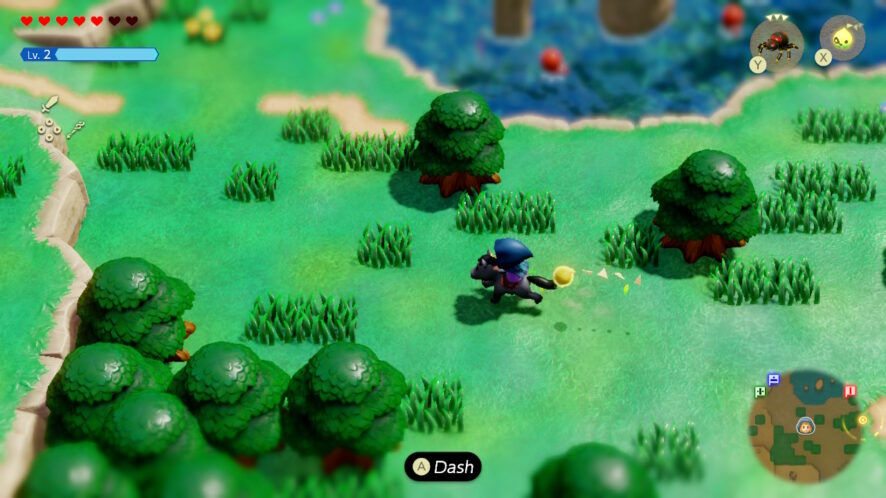
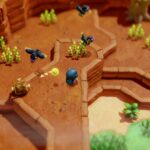
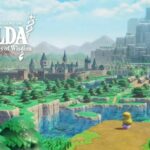
While Echoes of Wisdom shares the same graphical paintjob at the Switch’s Link’s Awakening remake, this game takes place in a brand-new Hyrule that is utterly vibrant and stunning to behold. Moreover, this world is far bigger than any 2D Zelda has dared to create before. Sure, the world may feel vaguely familiar to long-time fans of the franchise, but there’s plenty of surprises to uncover as you explore the land.
Imitation is the sincerest form of flattery
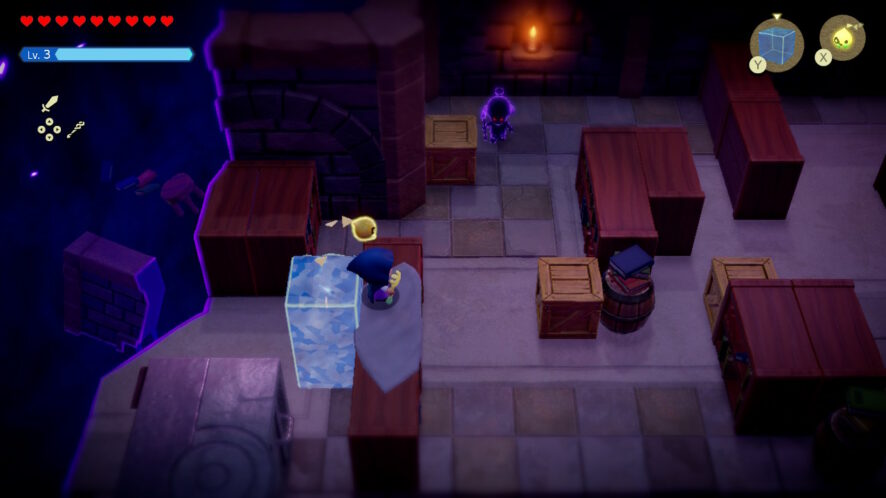
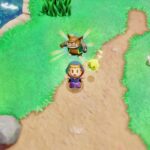
While Echoes are a brand new mechanic to the franchise, it feels like Grezzo took huge inspiration from Tears of the Kingdom’s Ultrahand-powered creations when making this. The sprite Tri loans Zelda the Tri Rod, from which she can copy and paste her way from point A to point B. As you begin to explore the world, you’ll encounter glowing objects which you can learn to echo. Once you learn how to create that object, you gain the ability to create an unlimited number of copies of that object…just not all at the same time.
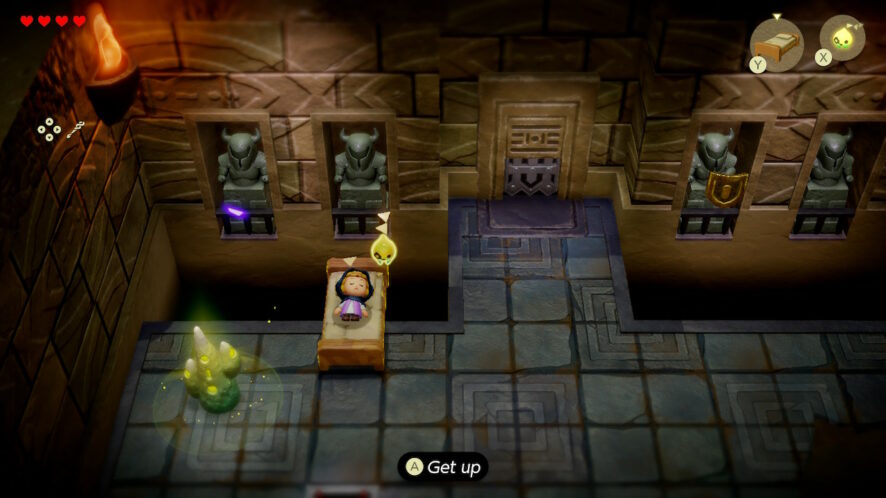
Beds will forever be one of your go-to items to solve problems.
Your ability to create is limited to the amount of power Tri currently has; at the beginning, you only have three units, but this is upgradable as time goes on. Once you create too many objects, they start disappearing in a first-in, first-out manner. Each Echo has a casting cost associated with it. Simple tables and crates cost only one unit of power (as do the multiple unnecessary variations of the common pot), but bigger or more useful objects will require more.
But it’s not just household objects that Zelda can imitate. For each new type of enemy that you defeat, you’re given the chance to learn its Echo. From that point onward, combat becomes less about summoning and flinging rocks and more about sending out hordes of enemies to do your bidding. As such, each new enemy you meet is simultaneously both an opportunity and a new puzzle to solve. Every time, I ask myself, “How do I kill that so I can make that?” Best of all, the answers aren’t simple because new enemies tend to be more powerful and more robust. Your first Zol won’t get you very far. Even my beloved three-triangle Peahat, once considered the nuclear warhead in my arsenal, is now cast aside and long forgotten. In this, Echoes of Wisdom has solved the Scribblenauts problem, where “black hole” tended to solve 99% of all puzzles. You’re forced to rely on at least some amount of variety, if only because you keep getting better toys to play with.
Each new enemy you meet is simultaneously both an opportunity and a new puzzle to solve. Every time, I ask myself, “How do I kill that so I can make that?”
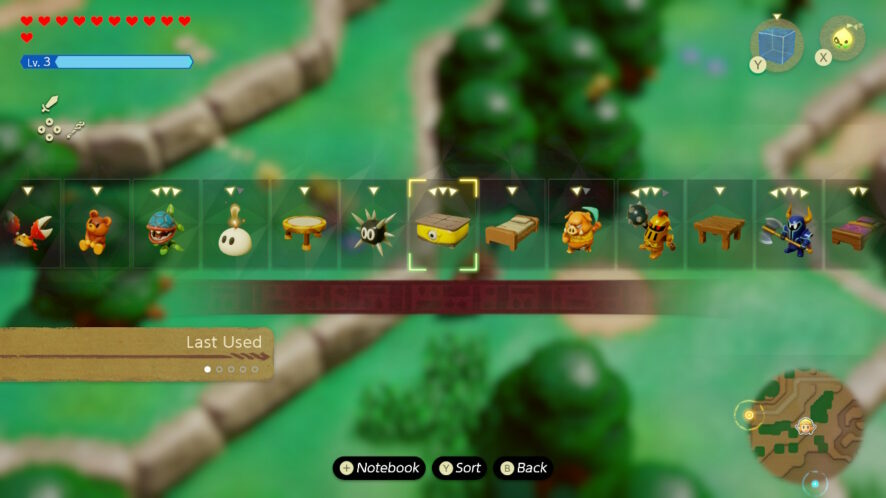
The Echoes are great and super fun, but it is such a surprise that Echoes of Wisdom commits the same menu follies as Tears of the Kingdom. In Tears of the Kingdom, fusing items to arrows was extremely painful as you would need to scroll through a long list of items in hopes of finding the one you wanted. Echoes of Wisdom directly copies that solution for selecting Echoes. If you want to choose a different Echo, especially one you haven’t used in a while, it feels bad having to sort through a list of dozens and dozens of Echoes to find the one you’re looking for.
Yes, you can get a grid-like display of your Echoes in the pause menu. And yes, you can sort the long list using a few rubrics (such as Most Used, Most Recently Learned, and Type). But you absolutely cannot customize these filters or lists at all. If you want to find a relatively unused Echo, you are almost certainly going to need to scroll for it. I’ll admit that this seems more a nitpick than a game-breaking experience, but if this “unlimited freedom” thing is the new way forward for Zelda, Nintendo really should work on developing a better mechanism for this.
Peahats are powerful, but they don’t survive underwater for long.Finding that one special Echo you found hours ago and now need can be frustrating.
The only other wishlist item I have is that I wish you could bind Echoes to multiple buttons on the controller. You only ever get a single button for selecting Echoes, which feels slightly cumbersome when you’re trying to experiment with new Echoes or using both boxes and tables to climb up the cabinetry.
I’ll take the Triforce of Wisdom to protect me
While Echoes are far and away the most important of Zelda’s abilities, they’re far from the only one. Bind, which allows you to have objects follow your movement, is incredibly useful, and will be a handy tool in your toolbelt whenever you come across a puzzle. Frequently, objects will be in the way, or you will need to place a heavy object upon a remote switch, and Bind is often the only solution.
Zelda lost all of her servants, so she’s got to do the heavy lifting by herself. Bind is a staple ability in your toolbelt.
The opposite skill Reverse Bond, where you allow yourself to follow some other moving object, is far less useful. While I’m certain there are clever and creative uses for this ability, I’ve thus far only really used this twice, once during the dungeon room where you learn this ability to cross over gaps, and once to ascend over trees and cliffs using a spider enemy before I found simpler and more engaging ways to do so. Overall though, these two abilities are a nice addition.
The last major ability is Swordfighter Form, where Zelda picks up Link’s Sword of Might and assumes his role, his guise, and his left-handedness to slay enemies directly instead of indirectly. With this ability, I’m honestly of two minds. On the one hand, Zelda is no stranger to having a sword; Twilight Princess’ rendition of the princess held one in her last defense and even wielded it against Link as a final boss, so this should be a complete non-issue. On the flip side, the fact that Zelda essentially becomes Link with Swordfighter Form is, frankly, odd. It’s odd because Aonuma has always wanted to differentiate Zelda from Link were she ever the heroine. It’s odder still that the very reason Zelda is the heroine is, according to Aonuma, “The sword and shield got in the way [of Echoes]. If you have a sword and a shield, you can just fight using those. There’s no need to rely on the monsters’ power, right?”
Nintendo’s answer? Limit the utility of it by tying its use to a magic-like meter that dwindles as you use it. This means that I find myself reserving this for big moments where I’m facing an extra tough enemy or a boss. And it’s very clear that the game wants you to use Swordfighter Mode against the bosses since there’s always spare Might fragments lying around to recharge your meter in the dungeon areas. I’ll admit that donning the green tunic and wailing on your enemies feels good. But it also feels unnecessary, almost a concession to the fact that Echoes weren’t enough to fully make the adventure work on its own merits.
Swordfighter Mode is very fun, but it seems like a compromise to the purity of the game; the magic meter means you probably won’t use it much.
Tearing the kingdom apart
While Echoes of Wisdom’s central character is the titular princess this time around, your first experience with the game places you as a fully powered-up Link. Kitted out with a sword, a bow, and bombs, Link dives in, defeats Ganon, and saves the girl. Well, almost, because Link gets himself sucked into a rift.
It’s after this when Zelda yanks the reins from Link and continues in his stead. Rifts start appearing across Hyrule, first an inconvenience and then outright sucking hapless people and kings into the void. When an impostor king jumps out and accuses Zelda of causing said voids, it’s off to the dungeons. But Zelda doesn’t take that lying down. With the help of the fairy Tri and her magic, Zelda starts conjuring all sorts of tables, boxes, and shrubberies to help her escape.
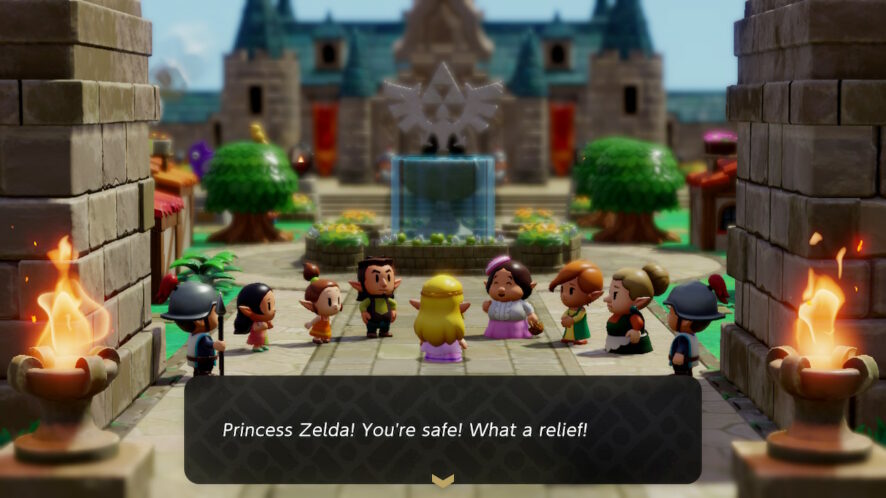
It’s good to know people really truly care about you…… until they don’t. Well that escalated quickly.
The tutorial doesn’t end there. Much like the Great Plateau, you need to hone your craft in an early, mostly harmless section before you’re set loose into the wild. This is super important because you need to learn firsthand that Echoes of Wisdom rewards curiosity and doesn’t penalize creativity. Even running out of hearts never sets you that far back, I’ve found.
After you get past the first dungeon, the rest of the world opens, and you pretty much go wherever you would like. Unlike Breath of the Wild however, not all the objectives are unlocked from the beginning. The structure plays out more like classic Zelda here, where the game is set with two distinct halves.
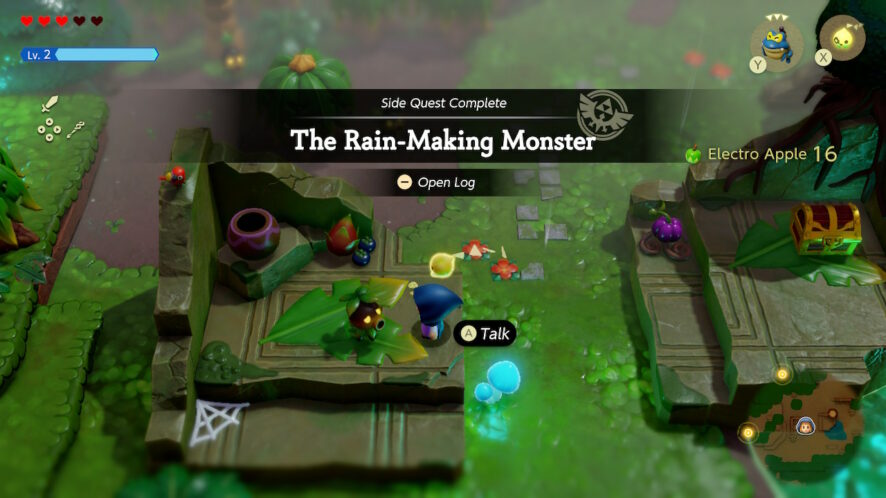
Some of the sidequests are super interesting, but you might also be able to complete them the moment you get the quest.
One of the things that a lot of players love about Zelda is exploration, going through the world and uncovering what lies around the next bush or tree. In this, Echoes of Wisdom has that same addictive quality that every Zelda game has had. But the game world doesn’t overstay its welcome at all. Some Zelda games — notably Twilight Princess and Tears of the Kingdom — can be criticized for being too empty, a world of largely barren landscapes. Echoes of Wisdom is a lot closer to having that right balance of being sufficiently populated, so you always feel that there’s a treasure to uncover over on the next screen.
Speaking of that, side content is usually what gives a game an extra bit of zest to make the world come alive. And Echoes of Wisdom has a decent amount of it, though whether it will fully appeal to you will depend upon your individual preferences. Alongside the game’s main quest are a host of sidequests that you can pick up and add to your already busy agenda of saving the world. My favorite quest thus far is essentially a big game of Spot the Difference, where you must look at ten identical character models and see which one differs from the rest. Unfortunately, not all the sidequests are winners. Quite literally, many of the side quests are to fulfill some NPC’s secret desire to see this one monster that you already found the Echo for fifteen minutes ago. I’d say anyone who is prioritizing exploring the world over the villages will be able to complete half of the quests immediately.
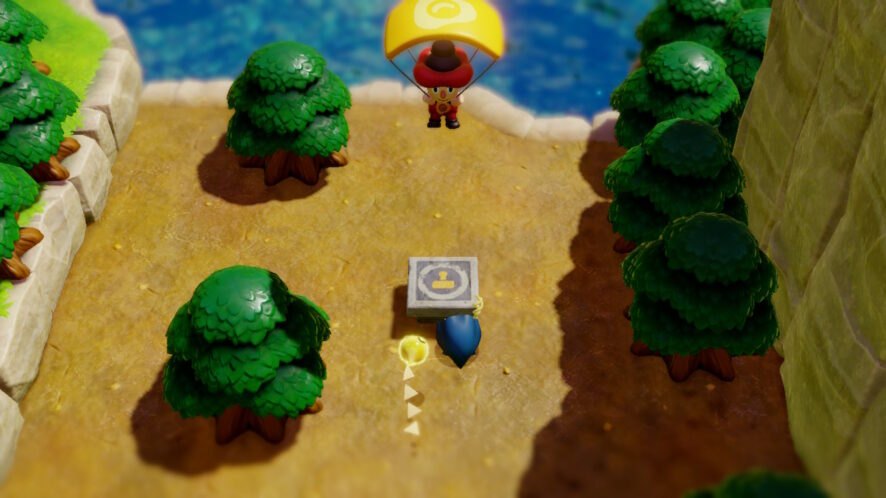
The Stamp Guy isn’t the most engaging character, but he does give free loot.
Beyond that, there are only a few other notable sidequests in the world. Dampé returns to this game once again, but this time he has a new career — he has created a new line of automatons that Zelda can use in combat. He’s not particularly hard to find, though when you’ll find him largely depends upon which directions you travel and how far off the beaten path you go. There’s also a wide array of stamp locations throughout the world that you can discover to, well, appease the Stamp Man apparently. He’ll give you rewards if you find enough of them, which I suppose is yet another way to encourage exploring the world.
Would you like your dungeons still or sparkling?
Echoes of Wisdom’s dungeons feature both top-down and sidescrolling sections.
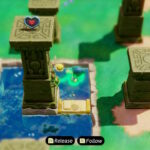
The game’s major objectives will force Zelda into the rifts themselves, which Echoes of Wisdom calls the Still World. The Still World is an empty void where landscapes are ripped apart into floating islands as they await their inevitable erosion into nothingness. People who fall in become frozen in time awaiting the same fate. For some unstated reason, Zelda is special, and she can move around freely within them with the help of Tri.
The Still World holds the game’s major dungeons as well as a series of smaller challenges. Navigating will often require some lateral thinking, especially when the terrain gets flipped on its side, and you suddenly need to walk on top of trees jutting out from the dirt. These challenges are relatively open-ended and thus invite any number of strategies and solutions, but much like problem-solving in the overworld, they generally require you to solve two types of problems: trying to reach something too far away and trying to reach something too high up.
The only thing that might be missing from traditional dungeons is that the game’s any-solution-works attitude does sometimes take away from that “ah ha” moment.
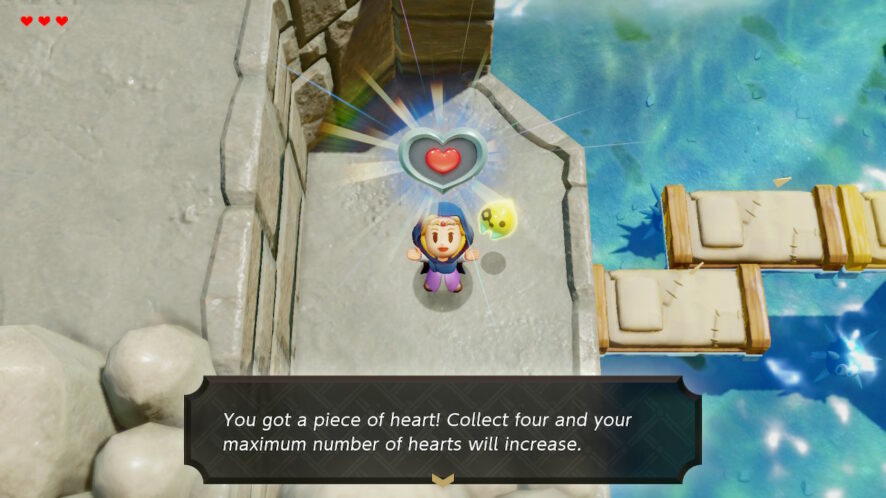
As for the game’s dungeons, it is with great enthusiasm that I can say that Echoes of Wisdom proves that traditional Zelda dungeons are not dead. Each dungeon I’ve been in has a unique vibe and feel that sets it apart from the others in the game, which was something that has been sorely missed from Breath of the Wild and Tears of the Kingdom in my opinion. In dungeons, enemies frequently cannot be avoided, putting your combat skills to the test, and there is an assortment of puzzles that need solving. From a distance, they’re all the same: Find the map, find your small keys, find the boss key, and beat the boss. But each dungeon has unique mechanics that must be understood, learned, and conquered that make them memorable, though they might not make my Top 10 Dungeons list. The only thing that might be missing from traditional dungeons is that the game’s any-solution-works attitude does sometimes take away from that “ah ha” moment; it’s hard to make a bespoke puzzle when you can break the puzzle in so many ways.
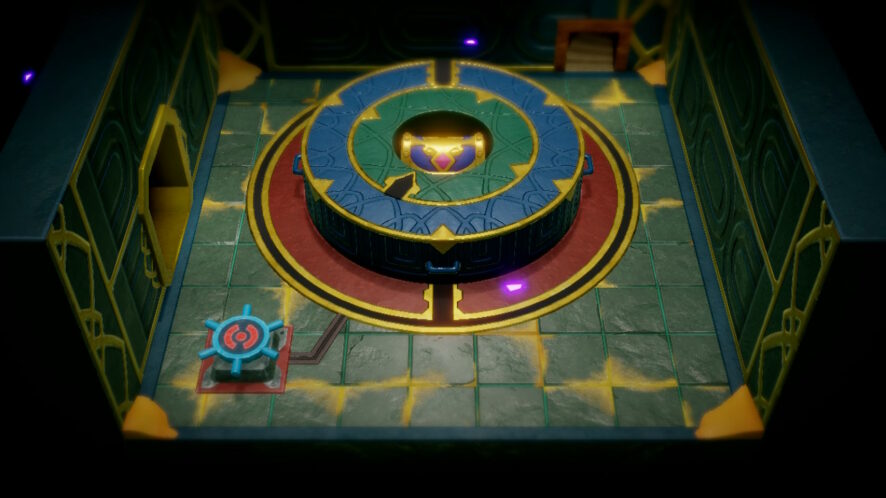
Traditional dungeons return some of the common trappings, like big keys.Each dungeon has unique mechanics that make them stand out from one another.
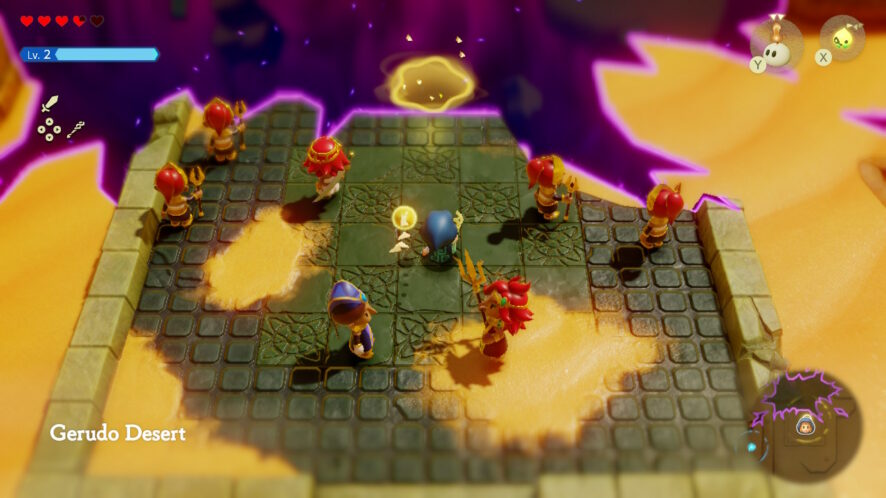
Of course, behind every good dungeon is a good boss…and maybe a mini-boss or two as well. And Echoes of Wisdom doesn’t hold back. While conquering normal enemies might grant you a little bit of breathing space with which to find your footing (and the right Echoes) to achieve victory, bosses will often slice through your most powerful of Echoes and leave you directly in the line of fire. Echoes of Wisdom will require you to think under pressure and devise a strategy whilst avoiding attacks that take up a third of the room. Once you figure out how to stun the boss, there’s a great opportunity to enter Swordfighter Mode, and going to town at those moments feels satisfying.
Hyrule has never looked so good from above
From a graphical point of view, this game is gorgeous. It should, given that Link’s Awakening’s Switch glow-up made the Game Boy classic better than I ever imagined it could look. And overall, Grezzo has done an amazing job of shoring up its graphical deficiencies, even when the screen is full of streaming water. Many have reported that sometimes the game will fall away from 60Hz to 30Hz at certain points, but I haven’t personally experienced the same level of chunkiness that I remember from Link’s Awakening. What’s certainly fair to say is that the game runs significantly better than previous outings.
The game’s music is also very excellent, which is par for the course from Nintendo. A few of the game’s tunes have quickly become earworms, and I find myself subconsciously humming along to the melody in my head. The sound effects are great too, though weirdly enough Zelda doesn’t get any sound effects to emulate her talking. The curse of the silent protagonist has stricken Zelda in this game, which does make sense given the history of the series. But given that the princess has always had a voice throughout the franchise, it still seems like a bit of a weird choice.
If you can find a space to take a break, you can essentially restore your hearts anywhere.
In terms of difficulty, Echoes of Wisdom gives a bit of a challenge but is relatively fair. I have had a few deaths, usually at those key moments where I stop being overly cautious and just want to brute force my way through a specific encounter. Hearts are aplenty, and accessories Zelda can wear will make them appear even more often. And like Breath of the Wild, you can hold food ingredients that can be made in Smoothies, both of which can restore health and give you helpful resistances and boosts. Though perhaps the strangest thing that makes the game easier is that you can create an Echo of a bed and lie in it, restoring a heart or two every few seconds. Sure, you can’t use that in the thick of battle, but you’re generally able to get back to full health quite quickly. But if all that makes the game too easy for you, you can choose to play Hero Mode, which has no heart drops and causes Zelda to take double damage. For the first time ever, Hero Mode is available from the start, and you can jump into and out of that mode at will, which is beneficial for those who want to give it a go but not lose progress if they fail.
A harmonious blend of past and present
Echoes of Wisdom pushes the envelope of what Zelda is. This shouldn’t be a surprise; if there’s ever been one constant about the Zelda series, it’s that the very being of it is always in flux. Nintendo, I think, is delighted by the prospect of things that surprise its players.
The bosses and mini-bosses add a bit of intensity, and it always feels like the stakes are high.
While I’ve had a lot of fun with the game, I recognize that it might not be everyone’s cup of tea. The inability to go around poking hundreds of enemies with a sword (at least easily) does take a little bit away from the fun of combat, especially when your Echo’s AI struggles to keep up with your enemy’s actions. I’ve left behind a few enemies unbeaten because I couldn’t be bothered on multiple occasions. And while there are numerous solutions to most puzzles, I find myself sticking to a few battle-tested Echoes to get the job done nine times out of ten.
But outside of those moments, the game clicks surprisingly well. Discovering new locations around each corner is exciting, and the thrill of vanquishing a new enemy and stealing its Echo is intense. And I cannot help but love the cute visuals that embody Grezzo’s unique art style. Nintendo doesn’t trust many external companies with Zelda, but Nintendo was very right to trust Grezzo with the task of creating a new Zelda title, even if it isn’t yet the Zelda Dungeon Maker that Grezzo was working on before they ended up with what we have today. This is a game worth owning and playing.
Playing as Zelda really doesn’t feel different; I’ve never felt impeded or limited by my lack of sword and shield.
I recognize that I’ve barely even mentioned in this review how different or strange it is to play as Zelda instead of Link. That’s because it isn’t. It really doesn’t feel different, and I’ve never felt impeded or limited by my lack of sword and shield (magic meter not withstanding). Even if Nintendo had to come up with a scenario different enough from Link’s to justify Zelda as the protagonist (even though the CD-i games never had such conniptions about it), this is a decisively good game with which to bring her into the fold. I’m delightfully happy to fight like a girl this time around, and I really hope we won’t have to wait another 30-odd years for that to happen again.
Score
Similarity to other Zeldas
9/10
Tears of the Kingdom – ▲▲▲▲▲ A Link Between Worlds – ▲▲▲▲△ Oracle of Ages/Seasons – ▲▲▲△△ Majora’s Mask 3D – ▲△△△△
David Johnson
David Johnson, a.k.a. "The Missing Link," was once the webmaster of both Zelda: The Grand Adventures and ZeldaBlog. He works as a software engineer in the games industry. David also pontificates about Zelda, writes features and guides for ZU, and obsesses about CD-i.


 by David Johnson on October 4, 2024