It is absolutely, 100% necessary that Nintendo remake Zelda games.
Whether it comes in the form of an HD remaster of Wind Waker — thus proving definitively that it is one of the most drop-dead stunningly gorgeous games ever created — or if it comes in 3DS versions of beloved N64 classics, continuing to update and make Zelda titles available is essential for Nintendo to do for a multitude of reasons. These reasons naturally range from the business necessity of cynical nostalgia-baiting money grabs to something more noble such as the preservation of video games and the introduction of classic franchises to new generations of fans. Perhaps most importantly, remakes of video games enable players to experience them for the first time on their own terms, thus enabling a game to be occupy multiple spaces of cultural meaning for a player; it can be simultaneously old and new, depending on who is playing.
Time and technology march forward
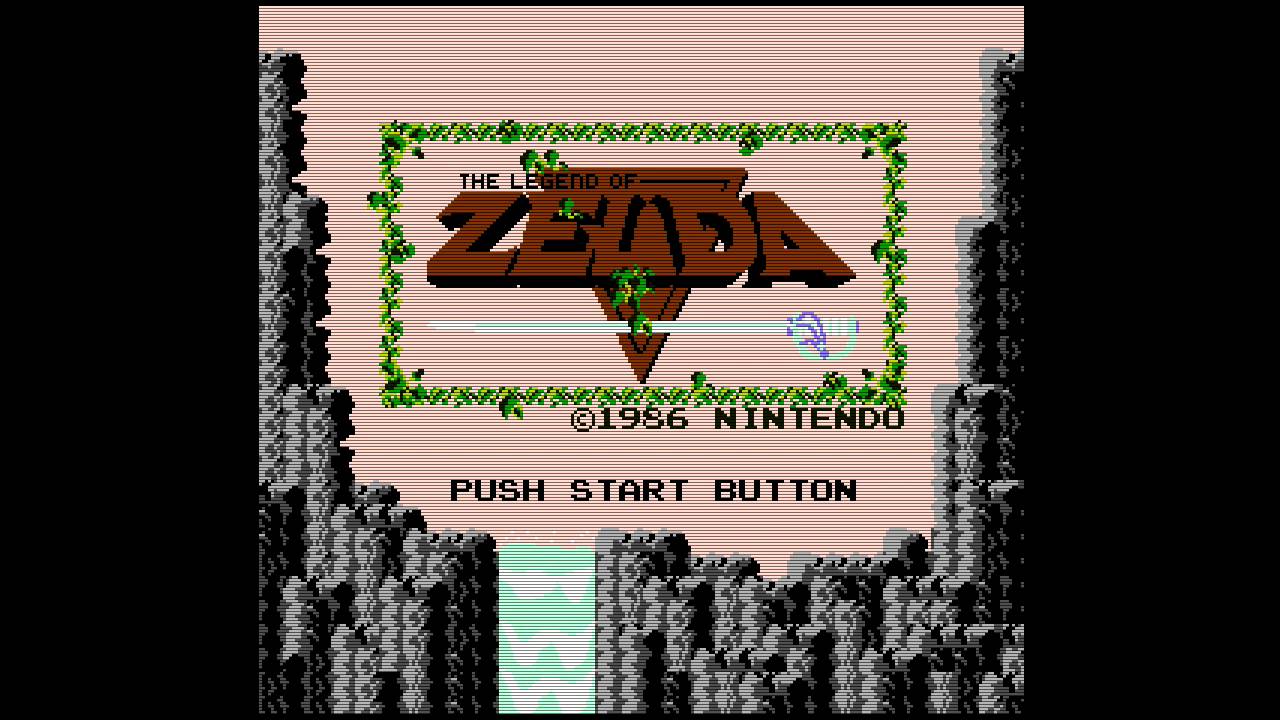
For those who have played the “original” game and found it transformative, anyone playing that same old game in the present cannot have the same experience. No one is going to feel the way you did if they play it now. It’s frustrating, I know. But it’s true. You were, what, maybe 12 when you played that one game? You’re pushing middle age now. And as quaint as it is to hook up an old CRT and sit no more than three feet from the screen with a friend, some things (okay, lots of things) just aren’t able to be reproduced with or without scanline filters, upscaling, and whatever other technical marvels of emulation we have at our disposal.
Some things just aren’t able to be reproduced exactly as they were before. Who even owns a CRT television these days?
The very ineffability of playing that one game is what justifies remakes, and, whether you like it or not, it is part of what makes them absolutely necessary for a game to continue to live in the past, present, and future of the industry.
Like all media, video games are unique products of their time and place in the historical moment. They are products of not only the cultural zeitgeist around their makers but also of the technological limitations of their times. However, when it comes to first exposure or experience, video games are fairly unique because primarily that first encounter has happened in the childhood home. As the history of video games continues to march forward, this is only increasingly true as the last generation to experience arcades in their sticky-floored glory was likely born before the 1990s. And, for many who came of age in the ’90s and beyond, those experiences were private by design or by accident, perhaps both. After all, how many of us have fond memories of the Nintendo, whose realm was the basement TV? Or the Gameboy, whose primary function was road trip entertainment? Or the PlayStation that our older sibling kept locked away in their bedroom, only furtively accessible when they were gone or feeling a wave of familial goodwill?
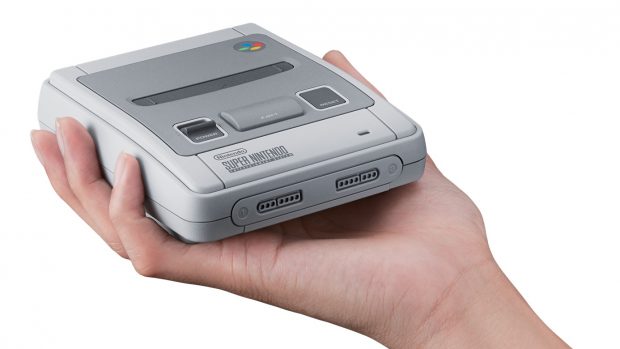
The contemporary success of mini-consoles flooding the market is proof enough that nostalgia alone is a huge pull for gamers. But these mini-consoles are a separate beast, one that pulls gamers back to a simulacrum of their childhoods and tries its best to emulate not just the game code on the machine, but the look and feel of playing those past games as they were in the past. Needless to say this is an impossible, though highly profitable, endeavor.
Mini consoles bring the classics into the future, but it’s another thing entirely to recreate a game from scratch.
Remakes, remasters, and ports, oh my!
But what of singular games reappearing time and again on new consoles and in new technological environments? When an older video game is updated and placed on a new system, the terminology can get a bit squirrely. Is it a remaster? A port? A remake? Without getting too bogged down in what makes what, I’ll just define my own terms here with reference to the aforementioned Zelda games.
A remaster is a game whose gameplay is largely unchanged and has instead been updated for higher fidelity graphics or sound, or both. Wind Waker is a remaster by these terms.
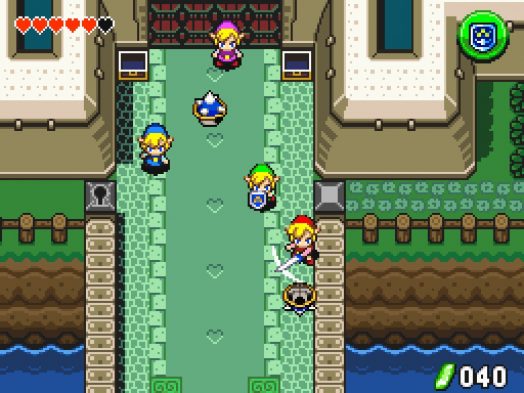
A port would be the 3DS versions of Ocarina of Time and Majora’s Mask. The salient feature of a port is updated or modified gameplay that deviates from the original to fit the new console or system the game is being played on.
A remake is distinguished by extensive enhancements to graphics as well as gameplay that is modified in order to embrace contemporary needs gamers expect that simply weren’t technologically available at the time of the game’s original release. For the sake of clarity, I’ll be using these terms in the ways defined here, but if my definitions are different from yours, feel free to curse me in the comments.
Emulation isn’t the real game. the real game is more than just code running on a particular machine
For some, emulation is enough to experience an older game again. But in Game After: A Cultural Study of the Video Game Afterlife, Raiford Guins makes the point that “emulation does not purport to be the original game it simulates but only a (hopefully) faithful and robust version [of it]” (36). This way of thinking about emulation is useful to understanding why companies like Nintendo remake their games so frequently. Emulation isn’t the real game. It is very much like the real game, but the real game is more than just code running on a particular machine. Hence we can enjoy the same gameplay experience by playing Super Mario Bros. on the NES, the Wii Virtual Console, and Nintendo Switch Online. But the experience of playing the game alone is not what makes video games such potent cultural experiences. The experience of playing the game is distinct from gameplay by itself.
Remakes stand apart from originals
Remasters and ports are more based in nostalgia than remakes. Writing for Kotaku, Ethan Gach laments the lack of PS2 games ported to current-gen Sony consoles. He says that while many have been remastered or ported, others are only available on aging or obsolete systems like the PSP. Some have never been ported at all. He is writing from a preservationist’s point of view, but the thrust of the argument remains the same that older games “deserve a bigger part of [a system’s] present.” But ports and remasters don’t strive to break away from the original game in the same way remakes do. Ports and remasters don’t always trust the original material to stand up independent of their cache of nostalgia-driven credibility. If you look closely at the marketing surrounding these games, this becomes more apparent. In Mediated Nostalgia: Individual Memory and Contemporary Mass Media, Ryan Lizardi says that “consumers are made to chase their memories” from one platform to the next, all the while failing to recognize that the past has been idealized and can never be captured again in the same way (127).
Because the specific game-playing situation of the past can never be truly replicated in the present, I view remakes as more essential than remasters or ports. True, remakes can be seen as the same kind of cash-grab that is just a corporate money machine finding a way to make a new product out of an old product that has already been packaged, consumed, and found acceptable by the public. Remasters are more susceptible to this kind of cynical cash-grab scoffing, and ports don’t fare too much better unless offering a compelling reason to be experienced in a new context.
Remakes are for both new players who have never experienced the game before and players looking for a nostalgia trip.
For remakes, however, I prefer to take a more generous view that recognizes the faults of emulation and the necessity of presenting an older product in a way that encourages playing it for more than nostalgic value. Simply put: Remakes are for both new players who have never experienced the game before and players looking for a nostalgia trip. Nathan Ingraham makes the point in an Engadget article that Nintendo seems to be taking a new strategy with its Link’s Awakening remake insofar as “you’ve either bought [it] once or not at all.” While that’s not exactly true (the game has been released on the 3DS Virtual Console and ported over to the Game Boy Color as Link’s Awakening DX), Ingraham understands that this remake is “certainly a more exciting prospect for people who’ve never tried it before.”
For Nintendo to embrace this specific game as a remake for release on the Switch is hopefully an indicator that they understand that the experience of playing a video game consists of so much more than just the gameplay itself. To reintroduce Link’s Awakening as a new game, imbued with its historical context but also able to stand completely as its own entity, on a new platform for a future generation of gamers that simply can’t experience the “original” is delightful. The first toe dipped in these waters for Nintendo was arguably Pokémon Let’s Go: Eevee and Pikachu, and those leaned a bit more heavily on nostalgia (as Pokémon Go absolutely does). It is refreshing to see a game like Link’s Awakening getting this sort of treatment for so many reasons, not the least of which is the possibility that new audiences can find in it an experience unique to themselves. Guins explains that “physical media and storage media for video games are a means of documenting, not reliving.” To play a remaster or port is to merely update the method of play or the media through which it is experienced. However, a remake is a way to create a new experience, or as Guins puts it, to “play yesterday’s games in today’s time” (45). That is a beautiful thing, and that is why remakes in the vein of Link’s Awakening should be seen as an essential part of game preservation. It is the past, and it is ready for the future.
Kevin Daiss
Currently playing and/or replaying: Cadence of Hyrule, Gris, and Rime.


 by Kevin Daiss on July 21, 2019