The Legend of Zelda has never been shy about taking inspiration from Japanese and other Eastern Asian cultures for parts of its many adventures. In fact, the series was pulling from those influences even during the early years of the franchise. There is the Triforce, which was once the symbol of the ruling Hojo clan in the early Feudal Era of Japan. The Keaton, first alluded to inOcarina of Time and then appearing in Majora’s Mask, is the series’ take on Kitsune, the multi-tailed foxes of Japanese folklore. The Sumo Wrestlin’ challenge with the Gorons in Twilight Princess? Come on, we all know where that comes from.
But these are small details within the games where they were included. Skyward Sword, on the other hand, was not so content with just a nod or two to East Asian culture. More than any other Legend of Zelda game that came before it, Skyward Sword looked to East Asian history and mythology for inspiration — and then even further into the Asiatic world.
Inspiring an unforgettable dungeon
The most well-known allusion to East Asia in Skyward Sword is among the most popular dungeons in the entire series — the Ancient Cistern. One step into its magnificent entry chamber is all that’s needed to see what theme it is channeling. Lotus shapes are carved into the walls, giant lily pads rest upon serene water, and a huge statue resembling the Buddha overlooks the hall’s gorgeous layout. Furnixes circle the head of the Buddha-like statue. Although the birds’ name certainly recalls the Phoenix of Ancient Greek mythology, their bright red plumage and slender frame might indicate that they were modeled after the Vermilion Bird of the South in the Chinese Constellations.
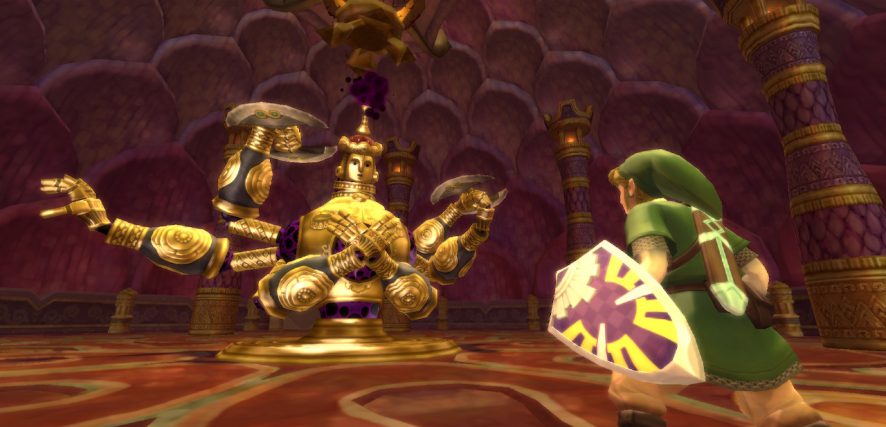
Link squares off with Koloktos.
Another nod to Buddhism is seen in the Ancient Cistern’s most fearsome enemy. The fan-favorite boss, Koloktos, is seated to start the battle with the same pose as what so many Buddhist entities are portrayed within artistic depictions. As a multi-armed giant, Koloktos could have been influenced by one of several prominent figures in Buddhism, but it’s likely that Koloktos takes after the many-armed Avalokiteśvara — one who is on the path to becoming Buddha, and represents great compassion and mercy. One of the Avalokiteśvara, Cundi, usually appears sitting on a lotus flower, the same flower that is frequently seen in the Ancient Cistern, including on the floor of the room where you battle Koloktos.
Even the Ancient Cistern’s eerie, dismal basement is rooted in East Asian Buddhist lore. The dungeon itself is believed to be based on the short story “The Spider’s Thread” by Japanese writer Ryunosuke Akutagawa. In the story, Buddha peers through a lotus-filled pond to observe a criminal named Kandata in Hell. Because Kandata chose not to crush a spider underfoot as he walked through a forest, Buddha decides to lower a spider’s thread into Hell to offer the man a chance to escape. Kandata eagerly climbs up the silky strand, but eventually, many other condemned souls begin climbing it behind him (just as the Cursed Bokoblins do in Skyward Sword). He declares that the spider’s thread is only for him to climb, and in his act of selfishness, the strand breaks, casting him back down to Hell.
Dragons of the East
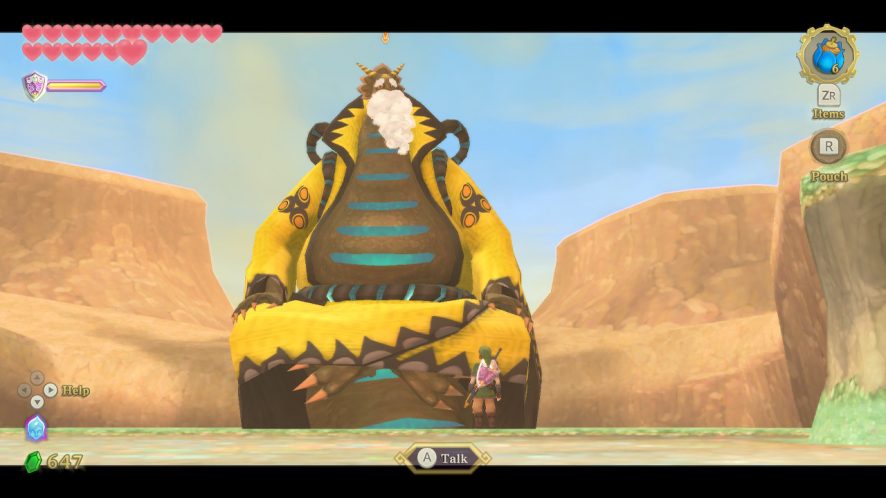
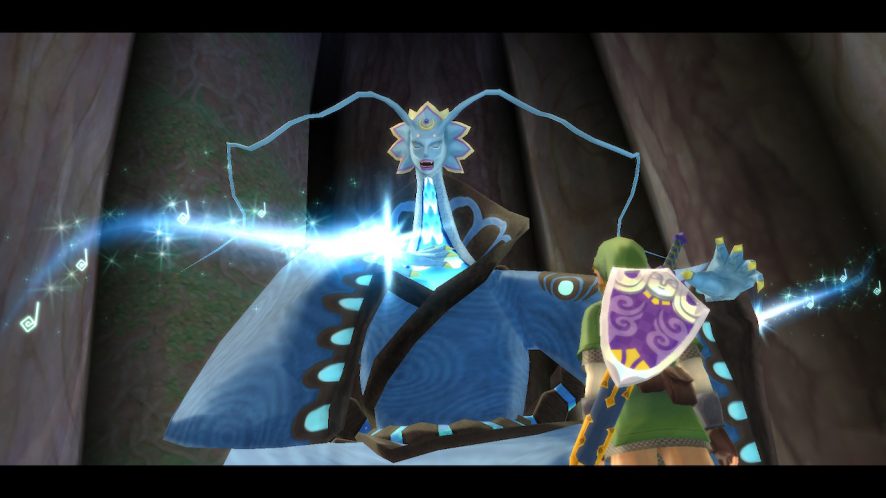
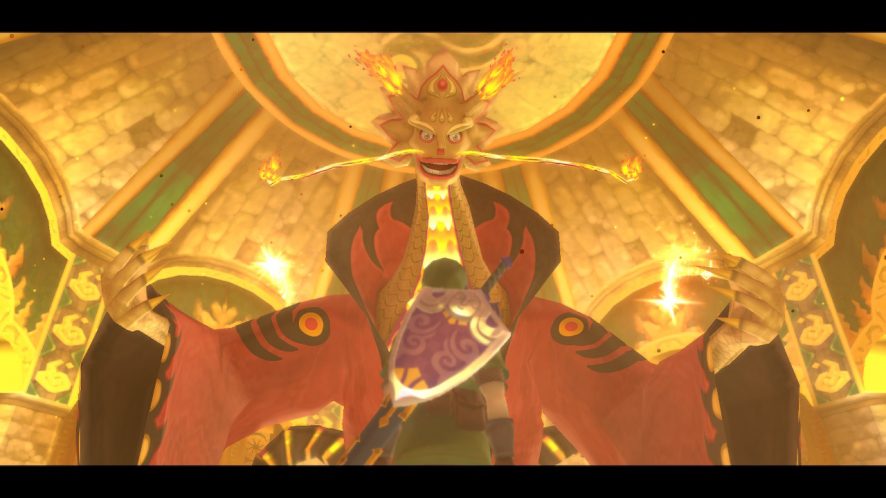
Faron, Eldin, and Lanayaru sport some of the most memorable designs of any of the many dragons in The Legend of Zelda. As is common with Asiatic dragons, they have serpentine bodies and can fly despite having no wings. What is most unique about them, however, are the human qualities of their appearance. Their faces are decidedly more human than reptilian, lacking pronounced snouts and being very expressive. In Eldin’s and Lanayaru’s case, they have their own versions of facial hair. Eldin has a fantastic handlebar mustache made of flame, while Lanayru has a flowing beard made of out clouds. All three dragons wear colorful haori jackets with hakama, which are tied by belts similar to the sacred shimenawa ropes of the Shinto religion. They cross their arms and assume a cross-legged sitting position, even while hovering in midair.
Asiatic dragons are also a frequent motif in the Earth Temple. They are painted on the entry doors and have numerous statues carved in their image throughout the dungeon. These dragons have a more animalistic appearance than the three dragons in service to Hylia, with long snouts, fang-filled mouths, whiskers, and no clothing to hide their sinuous bodies or three-clawed arms.
Looking to Southeast Asia
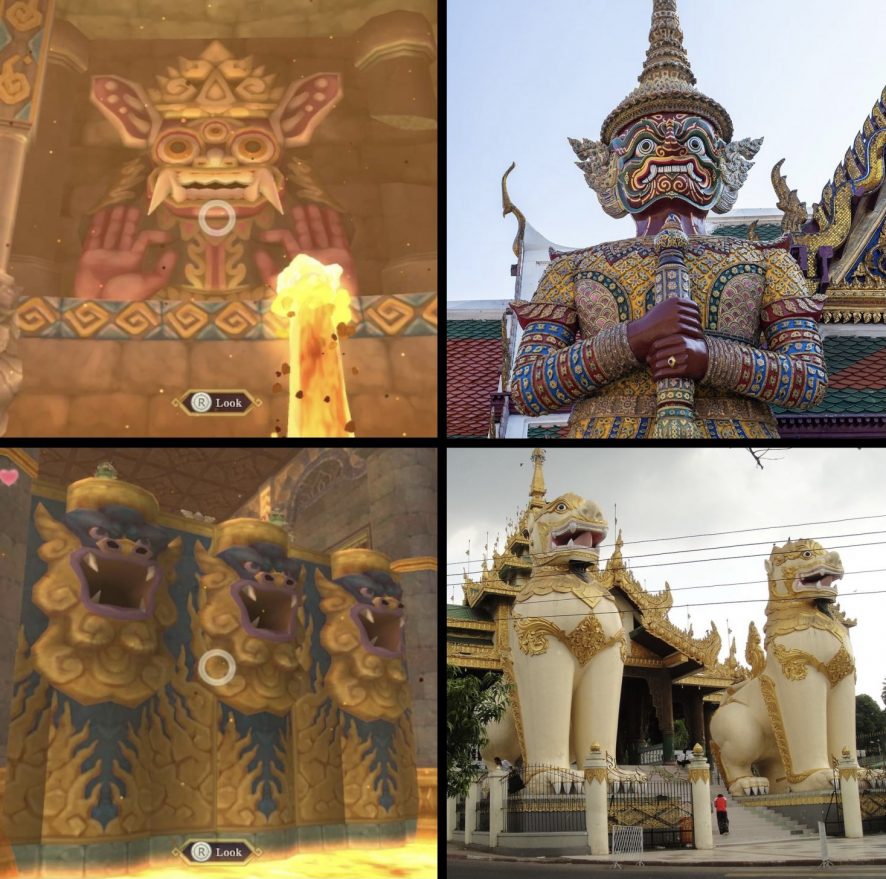
Other features found inside the Earth Temple seem to refer to figures and concepts more common in Southeast Asia, particularly with Hindu and Buddhist mythology of those regions. One recurring image in that magma-filled dungeon is that of a demonic creature that is somehow hideous and regal at the same time. With their long ears, jutting fangs, and crowned heads, these carvings bear an uncanny resemblance to the guardian Yaksha statues that surround the famous Wat Phra Kaew Buddhist temple in Bangkok, Thailand. They may also take after the Rakshasas of Buddhist and Hindu myth. Rakshasas of Bali, in particular, are commonly portrayed with a third eye like the Earth Temple’s unidentified creatures have.
Earth Temple carving and Yaksha (top), Fire Sanctuary carving and Chinthe (bottom)
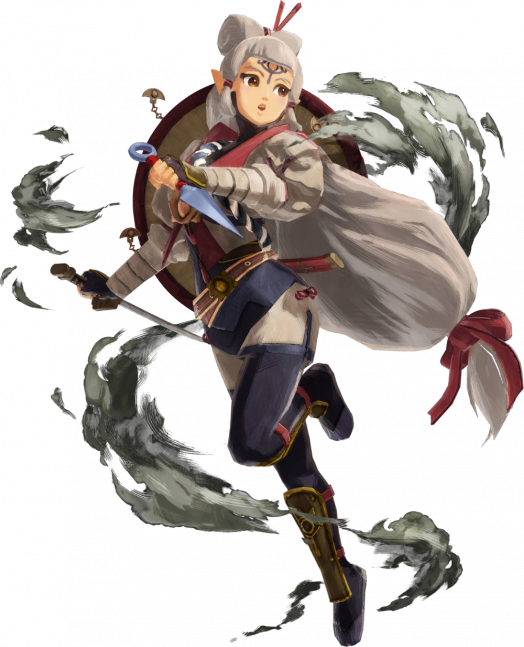
A more metaphorical “third eye” is possibly what the symbol on Impa’s forehead alludes to. Ajna, also known as the third eye chakra in Hinduism, is believed to be located between the eyebrows on the human body. One of Ajna’s functions is to help a person receive messages from the past and from the future, which Impa thematically fits into as a character who assists Link and Zelda throughout different eras of time.
If the Earth Temple was in fact aiming for a specific focus on Southeast Asian themes and trappings, the images of serpentine creatures may have been no coincidence, either. Appearing above doorways and as pathways, the numerous depictions of snakes could very well be inspired by Naga, the serpent deity of many Southeast Asian religions that is revered in some belief systems, and feared in others.
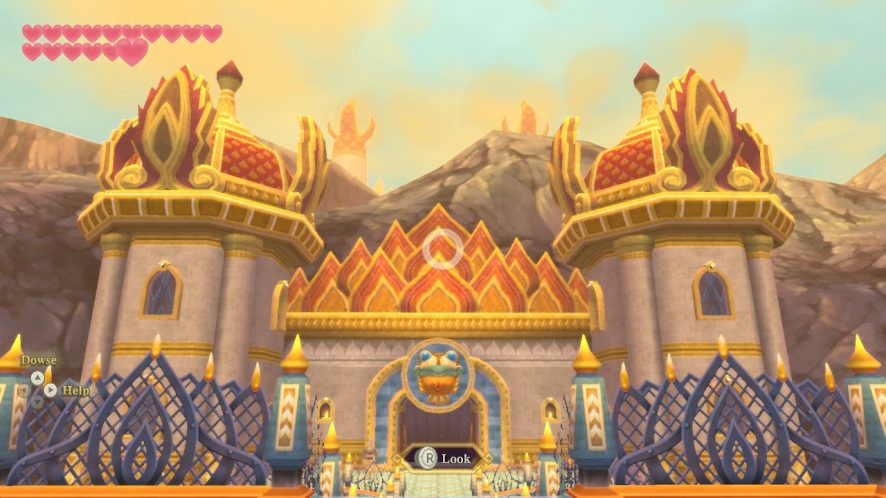
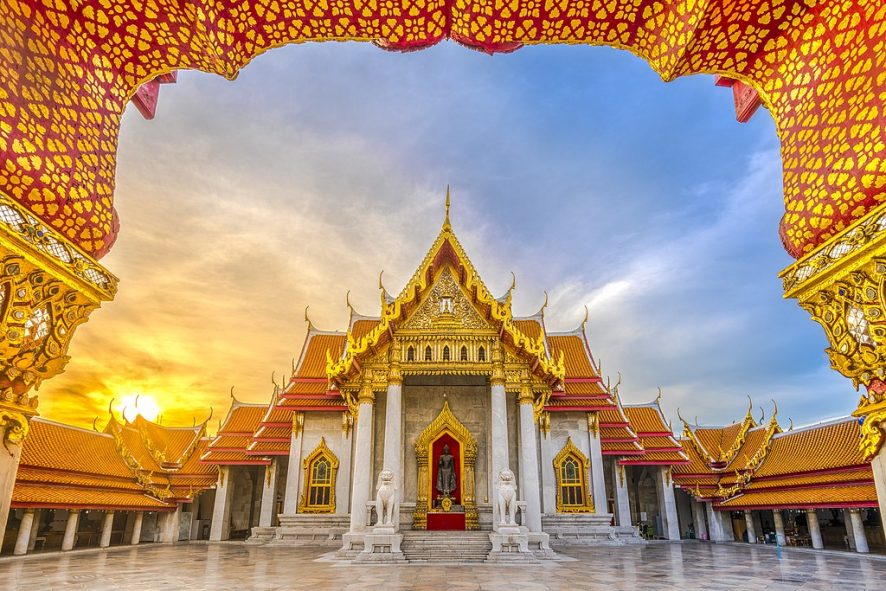
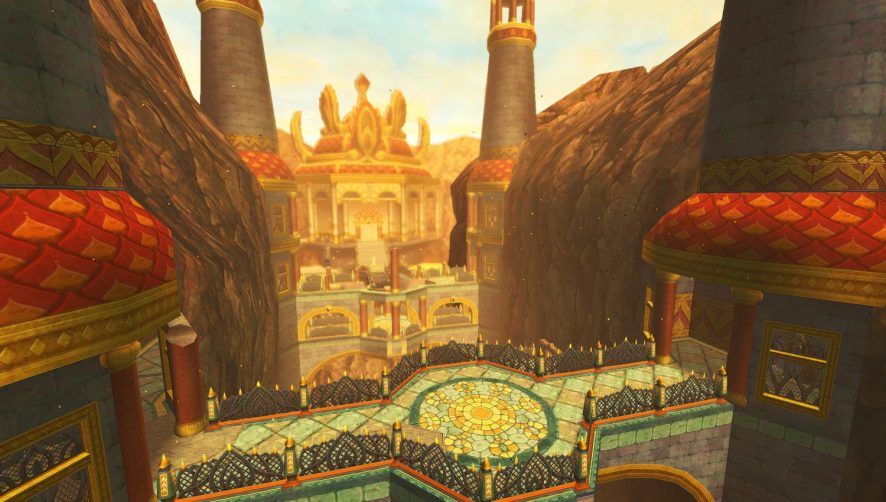
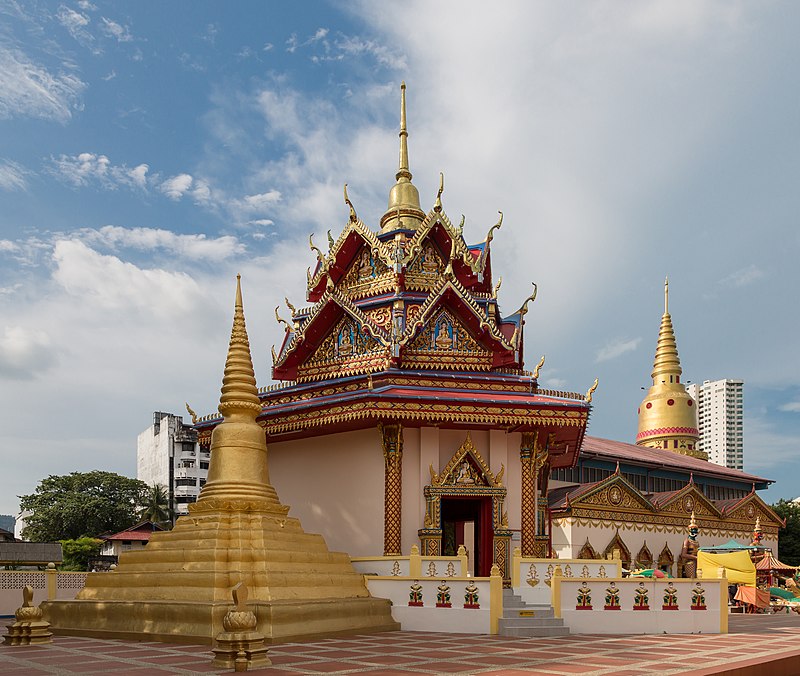
Not far from the Earth Temple in the Eldin Province is the Fire Sanctuary, a dungeon whose design is very similar to the architecture of Buddhist temples in Thailand, Malaysia, and other Southeast Asian nations. Sharp, pointed pinnacles on its rooftops and towers reach skyward not unlike the shape of flames, which is further accentuated by the fiery red and gold color scheme. It’s impossible to look at the Fire Sanctuary and not think of iconic Buddhist temples like Wat Benchamabophit in Thailand, or Wat Chayamangkalaram of Malaysia.
There may not be abundant serpents or Yaksha imagery in the Fire Sanctuary, but it does have its own intriguing creature design that appears at different intervals. The head of some mammalian beast is regularly found upon the walls of the Fire Sanctuary, with lava flowing from its gaping mouth. It has both canine and feline qualities, as do several mythical creatures in East Asian mythology, like the Imperial Guardian Lions of China, the Komainu of mainland Japan, or the Shisa of the Ryukyus. But in following the mythology of Southeast Asia, they may just as well take cues from Barong, the panther-like entity of Balinese legend, or the Chinthe, the highly stylized artistic depictions of lions in Burmese folklore.
A precedent to be followed
The Legend of Zelda’swillingness to explore Asiatic influences for significant parts of its world-building didn’t end with Skyward Sword. If anything, Skyward Sword started a trend for future entries to follow.
A distinct shinobi-like quality is evident in Impa and her fellow Sheikah.
When the Sheikah returned to the series in Breath of the Wild — as an entire population, no less — they came as a people whose culture was brimming with East Asian touches. The Sheikah in the Era of the Wilds wear straw conical hats, hair sticks, and skin-tight shinobi-esque outfits. That shinobi nature is on full display when you go into battle with Impa in Age of Calamity, where she wields a kodachi and uses rapid kuji-kiri hand gestures for special attacks.
The Sheikah live in gassho-style houses with thatched roofs, while Kakariko Village is adorned by plum blossom trees, wooden plaque wind chimes, and frog statues for good fortune. Even in death, East Asian inspiration is seen with the Sheikah Monks, whose eternal state of meditation is based on the Buddhist practice of Sokushinbutsu — where monks would undertake extreme asceticism and mummify themselves alive.
Like in Skyward Sword, these instances of Asiatic influence do not extend to the entire setting. Hyrule, itself, does not distinctly evoke Asia; it instead allows the pockets of Asiatic-themed areas to coexist with those modeled after other cultures and other parts of our world. With the series’ next great adventure taking place in the same setting as Breathof the Wild, the impact of Skyward Sword’s commitment to Asiatic themes and iconography will continue to be felt in The Legend of Zelda.
Jeffrey Pawlak
Jeffrey Pawlak is the Features Director for Zelda Universe, and has been a member of the website's community for more than 20 years. He is also a high fantasy author and an aspiring comic book artist.


 by Jeffrey Pawlak on November 18, 2021