The hunt for the 20 masks in Majora’s Mask is easily one of the most engaging collect-a-thon missions in the entire Zelda series. Not only does it sweep you all across Termina to meet colorful characters and solve some truly outrageous problems, but collecting them all also significantly improves your chances of beating the final boss. However, I think most people can agree that the spoils of these missions are a bit of a mixed bag.
Sure, the Bunny Hood is an extremely helpful tool and the Couple’s Mask has a beautiful story attached to it, but some of them (looking at you, Postman’s Hat) are neither particularly useful nor sentimental. One such mask, brought to us by the ever-shady Curiosity Shop Guy, is the Keaton Mask.
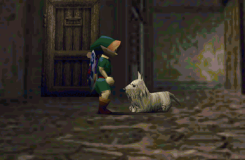
So what can you do once you obtain this item? Well, much like the Postman’s Hat, this mask has only one specific purpose: to summon the eponymous three-tailed fox spirit and take his five-question quiz to win a Piece of Heart. Some of these questions are rather benign, such as what the specialty milk at Romani Ranch is called, while others are unnervingly personal, such as what the Bomb Shop owner calls his mother. But odd as the encounter may be, Keaton still doesn’t have much of an impact in terms of his direct influence on the story.
However, if you possess some basic knowledge about Shinto mythology, the Keaton species does become a bit more interesting. Based on their design and mannerisms, Keaton are most likely based on the “Kitsune,” the powerful and clever fox spirits of Japanese folklore. One of many different “Yōkai,” or supernatural entities, they can be easily recognized by their multiple tails (up to nine) and golden or white coloration. Sound familiar?
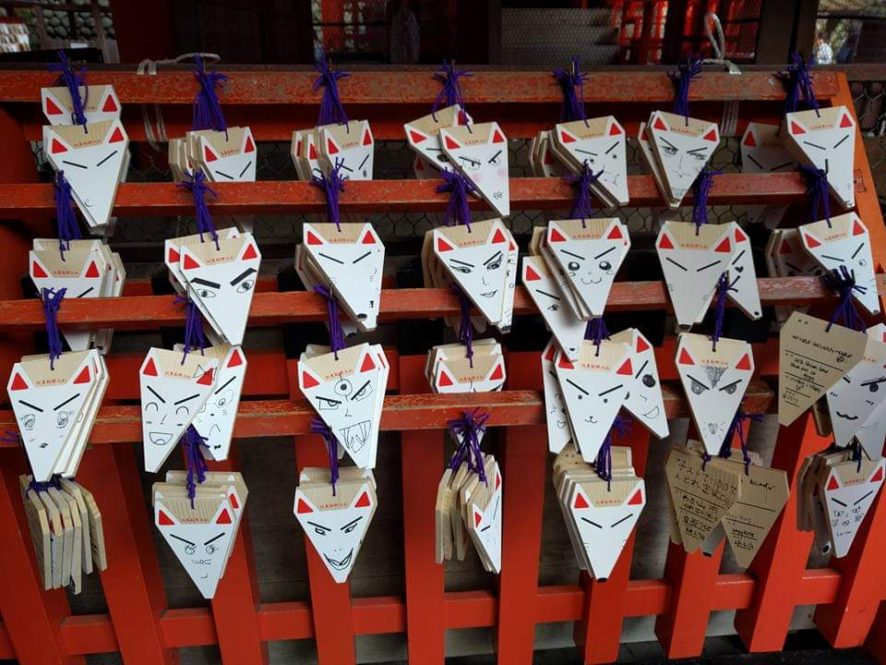
Indeed, the Keaton have too much in common with the Kitsune for this to be a complete coincidence. The fact that Keaton from Majora’s Mask knows so many intimate details about the people of Termina speaks to his vast knowledge and superior intelligence, one of the key characteristics of the Kitsune. He makes the bushes dance before appearing in his circle of stones, a playful and somewhat mischievous trick one would expect from his mythological counterparts. Even the existence of the Keaton Mask ties in with the Kitsune, as fox masks are commonly sold at shops throughout the city of Kyoto, home of the Fushimi Inari Shrine.
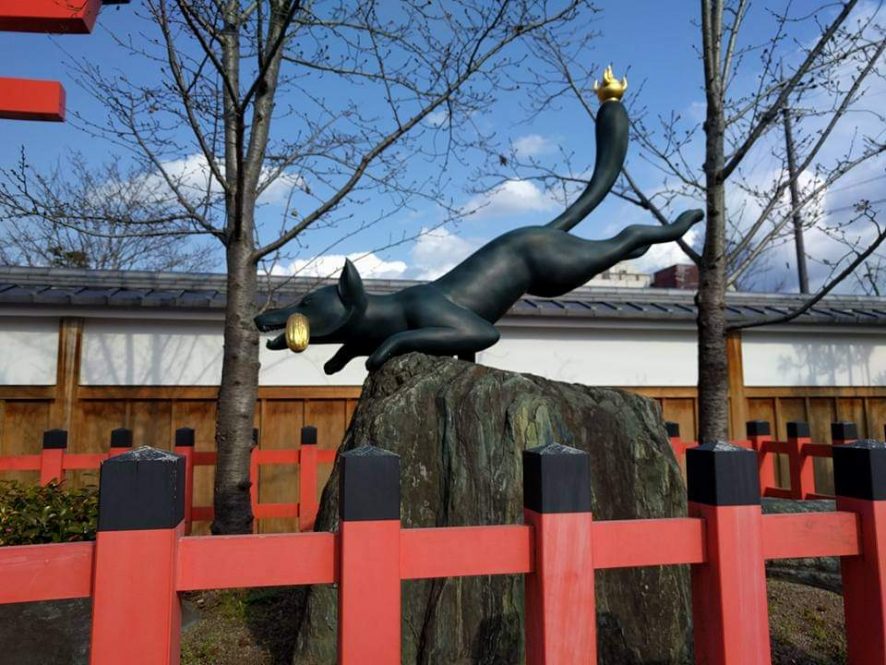
Since the Majora’s Mask Keaton is so kind to Link and gives him a reward that increases his health capacity, he would likely be one of the benevolent fox spirits who serve Inari, the highly revered Shinto god of rice and prosperity. These lucky creatures are said to act as guardians of humanity and messengers to the gods, offering their wisdom to humans who are good and humble. They acquire a new tail every 100 years, though they may only transform into exalted nine-tailed foxes once they reach 1,000 years of age. Following this logic, Keaton’s three tails signify that he would be somewhere between 300 and 400 years old.
However, this is where things get a little unsettling: If benevolent Keaton Kitsune exist in the Zelda universe, then their wicked doppelgangers must exist as well. The Minish Cap pretty much confirms this by featuring the Keaton as thuggish bandits who beat you up and steal your possessions, though that’s rather tame compared to what the Shinto entities do. Demonic Kitsune are known to mercilessly torture people by possessing their bodies, and they will often disguise themselves as beautiful women to play cruel pranks or even murder the humans they target (fans of Ōkami would know about this). So just how many of our beloved Terminian maidens are actually demon foxes in disguise, huh? Cremia? Anju? The Rosa Sisters? The possibilities are endless!
At any rate, the fascinating connection that the Keaton have to Shintoism just begs for them to be featured in future games. The Zelda games usually draw influence from other cultures to tell their stories and construct their lore, so it’s quite nice to see a character that directly references Japan’s own mythology. Hopefully, as time goes on, Nintendo will incorporate more characters inspired by Kami and Yōkai that further illuminate the fantastic culture from which the Zelda series was born.