After spending the last two months basking in the 107°F sunshine, admiring the beautiful view of Smog Mountain from my equally smoggy porch, and breathing in deep, cleansing lungfuls of wildfire smoke, I think it’s safe to say that I could use a vacation from my summer vacation. But wherever shall I go? Hanging out at the beach is so passé, and I’m permanently banned from all California amusement parks after the greatly exaggerated Magic Mountain Mayhem of 2014 (seriously, you can’t prove those were my fingerprints on the funnel cake), so that’s not an option either.
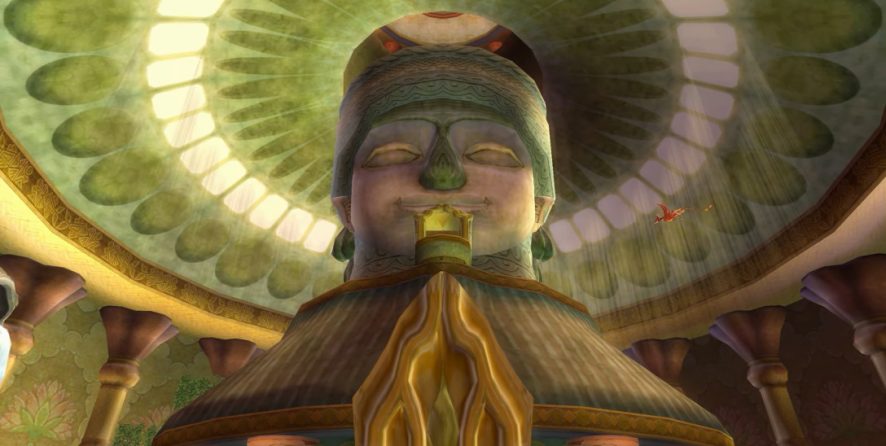
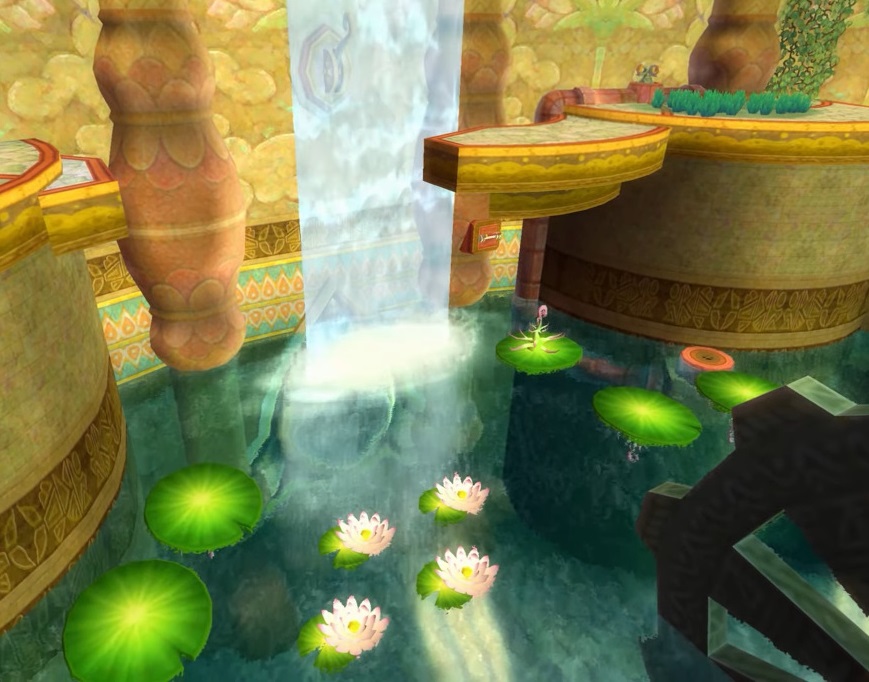
Perhaps this year, instead of indulging my yearning for pure, unfettered debauchery, I should take this rare opportunity to venture away from the disorienting chaos of the modern world and embark on a good old-fashioned spiritual journey. I could learn how to properly meditate, cultivate gratitude, and nurture a sense of well-being that will guide me through my darkest days. And what better place to accomplish this than a glorious golden temple sequestered behind a breathtaking waterfall, with pools of crystal-clear water sprinkled with lily pads and delicate lotus flowers to soothe a weary mind? Indeed, the Ancient Cistern from Skyward Sword, my favorite dungeon in the entire Zelda series, sounds like the perfect destination to relax and do some soul-searching.
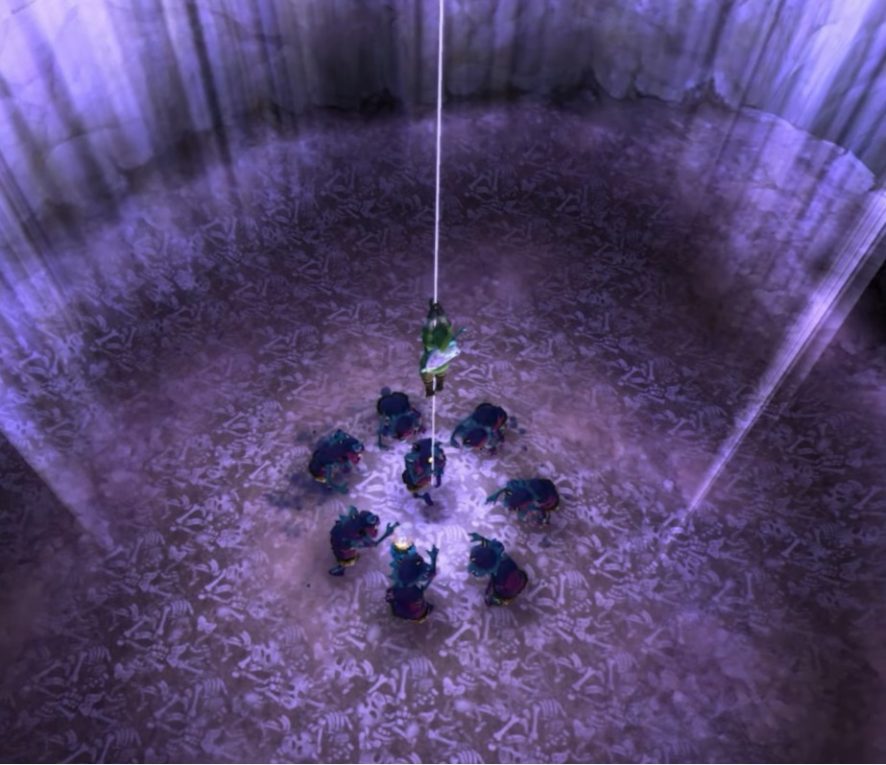
Or at least, that’s what I would say if not for the sinister hellscape that lurks just beneath the dungeon’s deceptively serene waters. I can’t be the only one who was startled by the drastic atmospheric shift when, upon reaching the Ancient Cistern’s lower level for the first time, I was greeted by an otherworldly graveyard oozing with toxic, maroon-tinted water and populated by wretched Bokoblin zombies. But why would a dungeon so strongly associated with vitality and spiritual awakening suddenly transition to an environment completely dominated by death and decay? Was this idea conceived entirely by the game’s developers as a way to make the Ancient Cistern more complex and memorable? Or is there more to this dungeon’s backstory than meets the eye?
To answer that question, we must travel back in time to Tokyo in the year 1918, when a young literary scholar known as Ryūnosuke Akutagawa was just entering his 27th year on this earth. Akutagawa was one of the most prolific Japanese writers of his era, penning over 150 stories in the span of 13 years and leaving behind a legacy as “the father of the Japanese short story.” He held the philosophy that literature should be a marriage between the different cultures of the world, so he often crafted his own stories by melding ancient Japanese tales and religious parables with ideas from a variety of other written works, such as The Brothers Karamazov. And one such story may prove the unlikely culprit behind the Ancient Cistern’s bizarre design: an allegorical cautionary tale about empathy and morality called The Spider’s Thread.

As the story goes, Gautama Buddha is greeting the dawn of a new day in the Pure Land and, while strolling along the shore of a beautiful lotus pond, decides to peer into its mysterious depths. The clarity of the water enables him to see straight into the underworld, occupied by the corrupted souls of humans whose mortal lives were governed by cruelty and greed. Among them is a seemingly unremarkable lowlife named Kandata, whose list of malevolent acts could stretch a mile long. However, the Buddha recalls that this man did demonstrate compassion once in his life: as he was about to step on an innocent spider in the forest, he suddenly withdrew, rationalizing that there was no good reason to kill it. With this in mind, the Buddha decides to offer the criminal a chance to redeem himself and escape eternity in the underworld.
Meanwhile, we readers are treated to a rather vivid description of the grim landscape Kandata and countless other unfortunate souls call “home.” And what exactly does it look like, you may ask? Well, just picture the catacombs of a vast subterranean cave, where no heavenly light can penetrate the darkness and a chilling silence envelops every surface like a shroud. There are only two prominent landmarks in this frightening place: the menacing Hari-no-Yama (literally “mountain of needles”), and — mind you, these are the author’s words, not mine — a vast blood-filled lake.
Is this all starting to sound just a tiny bit familiar?

So, as Kandata is suffering a terrible fate in the depths of this underworld, we finally get to see the Buddha’s plan unfold. Spotting a nearby spider spinning a silk web, he borrows the thread and carefully lowers it into the lotus pond, where it descends thousands of miles until it reaches the land of the damned. Recognizing his opportunity for salvation, Kandata grabs hold of the thread and begins the slow ascent, shocked by the strength of his delicate lifeline. But when he stops for a rest, he glances down and is horrified to see that dozens of other condemned souls are also desperately climbing the thread. Fearful that their added weight will destroy his only hope of salvation, Kandata decides to show his true colors and shake the other climbers off, proclaiming that the spider’s thread is his and his alone. At that exact moment, the thread snaps, and Kandata plummets back into the underworld as the Buddha watches from above, saddened that the criminal’s lack of compassion for his fellows led him to fail the ultimate test.
When you take a fresh look at the layout of the Ancient Cistern, it does quickly become clear that the setting of The Spider’s Thread, as well as its general themes, must have contributed to the development of the dungeon. The Buddhist architecture, beautiful lotus-filled pool, and tranquil ambiance of the upper floor align perfectly with the story’s depiction of the Pure Land, while the crimson lake and desolate atmosphere of the lower floor match up with Akutagawa’s vision of the kingdom of lost souls. And the final icing on the cake is that players can only escape back to the upper floor by climbing up a thin, silvery rope. So while I doubt that Skyward Sword’s development team knowingly paid tribute to this short story through the Ancient Cistern’s fantastic layout, Ryūnosuke Akutagawa is such a prominent figure in Japanese literary history that I would expect his work to have subconsciously influenced their decisions at the very least.
But I do have one lingering question: What does this mean for players who have Link fling the Cursed Bokoblins off the rope as he climbs? From a gameplay standpoint, one shouldn’t even think twice about doing so, since the Bokoblins will otherwise overtake our hero and send him painfully plunging back into the ground. But what about from the perspective of this story? If Kandata loses his chance at reaching the Pure Land by refusing to share the lifeline with other poor souls, then what happens to Link, and by extension us, when he shoos away the Cursed Bokoblins? Let that question sink in for a minute, and see if you’re just as unnerved as I was when I first stopped to think about it.
So even though it looks like I won’t be spending my vacation at Lake Floria’s hidden shrine after all, that doesn’t mean that I depart empty-handed. Discovering The Spider’s Thread through my research on Zelda trivia was a truly fascinating experience, and the story itself, while unsettling at times, is deeply poignant and thought-provoking. It led me to contemplate how interconnected we all are, and how, no matter which faith or creed we adhere to, compassion should be the ultimate guiding force in our lives. Maybe then, we’ll all have the ability to attain a sense of inner peace.
And before I forget, if you’re interested in reading the English translation of The Spider’s Thread for yourself, I recommend this one by Timothy M. Kelly. Not only is it an excellent translation, but Kelly also delves into the history surrounding the short story and offers some engaging commentary. Check it out and learn something new!