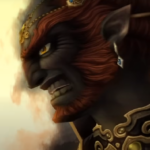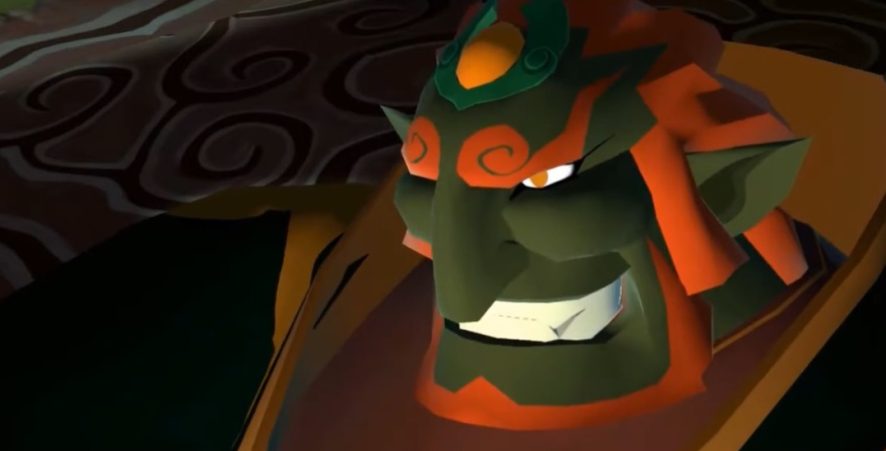
Ganon has always been an excellent example of what the final boss of a video game should look like. The grotesque, hulking monstrosity grinning down maliciously at our small hero, with deadly canines glistening against his hideous boar-like face, is a truly nightmarish vision to behold and makes for a perfect epic showdown to conclude a long, difficult adventure. He is the culmination of all the evil we have faced throughout our journey, striking both fear and hatred into the hearts of the gamers who have borne witness to his destructive rampage. Truly, Ganon has everything you could possibly want in a video game antagonist.
So with that in mind, how could it be possible that his human counterpart Ganondorf is, overall, one of the weakest villains I’ve come across in gaming?
I think the answer to that paradox lies in how I view human characters and monster characters in fictional stories. Because monsters are these twisted, beastly abominations that have absolutely no connection to our everyday reality, they can fit believably into almost any role in a fantasy setting. Want an utterly terrifying entity who delights in torturing others and suffers no remorse? A monster can fill that role beautifully, as is the case with Majora from Majora’s Mask. Or perhaps you want the exact opposite, with a gentle character who looks frightening but treats others with kindness? Just look at Batreaux from Skyward Sword. A monster can be black or white or anywhere else on the spectrum of character development, and I will usually embrace it.
However, things are not nearly that simple once we enter the real world of humans. Humans are incredibly complex creatures whose personalities and world views are molded by their unique experiences in life. Their actions are motivated by so many different emotions fighting for control, from joy to grief to rage to despair. And as humans, we have an innate desire to connect to and understand one another, no matter how different we may be.
Thus, from my perspective, a human character cannot be believably written as a one-dimensional villain who desires power, wealth, etc. simply because they are “evil.” And yet, that’s more or less what Ganondorf is in Ocarina of Time and Twilight Princess. The only side of him we get to see in those games is the one that hungers for power and thirsts for blood, and the lack of context makes his motivations seem incredibly shallow. Where’s the nuance? Where’s the relatability?
Well, that’s where The Wind Waker comes in.
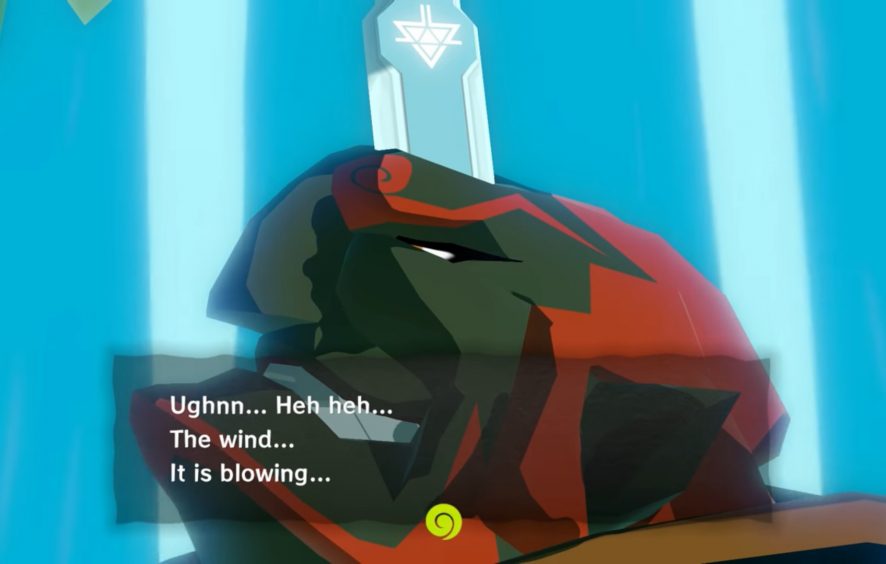
As the vast ocean slumbers under a blanket of darkness and the death throes of the hateful Helmorac King still echo through the night sky, we enter the highest room atop the dilapidated Forsaken Fortress. A tall, familiar man dressed in regal attire gazes off at the distant horizon, almost blending in with the shadows surrounding him as he loses himself in thought. And then, when he finally sees fit to acknowledge our presence in the room, his tone isn’t the one we expect from him. There are no snide quips or condescending sneers, no flashy displays of magic — just a rather subdued acknowledgment that we did a good job infiltrating his hideout. His primary agent of misery has just been obliterated, and he acts as though he knew it was going to happen the whole time.
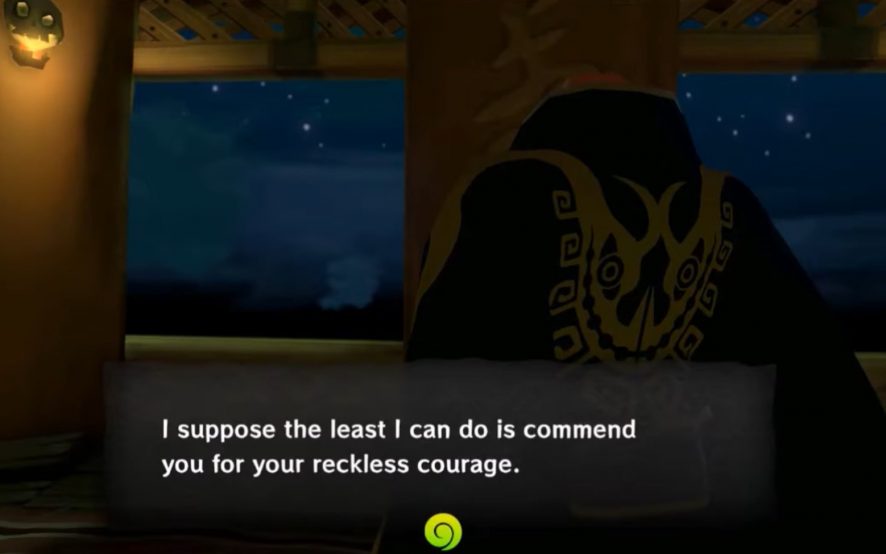
Thus the stage is set for Ganondorf’s final chapter of life. Gone is the arrogant, brazen young Gerudo who delighted in showing off his skills and allowed blind hatred to guide his aimless path of destruction. This Ganondorf is much older, his youth and vigor lost to the years imprisoned in the Sacred Realm. But during those years, he had nothing but time to mull over his past mistakes and narrow down his lofty ambitions into one singular, concentrated goal: take ownership of the land that was always meant to be his. And by the time he emerged from his long imprisonment, his wild, impetuous nature was tempered into a focused, razor-sharp mind filled with hard-earned wisdom. Now he works quietly in the shadows, carefully pulling on loose threads to slowly unravel the peaceful world around him. Every move is calculated, every subtle nod of the head designed to make his pawns dance a certain way at a certain time. Even our heroes are unknowingly being pulled by the strings of his ultimate scheme.
The King of Thieves is no more. Ganondorf has now evolved into the Puppet Master.

And yet, something feels off. Underneath this calm, collected persona seems to dangle a loose thread of his own, threatening to rip him apart at the seams and undermine everything that he has worked so hard to cultivate over the years. This strange modern Hyrule is so far removed from the one he once conquered, and the children of the Great Sea possess a defiant, adventurous spirit that is actually strengthened by the hostile ocean world rather than diminished. And somehow, that accursed king of old has found a way to defy death and guide the new Hero of Legend on his journey. The whole situation is rather bewildering to him. What if he isn’t capable of manipulating the princess and her knight to serve his purposes? This is likely the last chance he’ll ever have to get what he truly wants. He can’t fail this time.
Following the initial encounter at the Forsaken Fortress (which luckily didn’t end with our Gerudo chum being grilled to a toasty crisp), we don’t see Ganondorf again until after Link gathers the pieces of the Triforce of Courage and returns to the sealed kingdom beneath the waves. Here his confidence seems to have returned, as he mocks Link for believing that Hyrule Castle could protect Princess Zelda while he was gone. He yanks the string of Link’s emotions, knowing that the gullible boy’s affection for the pirate girl will lead him straight into a carefully laid trap. How very predictable that the wielder of the Triforce of Courage would be so reckless and short-sighted. Perhaps the humans of this world haven’t changed as much as he thought.
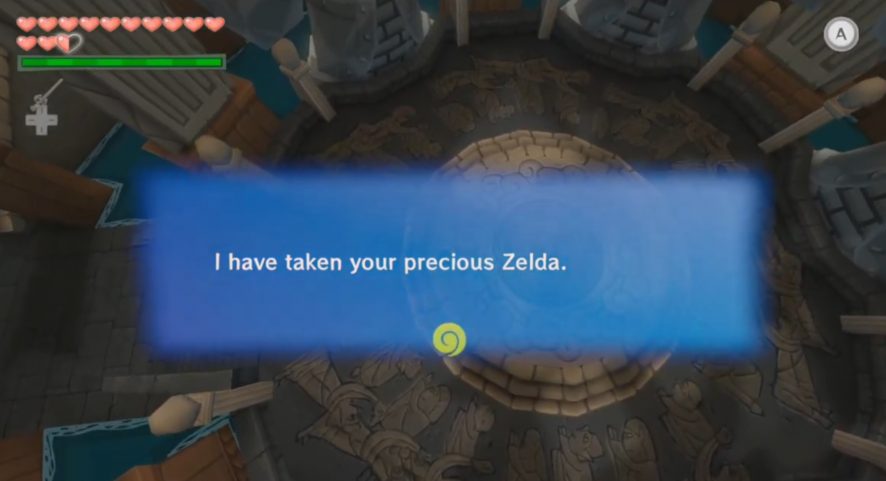
Link bravely navigates his mortal enemy’s lair until he finally reaches its cavernous boss chamber, where he finds Zelda sleeping peacefully as Ganondorf studies her intently. He can see into this unusual girl’s dreams, and they utterly confound him: All she dreams about are these endless, empty oceans that yield nothing but water. Nothing to help sustain life, nothing to facilitate growth or nurture potential. Yet its denizens are perfectly content to just cling to these isolated rocks above the surface? Oh, if only they knew what their ancestors lost. If only they knew what their beloved gods stole from them!
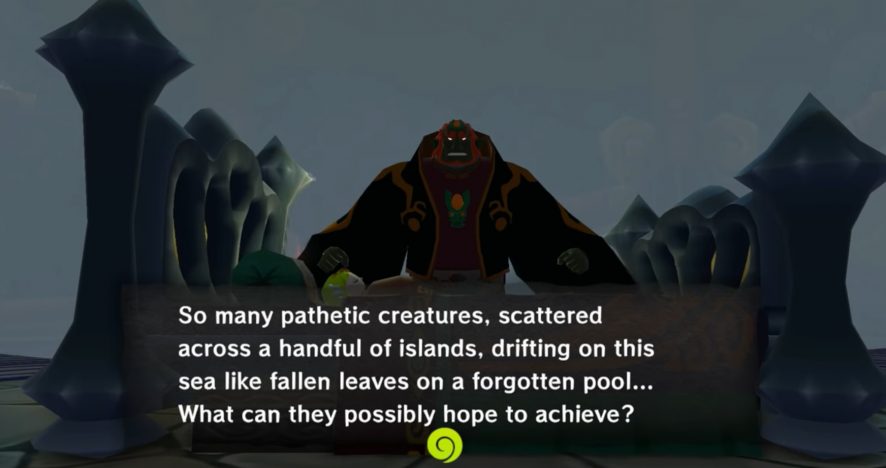
At last, the full picture of Ganondorf’s true motivations starts to come into harsh focus. For the first time, the Gerudo lord opens up about his past, and we find out that his long journey has been one of deep sorrow, bitter resentment, and desperate longing. In the desert where he grew up, the wind was a demon who took on many forms, from a searing blade that scraped the land raw to a frozen arrow that pierced the hearts of his fellows. But from the first moment he set foot in the land of Hyrule, he felt something unfamiliar on the wind: the gentle breath of life, soft against his battered skin. It carried the promise of a prosperous future in this paradise where Death didn’t stalk its denizens at every turn. And from that moment on, Ganondorf knew that he must claim this land as his own, at any cost.
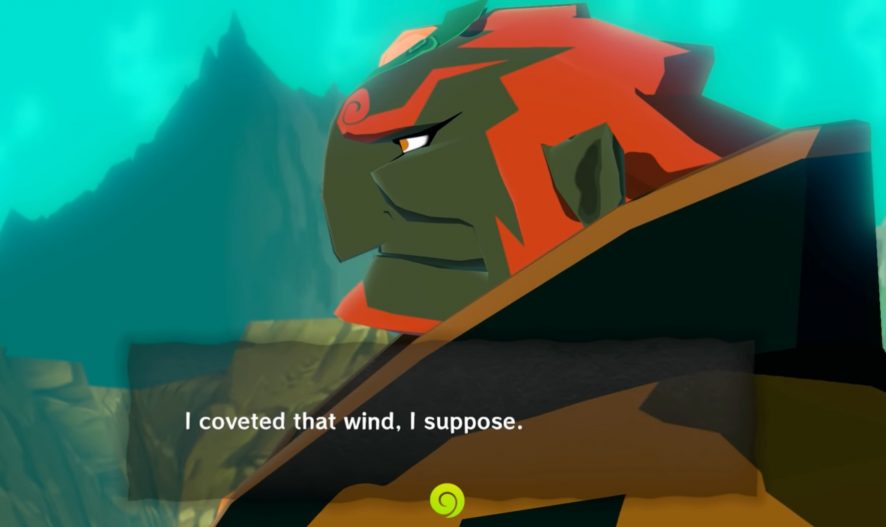
With this new obsession also came the first spark of anger that would eventually erupt into a raging wildfire of hate. Why did the goddesses bless the kingdom of Hyrule with beauty and peace, while leaving Ganondorf’s native land to suffer in agony under the burning sun? That was cruel enough on its own, but then they had to take it one step further and drown the beautiful green land that he so deeply coveted. He just can’t understand how these foolish descendants of Hylia can continue to blindly worship gods who abandoned them, who destroyed their future under the guise of “protection.” And more importantly, how do they manage to not just survive, but thrive?
Ah, no matter, though. Now that Ganondorf has managed to gather all three of the Triforce holders together, he can finally make the gods atone for their actions. At long last, the kingdom of old will be revived and placed in the hands of its rightful owner. That wind that brought life to Hyrule will soon be his!
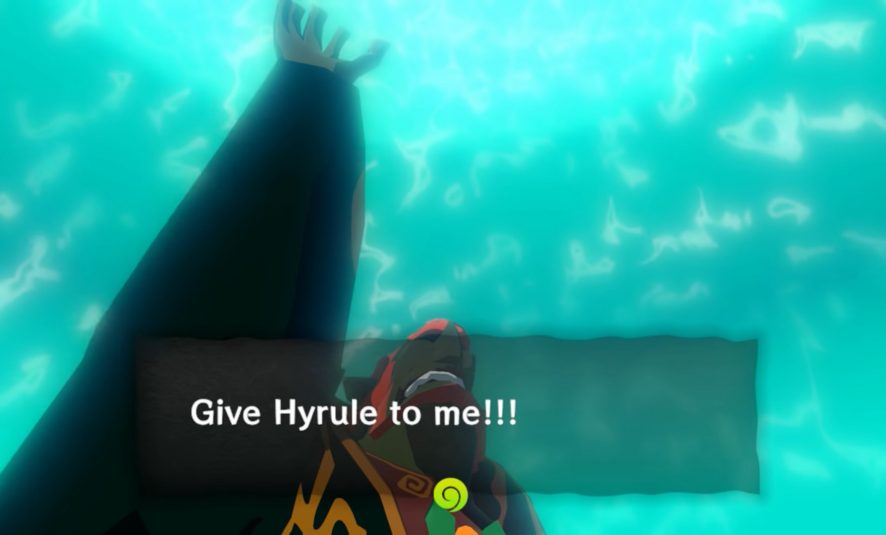
But, alas, it was never meant to be. Just as Ganondorf finishes shouting his demands to the skies above, we see that someone has already beaten him to the Triforce. King Daphnes Nohansen Hyrule, a man also trapped in the past alongside the Gerudo king, has accepted the painful truth: Old Hyrule is gone, and if the children of the Great Sea are to pave the way for a brighter future, the relics of the past must be erased. So he requests that the kingdom be swallowed by the sea, never to be touched by the breath of life again.
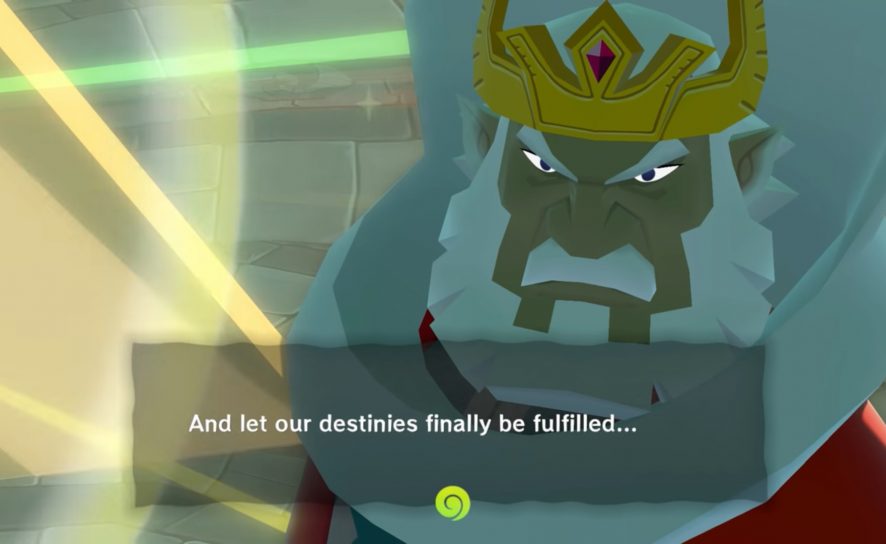
And as the enormous columns of sea water come crashing down around him, what can a tired, broken man like Ganondorf do but maniacally cackle at the sky above? This moment, in particular, proved pivotal in how I felt during the epic final showdown that followed. I knew that I wouldn’t get the same feeling of proud satisfaction that I did from defeating Ganondorf in the past. This seemed more like a somber execution to put a long-suffering man out of his misery. Every time the Master Sword plunges through the Gerudo king’s head and transforms him into stone, all I feel is sadness.
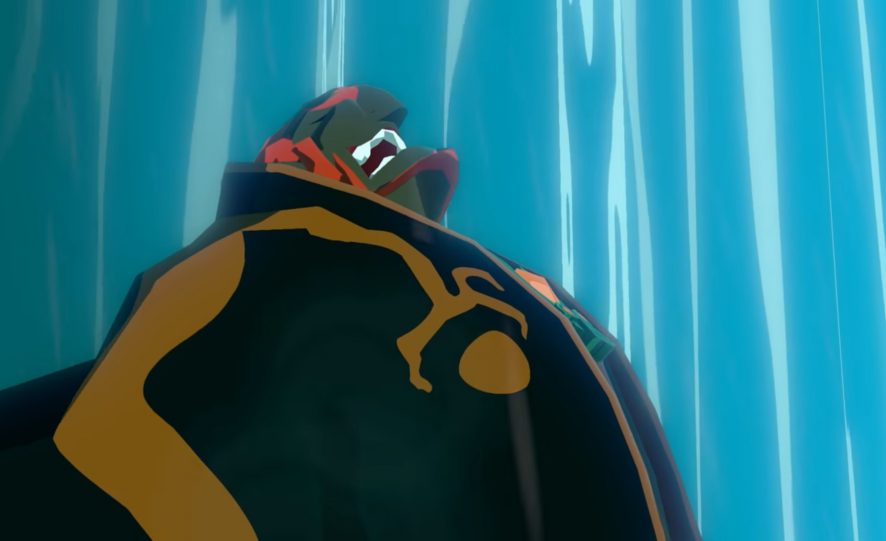
One day, I really would love to see Ganondorf become a fully evolved human antagonist. There is still so much untapped potential for exploring his backstory and deepening his emotional complexity so that we will no longer see just a greedy, remorseless megalomaniac, but a flawed human being with desires and motivations that we can relate to and sympathize with. But in the meantime, I think The Wind Waker’s portrayal of Ganondorf is a magnificent start. It gave flesh and blood to a formerly two-dimensional villain that I previously couldn’t feel empathy for on any level, transforming him into a fascinating character that I genuinely wanted to understand and learn more about. Of course, I have serious doubts that we’ll ever see Ganondorf as the tragic antihero I so dearly wish he could be, but this game does give me a reason to dream.