Given the narrative history of using monstrous spiders in fantasy tales, it was only natural that an enemy would be created for The Legend of Zelda series that followed this pattern. The Skulltula, an arachnid beast that is meant to intimidate players, has held a prominent place in the Zelda bestiary for more than twenty years.
The Legend of Zelda: Ocarina of Time
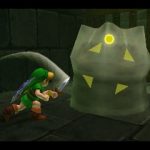
Skulltulas made their first appearance in 1998 in Ocarina of Time. These beasts were massive spider-like creatures with bodies that resembled the shape and color of a human skull. They also exhibited traditional arachnid features, including long legs and a mouth lined with sharp fangs.
To hunt, the Skulltulas hung from the ceilings and waited for prey to wander beneath them. Once a victim approached, the Skulltula would drop down from a line of webbing to bite and claw at them with their fangs and legs.

The Skulltula’s threat level was dependent on what weapons Link had at his disposal. When the Skulltulas face forward to Link, their skull-shaped armor protects them from sword attacks and weaker projectiles like the Deku Seeds. If Link is patient, the Skulltula will eventually pivot on its webbing, exposing its weak underbelly in the process. Link could then use nearly any weapon to strike it down.
The Legend of Zelda: Majora’s Mask
The Skulltulas returned two years later in Ocarina of Time‘s direct follow-up, Majora’s Mask. Common for many of the enemies in the game, the Skulltulas were reused assets from Ocarina of Time. Their physical appearance remains unaltered, but the Skulltulas gained a new attack in the form of a spin attack, and they also developed a resistance to attacks from the Hookshot.

The Legend of Zelda: Twilight Princess
The next iteration of the species came in Twilight Princess. Redesigned both in terms of visuals and behavoir, these Skulltulas were larger and more aggressive than their predecessors.

The Skulltulas of Twilight Princess were active hunters that would prowl on the ground and pursue Link. Once they drew near, they would attack by biting with their fangs. They were also more durable than the older Skulltulas and left fewer chances to find openings in their exoskeletal armor.
Link’s best option to defeat these creatures was to target their heads which, while a small target, were not encased in their durable armor. Stabbing at their heads, or using a shield attack to daze them, were Link’s best and most reliable options to land a decent hit.
The Legend of Zelda: Phantom Hourglass
The next appearance of the Skulltulas came only one year later in Phantom Hourglass. This marked their first inclusion in a Zelda game made exclusively for a portable system.
Skulltulas behaved almost exactly the same as they did in Ocarina of Time and Majora’s Mask. They would hang from the ceiling, with only a small shadow beneath them to signify their presence. Once Link came near, they would drop from the ceiling on a line of webbing to slash at him with their legs.

These Skulltulas were prominent obstacles in the Ghost Ship dungeon. While escorting any of the Cubus Sisters, the appearance of a Skulltula would cause the sister to both shriek in fear and cower in place. Killing the spider was the only way Link could free the sisters from this state of panic.
The Legend of Zelda: Spirit Tracks
The same Skulltulas from Phantom Hourglass returned two years later in Spirit Tracks. The only difference is that they were only encountered in the game’s overworld rather than in dungeons.
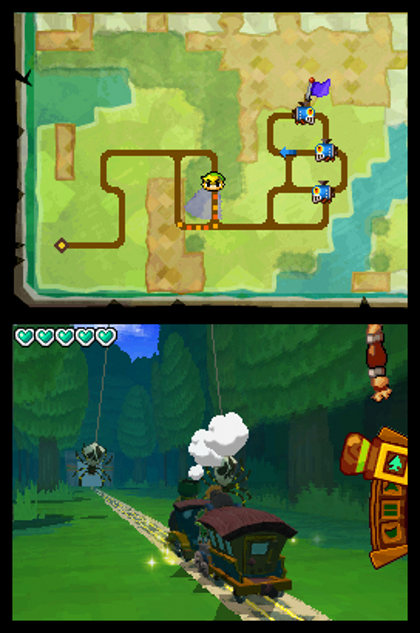
Lurking in closed-off portions of Hyrule’s railways, the Skulltulas would drop from trees and cavern ceilings to attack the Spirit Train. These Skulltulas were much larger than other versions of the species, but their threat level was relatively minor, thanks to Link’s ability to easily destroy them with the train’s cannons.
The Legend of Zelda: Skyward Sword
Currently, the last version of the Skulltula is the one seen in Skyward Sword. These Skulltulas were more aggressive and resilient than previous types.
Found lurking in multiple dungeons, the Skulltulas employed a mix of attack strategies borrowed from their predecessors. They also exhibited original behavior, such as attempting to grab hold of Link to restrain him as they attacked.

They were also more elusive and defensive, which made it difficult for Link to find an opening to attack while also avoiding their pursuit. As with most other Skulltula variants, their undersides were their weak point. To access this vulnerability, Link’s best option was to land any sword strike that could cause the beast to flip upwards. This would flip the spider over, revealing a vital weak spot on its abdomen.
Though the Skulltulas have not appeared in a game in recent years, their purpose as a menacing arachnid beast has allowed them to become a popular enemy among fans. Given many people’s fascination with real-world spiders, there is little chance that these creatures will fail to return at some point to test the courage of both Link and the players.
(For more information on the Skulltulas and the other fascinating creatures of Hyrule, visit Zelda Wiki.)