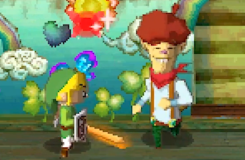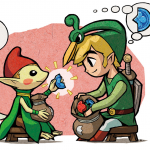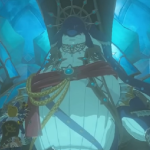
Although King Mutoh and the Four Knights of the Cobble Kingdom are shrouded in mystery, the names of these characters are eerily familiar to another colorful cast from prior Zelda games.
On page 285 of The Legend of Zelda: Encyclopedia we read, “The names of the ghosts who haunt the Cobble Kingdom come from carpenters who appear in Ocarina of Time, Majora’s Mask, and other games in the Zelda series [Oracle of Ages and The Minish Cap]. King Mutoh is the leader of the Cobble Knights in Phantom Hourglass, much like Mutoh leads the carpenters of other titles.”
This revelation begs the question: Which prior Zelda game served as the inspiration for King Mutoh’s name in Phantom Hourglass? The obvious choice is The Minish Cap because the names of King Mutoh’s four knights closely resemble those of the four carpenter apprentices. In spite of these similarities, I believe that the inspiration behind King Mutoh’s name is a subtle callback to Eiji Aonuma’s pitch for Majora’s Mask.
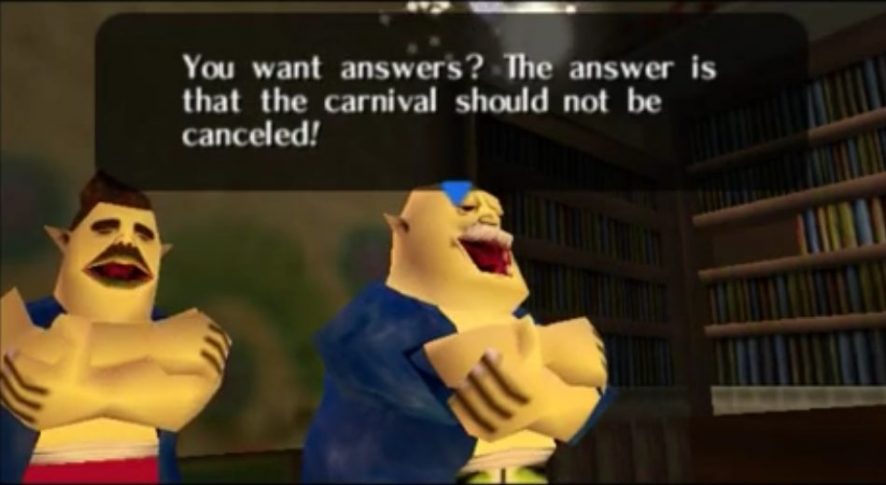
In Majora’s Mask, Mutoh’s character is more outspoken than in other Zelda games. For example, Mutoh argues with the mayor about the mandatory evacuation of Clock Town. Despite the impending doom, Mutoh wants to stay behind to complete the festival tower. From this single engagement, we learn much about Mutoh’s character. While his persistence and dedication are highly transparent, Mutoh’s courage to disagree with authority by voicing an opinion is more subtle and curious.
Which brings us to Eiji Aonuma. In a 2004 interview at the Game Developers Conference, Aonuma explains, “After finishing work on Ocarina of Time, Mr. Miyamoto instructed us to use the Ocarina of Time engine to create Ura Zelda — Ocarina’s second version with rearranged dungeon gameplay. I turned down Mr. Miyamoto’s offer and proposed that if anything, I wanted to make a new Zelda game.”
Similar to Mutoh disagreeing with the Clock Town mayor, Aonuma’s decision to turn down a proposal from a video game icon like Shigeru Miyamoto could not have been easy. Although he gave Aonuma a compressed timeline to develop the game, Miyamoto must have admired his protégé’s courage, because he promoted Aonuma to series director for Majora’s Mask.
Aonuma succeeded and became the series producer in 2007 for Phantom Hourglass, but it was difficult for Aonuma to follow in Miyamoto’s footsteps. In a 2007 E3 interview, Aonuma said, “Having completed Phantom Hourglass, I feel that this is the first time I can really say this. Up until working on Phantom Hourglass, I tried to stay true to Miyamoto’s image of the Zelda universe. But with Phantom Hourglass I feel like I was able to take Miyamoto’s original Zelda and add my own flair to it.”
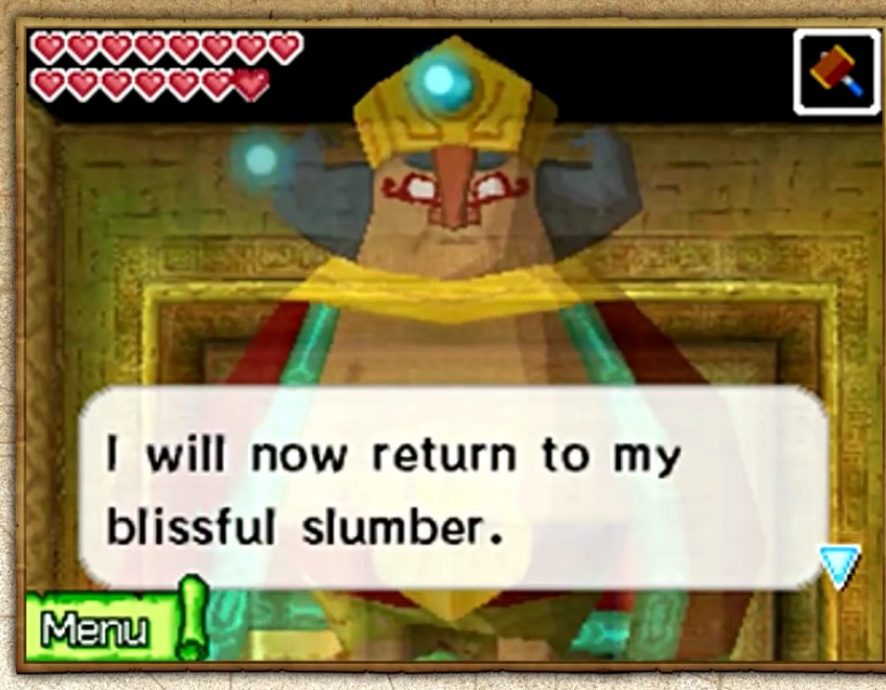
As he had done previously with Majora’s Mask, Aonuma plucked up the courage to pursue his own vision in Phantom Hourglass. While Mutoh is simply a name shared between a king and a carpenter, I believe Aonuma included the reference in Phantom Hourglass as a reminder of his early days working on Majora’s Mask.
With the internal challenges he overcame, it should come as no surprise that Phantom Hourglass is Aonuma’s favorite Zelda game. Perhaps Mutoh is also his favorite character, but I cannot help but wonder which inspired Aonuma more: the king or the carpenter?