There have been many real-life places that have inspired the Zelda series. As it turns out, Koei Tecmo developers Ryuta Matsushita and Kimiki Aoyagi, and Zelda developers Hidemaru Fujibasashi and Eiji Aonuma have confirmed that the Hyrule Castle location from both the Wild Era and the Ancient Era is inspired by real life Japanese castles from historical times in an interview with 4Gamer.net.
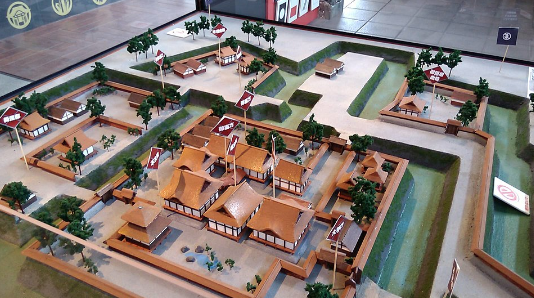
“Fujibayashi is knowledgeable about castles,” said Matsushita. “When we talked about Hyrule Castle [for developing Hyrule Warriors: Age of Imprisonment] earlier, it was all over in one turn, with him saying, “The image is Tsutsujigasaki Castle,” and I said, “Oh, I understand.” It was a perfect match.”
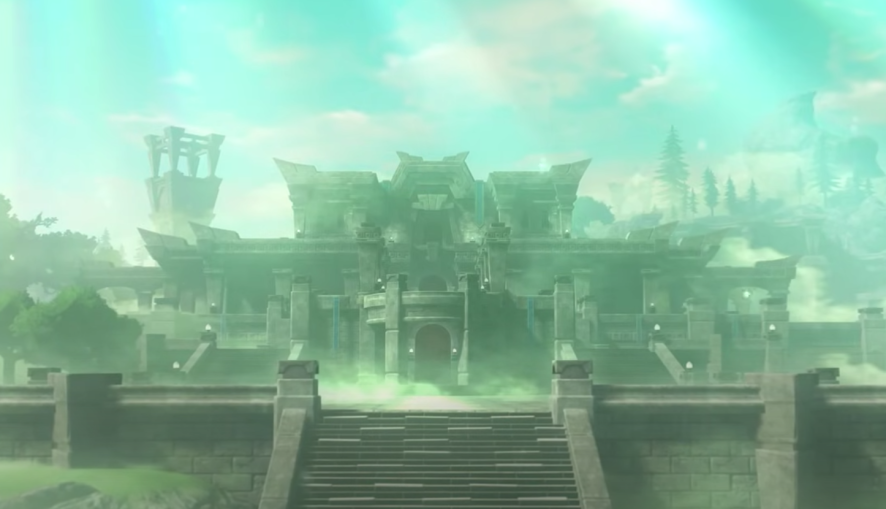
According to Aoyagi, Mr. Fujibayashi had “particular attention to detail” with the ancient Hyrule Castle as seen in Tears of the Kingdom and Age of Imprisonment and wanted it to be “a simple, sturdy flat castle with no keep.” Interesting enough, Tsutsujigasaki Castle was a 16th century castle that also had a simple, flatter design. It once belonged to the Takeda Clan but was eventually abandoned after the clan was wiped out by the warlord Oda Nobunaga, also curiously known as the “Demon King.” What’s left of the castle is now ruins but the grounds have been protected as a National Historic Site since 1938.
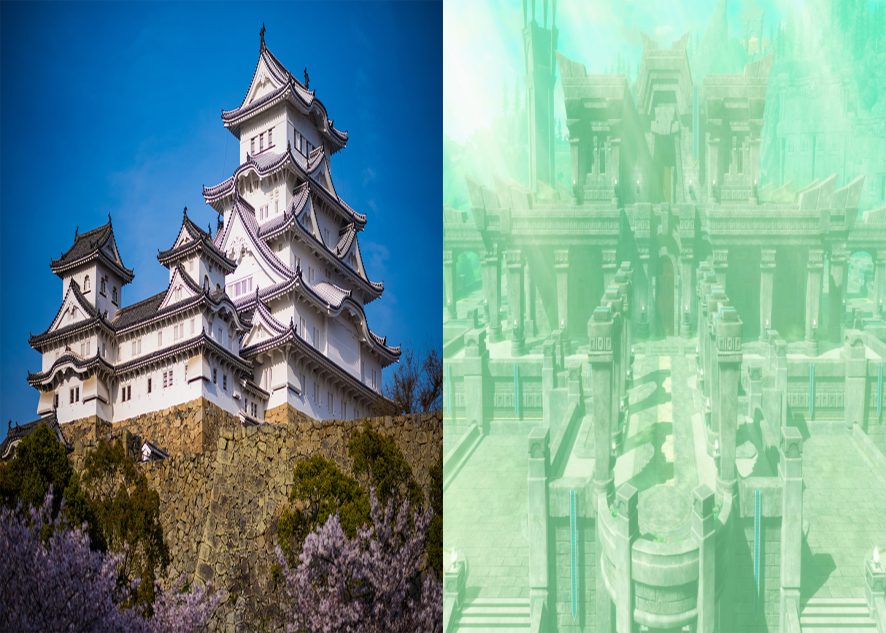
Another such place that Hyrule Castle is inspired by is Himeji Castle in Himeji, Japan. (Image shown at the article title.) Known for its towering size and white color, it has earned the nickname “White Heron Castle.” It is both a national treasure and world heritage site. Early beta models of the “modern” version of Hyrule Castle were based on this castle’s architecture during the development of Breath of the Wild, as confirmed by news sources in 2020. Probably the most unique fact about Himeji Castle is that it has never fallen due to war or natural disasters. It still stands as one of the surviving 12 original castles of Japan.
Himeji Castle is west of Kyoto. The first fortifications were built in the 1400s with the main castle structure being completed in 1609. Like Hyrule Castle, its many buildings, 80 to be exact, are spread across multiple outer walls that are connected by long paths and gates. As you enter the Otemon Gate, you walk through the labyrinth-like structure to get to the main keep. The layout has multiple walls and gates which were intended to impede opposing forces from getting through. From there, you’ll reach the main keep with has six floors. Himeji is one of few Japanese castles that feature winged buildings.
The layout of Himeji is very similar to Hyrule Castle seen in both Breath of the Wild and Tears of the Kingdom as well. For starters, like the castle in the Zelda series, it isn’t just one building. The entire complex is comprised of several smaller buildings that fill in the huge space. Both castles also share defense mechanisms such as maze-like passageways that confuse intruders and watch towers. Eiji Aonuma gives details on how locations in the Zelda games are inspired by real places.
“It is not based on specific locations,” said Aonuma in a 2017 interview with Le Monde. We mostly made montages from different pieces of architecture from around the world to tell what we want to tell. For example, if one decrees that such a temple is very “temple”, then one draws in different temples. If it is rather a castle, we draw from different castles to tell what we want.”