When it comes to preparing video games for sale outside of the country of origin, one might assume that the most cumbersome obstacle localization teams must overcome to ensure success on the international market is translating the in-game text to other languages. But while this is a vitally important task, it is only one piece of an extremely complex puzzle. New manuals must be printed, artistic assets must be altered, and in the case of games with voiceover dialogue, key regions for distribution need to hire actors who speak the native language to assist with dubbing. But the part of the localization process that has proven to be the most controversial is the removal and/or replacement of game elements due to cultural sensitivities or specific regional policies. This can result in a product that deviates significantly from the source material, prompting outcry from critics and gamers who believe that the game’s artistic integrity has been compromised. And, to the eternal frustration of amateur sleuths like myself, the changes themselves can be so baffling that trying to find a plausible reason behind them is seemingly impossible.
It may or may not surprise you to learn that the Zelda series has been a victim of odd localization choices since the very beginning. These range from harmless, even slightly humorous tweaks to the dialogue, to far more egregious alterations that have had a lasting impact on the series’ lore. Nintendo of America’s decision to incorporate the doge meme into Tri Force Heroes proved polarizing among fans, as Nintendo of Europe opted for a drier, yet more accurate translation of the original Japanese dialogue. The discovery that Link’s Adventure Log in Breath of the Wild was originally written from a first-person perspective caused players to question why the English translation changed the pronouns, reducing a personal journal chronicling Link’s thoughts and feelings down to a generic list of mission objectives. And, as I will explore in this article, the overseas export of A Link to the Past resulted in the complete overhaul of an in-universe language, a particularly intriguing casualty for a game already riddled with censored content (more on that in the future).
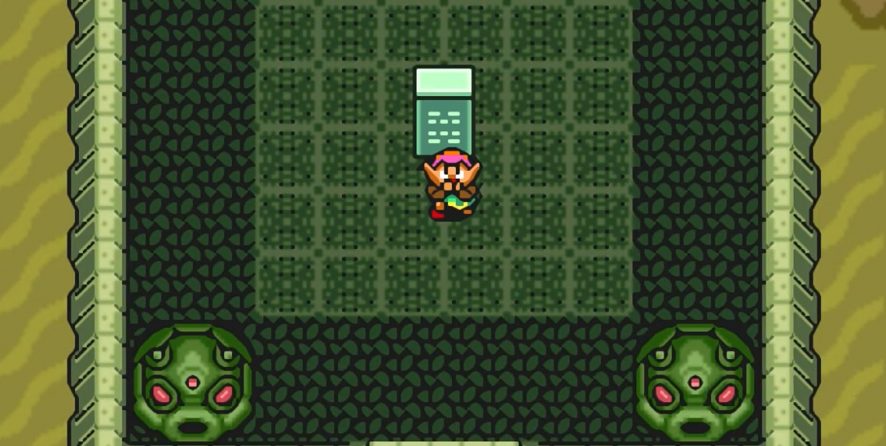
In order for Link to gain access to the Desert Palace, the Light World dungeon that houses the Pendant of Power, he must follow the instructions inscribed on a tablet stationed at the entrance to the palace. Unfortunately, these instructions are written in Mudoran, an ancient precursor to the Hylian language, so the only way to proceed is to obtain a historical tome known as the Book of Mudora and use it to translate the words written in stone. In addition, two Mudoran tablets at Death Mountain and the Desert of Mystery allow you to obtain the Ether and Bombos Medallions, respectively, and a fourth inscription on the Pedestal of the Master Sword must be deciphered in order to pull the legendary blade from its resting place.
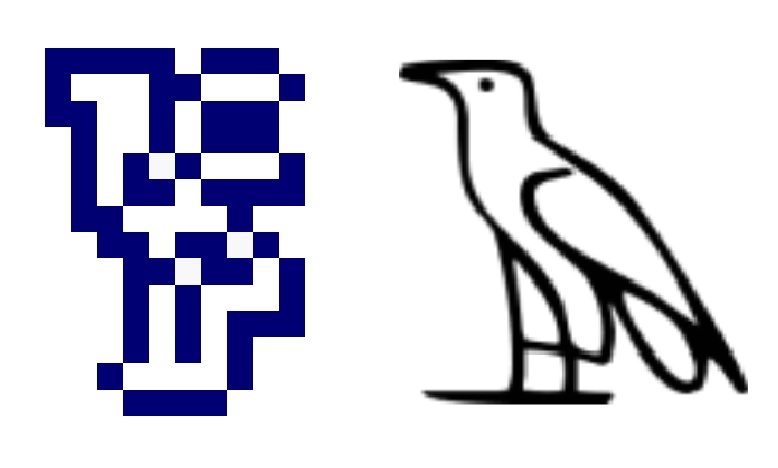
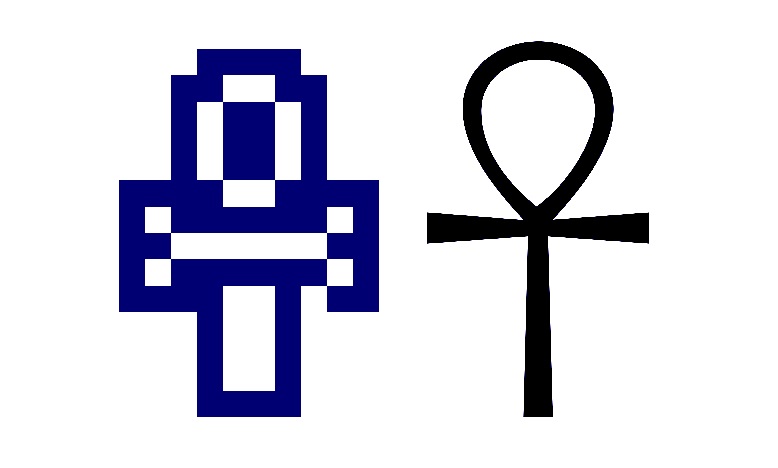
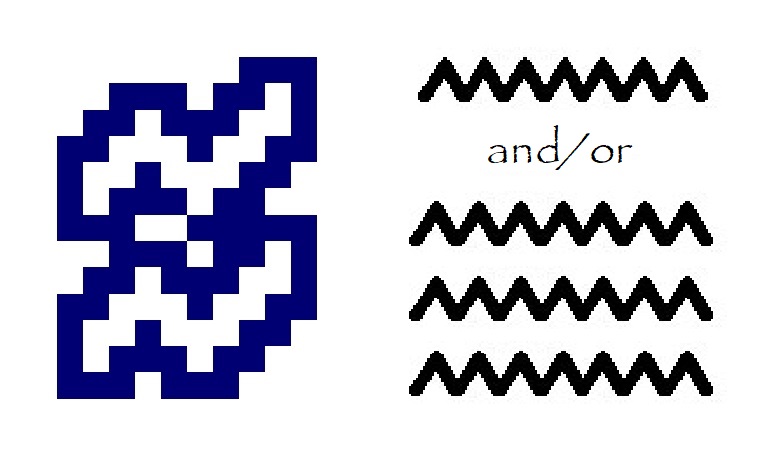
While the Hylian writing system as it appears in later Zelda titles can be reliably translated to either Japanese or English (it depends on the game), the Mudoran script only contains three characters, making it linguistically incompatible with every language known to the modern world. If you own a copy of A Link to the Past in English, the characters themselves are just random loops and squiggles that can’t really be connected to any symbols that exist in our world. However, if you happen to stumble across a Japanese walkthrough, you may notice something fascinating: the original Super Famicom version of the game contains far different Mudoran symbols that closely resemble ancient Egyptian hieroglyphs.

The first character presents itself as a rather sizable bird with a long, slender beak, which most likely references the aleph, a distinctive hieroglyph represented by an Egyptian vulture. It was usually used to denote a glottal stop, a plosive sound made by rapidly closing and releasing the vocal folds while exhaling. (Example: When we say “Uh-oh,” the pause between the two syllables is a glottal stop.)
The second one, a looped cross, is almost certainly meant to be the ankh. In writing, this symbol not only represents the word “life” and has come to be associated with vitality and power, but also acts as a triliteral sign to denote the three-consonant sequence Ꜥ-n-ḫ. One can find this specific sequence of consonants in words related to the concept of life, such as “nourish,” “oath,” etc.
The final symbol, which appears to convey two ripples of water, is a bit of a tricky one. There are only two water ripple hieroglyphs that I could find during my research: the one-ripple, which denotes the letter N and can be utilized as an interchangeable preposition; and the three-ripple, a hieroglyph block that is believed to simply mean “waters.” As far as I can tell, a two-ripple hieroglyph doesn’t actually exist, so I’d be curious to know what the thought process behind this decision was.
Now, I admit that it’s been a while since I last brushed up on my ancient Egyptian, but considering how rich and complex the language is, I’m still fairly certain that you can’t construct a coherent sentence if you only use three hieroglyphs. So if the actual text is nothing more than gibberish, what was the reason behind altering the Mudoran text for release outside of Japan? One might assume that A Link to the Past was found guilty of cultural appropriation, since modern-day Egyptians may not have appreciated seeing a watered-down version of their ancestral language used as the script for a fictional society. However, the true explanation is actually a bit more complicated than that, warranting a more thorough exploration of the second hieroglyph I talked about previously.
While the practical application of the ankh to printed text made it an invaluable character in the Egyptian writing system, its role as a religious icon is what truly set it apart from other hieroglyphic symbols. The concept of “life” as a tangible force that governs the existence of all organisms in the universe was crucial to Egyptian belief, and when it came to the vast pantheon of deities worshiped by this ancient civilization, maintaining life was their greatest priority. Thus, countless tombs, shrines, and pottery pieces were adorned with images of gods like Horus and Ra granting life to humans (usually pharaohs), with the ankh serving as the physical manifestation of that powerful force.
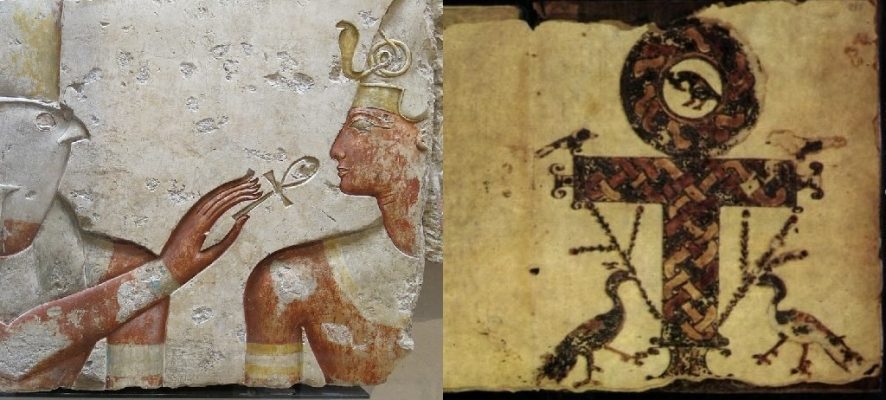
As Christianity began to flourish in Egypt around 300 AD, only a few artistic motifs survived the cultural transition, one of them being the ankh. In fact, its status as a symbol of divinity and power was reinforced by this new religious sect, as Coptic Christians eventually adopted it as their version of the Christian cross known as the “crux ansata.” And it is this connection to Christianity that caused the original Mudoran language to run afoul of Nintendo of America’s strict SNES-era policy regarding controversial content. The North American subsidiary’s wish to project a more family-friendly image meant that certain material had to be altered or removed from games they distributed throughout the 1990s, including overt depictions of substance abuse, extreme violence and gore, and “symbols that are related to any type of racial, religious, nationalistic, or ethnic group, such as crosses, pentagrams, God, Gods…Satan, hell, [or] Buddha.” A Link to the Past was already being scrutinized due to several other religious references, so in my mind, the Mudoran script never stood a chance of escaping unscathed.
Putting aside all the localization controversies and historical analyses, though, I just wanted to say that I think the society responsible for the Mudoran language deserves a comeback in a future Zelda title. Researching lost civilizations (even fictional ones) is a favorite pastime of mine, and there are just enough tantalizing crumbs scattered across the Light World to raise a few burning questions. When in the timeline did the Mudoran culture flourish? What is their true connection to the Master Sword, as well as the mysterious Ether and Bombos Medallions? If the Book of Mudora is meant to be a collection of Hyrule legends and lore, who compiled it? If they’re responsible for constructing the Desert Palace, did they also build the Eastern Palace and the Tower of Hera to protect the Pendants of Virtue? I do seriously doubt that the Zelda series will ever delve back into the Fallen Hero Timeline in earnest, but I’ve been proven wrong before. Hopefully this isn’t the last we’ll see of the mysterious culture that survived within the pages of an obscure tome and through the symbols inscribed on some lonely stone tablets.