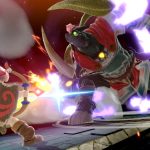
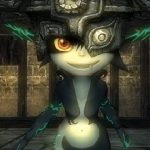
When a character becomes iconic, it is easy to forget that they were likely inspired by preceding characters or other sources. Such is the case with the main cast of The Legend of Zelda, who have come to be archetypes in the video game world. For example, the name “Zelda” itself has become synonymous with gaming. As we celebrate the 35th anniversary of the game introducing us to Zelda, Link, Impa, and Ganon for the first time, let’s take a look at how each got their name and original design.
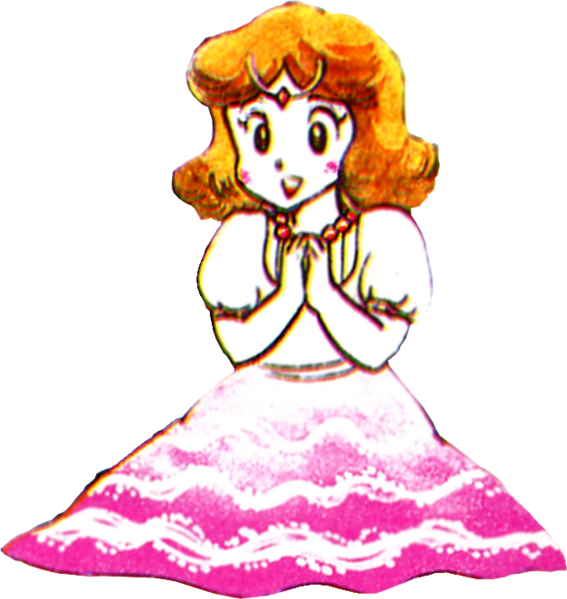
In the intro to Hyrule Historia, Miyamoto said, “I knew I wanted [the title] to be The Legend of something, but I had a hard time figuring out what that ‘something’ was going to be.” The public relations planner for the game suggested that “There’s a famous American author whose wife’s name is Zelda. How about giving that name to the eternal beauty?” Miyamoto really liked the name, and the title was born.
The Zelda they were referring to was Zelda Fitzgerald, author, painter, socialite, and wife of novelist F. Scott Fitzgerald (The Great Gatsby). Miyamoto noted in 2007, “She was a famous and beautiful woman from all accounts.” Fitzgerald was known for being a high-spirited jazz enthusiast and flapper, and for her tumultuous marriage. Her life has been the subject of numerous films, television shows, and plays. It’s fair to say Fitzgerald’s life has become a legend in its own right.

The name Zelda has a two possible meanings. As a short form of the German-derived name Griselda, Zelda means “grey/dark battle” or “grey fighting maid.” In Yiddish, Zelda is thought to be a feminine form of the name Zelig and mean “happy or blessed.” Whether Shigeru Miyamoto knew this when he picked the name is unknown, but I think either could fit our beloved princess. Dark battle could refer to the fight with Ganon, or blessed could refer to Zelda’s role as holder of the Triforce of Wisdom (and in later titles as a reincarnation of the Goddess Hylia and her descendants).
The name Link was chosen for reasons more practical than aesthetic. In a 2004 interview, Miyamoto recounted: “[W]hen we started designing The Legend of Zelda, we imagined that the fragments of the Triforce would actually be microchips! It had to be a video game that would take place in both the past and the future. As the hero made the link between one and the other, we called him ‘Link,’ the link in English. But in the end, Link never went to the future and it remained a heroic fantasy game. We can even say that there was absolutely nothing futuristic!”
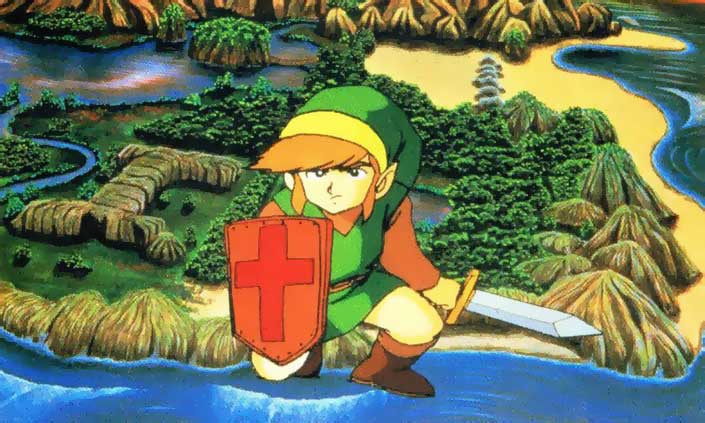
Though time travel didn’t make it into the original Zelda, it did become a key mechanic in later titles, perhaps most notably in Ocarina of Time. Miyamoto has also indicated that the meaning of Link may have evolved over the years, noting in Hyrule Historia, “I said the name Link came from his role as a connector, but Link is you, the player.” This allowed Nintendo to “‘link’ with players all around the globe.”
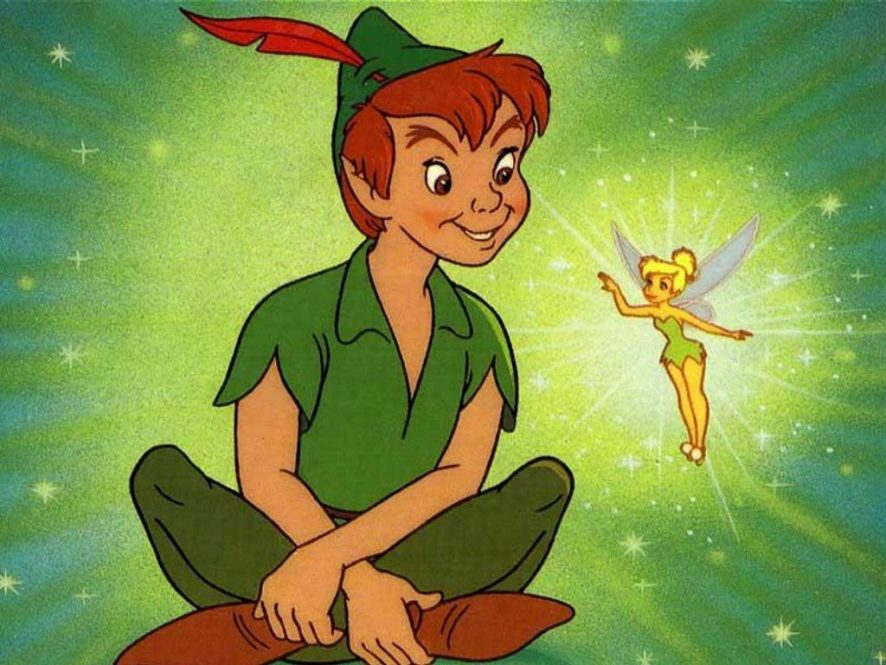
In the same 2004 interview, Miyamoto explained how Link got his iconic design. Link’s sprite was designed by Takashi Tezuka, Miyamoto’s right-hand man. In looking for a way to make the protagonist stand out with the limitations of the NES, they thought of giving him large ears and a long hat. This led them in the direction of an elf. Now with pointy ears, the developers were reminded of Peter Pan. Miyamoto, a major Disney fan, ran with it, giving Link a green outfit like the famed Neverlander. They liked the way the green stood out in the environments, and so Link’s look was born.

Miyamoto also explained in Hyrule Historia’s foreword that Impa’s name comes from the word “impart,” meaning to bestow or pass on. This is fitting for Impa’s role as Link’s key informant and catalyst for his quest. Impa was originally one of the guardians of the Triforce, along with Zelda and Link. This connection was lost in later games, and since Ocarina of Time, the characters associated with the Triforce are Zelda, Link, and Ganon.
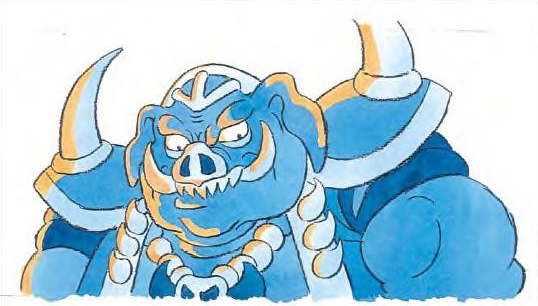
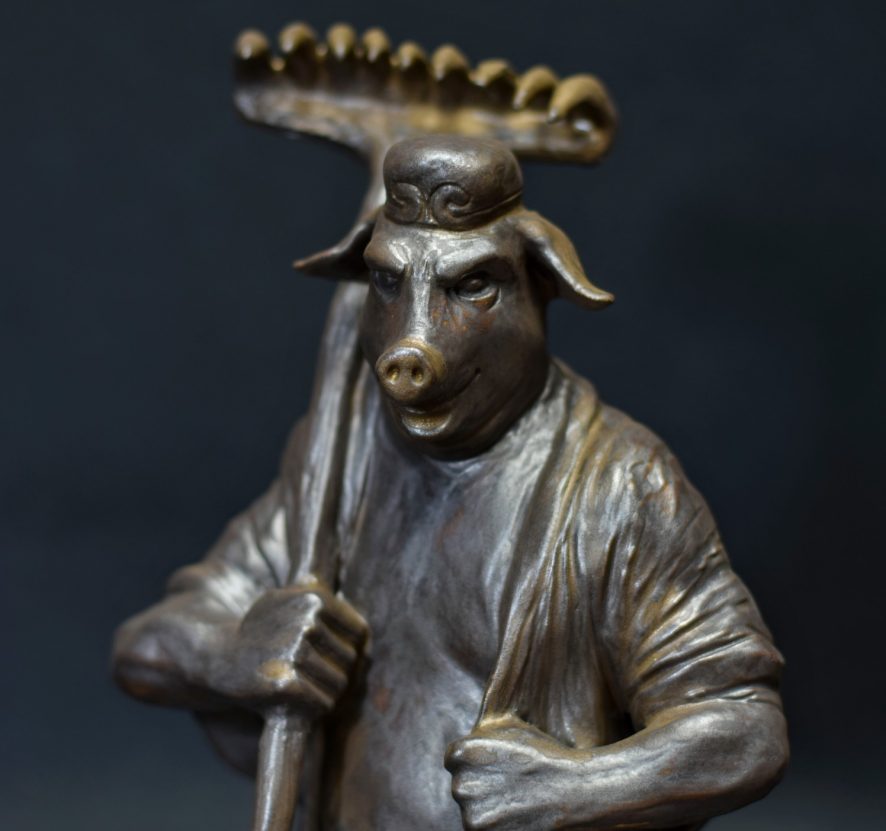
In documents dating back to 1985, Ganon was originally referred to as “Hakkai.” This is a reference to Chohakkai, the Japanese term for Zhu Bajie, a character from the 16th-century Chinese novel Journey to the West by Wu Cheng’en. Zhu Bajie is a grotesque, portly part-man part-pig known for his laziness and greed, and is an adversary of the protagonist, the Monkey King. This would help explain how Ganon got his large, pig-like appearance. The documents also appear to refer to the Bull Demon King, a hulking anthropomorphic ox who is another villain in Journey to the West. This character is extremely aggressive and wrathful, possibly explaining the inspiration for Ganon’s temperament.
How the name transitioned from Hakkai to Ganon remains a mystery. The developers have never confirmed where the name Ganon came from. “Gannon” is an Irish name meaning fair-haired or fair-skinned. This spelling has two “n”s, but so does the foul beast’s in the original Legend of Zelda (the second “n” was dropped in subsequent titles). Perhaps Miyamoto liked the name and thought it would be ironic. Or maybe he just liked the sound of Ganon for a villain. Whatever the reason, the name has since become one of the most feared in gaming.
Miyamoto and his colleagues relied on a variety of sources to create the heroes and demons of the original Legend of Zelda, a trend that has continued in the series to date. With the help of these inspirations, Zelda, Link, Impa, and Ganon achieved legendary status in 1986 and have served as inspiration for video games and beyond since.

The Legend of Zelda series is 35 this week, and we’re celebrating with the game that started it all! Be sure to check out more articles from Classic Zelda Week 2021.