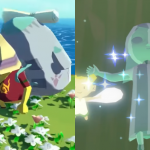
Fairies have played a variety of roles throughout the many Legend of Zelda games. From granting magic powers to directing Link on his quest, and occasionally acting as his voice, the fairies are present in almost every game. Some, like Navi, are fully realized protagonists, while others are memorable in their own distinct ways.
The Legend of Zelda, the first game in the series, was released in 1986. This game has all of the markers of things that we think of as quintessentially Zelda: magic swords, rupees, the Triforce, dungeons, boomerangs, and, of course, fairies.
In some ways, using a fairy as a character and a magical aid is obvious. After all, Link and the other Hylians are modeled on elves. With their pointed ears, green attire, and connection with the land and magic, they display all the key features of the fair folk of tradition.

Combine this with the image of Tolkien’s elves, their mastery of archery, their fine craftsmanship, their elegant architecture, and their ethereal beauty, and you get a very similar picture of our beloved Hylians. This is particularly true in the later three-dimensional games, especially in the likes of Twilight Princess and Breath of the Wild. There is also a myriad of similarities between Ocarina of Time and The Lord of the Rings, as explored in a previous Zelda Universe feature.

Elves and fairies have a very long tradition of co-existence in literature, with many of their physical attributes and powers overlapping. Some countries have both elves and fairies in their fairytales, while for other countries, the lines are a little more blurred and their fair folk are a mix of the two.
The affiliation between species of fae aside, I believe there are numerous reasons that fairies were introduced in the first Legend of Zelda game. When I looked deeper into what storytelling traditions from around the world say about fairies (or their variation of a fairy), I could see so many areas of influence that the creators of the first Zelda game may have drawn upon.
I started with the old reliable Brewer’s Dictionary of Phrase and Fable which, as its title suggests, is a massive tome for finding the meaning behind common and uncommon myths, legends, characters, and literary references. Despite covering thousands of topics, this book still dedicates two pages to the various fae traditions from around the world, listing them alphabetically and giving their key characteristics, along with where they are from.
When I combed through this list, I noticed a staggering amount of similarities to the fairies in our beloved Zelda. Not only are there similarities in the character of the fairies, but in their powers and affinities.
There are all the dryads of Greek myths, a fairy-type sprite that has powers connected to their home environment. Hamadryads are wood nymphs, and when they die, so does the tree. In some Greek myths, they rescue a slighted maiden and leave a poplar tree in her place. Naiads are water nymphs, who dwell in small ponds and vast underwater palaces. They have various elemental powers, but are often seen instructing Greek heroes on how to further their quest, but only if they are paid homage or if the hero has a kind of kinship or blood relation to them. There are also “Nereids” (or sea nymphs), and oreads (or mountain nymphs), all with particular powers that reflect their habitats.

The overwhelming majority of the Greek version of fairies tend to be tree- or water-dwelling, which is reflected in almost all of the Zelda games.
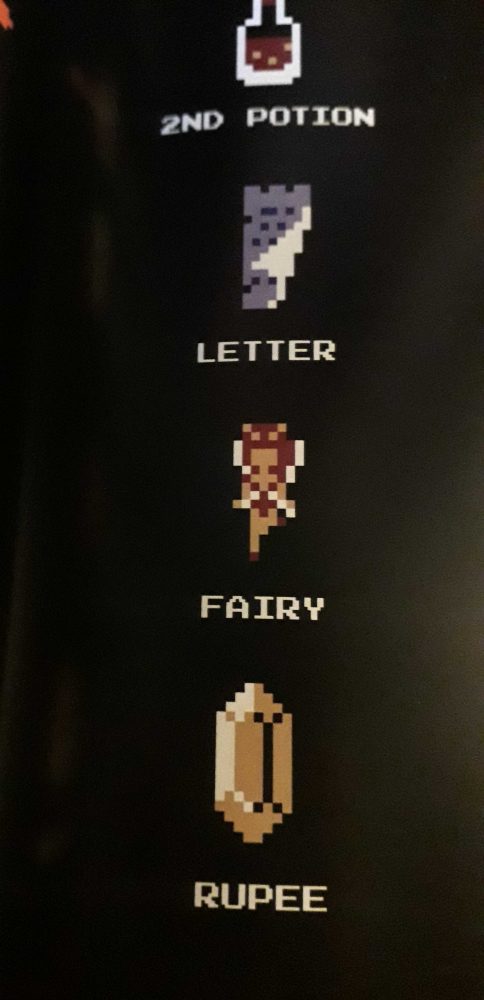
Like the Brownie, fairies in The Legend of Zelda are helpers, but only if you treat them well. Kill a Darknut in a dungeon and you may release a fairy. Was it trapped there by the Darknut? Possibly. So in return, it heals you.
Some live in fairy circles, others at the bottom of your garden, both of which remind me of the Fairy Fountains scattered throughout the games.

There are fairies that fix your clothes, grant you powers, give you safe passage or protection, and many that are tricksters. One thing that seems to be the norm across most types of fairies is that they take the form of a beautiful woman, and that woman is very small.
Some even wear distinctive green hats, like the nix.
Many of these elements are not only familiar because they are clearly used in The Legend of Zelda, but because they follow a certain logic that Zelda does too: They all follow the old fae rules and make sense in the context of fairytales.
The Legend of Zelda is itself a fairytale. The hero overcomes many trials and great evil to rescue a princess, who in some of the games, such as The Adventure of Link, is actually in an enchanted sleep. Hyrule is a land of magic and good will always triumph in the end, so it stands to reason that one of the helpers along the way would be a fairy. It simply fits the trope.

The fairies add an extra element of sparkle to The Legend of Zelda and I think the game would really have been missing something great without them. From our first simplistic Fairy Fountain to the oversized and completely extra Breath of the Wild fairy fountain, the fairies are the jazz hands of the series.

The Legend of Zelda series is 35 this week, and we’re celebrating with the game that started it all! Be sure to check out more articles from Classic Zelda Week 2021.