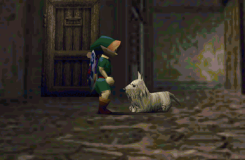
I guess you could say that I always sought adventure when I was younger. The Zelda series scratched that itch for me, but when I was around twelve years old, I found another type of game that also helped me fulfill my virtual wanderlust: the point-and-click adventure game. LucasArts was the king of the genre at the time, and I spent many days at my rickety computer searching for the lost city of Atlantis alongside Indiana Jones, or unraveling the mysteries of The World’s Largest Ball of Twine with the madcap help of the Freelance Police, Sam and Max. Despite some exceedingly cryptic item management, I loved every detail of each thought-provoking puzzle and each lovingly crafted line of hilarious dialogue.
Right around the time I was graduating from high school, LucasArts stopped making these beloved games and few other companies dared to pick up the baton. The era of the adventurer had died, and I left a tulip on its grave and moved on. Little did I know that a tiny tyke of a portable system was waiting just a decade down the road to revive the adventure genre.
In 2005, I heard about a new game coming to the Nintendo DS. It was called Phoenix Wright: Ace Attorney, and right from the beginning, I was intrigued by its unique premise. You played as a pointy-haired lawyer who both investigated crime scenes and tried criminals! It was essentially an anime Law & Order game. Once I booted up the game, I fell in love. It was the point-and-click (tap?) adventure game back from the dead. There were weird characters like the perpetually overconfident title character and the loyal and bumbling Detective Dick Gumshoe. One of the characters even channels her dead sister’s spirit to turn into Phoenix Wright’s buxom former mentor, who had been killed in a previous case. These characters were just as endearing and odd as any back in the maniac mansions or Monkey Islands of my youth.
The puzzles were different than the old games that frequently gave you things like string, chewing gum, and a paper clip and then asked you to create an inelegant apparatus Macgyver-style to help you climb out of a pit. In Ace Attorney, the puzzles were much more about noticing errors in the logic in a criminal’s and their accomplices’ testimonies. I’ll never forget the first time I noticed one of those errors and watched Phoenix Wright shout “Objection!” Logic had seldom seemed so action-packed.

With the introduction of the original Ace Attorney game and its sequels, Capcom had found the pulse of the genre and administered a shock to its system. It wasn’t long before Nintendo introduced their own games into the mix with Hotel Dusk: Room 215 and Professor Layton and the Curious Village to help truly bring it back to life.
In Hotel Dusk, you play as Kyle Hyde, a down-on-his-luck former detective who is now stuck selling merchandise for a company called Red Crown. At the beginning of the game, he finds himself at Hotel Dusk where he is looking into a mystery involving his old partner. Along the way, he becomes embroiled in the lives of the different residents of the hotel and finds that some of their lives have surprising connections to the lives of him and his partner.
The first thing that grabbed me about Hotel Dusk is the pencil sketch graphics for each of the characters. It lends every character a look of being rough around the edges, which reflects the secrets and mysteries tumbling around inside many of their hearts.
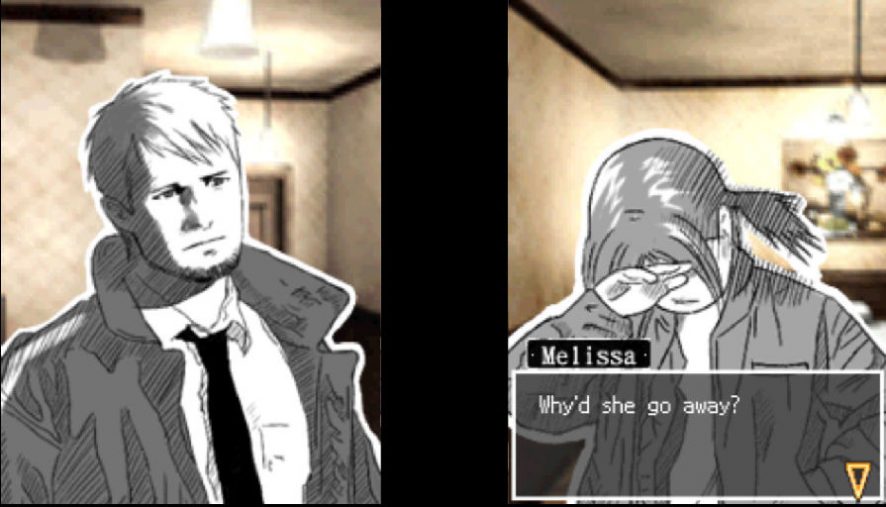
I also really enjoyed the inventive use of the DS’s capabilities for some of the puzzles. One such instance involves Kyle helping a young girl put a jigsaw puzzle together. That part’s not all that interesting. You just moved the pieces around with the stylus. In the process though, you realize that there’s writing on the other side of the puzzle that can be read once it’s complete. Except, once you cram the last piece in, there’s no button to press, no flick of the stylus to perform, and seemingly no way to turn that freaking puzzle over. Not until you try something unexpected — closing the DS — do you find your solution. By closing the two screens, it causes the digital puzzle pieces to flip, so when you open it, you are greeted by the writing you’ve struggled to see. This blew my mind and was an astonishing use of the DS hardware in order to use the physical system to tell a digital story.
Another quality that stands out in this game is that there’s almost no action. In an adventure game staple, you essentially just walk around, tap things, and solve puzzles. That’s it. But in this game, there is one memorable moment when Kyle is ambushed and sapped from behind. I vividly remember sitting in bed late one night knowing that I was close to finishing the story when Kyle and I were viciously assaulted by a pencil-sketched perpetrator. The fact that there had been no action in the game prior to that moment lulled me into complacency and my heart paid the price with a few extra beats.
Standing in contrast to Hotel Dusk was the absolutely adorable first game in the Layton series: Professor Layton and the Curious Village. I was immediately drawn in by the highly stylized cutscenes showing Professor Layton and his assistant Luke as they searched around the town of St. Mystere for clues to the location of a treasure called the Golden Apple. All the characters reminded me of a Studio Ghibli film in both their appearances and their expressive personalities. From the Holmesian Professor Layton to the diabolical Don Paolo, all the characters left me waiting to see what would happen to them next.

The doling out of story segments in Layton is handled differently than most adventure games, because where Ace Attorney, Hotel Dusk, and the old LucasArts games mostly focused on inventory management or contradictions in logic to move the plot forward, the Layton games required you to solve puzzles more akin to something you might find in the bargain book bin at your local department store. Every single person in St. Mystere seemed like they had some puzzle for me. No matter how menial the task I asked them for, they were always willing to help as long as I helped them solve the word problem they could never quite figure out. It seems like something that would be infuriating, but it was so unique that I loved it. I can’t say that I solved all of the puzzles without any help (I’m no Layton), but I enjoyed trying to decipher the various small clues or obscure logic within each puzzle.

When I think back on the legacy of the Nintendo DS, I don’t think of New Super Mario Bros. or even of Phantom Hourglass or Spirit Tracks. I think of games like Hotel Dusk, the Ace Attorney series, and Professor Layton and the Curious Village. These games reminded me that old ideas never die. Sometimes they’re just waiting for a stylus tap, an inventive puzzle, or a hearty objection to wake them up.