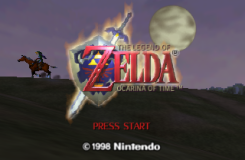
Ruto, Rauru, Saria, Darunia, and Nabooru. These are all names that we’ve come to know as some of the sages from Ocarina of Time, and from this point on they are referenced throughout Zelda lore. However, what some people may not know (though there are many who do) is that these names did not hail from that particular title. They instead came from Zelda II: Adventure of Link. Not only that, but they were not characters — they were locations.
As we’ve explored in my article about the many “Fado’s” of Zelda, we know that Nintendo isn’t a stranger to recycling names in the Zelda universe. It’s no surprise that they would take these names and use them again three games down the line. Instead, my question is did these names influence the character that they were given to? We see in games like Breath of the Wild that the Divine Beast names were influenced by the sages themselves. For example, Urbosa, the Gerudo champion, is given the Divine Beast Vah Nabooris, named after Nabooru, the Gerudo sage of Spirit. Does this hold true in regards to the sages themselves and the locations they were named after?
The first town you are more likely to visit in your Zelda II journey is Rauru. Just as so, Rauru is the first sage you meet in Ocarina of Time — well, the first realized sage. There’s also an old man in the town who teaches Link his first spell, perhaps a sage in his own right. There
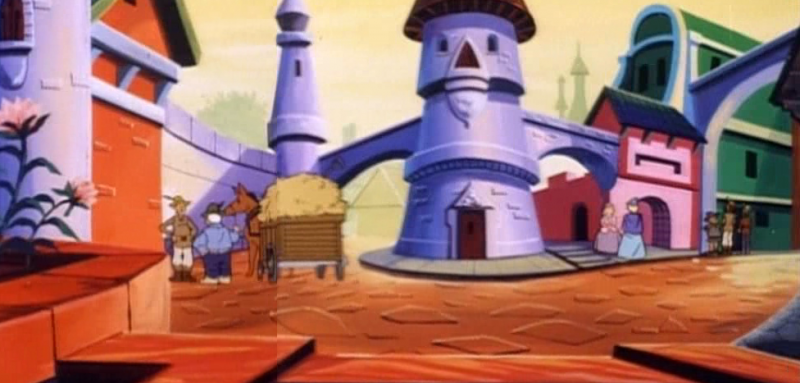
Next we have Ruto Town. Ruto in Ocarina of Time is the Zora Princess who thinks she’s engaged to Link and spends her free time inside of a giant fish. In all seriousness, she is the fourth sage and her corresponding element is water. In Zelda II, however, the region is mountainous and void of any large bodies of water. Magic is also to be found in this town as Link learns another spell, though it also has little to do with water (it is a jump spell).

Saria Town is next on the list, and there is not much relevance here either. Ocarina of Time’s Saria is a Kokiri girl who is Link’s childhood friend and plays music on her Fairy Ocarina in the Lost Woods. In Zelda II,Saria Town borders a river southeast of the Moruge Swamp, which I guess is kind of like a forest. Not the same, but close enough?
How about Darunia Town? Any Gorons here? Nope. But it is a mountain town. The Gorons of Ocarina of Time live atop Death Mountain, and while that’s a completely separate location in Adventure of Link, it’s at least close.
And Nabooru? No real connections here. It’s a luscious, green town near the center of Hyrule, vastly different from the desert that Ocarina of Time’s Nabooru is from. There’s also no real instances of female authority here, just a thirsty girl who Link will give a bottle of water to.
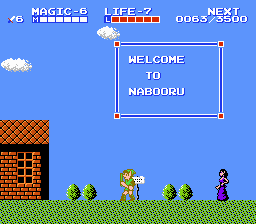
All of this being said, there is no real connection in terms of physical location or residents within the village, but it is still there. We just need to flip things around. Instead of looking at it from the perspective of which games came first, we need to think of which games chronologically came first in the official Zelda timeline. Then all will be made clear.

Ocarina of Time is known for being the game to split the timeline in three. From there we have the child timeline, the adult timeline, and the fallen timeline. The original Legend of Zelda and Zelda II both take place in the fallen timeline, where the hero of Ocarina of Time is defeated in his battle with Ganondorf. Regardless, the events of Ocarina of Time still took place, and the tales of the sages have been passed down through the ages. While their fates are unknown with the fall of the hero, their memory lives on, as the towns in Adventure of Link were named after them. This is no theory but canonical fact, as stated by Eiji Aonuma himself.
Aonuma said this decision was made to form a sense of continuity between the games and make it seem like the stories between all of the games were united in one way or another. Seeing how everything falls in the timeline, it makes perfect sense to me — even if there are a few fuzzy details. The only question I have left is how on earth did Mido get a town named after him as well?