Every entry in TheLegend of Zelda series has memorable, emotional moments. Whether it comes from the characters themselves or the quest, I’m sure that most players remember specific scenes that moved them. While some parts of these games are memorable for the feeling of elation, others are memorable for their melancholy. Throughout many of the games, the Zora characters seem to have a disproportionate share of tragic stories. This made me wonder why the Zoras specifically are stuck by misfortune so consistently, instead of another race or group.
The Zora are present in one form or another in most of the series’ installments, though they are given much more focus in Ocarina of Time, Majora’s Mask, Twilight Princess, and Breath of the Wild. Comparatively, the other major races of Kokiri, Goron, Rito, Gerudo, and Hylian seem to have less tragedy befalling individual characters. I think there are potentially several reasons for this — their physical design, their unambiguous sexuality, and their home environment.
Memorable Zora miseries
The Zora Princesses Ruto and Mipha, from Ocarina of Time and Breath of the Wild respectively, have parallel tales of heartbreak. Both spend a portion of their childhood with Link, both fall in love with him, and both give up their lives to help him save Hyrule. While Ruto becomes one of the Sages to seal Ganondorf away after the final battle, Mipha dies fighting during the Great Calamity. Neither Zora’s love for Link is reciprocated, and Mipha is especially conscious of this. The only way to save the world in both scenarios is for the princess to give Link something ceremonial to aid in his fight against Ganon, and in both games this is akin to an engagement ring. Link has no choice but to take these items to save the world, and it instills in them an even greater importance. These princesses chose to save the world and lose their hearts in the process.
Lulu from Majora’s Mask has fins like an angelfish.
The Zora princesses are not alone in their pain, and the examples that really stand out in my mind are two of the Indigo-Go’s band members in Majora’s Mask. Lulu, the singer, lays her eggs and loses her voice. When these are stolen by Gerudo Pirates, her close friend and band member Mikau promises to return them safely and restore her voice. This leads to the particularly moving scene where Link finds Mikau wounded and floating in the bay. Link drags the Zora ashore and tries to restore him with the “Song of Healing,” but it does not work and Mikau dies. He’s buried on the beach with his fishbone guitar in place of a headstone. I can’t recall another instance in the games where an Ocarina song doesn’t work as it should, and a character dies as a consequence. Death isn’t usually so permanent in Zelda.
There are plenty more examples throughout the series. In Twilight Princess the widowed Queen Rutela misses her lost son and dead husband. Said son, Prince Ralis, is ill and stranded away from home. Once healed, he avoids returning, as he is not yet ready to rule over his people. He instead lingers at his father’s grave until Link makes the way clear for him to return. Even the Zora King in Oracle of Ages dies due to polluted water before Link can revive him.
Designed for connection
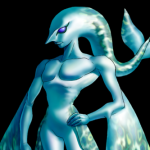
The physical design of the Zora characters sets them up for tragic possibilities. On the whole, the Zora are designed to appear humanoid with some additional magical attributes. Because these additions are non-threatening and mostly appear sleek or delicate, we don’t read them as “monster” but instead as “magical being,” something fey or fairy. The Zora in Ocarina of Time and Majora’s Mask have large, fine fins that look similar to those of an angelfish, and their skin is a pale blue. In this design version, the Zora look the most human or Hylian. The men are athletic with washboard abs and the women are curvaceous with large breasts, and apart from their gills and black eyes, their faces are very human too.
In Breath of the Wild, their look is a little more stylized or possibly evolved, with the women’s breasts being less pronounced and the men’s abs being toned down. Their latest iteration is a lot more streamlined overall, with their fins being smaller, less obtrusive, but with some Zora having additional fins on their faces or heads. Overall, they retain this humanoid silhouette.
Gerudo power stand from Breath of the Wild.
When a character looks human, we are able to identify with them as the player, and even project perceived emotions onto them. We’re able to do that with many different characters throughout the Zelda series, but it is the Zora that are the safest to project tragedy onto. Aside from their cool color palette, and the cool palette of their home environment, they often have a sad or downcast demeanor. They frequently stand with their arms loose by their sides, their expression solemn, and their entire stance is passive, unless they’re holding a staff or trident as a guard, of course. Compare how they carry themselves to that of the Gerudo, who stand casually, shifting their weight from one leg to the other or with their legs wide in a power stance, and often fold their arms and look straight ahead. They project an air of intensity, while the Zora project a kind of quiet calm. The player would not naturally project feelings of melancholy onto the Gerudo based on their body language and design alone, but the Zora make it easy.
Similarly, the Rito, Gorons, and Kokiri could not be projected upon like the Zora. Though the Rito share a common ancestor with the Zora, and have a vaguely human silhouette, they don’t look human at all; they look like bird-people. The exception to this would be TheWind Waker design of the Rito, who look like Hylians with a beak, but the only tragedy befalling these Rito is that of the upset of Valoo, a tragedy that Link quickly rectifies.
We don’t see much tragedy amongst the Gorons, who look less like humans and more like boulders, as they are a happy-go-lucky people, and their main desires are food, gems, or hot springs. The player doesn’t identify with them strongly enough to project onto them, and they don’t have complex interpersonal issues like the Zora do. The few relationships we see amongst the Gorons tend to be either brothers or father and son, and overall they are too stout a people to be bothered by much. The Kokiri are almost always designed as children or child-like, frequently non-human, and occasionally tricksters, so there is not much room for any great human emotion outwith joy in these little creatures.
The Zora provide a safe space where we can connect with a tragic tale without it being off putting to the player.
Another major reason to have the Zora be our more tragic characters is that while they look and feel almost human, they actually are very far from it. This allows them to have a higher proportion of sad stories because we don’t identify with them enough to be too deeply hurt or affected by this sadness. The game would feel very different if there were many more Hylians with sad histories, and it would possibly detract from the gameplay. After all, we play these games for adventure and escapism, not to be completely dejected by the side quests. The Zora provide a safe space where we can connect with a tragic tale without it being off-putting to the player.
Love and sexuality
The Zora look human and often act human, but one area that must be mentioned is the idea of romance and sexuality in the games. The Zora display more sexuality than any other characters throughout the games, and this is mostly coded as sexuality in human terms so that we again may identify with and project onto it. As I mentioned previously, some of the designs include elements that make the Zora attractive to the player, such as breasts or abs, and making them pretty or handsome, which immediately places them in a sexual context.
Compare Lulu in Majora’s Mask with Anju, the innkeeper, from the same game, and it becomes immediately clear. Anju is designed demurely, with a long-sleeved dress, hair tucked behind her Hylian ears, her overall look suggesting peasant or farm girl. Lulu, by comparison, wears a short, asymmetrical, figure-hugging dress, which accentuates her very human-looking curves. She’s styled with earrings that match the jewels on her dress, and overall her placed her in a sexual context, while Anju’s does not.
The contrast is clear when you look at the Champions together.
Even the Gerudo women of Breath of the Wild are not designed to be sexualized in the same way. While they may be wearing crop-tops, they are also given rippling abs and thick arms and legs, giving them a look of power and strength, which differs greatly when compared to the Zora’s graceful look. They emanate far more power than they do sexuality.
Beyond the physical appearance of sexuality, which allows the player to assume they have the desires to match, there are references to the Zora going through some sort of puberty, or at the very least a coming-of-age. Both Mipha and Finley mention this in Breath of the Wild, and it is evident when looking back through Link’s memories of Mipha. This, coupled with their appearance, places the Zora in a sexual context. The only other references to sexuality throughout the games comes from either Hylian families, who have children running around and therefore in all likelihood copulated, or the Gerudo women, who openly discuss their desires but most of whom have never met a man. The Kokiri and Koroks are always stylized as “Children of the Forest” and therefore do not display romantic or sexual relationships.
This obvious sexuality, combined with the fact that there are others to have such relationships with, gives the Zora characters a unique position in the games. They are the only group of people that can have epic heartbreaks. The Gerudo don’t know enough menfolk, and there are no suggestions of any same-sex Gerudo’s having any strife that I’ve noticed. The Gorons have no references to sexuality or really any specific family units, bar maybe one or two. The Rito are not all that different to the Zora, but they are different enough to us as the player, so we don’t identify with them as strongly, and there are far fewer of them throughout the games to develop a tragic plotline.
Cultural elements
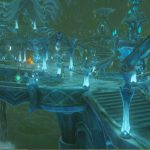
These games don’t exist in a vacuum, therefore we bring our own cultural experiences to the games, and our play experience is affected by this. While most cultures have different traditions and mythologies, one that seems to be a constant is that the sea is a dangerous and mysterious entity with a will of its own. Some personify it as a wild and tempestuous woman, while others fill the oceans with strange creatures and sirens to lure you to the depths. Whatever culture we bring to the game as the player, we will make assumptions about the character of the Zora people, and sea mythologies are rarely happy. The oceans represent the unknown, longing, distance, and the cornerstone of these games: freedom. So an ocean-dwelling people were always going to have an infusion of this. The Zoras have riches, traditions, water palaces, and aristocracy.
They also have some degree of magic to them, a relationship with the Hylian goddesses and legends. Put all these elements together and you have an opportunity to create a romantic people who believe in love the same way Link believes in adventure. They are the untamable sea personified, the bards of Hyrule. This suggests to me that they are uniquely positioned to have great loves in their lives, which in turn leads to their great tragedies.
I think that it is this combined with who the Zora are and where they’re from that gives them the scope for so much tragedy. Finally, they’re frequently used as a not-so-subtle metaphor for Hyrule, and therefore the planet. In each game we see their waters poisoned in some way or another, mostly literally poisoned though, as the human battles spill over into their territory. They are quite happy to be left alone, away from human affairs, until a threat presents itself in their pond and poisons their people. This is a suffering different to heartbreak, because it is immediate and deadly. The Zoras survive heartbreak again and again, but the destruction of their dwelling entirely could potentially kill them all.
Hope springs eternal
Tragic stories suit the Zora people, but the real tragedy would be if they always had a bitter ending. While Lulu may lose her dear friend, and Mikau loses his life, she does get her eggs and her voice back. And she knows that her bandmate truly cared about her in the way that mattered most. Both Mipha and Ruto discover their true powers, and while Link’s love is not reciprocated, they have the opportunity to love another unconditionally. Queen Rutela is reunited with her husband, and Prince Ralis readies himself to one day succeed her. There are moments of light in their tragedy, echoing the hope that fills every Zelda game. Without these moments of melancholy, the games wouldn’t feel well-rounded, but with them we get the complete experience.
Hannah Griffin
Bookseller and chick-lit connoisseur, when Hannah's not trying to be Meg Ryan she can be found hanging out in Hyrule Castle Library or riding across Hyrule Field. She can be found @griffinriot on twitter and instagram.


 by Hannah Griffin on July 29, 2020