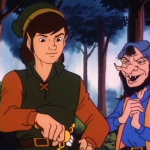
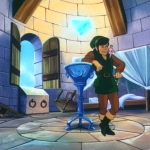
Being the literal manifestation of courage, we all know there is no challenge that Link won’t overcome in The Legend of Zelda franchise. Despite his mischievous ways, occasional recklessness, and a silly catchphrase, this also applies to the TV series version of Link. With Zelda’s help, he can deal with whatever Ganon throws at him.
So, how do you defeat the undefeatable hero? Simple: You try to steal his girl.
White knight, white lies
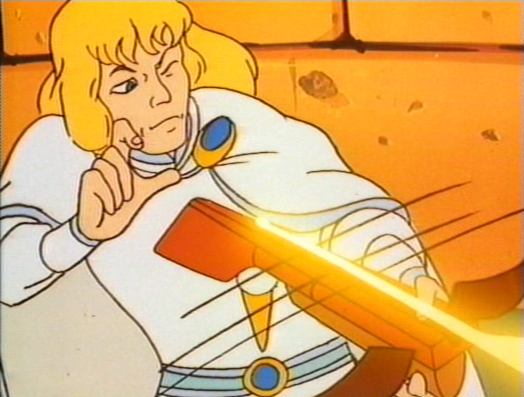
Prince Facade’s chat-up lines are cringeworthy in the best way. “I have traveled the world and viewed its wonders, but none have been your match in beauty.”
Enter Prince Facade, an original character created for the TV series who only appears in this episode. Usually, centering an entire episode around a seemingly throwaway character like this would give me cause for concern, but as it turns out, Prince Facade is one of my favorite characters to exist outside of the Zelda canon.
Facade arrives in Hyrule as Link is struggling in a fight with an Octorok, with the prince promptly defeating the creature with a single bolt of his crossbow. After the scuffle, he immediately ignores Link as he greets Princess Zelda. When Link offers a handshake, Facade rejects the gesture as Link, who had been dragged through the dirt in his fight with the Octorok, presents a dusty hand.
Zelda, however, is instantly taken by the prince, and he isn’t shy about complimenting her and bragging constantly to impress her. Right off the bat, he mentions how he has “traveled the world and viewed its wonders” before calling her beautiful and offering her a ride back to the castle.
The character is interesting because he’s not a cut-and-dried villain, yet he is still a new type of challenge for Link and, as it turns out, a threat to Hyrule. After a failed attempt at trying to impress Zelda by dressing and acting like Facade, Link feels humiliated and starts to feel that his place at the castle as the hero has been stolen. When Link decides to leave the kingdom, and with Facade not as competent as he lets on, the princess and the Triforce are momentarily unprotected and suddenly are susceptible to falling into Ganon’s hands. This makes Facade a pawn in Ganon’s plan, even though he doesn’t know it.
Prince Facade is one of my favorite characters to exist outside of the Zelda canon.
Prince Facade mentions he is from a land known as Arcadia, though oddly, this location is never seen nor referenced ever again throughout the series.
I can’t hate Prince Facade though, because he’s hilarious. There is a point where Zelda calls him “wonderful,” to which he responds, “Well, I wouldn’t say that.” His modesty lasts only seconds, however, before he drops the act and says, “Well, if you insist.” This, of course, is before he sees his reflection in the mirror and winks at himself. Amazing.
It is also highly probable that much of his bragging is based on exaggeration or perhaps even lies. When they reach the castle, Facade tells Zelda a story wherein he “defeated all fifty of the monsters,” and later another wherein he saved an entire city. He even insists that he took on Ganon himself and “taught that brute a lesson.” Not only does Link call him out on “telling lies,” Ganon even contradicts this earlier in the episode when he says, “I’ve dealt with Prince Facade before, and I know his weakness.” Of course, the name “Facade” is also a bit of a giveaway, and that alone makes me laugh. Oh, and his horse his named Magnus because of course it is.
Facade’s weakness is his vanity. He never risks getting dirty, refusing to allow anything to belittle his image in the slightest. As soon as Zelda is carried away into a swamp, Facade stops in his tracks, putting his “hero suit” above the princess’s safety and shrugging at Zelda as she screams for help. At long last, she sees through his charms, and Link chooses this moment to prove himself as the true hero once again.
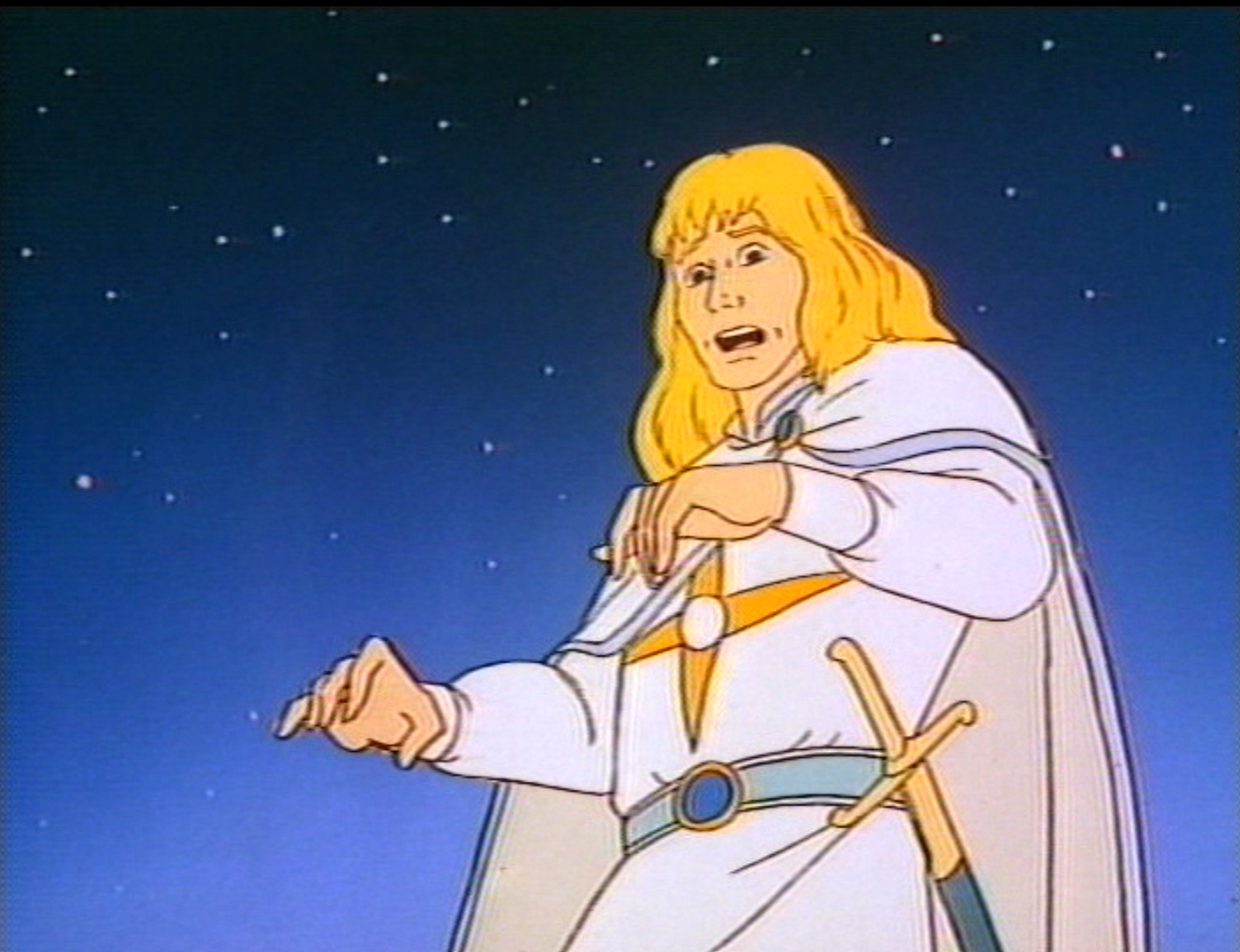
“Ooh, mud! No, I’m afraid not!” Facade’s brave exterior quickly folds as soon as the situation threatens to dirty that white suit of his.
The monsters that Octorok the boat
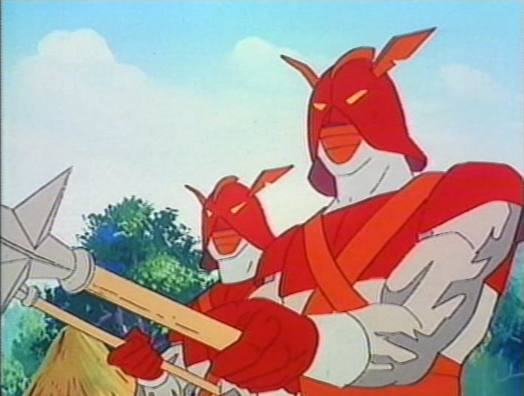
Tinsuits look like Armos, but they seem to be a smaller, subordinate version of the Armos seen in a later episode.
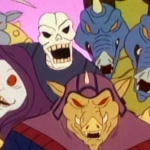
The first enemy type that Link and Zelda encounter is an odd one as, unlike the other monsters, they aren’t exactly lifted from the first two Legend of Zelda games. This army of orange-armored foes bear a strong resemblance to Armos (especially when compared to the official artwork of Armos from the original Legend of Zelda), yet Link refers to them simply as “Tinsuits.” You might assume that this is just a nickname adopted by Link, but a later episode seems to have real Armos, which are much larger and resemble statues that come to life when touched, just like in the original game. They are not named in this encounter either, however, leaving the whole thing somewhat ambiguous. I believe the “Tinsuits” are simply a “mini” version of the Armos. Either way, I honestly would have preferred Stalfos in this scene instead, to keep things simpler.
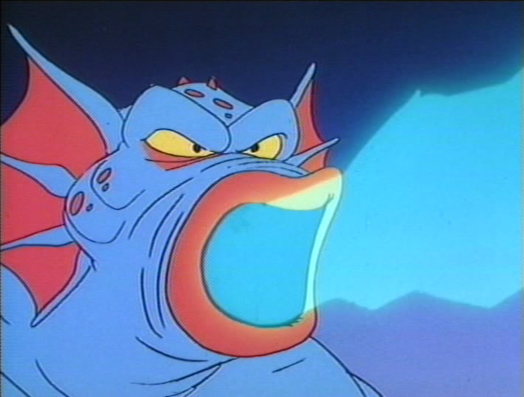
One thing one of the Tinsuits does is summon a more recognizable enemy, however: the Octorok. In this show, Octoroks are huge, able to grab Link and hurl him through a barn with a single tentacle. In the games, we’re used to taking out these creatures in groups with relative ease, but the TV series has an interesting take on them as Link struggles greatly when trying to defeat just one of them.
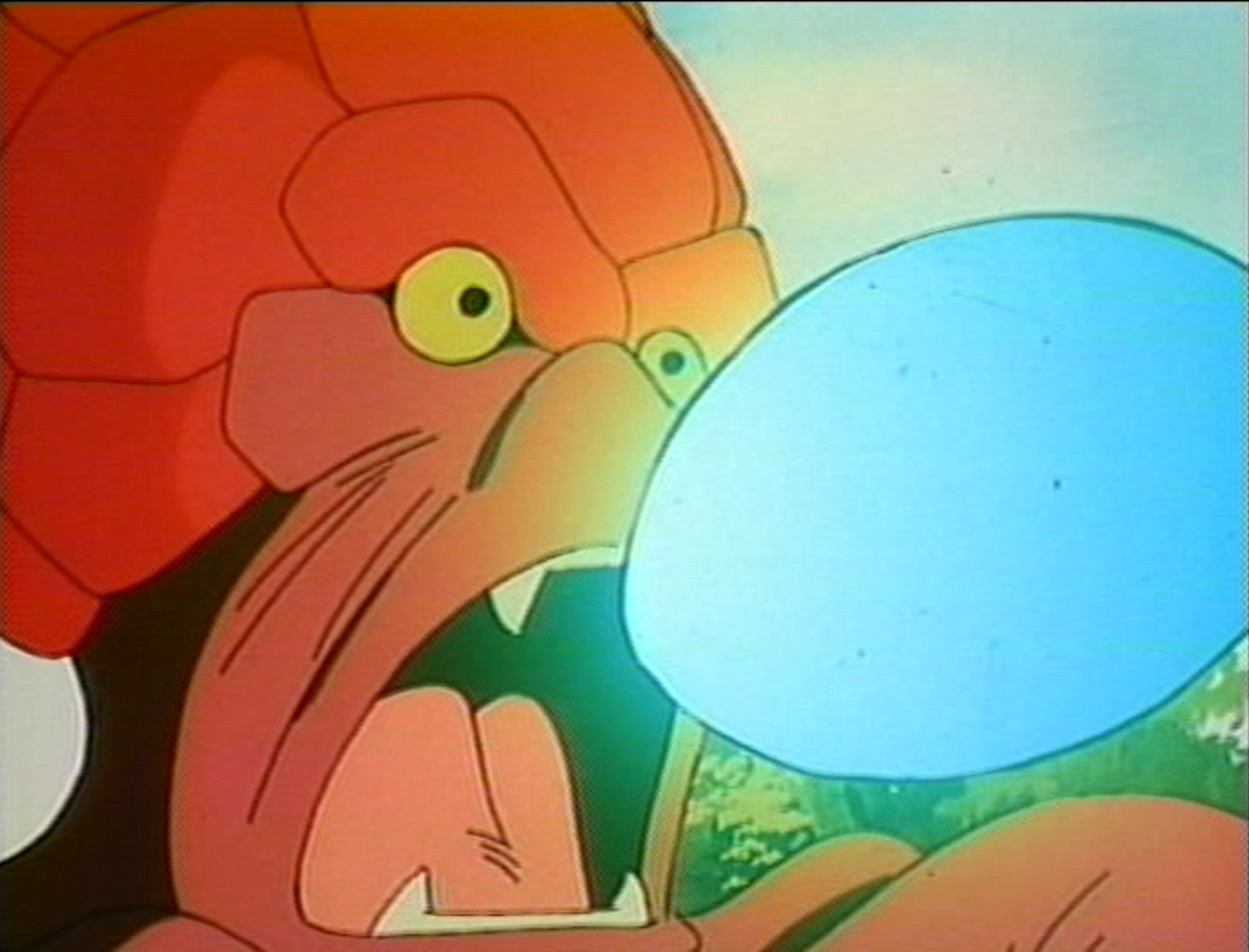
Octoroks spit projectiles, just like in The Legend of Zelda games.
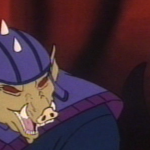
When Ganon commands his assault on North Castle, this time he uses an army of Tektites. Unlike the Octorok, these critters swarm the castle in a large group, overwhelming Prince Facade at first in his attempt to protect Zelda. He eventually fights them off, but they keep him distracted long enough for the Moblins to capture Zelda. If this sounds uncharacteristically damsel-esque for her, in fairness, she is unarmed in this scene.
What is it with Ganon’s minions and spitting stuff? It’s just rude.
Finally, as Zelda is hurled out of the window, we’re introduced to yet another new, horrifying face as she lands in the scaled claws of the Zola. That’s right, not a Zora, a Zola. This was a misspelling in the manual of the original Legend of Zelda, and given that this was one of two reference points for the TV series creators back in the late ’80s, it’s understandable why this name would reappear here.
It’s cool to see not only a variety in the enemy types throughout the show but also a difference in behaviors between them. Some are competent fighting alone, while others are effective in hordes. They’re a recurring highlight of the series, and I’m definitely not done discussing Ganon’s weird and wonderful army in this retrospective series.
Money is power
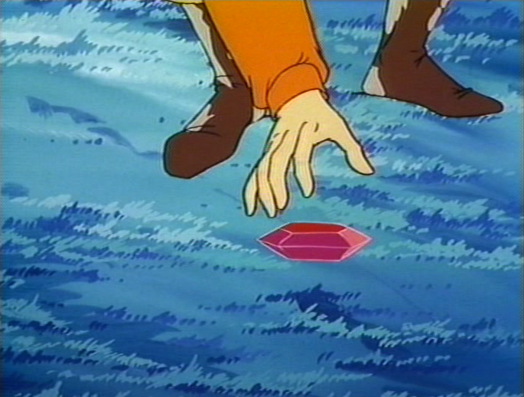
Link finally grabs his well-earned Red Rupee.
As Link defeats the first batch of Tinsuits with ease, they leave behind a crossbow and a Red Rupee. This is actually referred to as a “ruby” in the cartoon, which is based on another misnomer from The Legend of Zelda manual (to make things even more confusing, the in-game text labels it as a “rupy.”) For the sake of this article, though, we’ll refer to it by the name we know best.
This is the first and only time a rupee is seen in the show, and fortunately it’s put to great use. Depending on who’s carrying it, the rupee symbolizes the character who currently has the upper hand. For example, when Link is overwhelmed by the Tinsuit army and is sent flying by the Octorok, the rupee lies in the grasp of the enemies.
Later, Prince Facade arrives and sweeps Zelda off her feet, claiming the rupee as his own and snatching it away from Link’s grasp. Again, the prince is in control in this moment as he is the only thing that Zelda is interested in. Then, of course, when Link is proven to be the real hero at the end, winning back Zelda and stopping Ganon’s plan, he finally gets his reward as he rightfully reclaims Facade’s dropped rupee from the ground. It’s such a thoughtful little touch throughout the story, and it’s heartening to see the rupee’s inclusion going beyond a simple reference to the Zelda games.
Depending on who’s carrying it, the rupee symbolizes the character who currently has the upper hand.
Harkening back to the king
This is the first iteration of the King Harkinian character, who would later appear in the CD-i games and the Valiant comic series.
If you recognize the name “King Harkinian,” you’re probably thinking of the CD-i games, The Faces of Evil and The Wand of Gamelon. Or if you weren’t, you are now. Sorry about that.
Anyway, while both interpretations of Harkinian portray him as a king of Hyrule and Zelda’s father, the two are quite different when it comes to personality. This version is much kinder and slightly more dimwitted compared to the brash, outspoken king in the CD-i titles. The cartoon version is also much less competent; in The Wand of Gamelon, Harkinian ventures off to aid in the fight against Ganon, while in this episode he is fast asleep throughout Zelda’s capture, not the least bit disturbed by all of the fighting and screaming happening around him. He appears to forget things frequently, not only forgetting Facade’s name while he’s talking directly to him but forgetting Link’s name too.
While the CD-i games may not be hailed as classics, it’s still very interesting that the team behind The Faces of Evil and The Wand of Gamelon chose to use the TV series as a reference. King Harkinian was created solely for the TV series and has never appeared as a character in the mainline games, but he was at least significant enough to appear in the CD-i titles and the short-lived Valiant comic series.
His presence in this episode is brief, but it’s at least nice to finally see another inhabitant of the huge castle that isn’t Link, Zelda, or Spryte.
King Harkinian sleeps soundly while his daughter Zelda gets captured.
A princely episode
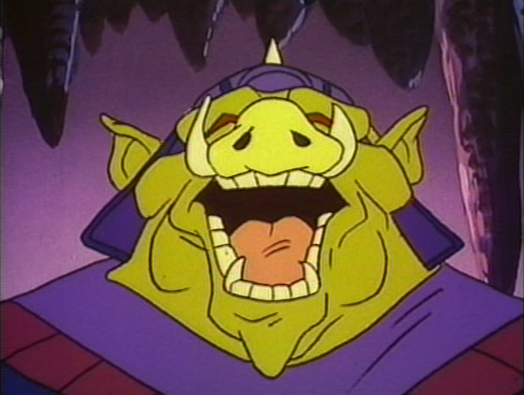
Who could blame Ganon for laughing, when Prince Facade is this entertaining?
I haven’t been too enthused about the non-canon elements of the show before this episode — or indeed many after — but I highly enjoyed Prince Facade taking center stage, and King Harkinian’s introduction helped expand on the TV series’ universe.
There was also an interesting change of pace as Ganon waited for the right moment to strike, anticipating Link’s departure and Facade’s ineptitude at protecting the princess. At no point does he engage in a direct encounter with Link and Zelda as he usually does, instead pulling the strings and orchestrating his plan from the depths of the Underworld. It proved that the villain is capable of strategic mastery rather than just brute force, which was necessary after his oddly misshapen plan from the previous episode.
I have to give this episode props for being the funniest in the whole series.
If I have one criticism about this episode, it’s that it portrays Zelda in a rather unlikable fashion. Her infatuation with Facade causes her to dismiss Link completely, saying he’s “not in the prince’s class” and forgetting about him entirely while in Facade’s presence. It’s funny at first, what with her accidentally introducing him as “Stink” to Facade, but it soon becomes mean and strangely out of character for Zelda.
Link and Zelda reunite, leaving Prince Facade in the mud.
Link, however, sees some real development in this story. As Facade refuses to help Zelda at the cost of his clean clothes, this gives Link an opportunity to prove his worth, unafraid of what lies in the swamp and saving Zelda from being dragged into the imminent Underworld gate. Until this point, we’re mostly under the assumption that Link only pursues adventure for fun and only assists Zelda in the hope of receiving a kiss, but he undergoes a moment of true heroism as he makes a stand and says, “She’s not worth saving, but I’m doing it anyway.” It’s in this moment that we realize even this often-frivolous interpretation of Link is still highly honorable and courageous, setting him apart from frauds like Facade.
Most importantly of all, for a show that relies heavily on running gags — with the “Saved you princess! Kiss me” line particularly tiresome at times — I have to give this episode props for being the funniest in the whole series.
Reece Heather
Reece is the former leading news editor and columns editor at Zelda Universe, and is the greatest video game journalist in the history of video game journalism. He recently won an award for "World's Most Influential Video Game Critic," but had to decline his certificate as his ego is now too big for him to leave his front door.


 by Reece Heather on September 6, 2019