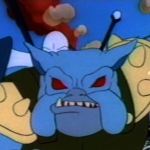
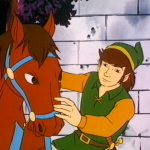
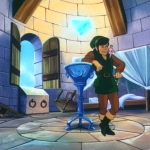
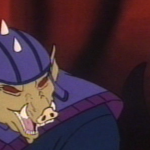
With our 30th-anniversary celebration of The Legend of Zelda animated series underway, it seemed an appropriate time for us to sit down and rewatch the show leading up to the big event this September. With a fresh perspective, we’re going to be looking back upon each episode to see just how the animated adventures of Link and Zelda stack up today.
Love it or hate it, “The Ringer” marked the beginning of a unique era of The Legend of Zelda. It began the one and only time that the franchise graced the small screen, giving the first generation of Nintendo gamers something to watch as they dug into a bowl of Nintendo Cereal System.
If you can set aside your expectations for Zelda character personalities based on the long history of the video game series, and accept that there was very little material for the producers to work with back in 1989 (The Legend of Zelda and Zelda II: The Adventure of Link were the only games available at the time), there’s a lot to love and appreciate in this first episode.
Infatuation and intrusion
Moblins break into Link’s room in an attempt to steal the Triforce of Wisdom, which marks the “third attack by Ganon this month” according to Zelda.
The opening scene is a very fitting one for a Legend of Zelda animation, panning over a peaceful-looking Hyrule while a very pleasant flute version of the main Zelda theme plays. We also see a very sleepy Link awakening from his slumber, a motif seen often in Zelda games released after this series aired.
This sense of familiarity comes to a halt, of course, when our otherwise-wordless warrior starts to speak. As Link awakens in an agitated mood, he laments his peaceful life at the castle, recalling having “a hero’s life” before. He ceases his boredom for a moment by gazing upon Princess Zelda from his window, quickly establishing a romantic interest for Link. Zelda isn’t too happy about his whistling, though, proving that our princess won’t be won over so easily.
It’s not long until Link gets his wish, as Moblins sneak into his room for an ambush. Ganon’s minions are on a mission to claim the Triforce of Wisdom, which is guarded by Link. The ensuing action isn’t bad at all for late ’80s animation, with Link somersaulting over his enemies and bouncing off walls in a playful fashion.
It’s when Link first grabs his sword that I really felt at home watching this episode.
It’s when Link first grabs his sword that I really felt at home watching this episode. This is when we’re introduced to one of my absolute favorite aspects of this cartoon: the use of the NES sound effects. Link retains his Sword Beam attack from the games (referred to simply as “zaps” here), and as his sword lights up and as Moblins are struck, I can’t help but smile when I hear those iconic sounds. Speaking of auditory amusement, those Moblin voices are hilarious — props to the late Len Carlson, who provided his voice for both Ganon and his incompetent subordinates.
Talking Triforces
There are three significant changes to the Triforce in the animated series. The first is that there are only two pieces of the Triforce: the Triforce of Wisdom, protected by Link and Zelda, and the Triforce of Power, which lies in the clutches of Ganon. The Triforce of Courage is nowhere to be seen, though this makes sense; this piece was also not present in the original Legend of Zelda, and while we did see the Courage piece introduced in The Adventure of Link, the show seems to lean more on the first game in terms of influence. It also keeps the show’s plot a little simpler, which makes sense considering the younger audience.
In the show’s opening, Zelda establishes that “Whoever gets both Triforces will rule this land forever!”
The second change is the appearance of both Triforce pieces. Rather than flat triangles, they are sparkling tetrahedrons that float when placed in their pedestals. The Triforce of Wisdom glows green, while the Triforce of Power glows red. Differentiating both pieces using color was a good call; the Wisdom piece allows Zelda to wield magic, and the Power piece strengthens Ganon’s abilities, so a distinction was necessary.
The third and perhaps most surprising change is that both pieces of the Triforce can speak. The Triforce of Wisdom only seems to speak in rhymes, warning Ganon in this episode that “Evil is the path you choose, but evildoers always lose” during his attempt to steal it. It offers more wisdom in following episodes, but “The Ringer” is notable because it shows the one and only time that the Triforce of Power speaks. When Ganon ponders entering the magician’s contest in Hyrule, it says, “But you’re no amateur! You’re a pro!” It’s only one small line, but it seems to both advise and flatter Ganon, which may indicate that it respects its master.
It’s quite jarring to see the Triforce presented this way, after years of knowing it as a silent, sacred relic in the games, but it matches the tone and the traditional fantasy elements of the show.
Enter the dragon
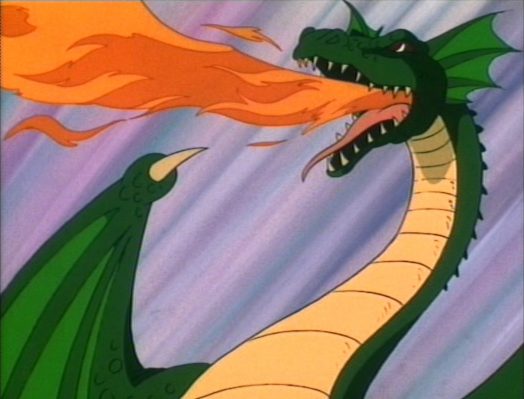
Fearsome beasts are just what a Zelda cartoon needs, though it would have been much better if it were a specific monster from the games.
As we’re introduced to the series’ villain, Ganon, we learn that while he is capable of strong magic in the Underworld, his ability to teleport becomes “limited” when he ventures out on the surface. This means he has to devise strategies in order to get close to North Castle in his attempts to steal the Triforce of Wisdom. In this episode, his plan is to enter the aforementioned magician’s contest.
Ganon disguises himself and his Stalfos servants, convincing Zelda (who is hosting and judging the contest) that he is an amateur magician. While waiting for his turn, Ganon summons an Ache (a bat-like creature from The Adventure of Link) to spy on the tower. As his minion reports the presence of Link, Ganon finds an opportune moment to unleash some magic to draw the hero’s attention, turning a small lizard into a giant dragon.
While a dragon is a believable adversary in the world of Zelda, it’s a shame that it’s presented as a generic dragon rather than one based on an enemy from the games, such as an Aquamentus or Gleeok (though to the show’s credit, both of these enemies appear in later episodes). Being Link’s first battle against a giant monster in the series, it feels like a missed opportunity. It must be said, however, that this cartoon is usually very good at making use of the bestiary from The Legend of Zelda and The Adventure of Link; this first episode just isn’t a good example of that.
Co-op mode enabled
As Ganon makes his escape with the Triforce of Wisdom, Link and Zelda make chase in style, launching from a giant tree that an elderly magician kindly summoned with a growing spell. As Link stops Ganon from reaching a secret Underworld entrance, the boar-faced brute is forced to make a stand. Thus ensues the best sequence in this episode.
The greatest thing that this first episode establishes is that Zelda is just as skilled in combat as Link is. After handing Zelda a bow, Link ties his belt around them for a back-to-back stand-off against the surrounding army of Stalfos that are closing in on our heroes. Being tethered together, the duo is able to perform some acrobatic-style fighting moves.
Tethered to Link, Zelda is able to lean back on Link and fire a shot directly at Ganon.
After all of the Stalfos are defeated, Ganon attempts to slip away with the Triforce, only to be stopped by a bomb deflected by Link’s sword. The episode ends with Ganon transported back to his Evil Jar (a magical device in the Underworld where Ganon and his minions will reappear upon defeat), swearing to Link and Zelda that they will pay. And with that, the series has its recurring setup.
Ringing up the curtain
“The Ringer” may be lacking a “boss fight” that fans could recognize from the games, but it has enough of the smaller monsters to remind them that this is very much a Zelda cartoon. The Moblin raid, spying Ache, and the Stalfos battle were more than enough to keep Link and Zelda on their toes.
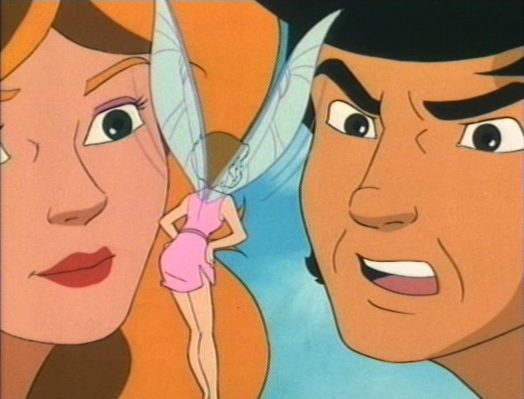
Spryte puts a stop to Link and Zelda’s impending kiss.
Speaking of our heroes, this episode’s biggest strength is in how the main cast is introduced, as well as the relationships that intertwine them. Despite Zelda’s resistance to Link’s flirtatious advances, the pair seem to share a strong bond, which is evident both in their bantering dialogue and ability to fight together.
Even Spryte, with the little screen time she has in this episode, presents her affection for Link and jealousy towards Zelda. At one point, Spryte suggests that Link forget about Zelda and focus on her instead, calling the princess a “snot.” After rejecting him twice before, Zelda gives in to Link’s request for a kiss near the end, but the romantic moment is interrupted by Spryte telling them to “knock it off.” With Spryte offering Zelda a robe at the beginning of the episode, though, it’s still clear that they’re all close friends.
this episode’s biggest strength is in how the main cast is introduced, as well as the relationships that intertwine them.
Something that this episode also achieves, which is impressive given the 15-minute runtime, is encapsulating the entire show in a nutshell. The show’s formula is made clear: Ganon devises a new plan to steal the Triforce, while Link and Zelda stop him and his minions. We are also introduced to the running tropes: Link’s ultimate motivation is to kiss Zelda, and whenever he is finally given the opportunity, they are interrupted. And of course, there is Link’s infamous catchphrase, “Excuse me, princess!” (Don’t worry, I didn’t forget about that; we’ll be exploring that in more depth in an upcoming article!)
It’s far from the most complex and sophisticated pieces of animation, but had I watched this as a child (having become a Zelda fan from a young age), I know I would have watched this and wanted to see more, and what more could you want from a first episode?
Reece Heather
Reece is the former leading news editor and columns editor at Zelda Universe, and is the greatest video game journalist in the history of video game journalism. He recently won an award for "World's Most Influential Video Game Critic," but had to decline his certificate as his ego is now too big for him to leave his front door.


 by Reece Heather on September 2, 2019