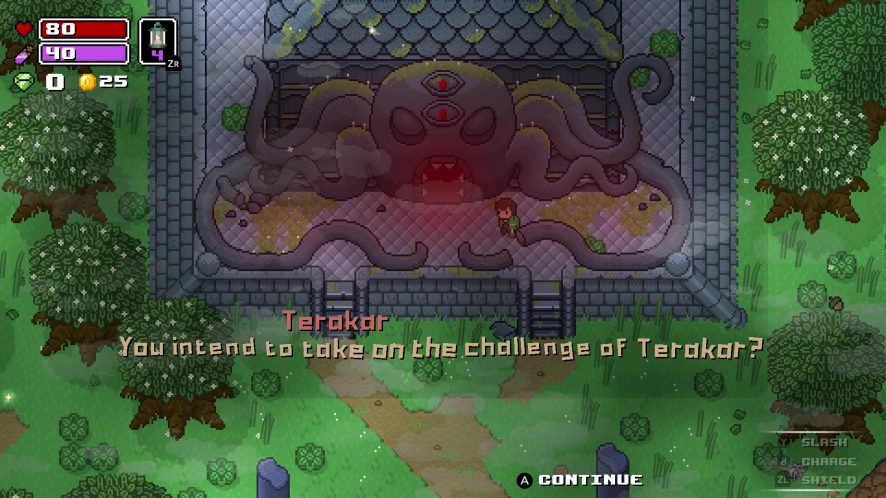
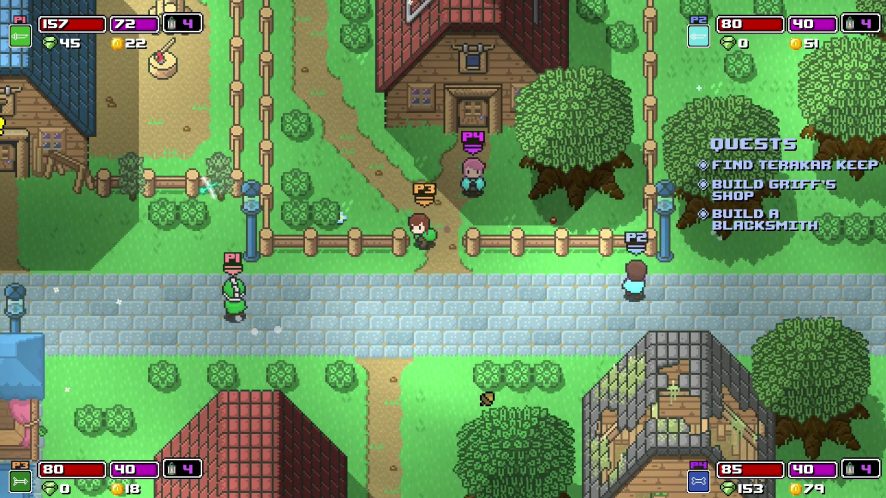
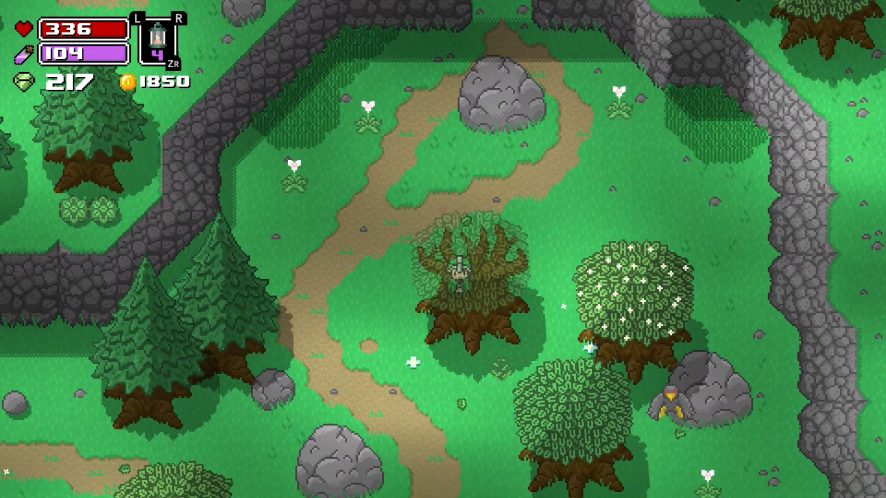
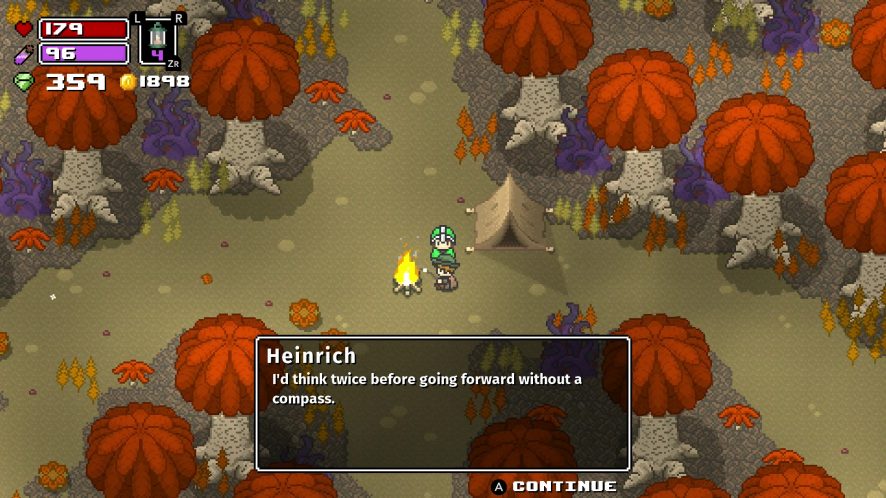
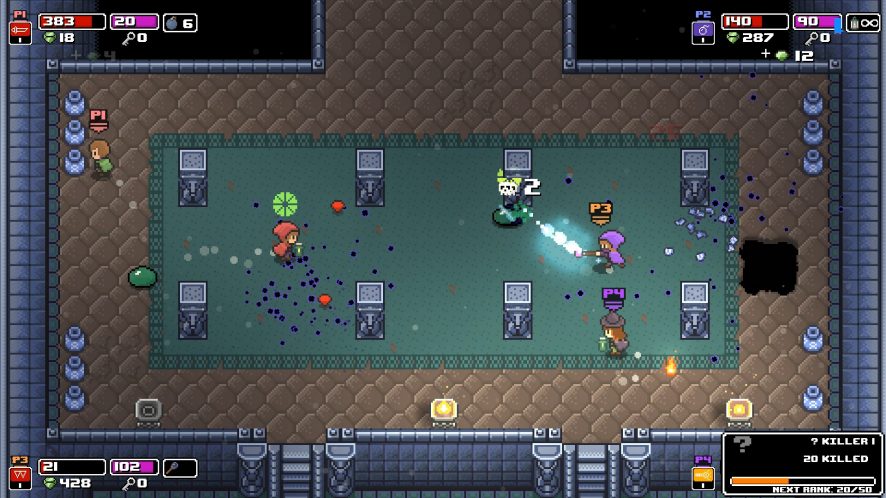
Rogue Heroes: Ruins of Tasos is a new action-adventure game developed by Heliocentric Studios and published by Team17. Set on the mysterious island of Tasos, you are the land’s chosen Hero and must protect it from the return of four evil Titans. The Titans were defeated and sealed away long ago by the island’s four Goddesses, but the seals are weakening and the Titans are close to escaping their prisons. You, as the Hero, must travel to every corner of the island to complete trials and vanquish monsters to ensure that the Titans remain imprisoned.
Right off the bat, Rogue Heroes’ genre and premise tell you to expect a fun and imaginative experience. Inspired heavily by many of the classic adventure titles that have come before it, this game delivers nearly everything that fans of the genre enjoy. It has exploration, puzzles, combat, collectibles, charming characters, and dangerous enemies — it checks off every box fans want to see filled.
FULL DISCLOSURE:
Heliocentric Studios and Team17 graciously gave Zelda Universe a review code for Rogue Heroes: Ruins of Tasos.
Considering how the theme, genre, story, gameplay, and mechanics fit together, as well as the visual similarities, it’s easy to understand how I, as a Zelda fan, would be thrilled to play this game. The comparisons are obvious and welcomed. I can’t get enough of Zelda, so when Nintendo isn’t able to offer it to me, I can rely on other developers to help out. This game being a “Zelda-like” game is probably what most people will think when they look at it. And while that is true, the great thing about Rogue Heroes is that a lot of its key components offer content that isn’t present in my favorite franchise. There’s a new and unique fun to be had with this game.
Story Time
As I mentioned at the beginning, the story for Rogue Heroes is about a Hero (or a band of Heroes, if you are playing with friends) who must protect the land of Tasos from the encroaching threat of four monstrous Titans. Long before the game’s present day, four Goddesses waged war with the titans. They ultimately sealed the titans away in four dungeons, but they did so at the cost of their own lives. Now the Goddesses’ spirits watch over the temples where the titans are imprisoned.
But as the ages have passed, the seals have weakened, and the titans have been able to exert their evil influences. They unleashed terrible monsters onto the land, four of which are their Guardians. One Guardian resides in each dungeon, and the Hero or Heroes must venture into these labyrinths and dispose of each one to secure Tasos’ peace.
The story is simple and straightforward. Much like the original Zelda games and other classic adventure games, the story is there to give the player drive and purpose, but it’s not meant to be compelling. This game has many RPG elements, but you’re not going to find any emotional or profound tale that is common for certain RPG games. That’s the way I like it, but it’s worth mentioning for those who crave narrative depth.
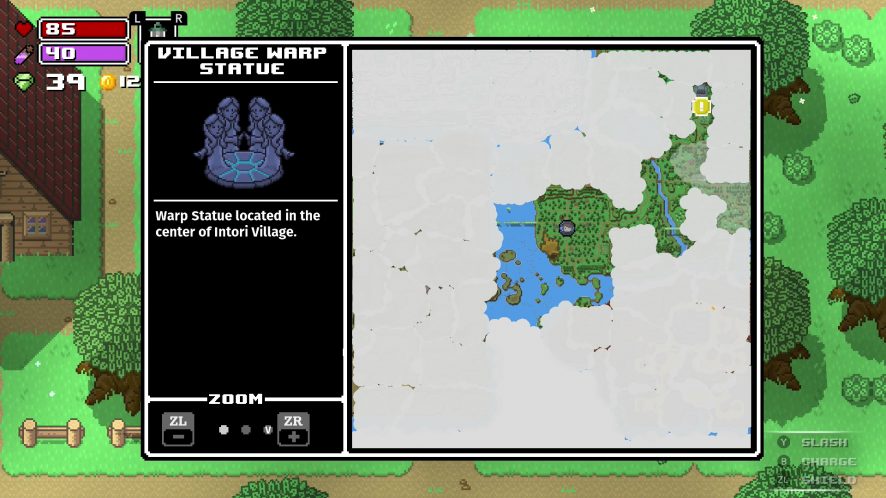
From the start, Rogue Heroes teases you with the promise of a vast yet hidden land to explore.
What makes the narrative aspect of the game alluring are the characters and the environments that give it relevance. The characters you interact with, though some of the interactions are brief, make the fantasy world come alive. They turn Tasos into an actual livable fantasy environment. So do the locations. There’s only one main town, but there are a few settlements and ruins of previous villages sprinkled throughout the island to give weight to the story’s timeline. It’s not much, but it is enough.
A Treat For The Senses
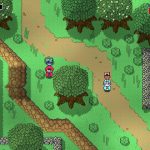
What immediately draws Zelda and adventure lovers to Rogue Heroes are its visual style and graphics. It is a 2D game with a top-down perspective, the same as many classic adventure games from the 8-bit and 16-bit eras of gaming. It employs that always-nostalgic pixelated graphics, and its style of art has an adorable charm to it. Despite how dangerous everything on the island of Tasos is, it’s hard to not get drawn in by the cuteness of it all.
An important detail for me while playing the game is that I could easily tell what everything was. Many times, while playing retro-inspired games, I can have trouble identifying what an item, character, enemy, or other object is. Some developers take the basic nature of the visuals too far. That wasn’t the case with what Heliocentric created. I always knew what I was looking at, even down to the tiny details such as leaves scattering to the ground after a bush had been chopped to pieces.
Everything about this game looks great.
Paired well with the game’s visuals was its audio. Now, Rogue Heroes is lacking when it comes to a stellar soundtrack, but the same can be said of Breath of the Wild. And like Breath of the Wild, it seems to have been a conscious choice. The music, when it is not replaced with environmental sounds, is subtle and soft for the most part. The soundtrack never tries to be the main attraction. I was upset at first, but once I got into the dungeons and I needed to keep my full attention on what I was doing, I appreciated that I didn’t have some over-the-top beat distracting me.
A Full And Fulfilling Experience
The heart of Rogue Heroes, as is the heart of any good game, is the gameplay. Mechanics, features, puzzles, and combat are what any good adventure game needs so the player can feel their time is being well spent. And Rogue Heroes has all of these in spades.
For the game’s core mechanics, think A Link to the Past, but updated slightly. Progression through the game’s world and dungeons is fun and addictive. The constant use of the sword, shield, items, and special abilities keeps the action levels high and compelling. The various ways to interact with the different landscapes and enemies make every new location actually feel new. And all of these are made fun and possible by the game’s solid and accurate controls. There’s a richness to how Rogue Heroes operates at every moment.
Then there are the game’s features, of which there are honestly too many to go over in this review, so I’ll stick to the best three.
Heroes Among Us
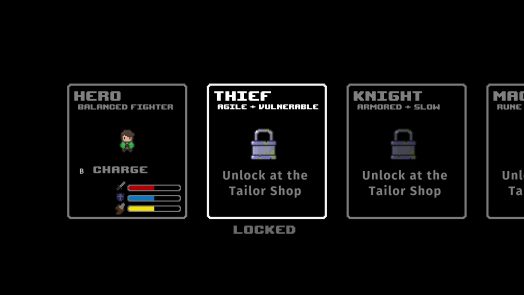
The most important inclusion in this game would be the eight different class types that you can unlock and use. You’ll start out with the standard Hero type, then you’ll unlock the rest as the game progresses. Once they are unlocked, you can swap your class out at any time simply by returning to your home and changing outfits.
Each class type has its advantages and disadvantages, and each of them also comes with a unique ability. Once you have them all unlocked, which one you will use simply becomes a matter of personal taste. While I was playing, I stuck with the Knight for most of the adventure. The Knight isn’t as mobile as the other classes, but he has the greatest defense available, and his ability to leap across spikes and enemies was incredibly useful.
Time To Level Up
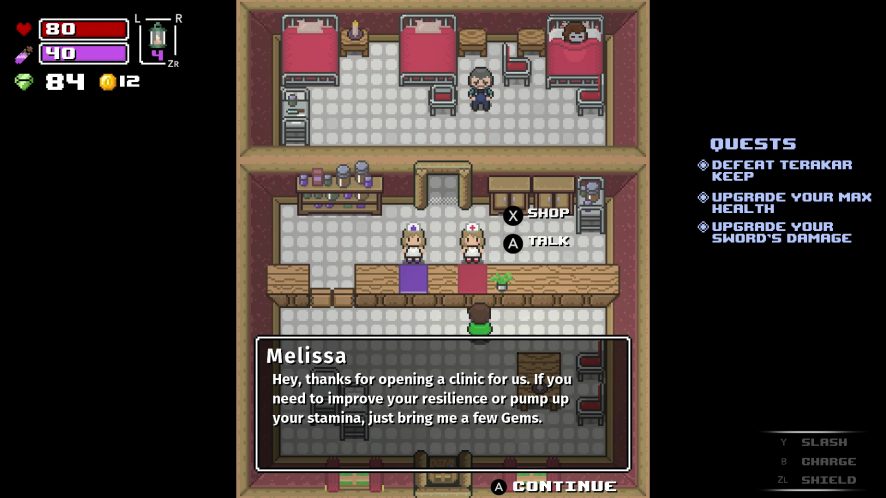
Following the class types, the feature that was most pivotal to the game was the ability to level up your character’s stats. While exploring the four main dungeons, you’ll find a large number of gems, which is one of this game’s two forms of currency. You can use these gems to buy all manner of items and gear in town, but you can also spend them to increase your health, magic, attack strength, and more.
Rogue Heroes 3
Rogue Heroes 3
Each of these stats has a different NPC you can visit to make the purchase, and talking to them will reveal expansive skill trees. You can boost a stat one part at a time, but each subsequent portion costs more gems than the previous one. The process works to keep the game balanced and ensure that you have either cleared later dungeons or returned to older dungeons multiple times before you can level up a stat too soon.
This strategy for leveling up your character works and is fun at times, but the issue is that there is simply too much of it for each stat. The options available are not all worthwhile, in my opinion, and you could potentially end up spending a lot of gems on an upgrade that doesn’t see a lot of use.
You can also level up your items and weapons, which can rarely seem worth it. While I was playing, I only enhanced two of my items. They were the only items I truly relied on when fighting enemies.
A Sense Of Community
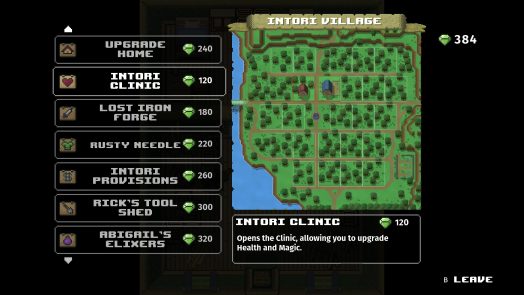
Finally, the last feature that must be mentioned is the ability to build and improve the game’s town. Intori Village becomes your home at the start of the adventure. While you play and earn the gems, you can take those gems to a man who will build businesses and homes for you and the other people who live in town.
Shades of SimCity.
You can invite certain characters to then live in those homes, you can build a garden to grow crops that you can sell for coins (the game’s second currency), and you can complete side quests for the NPCs. The town’s intricacies give Rogue Heroes that extra bit of depth to appease fans who want more than just action.
A Major Test Of Strength
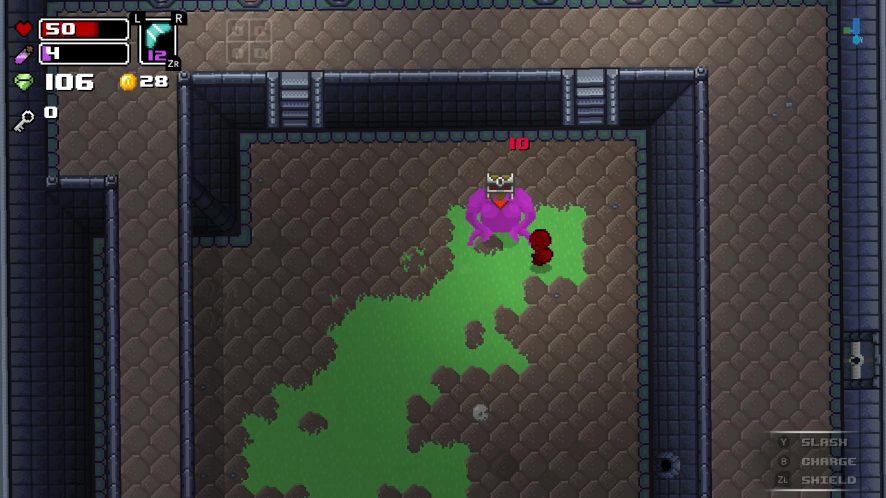
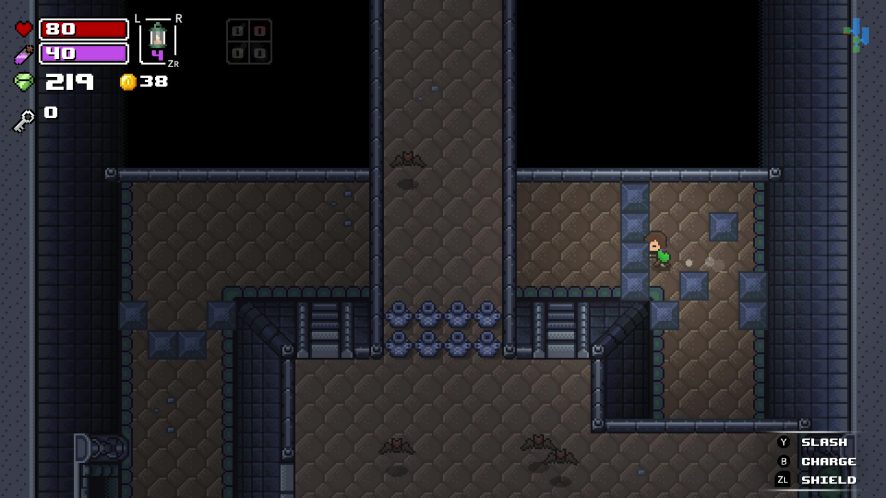
The final and largest piece of Rogue Heroes’ core content is its collection of dungeons. Wait, I’ll rephrase that: its collection of brutal dungeons. The dungeons are where the game separates itself from other adventure games, especially Legend of Zelda games. Unless you’re a person who only ever seeks a challenge from a game, you’ll be dying a lot once you pass through a dungeon’s foreboding front door.
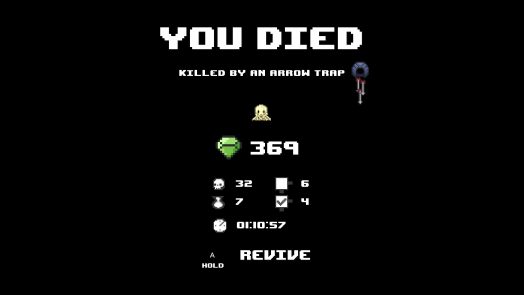
The traps are fast and painful, and the enemies are even worse. Plus, the dungeons are each split into three floors, and the enemies grow stronger on every new floor you reach. If you are not quick and accurate with your movements and attacks, and if you fail to be mindful of your surroundings, you’re going to see the words “You Died” appear on the screen time and time again.
This screen was a constant companion of mine during the start of my playthrough.
But it’s not all gloom and doom. There’s a point to this difficulty. The dungeons are where you earn the gems, so the game has to ensure you earn them at a proper pace and that you actually use them. When you die (notice that I didn’t say “if”), you are instantly revived back at your home in Intori Village. While in town, you can spend the gems you collected to improve your stats. Then, you can try to face the dungeon’s challenge again. It’s a process you’ll repeat till the dungeon is cleared and its boss is destroyed.
Rogue Heroes 3
Rogue Heroes 3
This process would be insufferably boring and repetitive if the dungeons were the exact same every time you explored them. Thankfully, that is not the case. Each dungeon is procedurally generated, meaning the rooms will never be explored in the same order more than once. The choice to design the dungeons this way gives them a level of replay-ability that is rarely seen in any adventure game. It also adds to the challenge. You can learn the patterns of individual rooms, but you have to quickly adapt to the dungeon’s entire layout. For people who enjoy playing those A Link to the Past randomizers, this is a chance to play an original and full game that’s similar to those.
Heroes Help Heroes
Aside from the multiple class types and the procedural dungeons, the biggest draw to Rogue Heroes is the local and online co-op modes. You and up to three of your friends can play the game and work together to explore Tasos and conquer its dungeons.
Playing with friends makes the game even more fun.
The comparison might seem too obvious, but think Four Swords or Four Swords Adventures. Each player has free control of their character, and they can team up to overwhelm enemies and solves dungeons that would be harder to deal with when playing the game solo. Everyone also shares in the collected items, gems, coins, and health orbs while playing. This helps ensure that everyone survives and progresses at an equal pace.
You can even revive your fallen friends. When someone dies in a dungeon, as morbid as it might sound, they will explode and leave only their skull behind. You can then pick up that skull and take it to one of the numerous altars found throughout the dungeon to revive the player. The game gives you and your friends all the chances you should need to keep everyone alive till you reach the boss.
The Ugly Side Of A Grand Adventure
Now comes the game’s shortcomings. In terms of design choices that I think should have been handled differently, there aren’t many. I already mentioned things such as the excessive options for leveling up the character’s stats. Aside from that, the only thing I believe should have been different was the stamina gauge. The character has a stamina gauge that depletes whenever he uses the sword or shield. You can upgrade the gauge the same as any other stat, but at the start, it did not last nearly long enough.
Those were my handful of problems with the design choices. The keyword here is “choices.” In terms of things that the developers did not intend, there is a list. There is definitely a list.
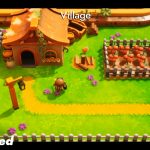
What do Rogue Heroes and a coat bought from a shady pawnshop, unfortunately, have in common? The more time you spend in it, the more bugs you’re going to find. Yes, this game is buggy. It is undeniably buggy. Though, not all of them are problematic. Some are common for indie games, such as the character’s tendency to clip into parts of the terrain. Others are simply visual, such as when object layers are screwed up. I was very amused when I saw that the base of a house was suddenly covering my character’s head while I stood next to it.
This forest is crawling with bugs, apparently.
That graphical stuff is minor. A more frustrating problem comes from how the game would not properly load important content. I found multiple instances where my character seemed to not align with the rest of the game. I could walk through objects such as trees and rocks, and enemies couldn’t hit me. This was amusing at first, but then I hit what seemed like an invisible wall and had to figure out a way to correct the problem. I did find it, but it was still annoying to deal with.
But then there are the times when I couldn’t correct the problem. That was my issue when I tried to explore the region where the third dungeon hid. This part of the game is a lot like the Lost Wood from Zelda. If you don’t follow the right pattern or find a required item, you’re not getting through it. That’s all fine — if the game loads the important NPCs that will lead you to proper progression. Do you want to guess what Rogue Heroes did not do for me? I literally could not complete the game due to that, and I had to wait till the software was updated.
Pre-patch, this guy didn’t exist.
To wrap up this tangent about the game’s issues, I have to mention a few things about the online. I played the online mode for about three or four hours with three other Zelda Universe team members, and we encountered a number of glitches and performance issues. The worst was that we randomly lost our connection two times, with one of those times actually forcing the game to close. Those crashes happened fairly early into our session, so I don’t know if the issue was with the connection or the game itself. It might have been fixed in the update, but I was not able to test it for this review.
While not as bad as the random lost connections, the other problem was that certain dungeon elements such as the doors, treasure chests, and keys failed to appear on everyone’s screen. It was admittedly amusing to see someone running in place because on their end they were walking into a treasure chest, but these problems made it difficult for us to properly coordinate with each other.
I don’t mean to bash the game by listing these problems. There is so much that I love about Rogue Heroes. It offers something that many Zelda games either can’t or won’t, and being able to play with friends is a blast. But all of this praise is contingent on the game working as intended. My hope is that the developers will continue to work on the game and release additional patches. (At the time of this publication, the game is on version 1.0.2.)
Final Verdict
Rogue Heroes is an ambitious and entertaining indie adventure that fans of the action-adventure genre should at the very least pay close attention to. It offers a lot of what fans love from these types of games while bringing its own new elements. And any Zelda fan would especially appreciate the inspiration and influence that Zelda games have had on it.
But the bugs are an issue. At the price of $19.99, this game is a good example of “Let the buyer beware.” The remaining bugs aren’t going to break the game, but if they have not been fixed by the time you play it, there is a good chance that they will annoy you. So, it’s a matter of how patient you tend to be with indie games. Now, if the game didn’t have these performance issues, then I would without question say this is a must-play game for fans of the genre, and my final score for it would be at least a full point higher.
SCORE: 7/10
Zac Pricener
Zac Pricener has been an avid Zelda fan for twenty years. The series has been a source of creative inspiration for him and fueled his desire to become a writer. That desire to write in turn led him to now serve as the Features Manager, Assistant Columns Manager, and Assistant News Manger for Zelda Universe.


 by Zac Pricener on February 24, 2021