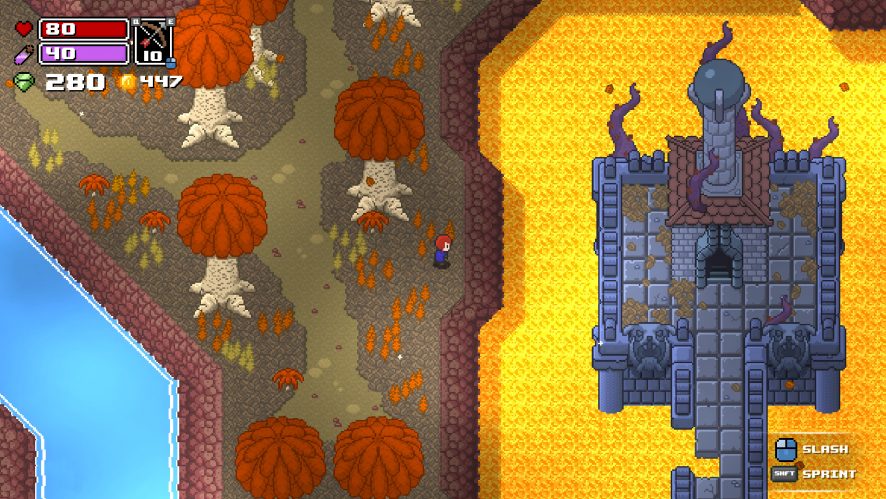
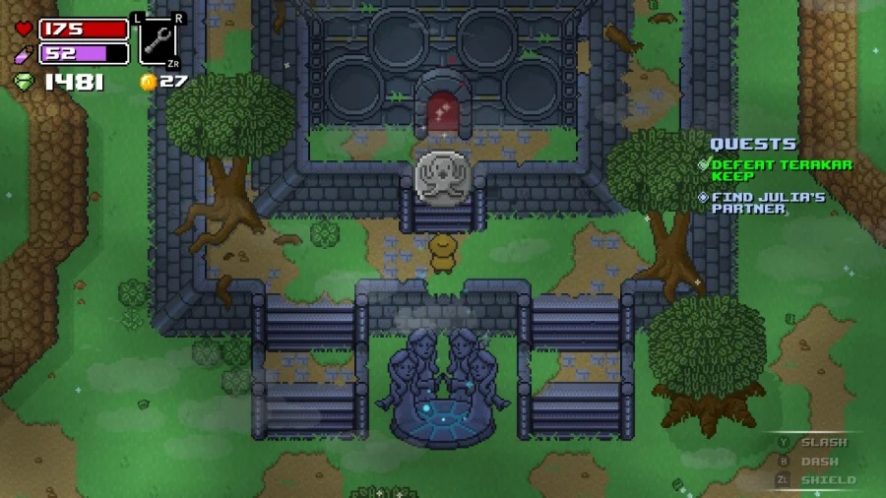
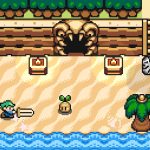
Today, February 23, 2021, Rogue Heroes: Ruins of Tasos launches on Steam for PC and on Nintendo Switch. Developed by Heliocentric Games and published by Team17, Rogue Heroes is an action-adventure game with procedural gameplay reminiscent of The Legend of Zelda: A Link to the Past. With that in mind, we were eager to get our hands on the free demo following the game’s release date announcement.
I had an opportunity to reach out for a Q&A with the development team at Heliocentric Games for insight into their creative process in developing Rogue Heroes. Josh Gump, Programmer and Sound Designer, and Brandon Weatherbee, Art and Level Designer, delve into the details behind Rogue Heroes.
Alison: What is the original inspiration for Rogue Heroes: Ruins of Tasos?
Josh: Rogue Heroes started as a simple side project during winter break years back. I was messing around with procedural generation and decided for a challenge to create infinite versions of some 16-bit classics. I started with an infinite runner version of Super Mario World then moved on to making an infinite dungeon based on The Legend of Zelda: A Link to the Past. Just walking through room after room in that generator was surprisingly fun. Roguelites had been getting pretty popular at the time but were mostly relegated to platformers, so it seemed like a good opportunity to bring the same elements to a top-down, action-adventure RPG.
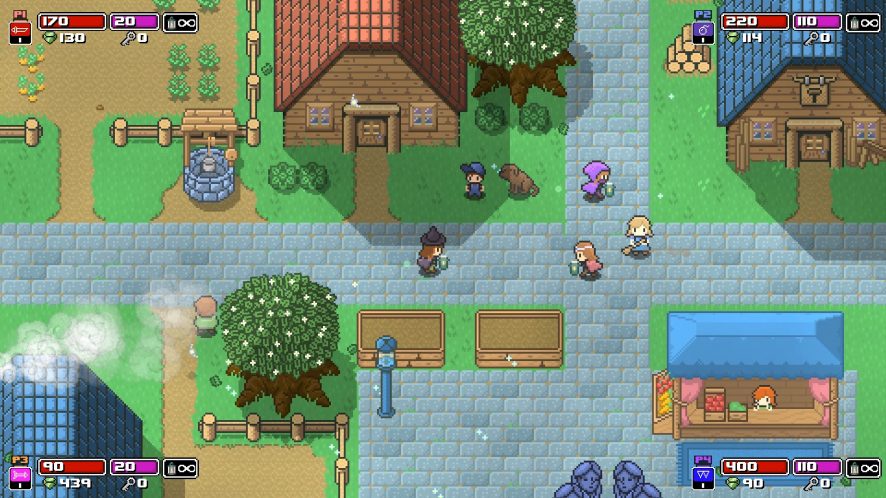
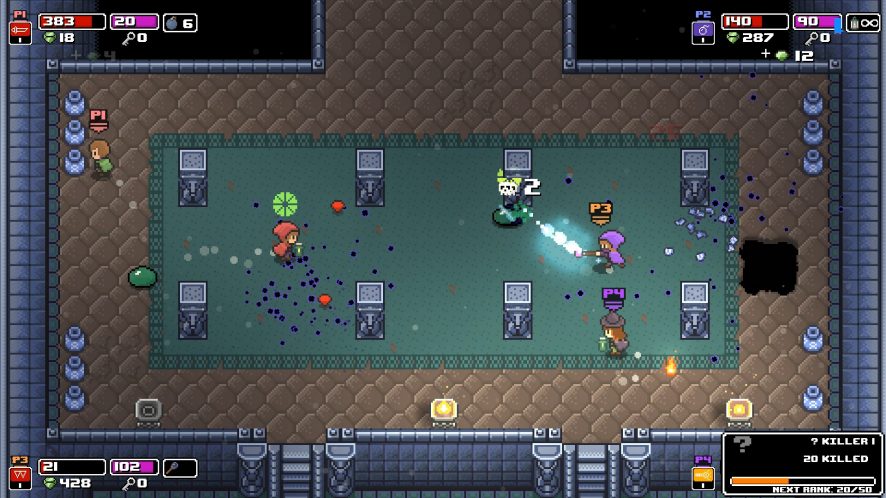
The game expanded in scope pretty naturally from there, but the biggest change was made about one year into development. I had seen a number of other games being worked on with a similar enough concept and style but none of them had co-op or multiplayer. This seemed like a good opportunity to add something unique, so we added four-player co-op to the campaign. That decision really started shaping what the game has become today, but we still play the game single-player more often than not, and I think anyone worrying about it being a co-op only game should give it a shot and see that it feels just as good solo.
Alison: What makes this game unique from other adventure-RPGs?
Brandon: There are a few things that make this game a bit different. Co-op is a big one, being able to play with your friends through the entire campaign, and carry progress back and forth between solo and co-op. There are roguelite aspects as well, where players can buy permanent upgrades for their tools, town, and characters with the gems they earn as they try to fight their way through the dungeons.
Alison: The co-op concept being a key aspect within this game, we are very interested in hearing more about it. What can players expect from the local and online co-op modes? Especially, how does the user experience change between single-player and co-op modes?
Brandon: The layouts of the dungeon rooms or puzzles can change based on the number of players. In co-op you might have to work together to trigger a treasure chest or open a door, while if you’re playing solo (or if your co-op allies have died) there will be a different solution.
Another difference is the player’s home. In co-op games, the home serves as a lobby of sorts with beds where players wake up at the start of a run, choose their class, and wait for their allies to get ready. In single player, the home can be upgraded and customised with furniture items found throughout the game.
Alison: The dungeons are something else entirely to the game! It was a surprise to play the demo and discover that each time you enter the dungeon, the map and rooms are never the same. Can you give us insight into the methodology for use of procedural dungeons?
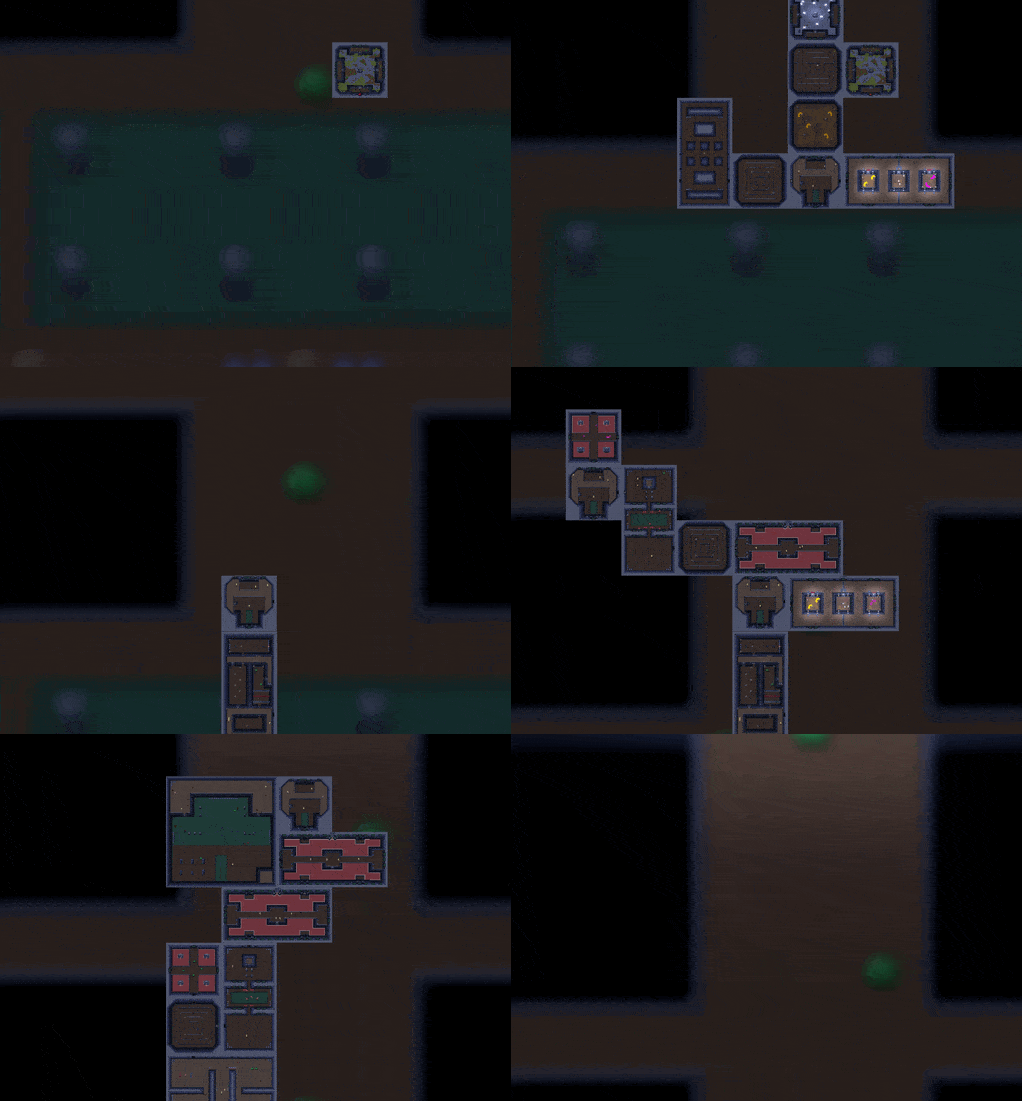
Josh: We generate the dungeon in a few phases that add more complexity and features in each stage.
Gif curtesy of Heliocentric Studios
First, an entrance and exit point for a floor is chosen and we then run pathfinding between these points using a randomly weighted grid, so the path isn’t linear. This path is the core set of rooms that players will make their way through to complete a floor. The grid also groups itself into blocks of 1×1, 1×2, 2×1, and 2×2, which makes some rooms along the path bigger and gives us a variety with smaller challenge rooms and larger exploration-based puzzle rooms.
Secondly, we place side rooms off of this main route, so the path isn’t clear and players get some choice of where they explore.
Thirdly, we chunk up the path and side rooms into sets of rooms and place a locked door between these sets. We then choose a suitable location randomly for the location of the key within the chunk to unlock the next one.
Lastly, we mix up the rooms adding random event points like a dungeon merchant, revive statue, Tasian gold chest, and bonus gem/key/upgrade chests. We also determine spawn groups and puzzle configurations during this stage. Even though we use templates for each room of the dungeon many of them come with multiple configurations, so they feel unique when you see them again.
We originally, very early on, had the dungeons entirely generated through procedural means and although this made room layouts completely unpredictable, it also made them a bit messy and simple. By using templates with variations and stitching them together randomly we get the best of both worlds. We also lower the chance to see a room again each time you see it, so it’s more likely you won’t see the same room twice in a single play through.
Alison: Can you tell us a little about how the Zelda series influenced you both in developing the game?
Brandon: The Zelda series was a huge influence. Like many in this community, we grew up playing these games and have a lot of great memories from them, especially the early ones like the original Legend of Zelda on NES and A Link to the Past on SNES. We wanted to make something that captured the feel of those games while putting our own twist on it, like the roguelite elements or online co-op so players can share the adventure with friends.
Josh: For me, our game is a love letter to A Link to the Past more than anything. That’s how it started, and a lot of that game’s DNA can be found in Rogue Heroes. During the SNES era I played that game more than any other combined, often just clearing a profile slot, deleting the next one and starting again. It’s one game that even now I still go back to, often trying to play through it at least once a year. Recently I’ve played some of the randomizers as well, which have been a lot of fun. I still love the series and look forward to playing through every new release. Even as the series changes and evolves it still carries with it a sense of adventure that very few titles can evoke.
Alison: I had an opportunity to play the free demo on Nintendo Switch, and it is quite a challenge! What overall difficulty were you all aiming for in Rogue Heroes?
Josh: We definitely wanted the game to be a bit on the tougher side while remaining approachable for casual players. Since we have roguelite elements in the game we want players to die at least a few times per dungeon so when they go back to town and spend their gems to level up they really feel stronger and more able to take down the dungeon each run.
This helps the game work better for players of different skill levels as more experienced players might make it through the game more quickly, while those having trouble will be given the opportunity to improve their stats to a point where they can overcome a dungeon. We’ve also added warps that players can permanently unlock and then return to a certain floor of the dungeon, which should feel like an accomplishment to earn as much as actually finishing a dungeon, as their progress is cemented by doing that.
Alison: Thanks for taking the time to answer all of our questions! To wrap this up, what do you most want the players to know?
Brandon: We really like the exploration aspect of games, so we don’t feel like you need to focus solely on defeating the dungeons. There are things to find and do throughout the overworld, and that can be a nice change of pace, and a different way to make progress! You’ll be able to find new equipment, side quests to unlock classes, and 100 collectible power spheres that allow you to retain a portion of your gems when returning to a dungeon.
If you would like to learn more about Rogue Heroes: Ruins of Tasos, you can check out Heliocentric’s webpage and YouTube for other gameplay content. And don’t forget to check out the full game on Nintendo Switch and Steam, available now!
Alison Smith
Alison is a news reporter with Zelda Universe, and has been a community member since 2006. She likes to dream of having hobbies, but honestly spends too much time either sleeping or chasing after her two cats to commit to anything.


 by Alison Smith on February 23, 2021