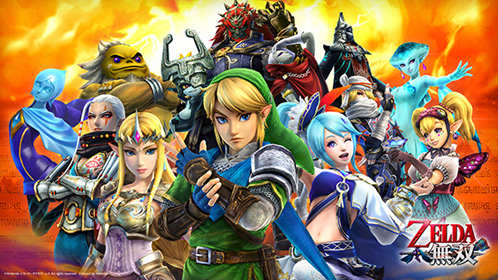
At its onset, the Hyrule Warriors series was a silly idea that cross-pollinated between Team Ninja, Koei Tecmo, and Nintendo as a non-canon Legend of Zelda spinoff to the classic hack-and-slash Dynasty Warriors games, commonly referred to as “Musou.” The initial premise of the first Hyrule Warriorsgame was simple — throw a colorful cast of Legend of Zelda characters onto a map to do war, slay enemies by the thousands, have a good romp with friends, and walk away from the controller. It released on the Wii U in 2014 with enough commercial success that Hyrule Warriors was re-launched with new content not just once, but twice; first as Hyrule Warriors Legends for the 3DS in 2014, and then Hyrule Warriors: Definitive Edition on the Switch in 2018.
The first Hyrule Warriors game was a Zelda fan’s playground, but it was never meant to be serious.
Despite some balks for its repetitive nature, Hyrule Warriors held true to its charm. It has been enjoyed by Zelda fans far and wide in the past decade for its rare capability of making numerous Zelda characters playable along with a handful of original fighters. The Zelda characters are on point in personality and wit, which is its strongest feature. The plot of Hyrule Warriors, however, is thin and somewhat laughable. Who cares? It’s a hack-and-slash Hyrulean Mario Party. The game was never meant to be taken seriously.
But once Breath of the Wild came onto the scene and changed everything we knew about Zelda, Hyrule Warriors stumbled into a new era. Things got much more serious. Enter Hyrule Warriors: Age of Calamity, a full-scale production detailing the Era of the Wilds with all the cutscenes and voice acting needed. Set as the dramatic prequel to Breath of the Wild (though that topic is hotly debated today), Age of Calamity was released in 2020 with even more success than its predecessor. Now we have its successor, Hyrule Warriors: Age of Imprisonment, the newest Hyrule Warriors installment that takes place in the legendary past of Tears of the Kingdom. Designed as a team effort by legacy Legend of Zelda staff, Koei Tecmo, and their brand new AAA Studio, Age of Imprisonment is an exciting entry into the series that does everything Age of Calamity accomplished and then some. In fact, Age of Imprisonment feels more like an actual Zelda game than a Musou even though it’s technically a third party product.
Full disclosure: Nintendo Australia has graciously provided us a release-day copy of Hyrule Warriors: Age of Imprisonment for review.
Live Through a Legendary Slice of Hyrulean History
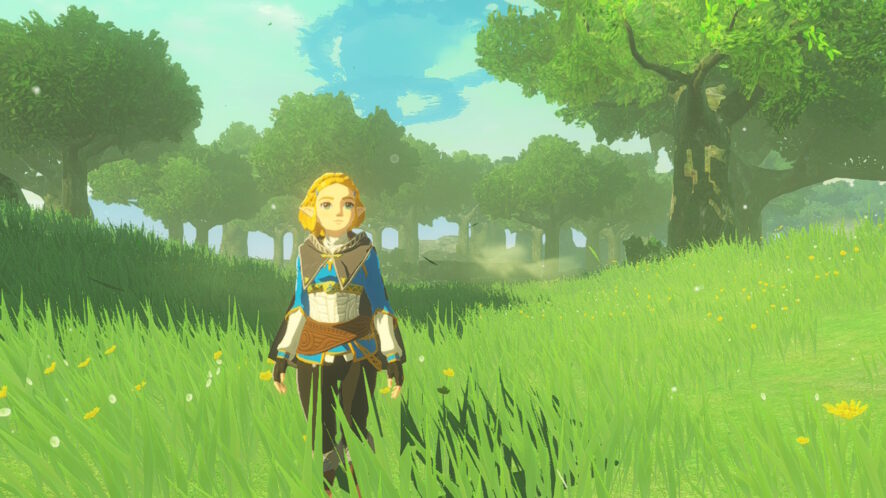
First, let’s address the elephant in the room. A sizable number of Zelda fans expressed measurable disappointment in Age of Calamity’s alternate timeline approach to address the apocalyptic backstory of Breath of the Wild. I hear you. Fortunately, there is good news. If you’re concerned about whether or not Age of Imprisonment is truly canon, there’s nothing to worry about (well, for anyone except Rauru and Zelda). Age of Imprisonment is exactly as it’s advertised. It’s a game all about fighting against Ganondorf’s armies in the Imprisoning War, at least as depicted in Tears of the Kingdom. The total sum accounts of the Imprisoning War are complicated, but that’s beside the point. We can finally play as Princess Zelda and experience what it was like to be in her shoes when she accidentally time warped to the ancient era in Tears of the Kingdom, a possibility that fans have been dreaming of since 2023.
Indeed, Age of Imprisonment faithfully follows the plot of Tears of the Kingdom to a “T.” No Secret Stone is left unturned. Even some of the cutscenes are identical. This part, however, is for the player’s benefit and nowhere near repetitive. These scenes often show different character perspectives and more context, giving us the opportunity to finally connect the dots. You don’t play Age of Imprisonment to know how it ends; you play it to learn more about the “who,” the “how,” and the “why.” Age of Imprisonment answers a lot of those nagging questions that left us scratching our heads with Tears of the Kingdom, and that alone is enough reason for fans to get this game.
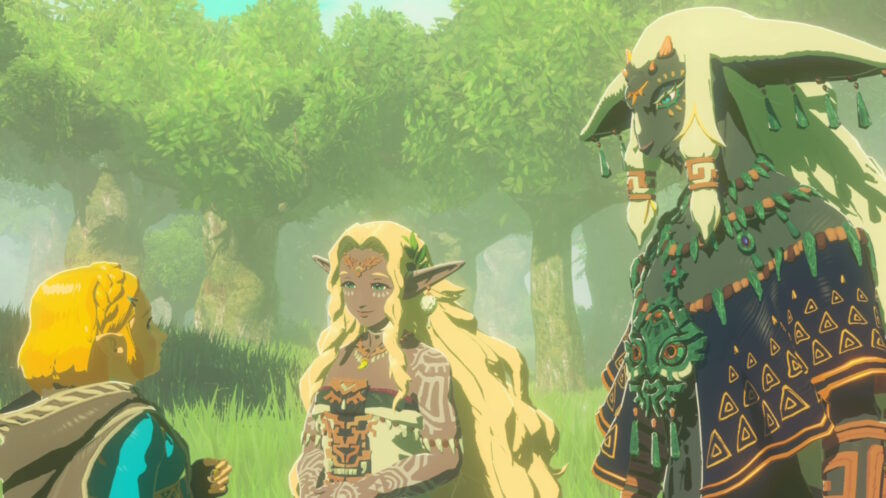
In fact, the lore yarn that Age of Imprisonment weaves is undisputedly its strongest feature. Thanks to the hard work of its developers, the game not only reproduces the scenes of Tears of the Kingdom with grace, it somehow makes them look better with the Switch 2 technology, and it sports over three hours of total cutscene content that is fully voice acted with the largest actor cast I have seen to date for a Zelda game. It’s good to know that a lot of voice actors are supported with this game. Once the cutscenes are unlocked, they can be replayed at your convenience which comes in handy for those pesky timeline forum debates.
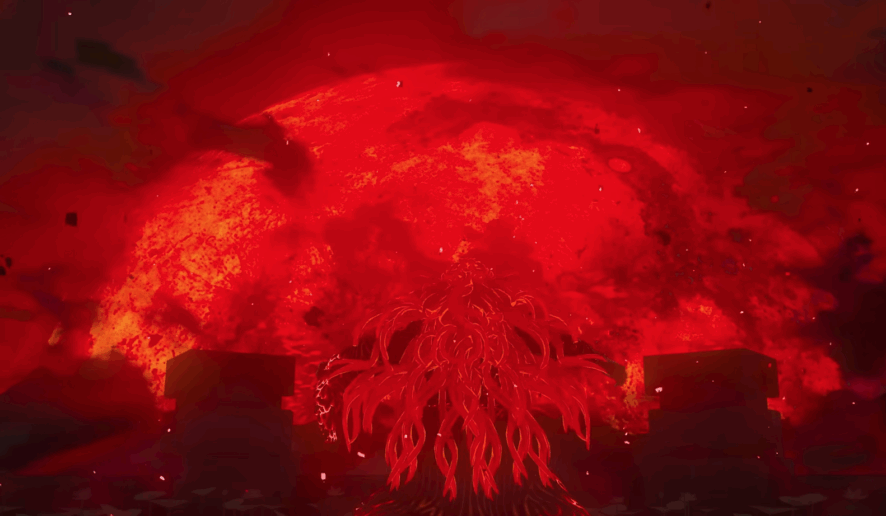
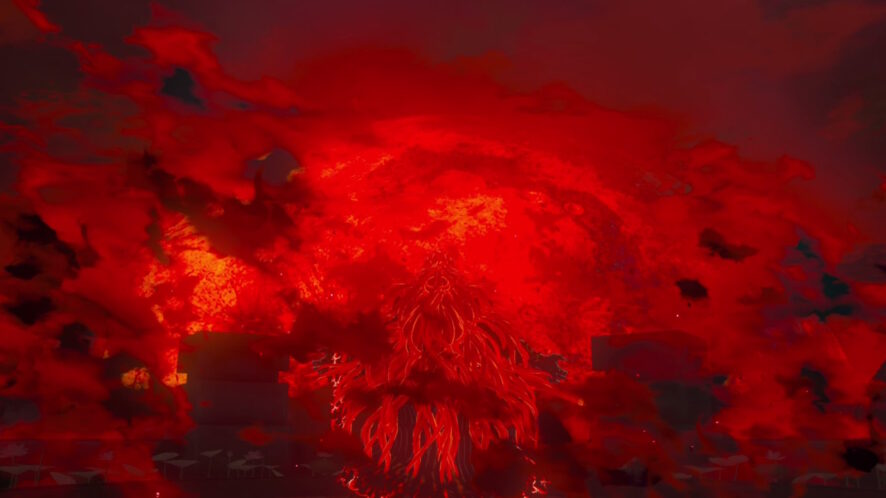
This screenshot came from Tears of the Kingdom on the Nintendo Switch.And this screenshot came from Age of Imprisonment on the Switch 2. Look at that detail!
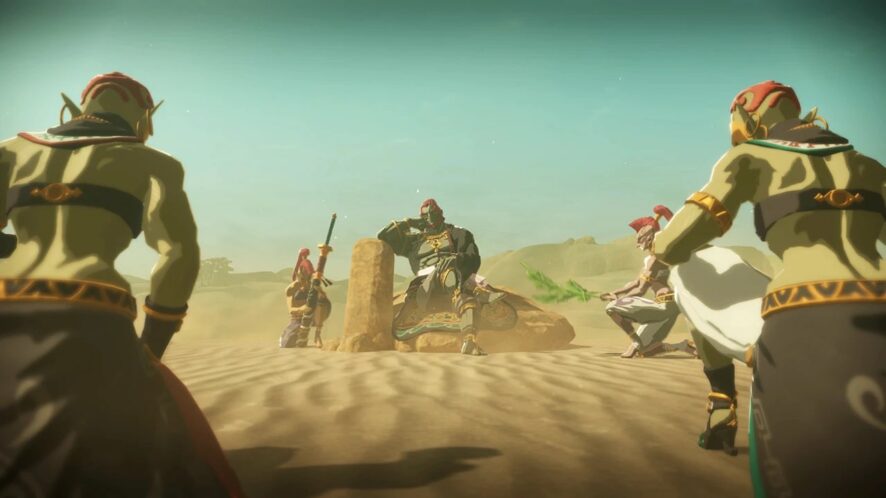
Being the Imprisoning War, the plot by nature is dark and heavy. We experience Ganondorf’s rapid descent to madness and how it affects everyone else in the primordial world of Hyrule. It’s an intriguing take for the series because one quickly realizes how much of the entire Legend of Zelda series is actually a war story. Nonetheless, Age of Imprisonment’s pacing is properly executed with engaging action from start to finish and well-timed comedy relief to keep things from getting depressing. The attention to detail is immaculate. I’ve yet to encounter any plot holes or hiccups in the continuity between Tears of the Kingdom and Age of Imprisonment, and that speaks volumes even for a mainline Zelda. A compelling narrative with tantalizing lore bits is the star in Age of Imprisonment, a refreshing change of pace from anemic plots that are characteristic to the open world trend. Even the gameplay is seamless to the story.
Speaking of which, it’s important to point out that while helpful and entertaining, you do not need prior experience of playing Breath of the Wild or Tears of the Kingdom to fully enjoy Age of Imprisonment, as the game’s setting in my experience has the advantage of being in a not-quite-a-prequel-but-sort-of-a-sequel position. And if you’ve played those games before, all the better. I won’t be surprised if finishing Age of Imprisonment fires you up to revisit the Era of the Wilds games again. There are a ton of fun details that cross-pollinate between the games that Zelda fans will be talking about for years to come.
Many times Age of Imprisonment feels more like a Zelda game than a Musou game.
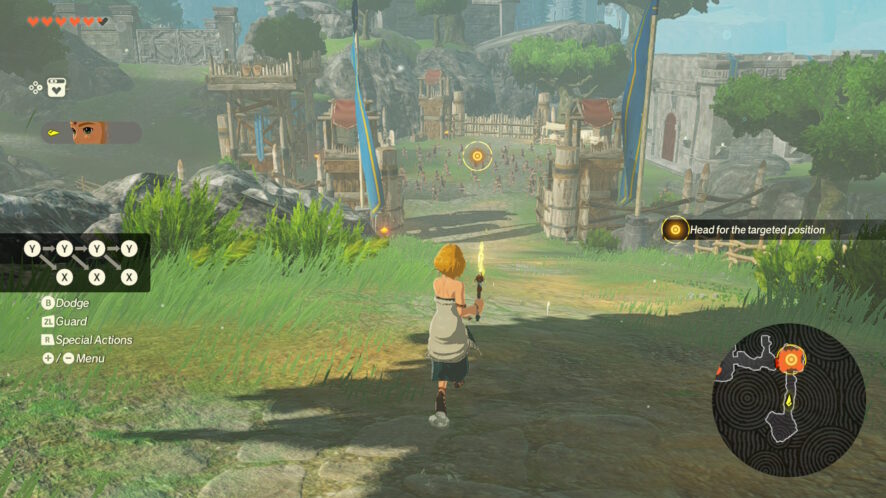
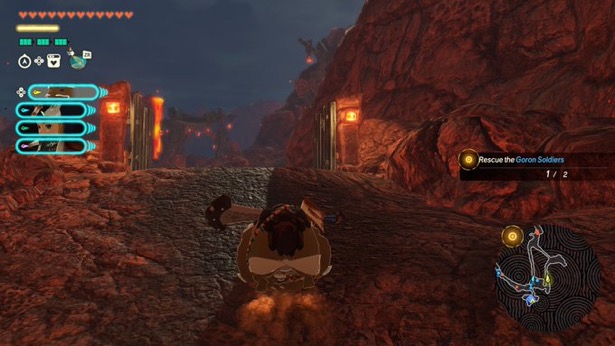
If you’re a Dynasty Warriors regular who is getting your feet wet into the Zelda franchise, you might find the maps to be somewhat underwhelming. The mechanics of commanding your warriors to go places and defend outposts are still there in Age of Imprisonment, and the map sizes do get larger with game progression, but the maps seem to be designed more for the Zelda world building and lore than hardcore tactical strategy. Players can afford to wander a bit and take in the beauty of Hyrule’s famous landmarks in its natural infancy, scout for treasure chests scattered across the map, and even collect Korok Seeds while fighting. The good news is that none of the campaigns feel like a chore. Each one is exciting to play. You can change the difficulty settings if you want to spice things up. Campaigns seem shorter and much more palatable to me than previous Hyrule Warriors titles, which gives me a greater sense of satisfaction — and makes the hours fly by if I’m not careful. There are even aerial dogfights in the middle of the action!
Battles are broken up with “cool down” phases to level up weapons, strengthen your fighters, take stock of your inventory, and discover fun pockets of lore across the map. A Steward Construct icon will appear as a navigation aid to recommend where to go next, which is helpful for new Warriors players. This type of pacing makes the gameplay approachable and incredibly fun, almost to the point of being addictive. Even the start screen and game map sucks you in as you lead your heroic Hyrulean team to defend their ancient homeland from Ganondorf against all odds. With this in mind, it holds greater benefit for the player to think of Age of Imprisonment as more like a Zelda game than a Musou game. Oh, who am I kidding? It’s a Zelda saga hiding inside a Musou like one of those folk nesting dolls.
Band Together to Save Hyrule in Thrilling Combat
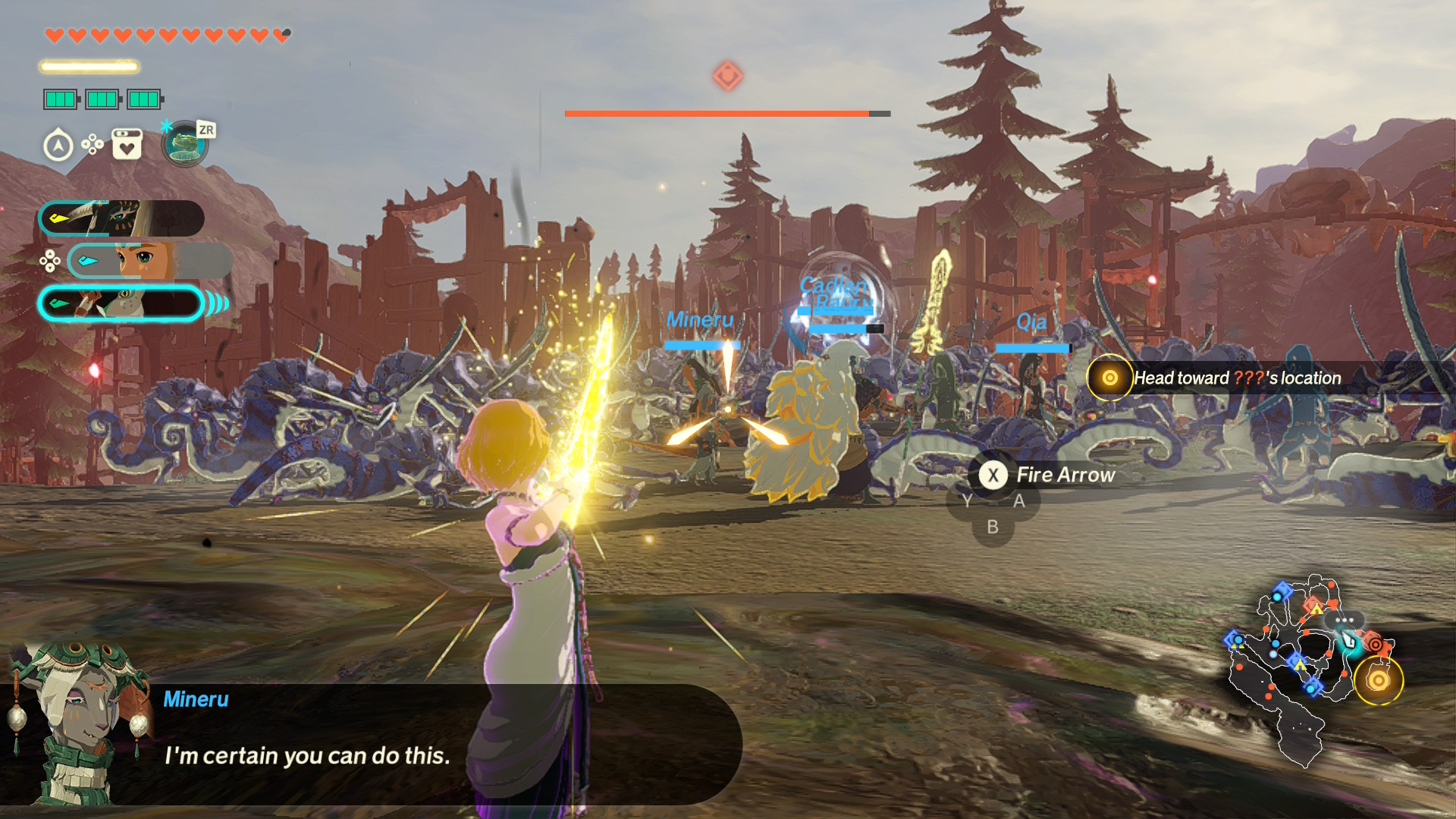
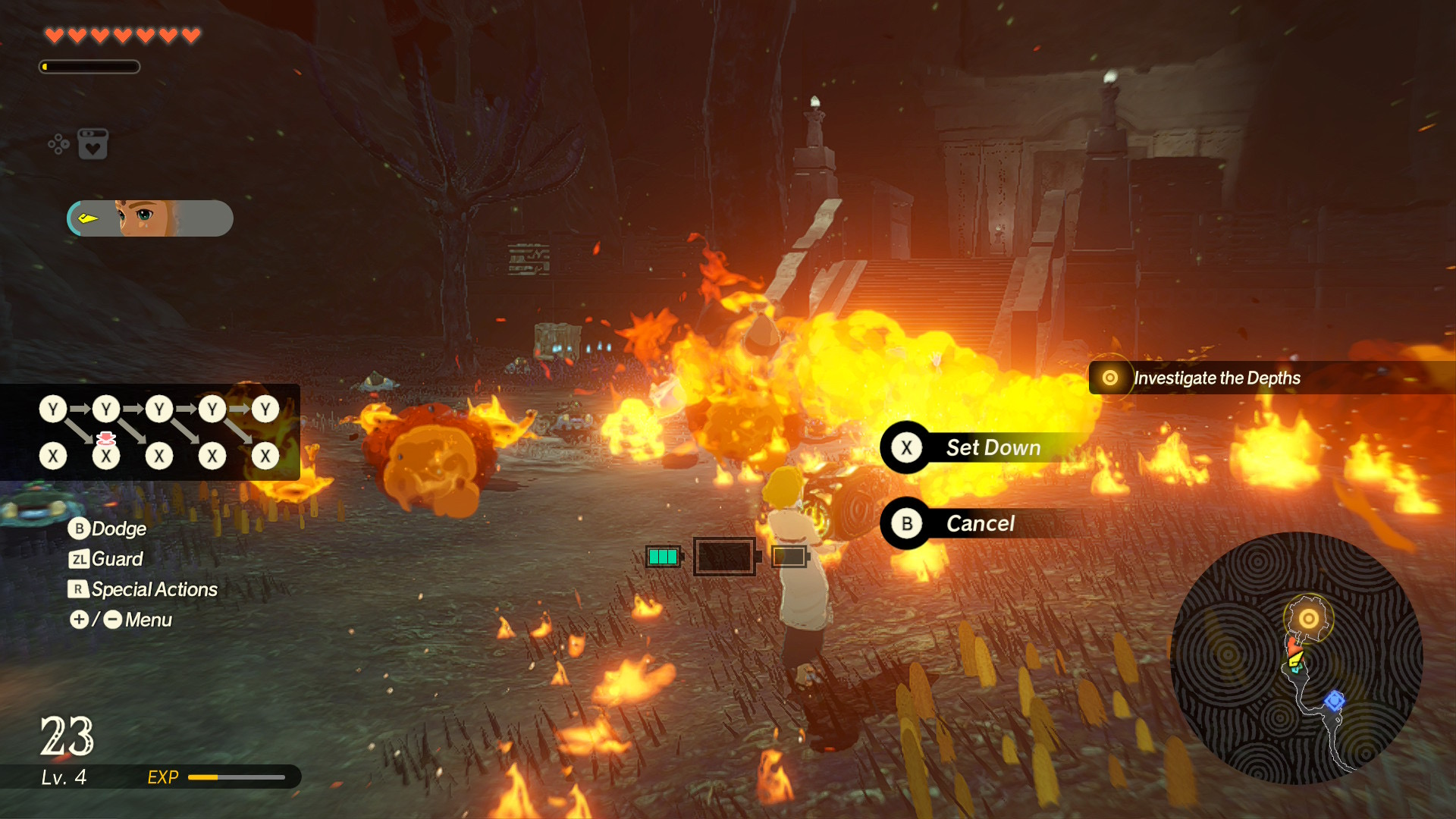
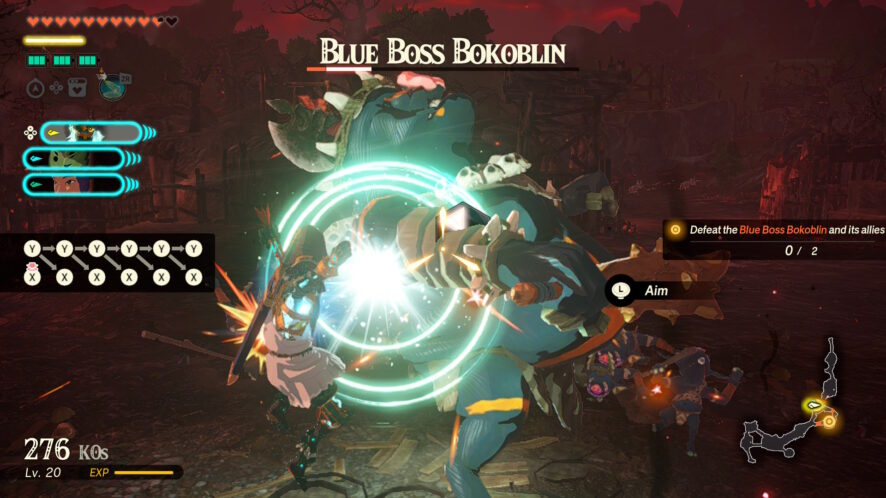
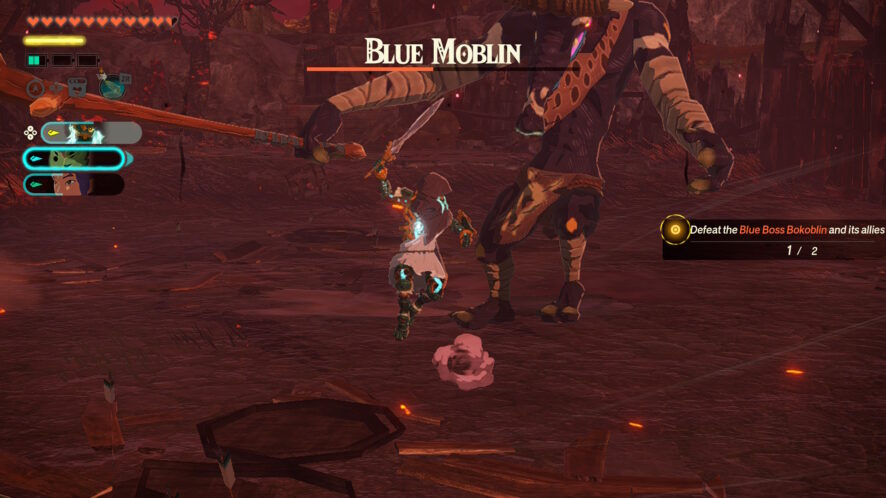
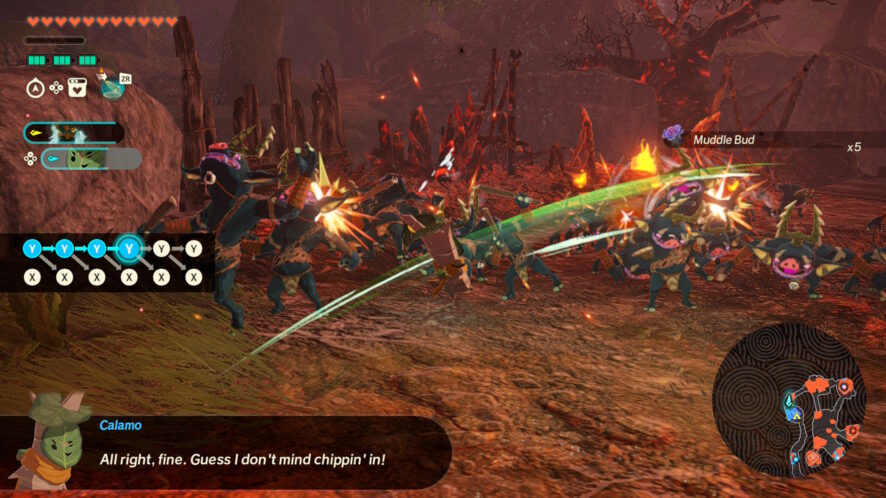
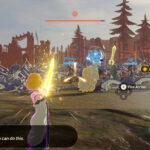
Because Age of Imprisonment is a Zelda game in disguise, fans will have little trouble adapting to the Warriors style skeleton even if you have not played hack-and-slashes before. There is a decent tutorial session in the beginning where you get to practice the basic controls of walking, running, dodging, and attacking. Attacks are categorized as strong moves, special moves, Zonai equipment, and monster items. Some moves can do certain things based on their corresponding icon. Fighters can’t jump, but moves with an upward arrow image will send your warrior into the air to intercept an aerial opponent. Moves with a forward arrow symbol will lunge forward and help you deal more damage. Moves with a shield icon can break down the enemy’s defense meter faster. Get used to these move sets, because this is the backbone of the gameplay. You’re going to be hanging onto them a lot.
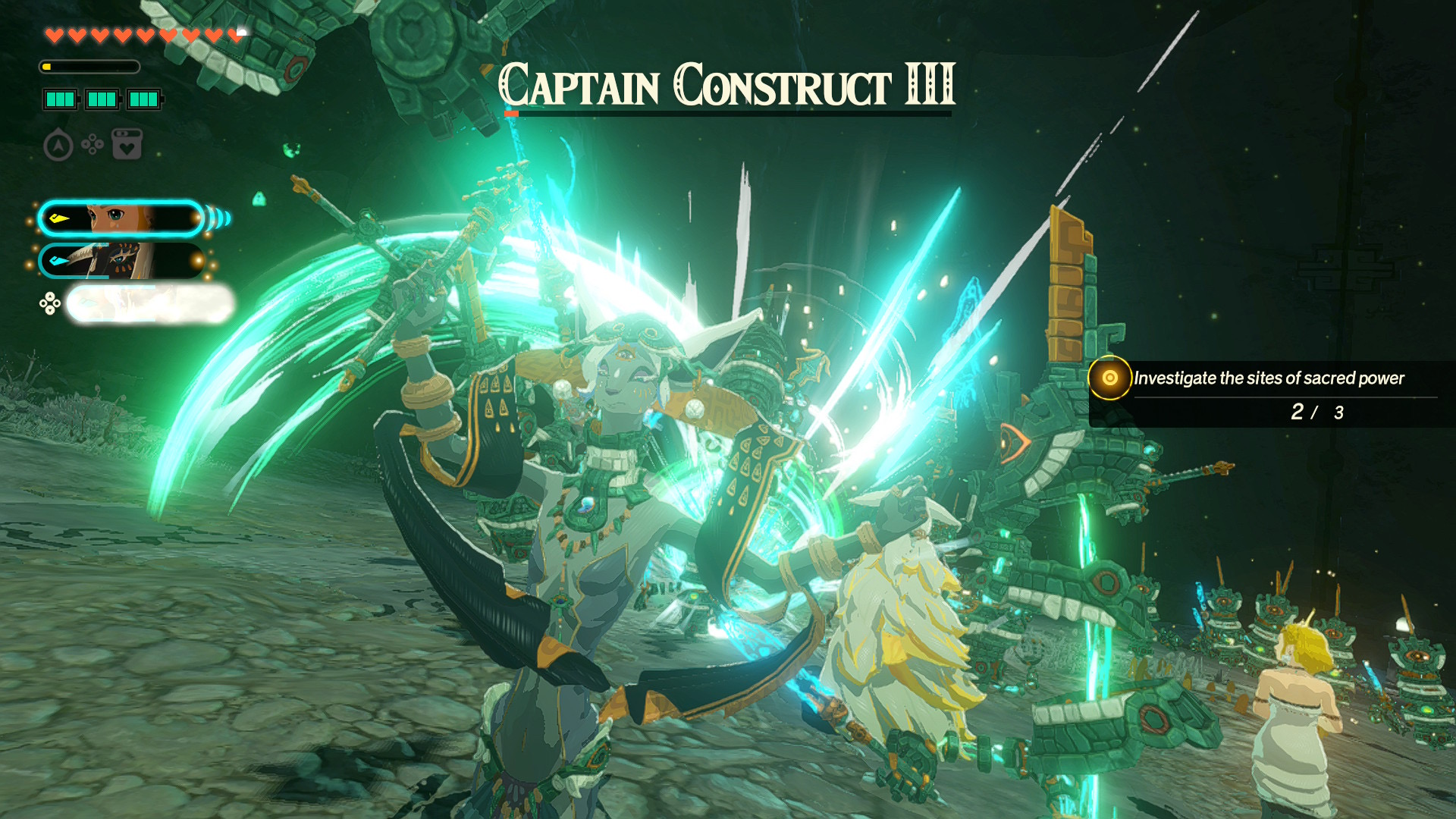
Thankfully, each character is on point with their moves and feels great to play. Once the enemy’s defenses are broken, you can execute a weak point attack to do significant damage. As you go further in the game, you’ll encounter a wide variety of enemies with certain elemental types. If your fighter needs more oomph, you can equip their move set with specific Zonai equipment that will weaken an elemental enemy’s defenses faster. And then there’s the Sync Strikes, a unique feature in Age of Imprisonment that is inspired by the “hands” theme in Tears of the Kingdom. By pressing L when the Sync Gauge is full in blue highlight, two fighters will join hands to perform a special series of attacks called a Sync Strike to devastate enemies. The type of Sync Strike that you get depends on which two characters will participate, which changes things up on the battlefield and makes it fun to experiment with different character combinations.
Here’s my Construct with the bonus weapon from my Tears of the Kingdom save data. It does make a difference!Rauru and the Construct get ready for their signature Sync Strike attack.
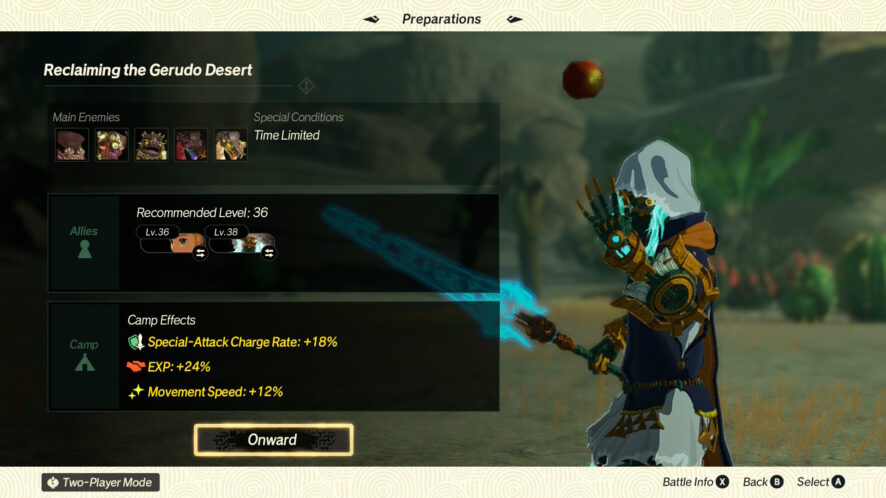
During your “cool down” phases you’ll discover that you gain items and experience from fighting your way through Hyrule. You can power up and assign different weapons to each fighter, as well as unlock new status conditions as the roster gains experience. Some fighters can use only certain types of weapons while others are capable of wielding more types. This is where the strategy of the game kicks in. The bonus unlockable weapons come in handy if you have previous Tears of the Kingdom or Age of Calamity save file data. If you have amiibo, you can tap them with the amiibo feature on the start screen to gain extra items. Attack moves are button mappable. You can change them a little — or a lot. The choice is yours! Additionally, you’ll get the chance to use a combination of up to five items that will enhance your party with various effects right before a battle. I highly recommend to experiment with them. Tears of the Kingdom players will be familiar with this part, as the items and inventory chart are practically identical. Pay close attention to what each item does, however. Some of the differences in item effects between the two games vary drastically.
Speaking of going into battle, the game map does give you some freedom in selecting which battles you want. Worried that you zoomed past a fight in pursuit of the story? Are you itching to experience the glories of a battle you already fought? Not to worry. A handy list lets you revisit past fights by chapter and level recommendation. You’ll likely realize you have a preferred play style with certain characters, and that’s okay. Straggling warriors can catch up at specified Training Sites as needed.
Plenty of tutorial screens will pop up as you progress through the beginning to help you learn which buttons will do what for each character according to the situation. This is helpful, though at times it can feel like information overload the first time you play. The good news is that you can review the tutorials afterwards in the Gallery menu. If nothing else, you can’t go wrong if your stunned brain can only retain mashing X and Y and focusing on timing your dodges. Strong enemy attacks are telegraphed with a gloomy red pathway indicating the hit zone, giving you plenty of time to get out of harm’s way. Sometimes, you’ll get flagged to switch to another character on the battlefield who is in the enemy’s path. When that happens, that’s a boon because an opportunity opens for that character to strong arm the enemy with a special attack in a super satisfying slow motion effect. Right in the weak spot!
Have you ever been annoyed to no end over the snail-paced processing of a Hyrule Warriors game? Well, thanks to the Switch 2’s hardware power, that problem is thankfully resolved in Age of Imprisonment. Our Zelda Universe team tested the two-player split screen feature, and it’s incredibly smooth. On a technical point, Age of Imprisonment runs at 60 fps in single player mode and 30 fps in two-player mode and cutscenes. But the difference felt negligible to us. The split screen mode works seamlessly in both story missions and side missions. Age of Imprisonment can also take advantage of GameShare, a feature that gives you the ability to “share” the game virtually with another person who has a Switch 2 or even a Switch console in undocked mode. We haven’t tested this yet to see how the game runs on a regular Switch console, but it’s nice to know that this feature is available for multiple player households to save money.
A Must-Have Addition to the Zelda Timeline
Some mainstream critics may argue that Age of Imprisonment holds you captive to the repetitive woes of Warriors games, and yes, playing battle after battle is repetitive in nature. But that’s a Warriors game for you. I don’t think it’s fair to count a Warriors flaw to a Zelda game, though. Of course it’s going to get repetitive and feel like a blur. You’re in constant crisis mode. That’s war. And yet, somehow Age of Imprisonment feels different from the rest. You’re emotionally invested. This time, you’re living through a war beside ordinary characters you sympathize with, and it’s important to marinate on that.
Hyrule Warriors: Age of Imprisonment is an excellent complement to Tears of the Kingdom. Its action-packed combat and exciting story make it incredibly hard to put down, making it an absolute must-have for Zelda fans.
Being a game about a war in the Zelda canon, Age of Imprisonment not only gets the lore right, it astonishingly adds more lore. Once you start, it’s incredibly hard to put down. We see Hyrulean nobility and common folk alike get tossed into a hostile situation and fight for their home and everything they know and love. Because of this premise, not everyone in the fighter roster is a “celebrity” like in Warriors games past. You might not be playing certain characters like you were hoping for. Unfortunately, that’s because it’s canon. But the tradeoff is worth it. Age of Imprisonment is stellar at what it’s designed to do, and it’s for that reason I give it the following score. Unlike other Warriors games, every single Age of Imprisonment fighter has a unique move set, so be sure to make the effort to play each one.
I can assure you this without spoiling anything: if action games and detailed Legend of Zelda narratives are your thing, you’re going to have a blast of a time here. The story hidden in Tears of the Kingdom is finally understood. The voice acting is phenomenal. Age of Calamity walked so Age of Imprisonment could run, and for that, I’m beyond excited to see what’s coming in the new DLCs for this game in the near future.
Score
Similarity to other Zeldas & Spinoffs
10/10
Tears of the Kingdom – ▲▲▲▲▲ Age of Calamity – ▲▲▲▲△ Breath of the Wild – ▲▲▲△△ Hyrule Warriors – ▲▲△△△
Chelsea Reed
I’m a ZU writer and author of an up-and-coming sci-fi fantasy novel. All credit of my nerd prowess goes to a dear friend of mine, the true master of Forsaken Fortress.


 by Chelsea Reed on November 19, 2025