Alongside The Legend of Zelda, Fire Emblem is tied for my favorite game series ever. I’ve been a fan since Path of Radiance on GameCube and have since then played an array of games both old and new. However, upon hearing the news of an upcoming Fire Emblem game for Nintendo Switch I was not as ecstatic as one may think.
Excluding Echoes: Shadows of Valencia, which was a remake, the last original installment of the series was Fire Emblem: Fates. Now Fates was not necessarily a “bad” game, but I, as well as many other fans, consider it a weak point in the series. It took away many of the elements that were key points to a Fire Emblem game, had one of the weaker stories of the series, and felt that it focused more on being a dating simulator than a strategy game. The biggest offense of Fates, though, was that it tried to be a clone of Awakening, one of the most successful (if not the most successful) Fire Emblem game. It even went as far as to create clone characters from its predecessor with carbon-copy personalities and all.
The point of me bringing all of this up is not to bash Fates by any means. However, when speaking with my other friends who frequented the series, these flaws and how to fix them often came when discussing Three Houses. After finally getting to play Three Houses for myself, there are definitely indications that the developers are listening, but they also want to do their own thing. Does it make for a well-made game? Here are my thoughts on the matter.
Three tales intertwined: The stories of the game
The story of Three Houses is incredibly engaging. I have not been so invested in a Fire Emblem story since Radiant Dawn. Do I think the script is flawless? No. In fact, there are quite some repetitive points thrown into all three factions. However, as a whole I think it holds up very nicely, keeping me on the edge of my seat the entire time. For the most part, the story keeps a consistent pace and flows nicely into each new chapter. I’ll admit this flow gets abruptly altered when transitioning from Part One to Part Two of the game, but again the overarching story is solid and enticing.
I don’t want to spoil too much as this is a long game with many chapters oozing to the brim with lore, but I’ll do my best to sum up what I can from at least the first portion of the game. You are a mercenary traveling with your father Jeralt. A chance encounter leads you to become a professor at a monastery, which also functions as a knight’s academy. You choose a team to lead and bond with your students, participating in festivals, classes, battles, and missions from the Church of Seiros. All of this goes on while Byleth, the protagonist you play as, hears the voice of a mysterious girl.
While I wouldn’t say that every decision you make matters, a vast majority of them play a significant role in the overarching tale — especially once you reach Part Two. The main turning point, of course, is in choosing the house to lead. You have three choices: the Black Eagles, the Blue Lions, or the Golden Deer. As for my personal pick, I chose the Blue Lions in my playthrough of the game — and no, not just because Dimitri is incredibly charming in every way possible. (Okay, that may have swayed me a little. A lot.)
Prince Dimitri of the Holy Kingdom of Faerghus is incredibly charming.
In the beginning phase of the game, the three houses share many if not all of the same maps and levels. Part Two is where the paths start to drastically diverge. As far as I am aware, the Blue Lions and Golden Deer have relatively similar paths, although if you want a somewhat more neutral route, the Golden Deer would be the way to go. The Black Eagles, however, will allow you to choose between two other routes. I won’t go into details on those routes, as they contain major spoilers. Regardless, these paths will all be different. With approximately 50 hours minimum per playthrough, playing each path will lead to hours and hours of enjoyment — and yes, you need to play through all of them if you want all of your questions answered.
A colorful cast of superb students: The characters of Three Houses
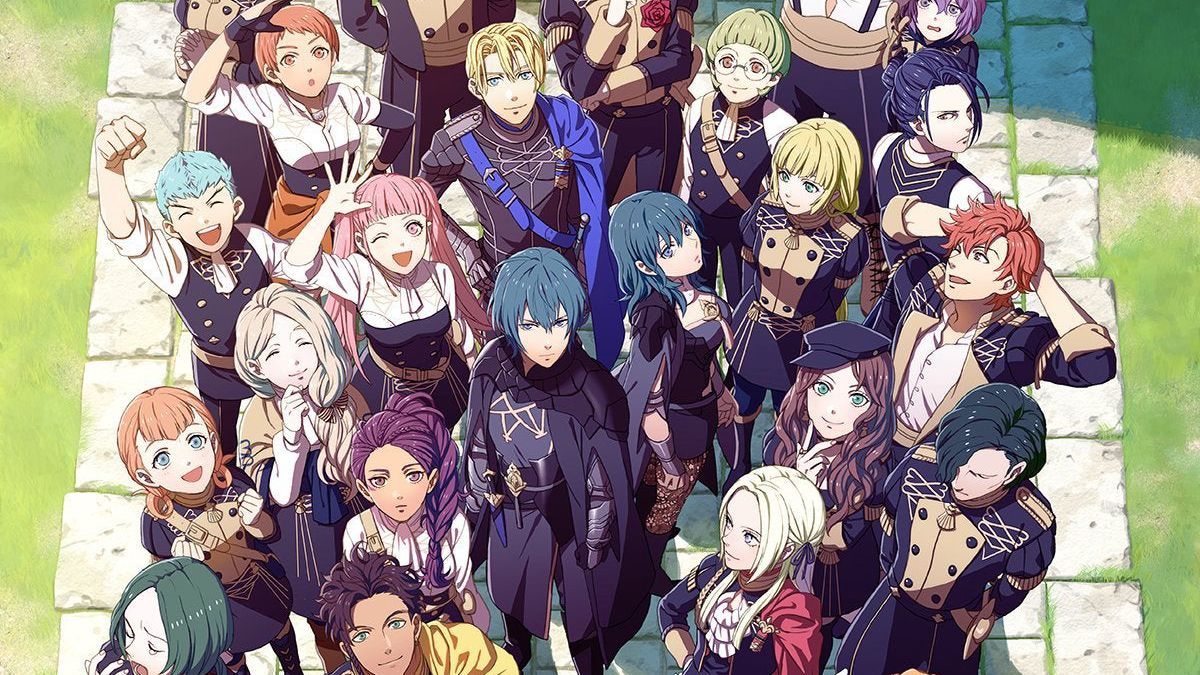
As with every Fire Emblem game, there is a large array of characters to recruit on your teams. Which house you pick will determine your starting units. The game box itself is inlaid with the art of the characters and the teams they reside on as a way for you to preview your options. You will also get further indications on which direction to go when you speak with them inside the monastery before you make your choice. However, this does not mean that you have to pick solely based on who is in which school. You can recruit members from other houses, and I highly recommend you recruit as many as possible. I won’t say why this is important, but I will say it will increase the difficulty of the game in more than one way.
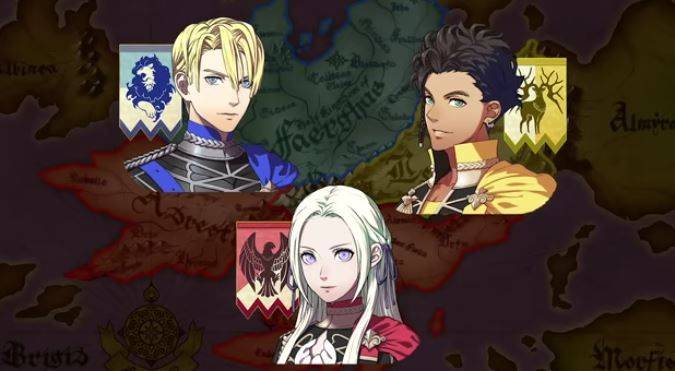
There are a few exceptions to this statement, however. House leaders are not able to transfer into your class as well as their retainers — Dedue for Dimitri and Huebert for Edelgard. It was very hard for me to choose between the three, even though I was admittedly fangirling hard over Dimitri from the start. Each leader is extremely interesting yet diverse in personality. As the future leader of the Adrestian Empire, Edelgard is very authoritative and meticulous, with a set goal in mind for the future of Fodlan. Dimitri, also a sole heir to his late father’s Holy Kingdom of Faerghus, retains a very gentlemanly demeanor, although it also hides the dark tragedies of his past. Lastly, Claude is due to be the leader of the Leicester Alliance, though he’s a lot more carefree than his counterparts, as well as a little sketchy.
Supports make a comeback in Three Houses, and they are easier than ever to obtain. Most of the conversations that are held between characters are extremely entertaining. While a few have a slight repetition problem with the characters addressing what ails them or what their dreams are, the supports are a huge step up from both Fates and even Awakening.
I adore so many conversations from Awakening, but due to the vast number of characters that had support conversations, the dialogue ran dry after a while (and I’ve found that their “go to” conversation for supports is “pie.”) This also happens for a few characters in Three Houses with talking about sweets or cooking, but, while the topic sometimes gets repetitive, it’s the characters’ personalities playing off of each other so well that really makes them work. They never really stray from their personalities, and they are more diverse than one defining trait. Sylvain, for example, was a character that I (and my other friends) did not think we’d be fond of, thinking he’d be a one-trick pony of flirting with every girl he sees. And, yeah, he does do that, but, once you start learning more about him through his supports, he is so much more than a skirt-chaser.
Minor spoiler
For those who are interested, yes, your units can get married. However, this doesn’t happen until the epilogue, so choose your supports carefully.
Then there’s Byleth, who serves as your avatar. Unlike Robin or Corrin, Byleth (who I will be referring to as “they”, as there is a male and female version of the character) is more of a blank slate character that will serve as a stand-in character for yourself. You do not get to customize their appearance or starting stats. They have no major dialogue, and, what little they do have, you get to decide what they say. There is usually a choice of two or three options to pick from when responding to other characters, and choosing answers that the characters want to hear may earn you support points as a bonus.
Admittedly, there are some Mary Sue qualities to Byleth. The leaders of the houses adore them from the start for no real given reason, and most of the students flock to you just because. There are also some supernatural elements that come into play, but I won’t give any of that away. However, I don’t think this necessarily makes Byleth a bad character. As I mentioned, they are a stand-in character, so you get to make them what you want them to be. As for myself, I picked a lot of stupid and sarcastic answers whenever I was given the choice. I’m sure there are others, though, who see Byleth as a more strict and serious type and will choose to roleplay them in that manner. Byleth is your link to the world of Fire Emblem just as Link acts as one for us and The Legend of Zelda.
Byleth is your link to the world of Fire Emblem just as Link acts as one for us in The Legend of Zelda.
In the heat of combat: Three House’s gameplay
There are a ton of new mechanics that even a longtime Fire Emblem player might need some getting used to. Honestly, there are some mechanics I’m not even sure if I know how to properly use or know about, but I beat the game so some of those new additions aren’t necessary to play. As long as you know the core concepts of a Fire Emblem game, you should be fine.
Right from the start there is a choice of having a third-person view or a top-down view just like classic Fire Emblem. I personally don’t care for the third-person perspective, even though it is cool to see what the characters would see, because it’s very confusing from a gameplay perspective. I’d rather see the full map and grid, but you can easily toggle views at any point during the battle.
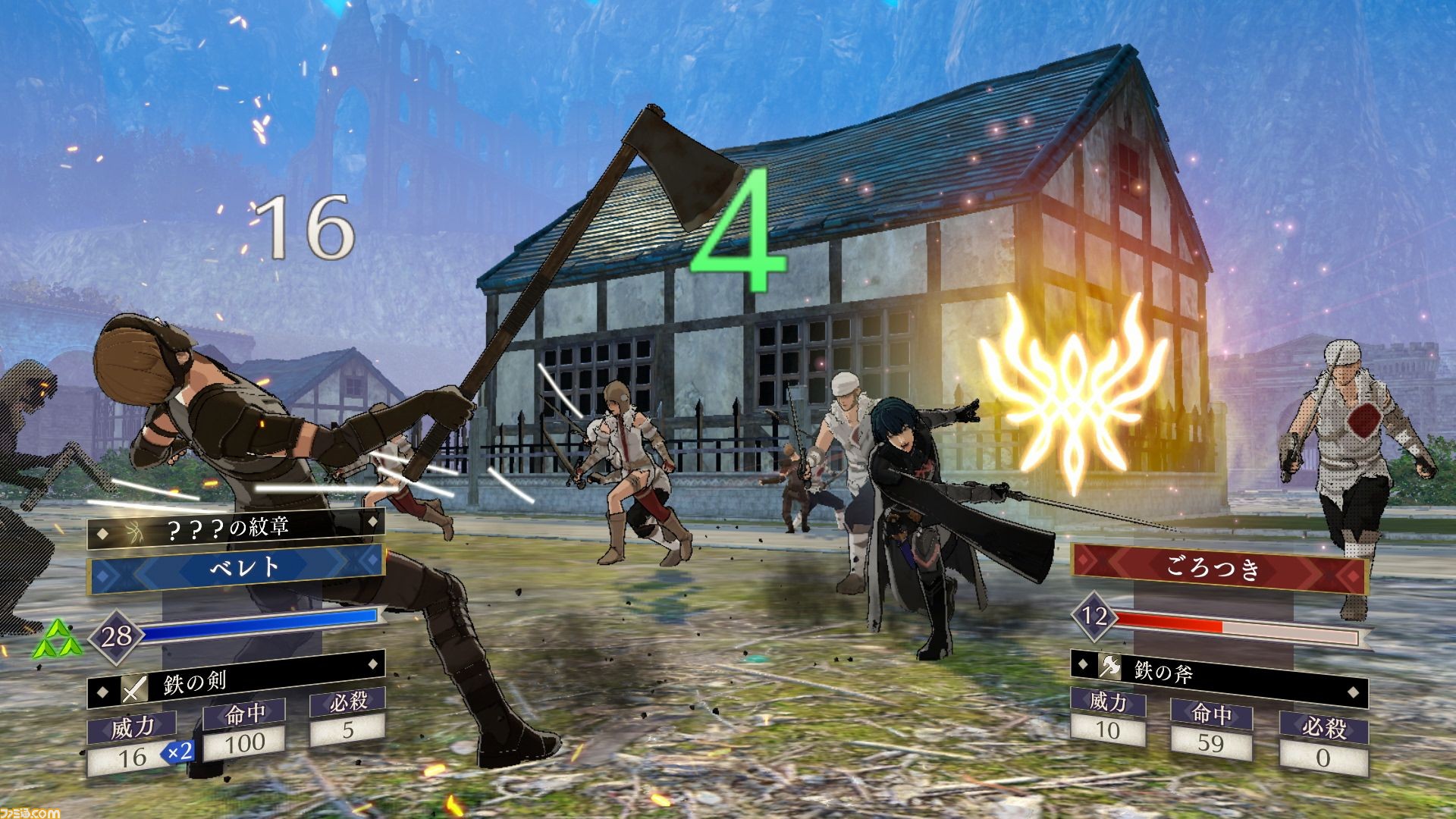
Battle at its core is familiar. As per usual, you have battle forecasts, classes, and weapon ranges, but there are new additions such as Combat Arts, Crests, and Battalions. Combat Arts and Crests essentially take the place of skills. Combat Arts are abilities you can use on a whim in exchange for your weapon’s durability — yes, weapon durability is back. Although this may have been a pain for Breath of the Wild players, it actually works really well in a game like Three Houses! Skills such as Deadeye and Astra are included, but they are usually only obtained after the character has gained full mastery over their respective weapons.
Crests, on the other hand, are only given to select characters who are born with them. Mainly noble children have these crests that give them special abilities in battle. These are more like skills where they activate at random in the middle of combat or on the field. These Crests are also important as to who can wield Heroes’ Relics, which are some of the best weapons in the game. If a character does not have a Crest and uses a Hero’s Relic, they will take damage whereas a character with a Crest will have no issues at all. I learned this the hard way.
One of the things I thought was just a neat addition when first viewing the trailers was the Battalions. I thought they were just part of the background so that it wouldn’t look like your characters were all alone on the battlefield. During my playthrough most of my Battalions acted in that fashion. However, you can also use them for a Gambit. Gambits are like rush attacks that can affect your opponents in various ways such as stunning your foe or grabbing the attention of large beasts. If used correctly, these attacks can lead to more strategic advantages.
Also new to the series is that mounted units are able to dismount their steeds. Have a Pegasus Knight (a unit vulnerable to arrows) that you need to go tackle a field of archers? Have her dismount and waltz on in. This naturally has its own repercussions to think about, of course. Fire Emblem: Three Houses sure knows how to shake things up.
The classes in general take on a new light as most are no longer restricted to particular weapons. An archer can wield a sword, a mage can use an axe, and a soldier can punch with gauntlets. Oh, did I mention gauntlets are now weapons and that you can punch a horse? Because you can. Not that I would. But I totally did.
The way classes work (with a few exceptions) is that during each week you teach your students. There is one mission per month being the level that you need to beat to progress through the story, and for the rest of the month you instruct your students at the beginning of the week. Toward the end of the week, you will have free days where you can choose from several activities, such as exploring the monastery, attending seminars, fighting paralogue battles, or just taking a rest. Most of these activities will increase your supports and your students’ motivation.
Instructing your students is vital to their growth as units on the battlefield.
When you teach your students, they will be more motivated and can learn more. You can advance their skill sets, such as weapons, magic, mounted units, or heavy armor depending on the classes you want to them to take. Keep in mind, however, that if their personal goals don’t align with your vision for them, that they may have a more difficult time achieving those goals. Their strengths and weaknesses are clearly indicated by blue and red arrows respectively.
Victories and failures: My personal likes and dislikes of the game
So here’s more of a personal segment of my general likes and dislikes in this game, what I personally find are some of the highest and lowest points of the game. I know you’re all waiting for it, so I’ll start with what I don’t like about this game first.
Three Houses is a long game. I love it, but it’s long. I only had time to play this when I got home after work and an entire chapter would take hours: not because the combat was so difficult but because you have to go through an entire month. It’s nice to take a break in between and bond with your teammates, but sometimes you just want to progress with the story and it’s a waste to just rest the entire month and auto-instruct your students. Every time I’ve picked auto-instruct, it’s chosen characters I hardly used to improve their skills, so it wasn’t worth it, but manually instructing your units every in-game week could be a bit trying when you just want to continue on.
As I mentioned before, as much as I love the story, there are still a lot of clunky bits and pieces. There are also a few anime tropes that do get in the way of things (if you’re not a fan of that) from time to time as well, though that can be mostly overlooked as well once you start to actually get to know the characters. The roleplaying aspect of this game as a whole was really enjoyable, and I would like to see it incorporated in future Fire Emblem games as well; however I would make these portions of the game lesser ones. I felt like there weren’t enough chapters of actual gameplay, and, while some may argue that there are paralogues and auxiliary battles in between to tide you over, those chapters are another of my minor irks with this game.
The story portions of the paralogues are fine. They give insight to the characters you’ve recruited and introduce interesting scenarios on the battlefield. The problem is that the battlefields are all the same. There’s hardly a variety in paralogue maps, and it’s even broken my immersion on more than one occasion. Sylvain’s mission was to assist his father in Gautier; following that, Felix’s mission was not only similar in story, but the map was identical. The same went for Annette after that. All took place on the same map, admittedly with a slightly different twist, but not enough to make me want to keep going back to the same location.
My last little complaint would also be about the classes. I love that there’s diversity, but with fewer restrictions on weapons and abilities, I question why there were even classes at all. There aren’t that many Master Classes (the highest level of class progression) in the game, so I preferred most of the Advanced Classes (the next rank down) over them. You go from having twelve classes to choose from down to nine, losing beloved classes such as Assassins in the process. Half of the final choices are also mounted units, so your choices are very limited if you want to keep a balanced party.
All of this being said, I still think the good vastly outweighs the bad. I think my favorite part of the game was the characters and supports. I also love how they implemented roleplaying into creating bonds with these characters. From answering questions, hosting tea parties, and interacting with your allies, it all really felt like you were making a connection with these characters, and there wasn’t much that made it feel forced or overly sappy. Of course there were a few cringe-inducing lines thrown in the batch, but I really think it was well done overall.
It feels like you actually make real connections with the characters.
The levels were also really fun with the scenarios that they were thrown into. While most of the battle conditions were the same, either leading you to defeat the commander or rout the enemy, there were enough twists and turns thrown in to keep me engaged. This game was probably easier than past installments, but it still felt challenging enough. I plowed through Part One chapters with ease, but once Part Two came around it required me to weigh my options and use my brain as a Fire Emblem game should.
I played on Classic mode which features character perma-death, but I’ll also fully admit that I’m happy that Shadow of Valencia’s Mila’s Turnwheel made a comeback, allowing you to rewind a battle. In Three Houses they’re called Divine Pulses, because their presence saved me so many times in later chapters from completely restarting after a character got killed in one hit by a surprise mage that came out of nowhere. I’m also glad that Casual mode is still available as an option, although I really only use it for support playthroughs, I think it’s good for people just jumping into the series.
The last thing I’ll mention that I really enjoyed about this game is the number of events that your decisions affect. As I said, not every decision matters, but the big things are the ones that really count. The fate of every character rests in your hands and it’s up to you to decide what to do with them.
Final thoughts
Overall, I was genuinely surprised and entranced by Three Houses. Although there were many new elements added into the game, at its core it felt like a traditional Fire Emblem game.
If you are a classic player and do not like the new roleplaying elements of the newer games, you may have a more difficult time enjoying this installment. The levels and story are worth it in my own opinion, but there are a lot of months filled with nothing to do but little baby battles to grind up your levels. However, the missions offered I found both fun and challenging, and the game does have a harder difficulty setting if Casual isn’t enough for you. I would at least recommend giving it a try; you might be surprised just as I was.
For a new player, I’m not sure if I would recommend this as your first Fire Emblem game. I personally would start with Awakening, Shadow Dragon, or, if you can get your hands on a copy, Path of Radiance. As I mentioned there are a lot of new mechanics to learn as a veteran Fire Emblem player so it might come off as overwhelming to someone who is completely new.
While there are those who may be skeptical about Three Houses, as I once was, I would say it was worth the price of the game. If you like it, you have two more paths to explore and a ton of secrets still to discover. I would absolutely recommend anyone to play it at least once through, whether it’s right this very instant or a few years down the line. Fire Emblem: Three Houses is absolutely worth your time.
Score
8.5/10
Stephanie Cusumano
Stephanie Cusumano is co-editor of the columns team on Zelda Universe as well as a cosplayer, author, and artist who is always ready to show off her Zelda side. She's kind of a dork, but her passion for Zelda has inspired her to be creative and try her hand at her own storytelling.


 by Stephanie Cusumano on September 14, 2019