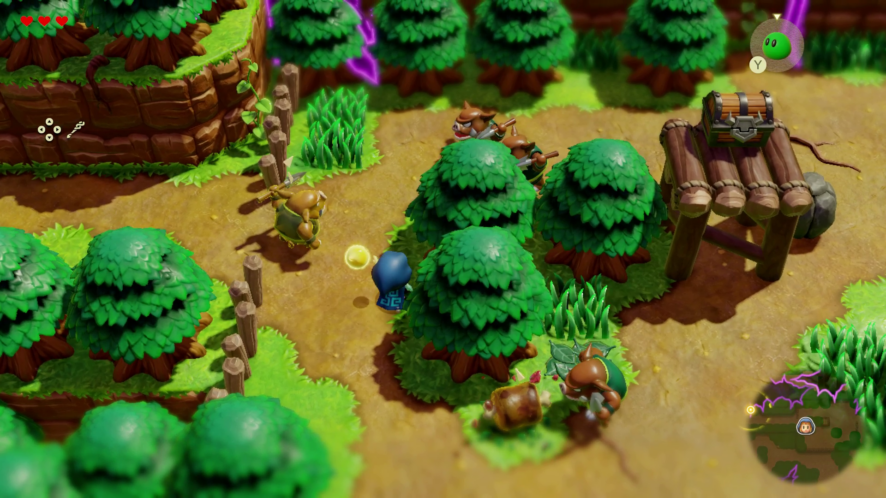
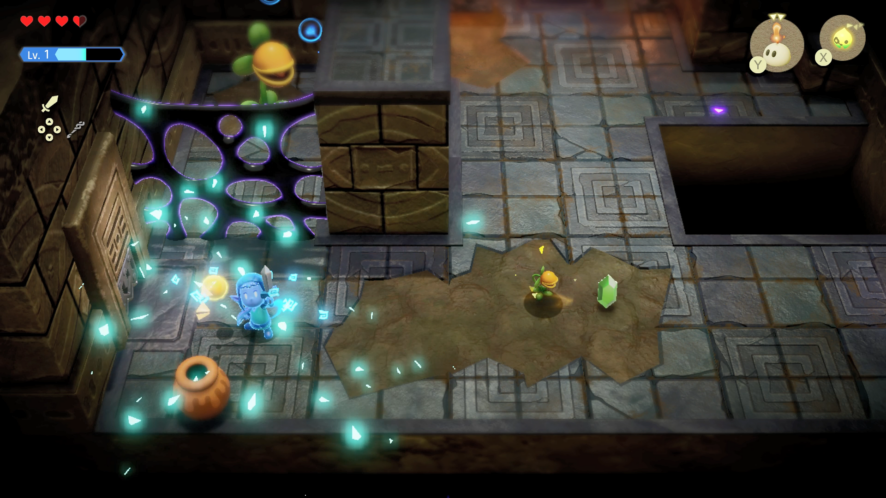
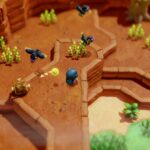
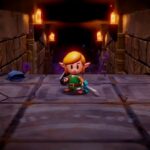
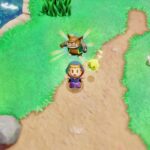
This thought may have crossed our minds on more than one occasion at a recent preview event for The Legend of Zelda: Echoes of Wisdom. One particularly intimidating enemy had us scrambling after our tried-and-tested combination of Echoes failed to do any damage. And if panic-throwing pot after pot at it ultimately proved to be successful, well, it may not have been pretty, but success is success.
At the very beginning of the preview session we were told that success would require us to rely upon Zelda’s wisdom plus our own wit and creativity, and you won’t find a better summary of what this game is about. Princess Zelda’s first official outing as heroine takes place in a familiar setting, but the way in which you interact with the world is new. Exploration and combat have shifted from Link’s action-oriented gameplay to a more puzzle-oriented approach. It’s fun, it’s engaging, and we’re more excited than ever to get our hands on the full game later this month.
Spoiler Warning: The rest of this article may contain spoilers for Echoes of Wisdom about the story, gameplay mechanics, and other details that you might not wish to see. Continue reading at your own risk.
Giving the game a good Tri
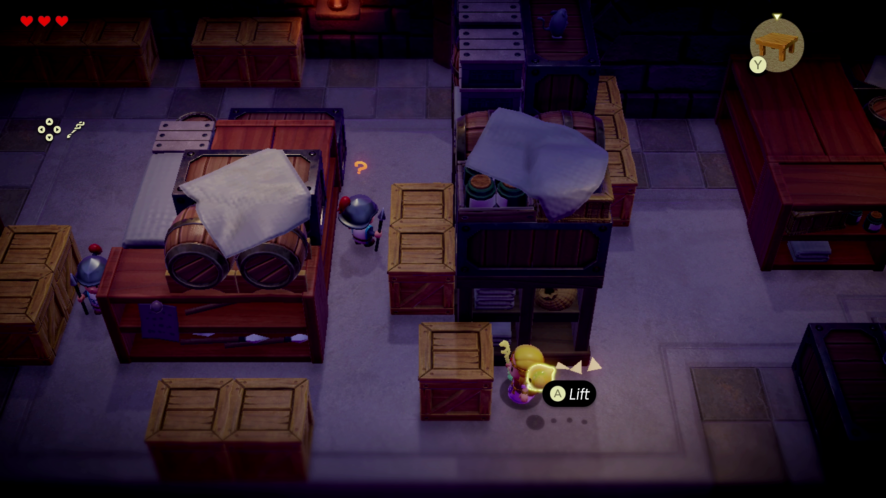
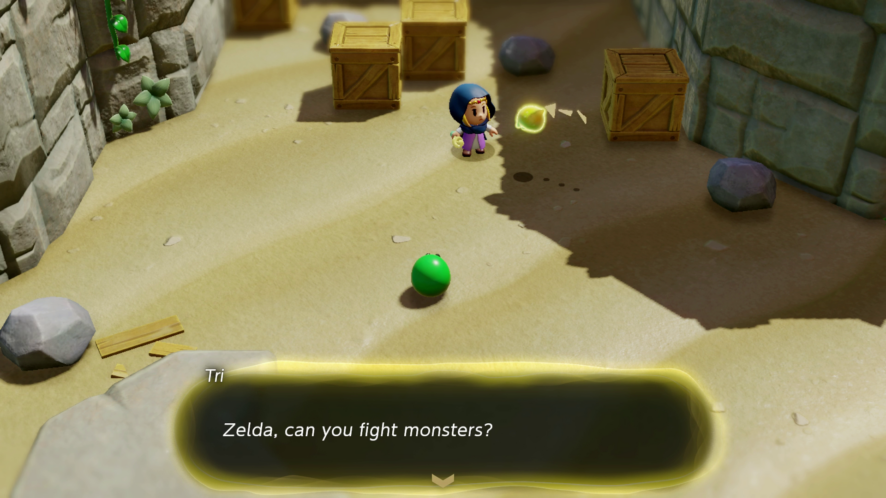
The preview experience was 90 minutes long and covered a section of the early game. We didn’t start at the very beginning; instead, we found ourselves behind bars in the castle dungeon. Nintendo helpfully gave us a short presentation before we began playing to provide context: Rifts have begun appearing throughout Hyrule, and Princess Zelda has been accused of being the cause of them. She’s been thrown in jail, and we began playing after meeting Tri, her companion for the game, and receiving the Tri Rod, the item that allows her to learn and create Echoes.
What followed was an experience that can be broken down into three chapters: breaking out of jail and escaping the castle, exploring the overworld, and conquering the first dungeon. This sequence expanded upon the story a little, as we learned that several important characters are imposters—though we don’t yet know how that has come to be. We also learned a little more about Tri: that their role is to mend rifts, and they have lots of friends who do the same. But otherwise, it wasn’t particularly story-heavy.
We experienced exploration, combat, puzzle solving, fulfilling objectives, and discovering Echoes (so many Echoes!) during our play session. Because we’ve played a lot of Zelda in the past, we found it somewhat of a shift to switch from Link’s action-oriented approach to exploration and combat to Zelda’s Echo-based approach. The game does a wonderful job of introducing each gameplay concept though. The castle escape section serves as a tutorial, gently acclimating you to Echoes and their manifold uses. Once you reach the overworld, the game relaxes its hand holding and becomes more freeform, but still recognizes that you need a few training wheels. Don’t worry; before the end of the first dungeon, you’ll need to start using your Echoes under pressure.
New protagonist, new Hyrule, new rules
Link? Never heard of him. It’s called the Legend of Zelda, thank you very much.
We came into the preview with a few questions about how Echoes of Wisdom might relate to other Zelda games. The graphical similarities to the Switch’s version of Link’s Awakening and traditional rendition of Hyrule that appeared in the first trailer had a few fans wondering if it would be set in the same Hyrule as A Link to the Past and A Link Between Worlds. It’s not. It’s set in a brand new world and a brand new Hyrule.
Then there’s the fact that Echoes of Wisdom is the first new Zelda game after the double epic that was Breath of the Wild and Tears of the Kingdom. Considering that these games basically tore up the Zelda blueprint, we’ve naturally had a lot of questions about exactly what the play style of Echoes would be like and whether or not the open-air approach would continue. While we can see some inspiration from both games in trailers and marketing material for Echoes, what we played was quite linear and felt a lot more like traditional Zelda games. As we were playing the early stages of the game, and part of that served as a tutorial, we don’t know yet if the world opens up at a later point or how open-world it might be, but the biggest thing that appears to have carried over is the creative and open-ended approach to gameplay.
Regardless of whether this is your first Zelda title or you’re a seasoned Zelda veteran, the gameplay is going to feel new and different. Everything seems like a puzzle at first, and for each new area or situation you encounter, at least in the early stages, you’ll find yourself taking a moment to assess the situation and figure out your best solution for success. The good news is that there’s usually more than one. Experimentation is encouraged and creativity is rewarded… as long as you don’t mind the occasional laugh at your expense from time to time.
Use Echoes wisely (or not)
Given the name of the game, it shouldn’t be a surprise that the most important gameplay mechanic, and the one you’ll be using the most, is the Echo. You will no doubt find yourself constantly poring through the extensive list of Echoes as you decide how to tackle each new problem you come across. To cast an Echo, simply peruse the list of Echoes until you find the one you’re looking for. Once selected, you can cast as many copies of it as you want… or at least as many Echoes as you are capable of.
Echoes of Wisdom encourages lots of experimentation… for better or worse.
Floating behind Tri are several triangles which represent her overall power. During the entirety of the demo, we had three, but we’ve seen four in trailers so presumably Tri’s power can be extended. Every time you create a new Echo, you spend some amount of that power depending upon that Echo’s specific casting cost. Most Echoes we encountered cost just one or two triangles of power, but we did find a powerful Peahat that needed all three. If you make a mistake, you can easily erase any or all of the objects you’ve created, reclaiming that power. Moreover, even if you spend all your power, nothing prevents you from casting more, but creating new Echoes will erase existing Echoes in a first-in first-out fashion until you have enough power to make your new object. The game is incredibly helpful on this point as well: Any objects that would be automatically erased by creating a new Echo will shimmer in yellow as a helpful guide.
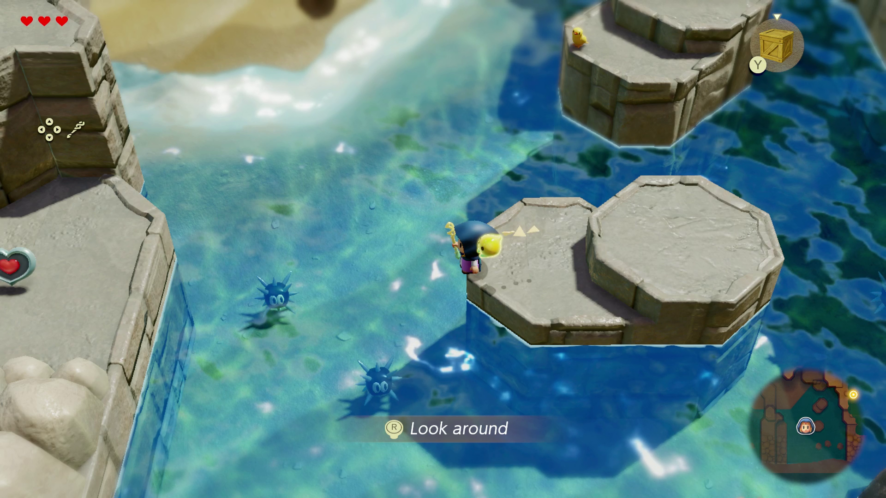
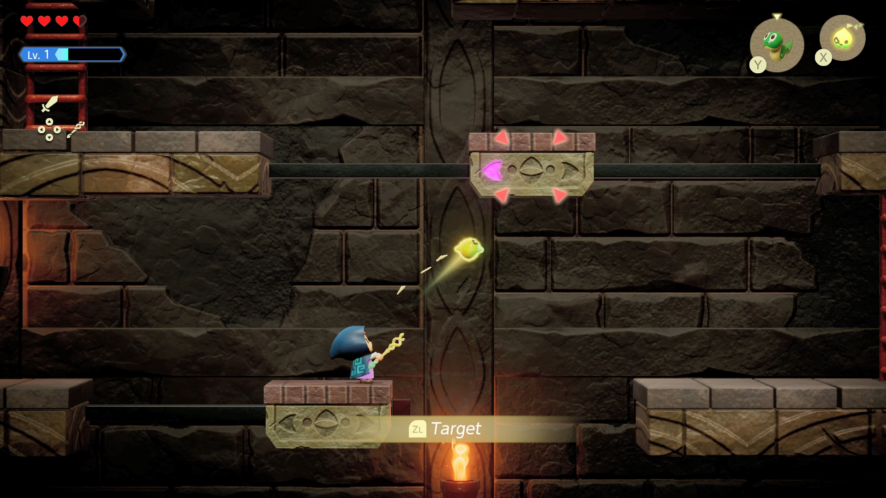
It’s such a fun and creative system. The very act of exploring the world can be a puzzle, with uneven terrain often the biggest obstacle. Zelda can’t jump very high, so getting from A to B isn’t always straightforward. You’ll quickly find yourself looking at the world in relation to the height of tables and boxes and the width of beds. One neat little feature that the game provides is the ability to look around an area with the right stick, something that should prove helpful when planning routes. Certain sections are also presented in a side-scrolling format a la Link’s Awakening, lending another dimension to puzzle-solving through exploration. And like in many Zelda games, exploration is rewarded. We took the time to fully explore the overworld in the demo area and were rewarded with powerful Echoes and useful items.
Now how do I get over there? The sky’s the limit, really.Moblins are formidable foes… but their true weak point is their stomach.
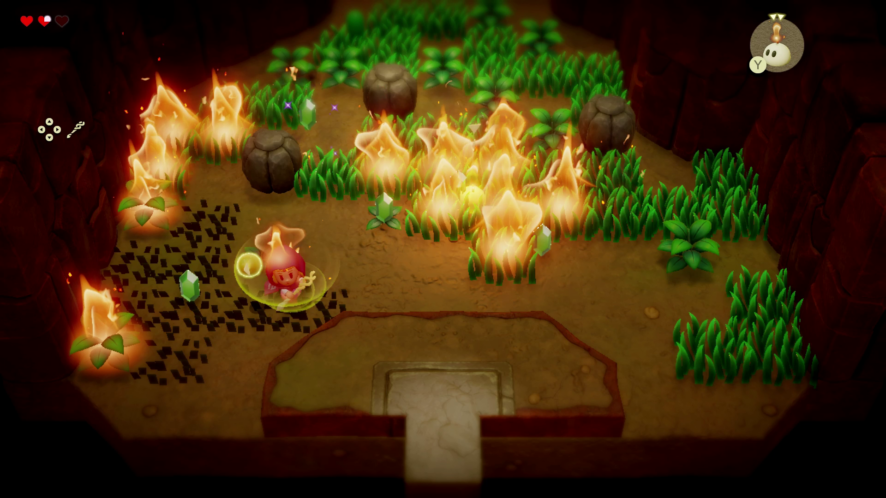
If the terrain isn’t getting in your way, the monsters probably are. With Echoes as the primary driver behind the gameplay, it’s important to remember that you don’t have the capacity to attack enemies directly. Yes, you can clone items such as rocks and pots and throw them in their faces. But you can also create Echoes of enemies you’ve defeated and have them fight for you while standing back to watch the carnage, something that felt a little reminiscent of strategy games when you’re keeping tabs on multiple Echoes and enemies.
It doesn’t take long to fall into strategies, whether that was a dream team of enemy Echoes to do the fighting for you or a preferred combination of household furniture used for navigation. And when you add Zelda’s other abilities, such as Bind and Reverse Bond, into the mix, the possibilities open up even further.
Zelda isn’t just a one-trick pony
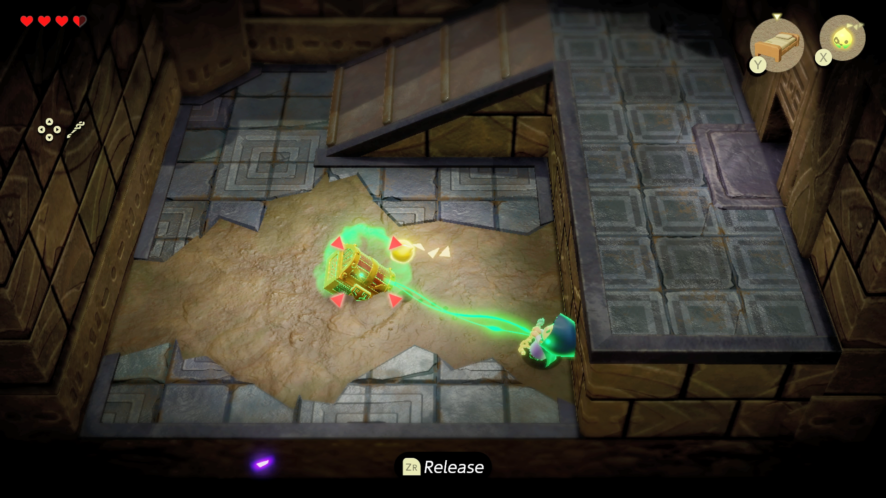
We had the opportunity to try out Bind and Reverse Bond as well. By targeting an object or enemy and activating the Bind ability, that object will follow you around the room, maintaining its distance to you; if it gets stuck, you’ll move like normal, causing the distance between you and that object to change. Reverse Bond is the exact opposite; here, you’ll lose your ability to move freely, but you’ll hover beside or along any other moving object. Technically speaking, these abilities are just two sides of the same power, where Reverse Bond requires you first to use Bind ability before pressing a second button to reverse the flow of the connection. In many ways, it shares some characteristics to Breath of the Wild’s Magnesis or Tears of the Kingdom’s Ultrahand.
Bind will allow items to follow your every movement.Reversing the bond will allow you to follow moving objects.
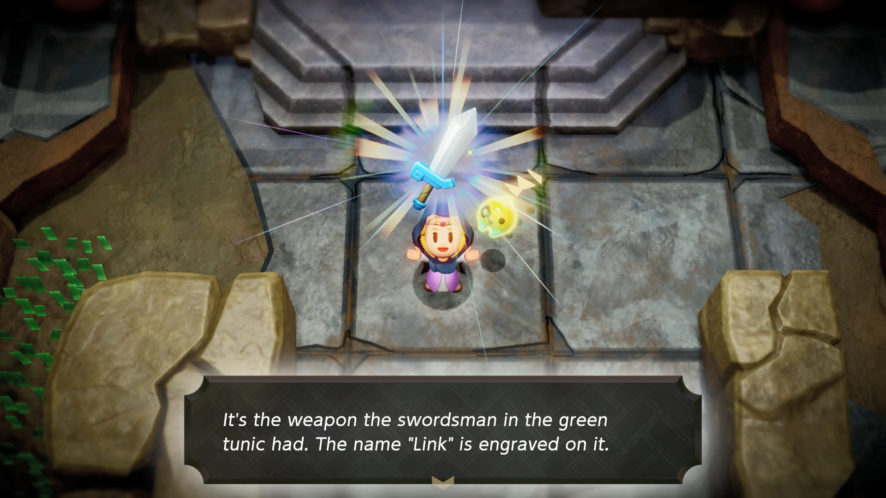
The final ability that we had access to during the preview was swordfighter form, which was a surprise so early in the game. Yes, Zelda actually gets a sword. Well, it’s more like she found Link’s and decided to “keep it safe” for him. However, it doesn’t negate the need for Echoes, even during combat because it’s not an infinite resource. Once the sword is obtained, you can activate it to enter swordfighter form, which mysteriously allows Zelda to channel Link’s abilities (and his left-handedness), not only allowing you to attack but also to jump higher.
While in this form, a magic-like meter will start to drain away; once it runs out, you’ll be booted out of swordfighter form. You can acquire bits of magical energy to fill up this meter, but we found that they were few and far between. In short, you’ll want to primarily rely on Echoes and Bind for most circumstances and save your magic sword for when it really counts. But that said, we did notice a conspicuous “Level 1” next to the meter when we acquired it, so no doubt you’ll be able to level up either the sword’s power or duration later in the game.
It may be Link’s, but possession is nine-tenths of the law.Swordfighter form is a fun change of pace, but watch that magic meter.
A rift between worlds
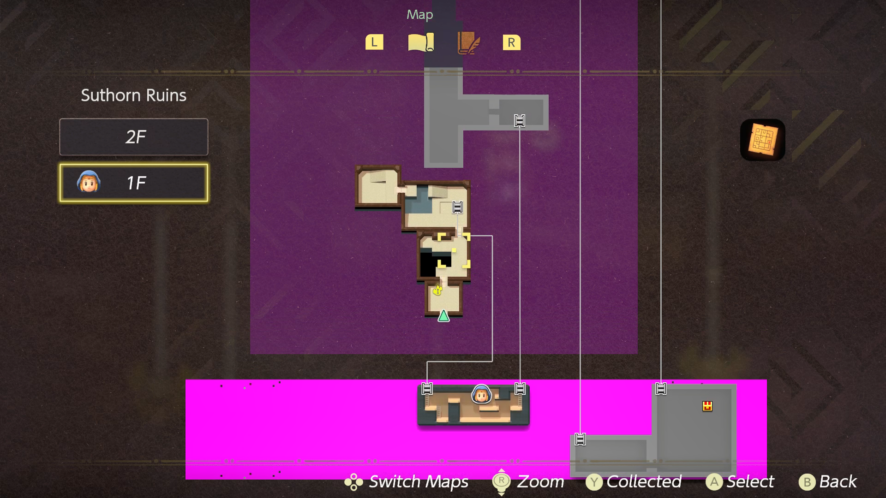
The final part of the demo saw us delving into the Still World en route to the first dungeon. In some ways, the Stilled Suthorn Forest wasn’t that exciting outside of its novelty. Sections of Hyrule had been sucked into the rift, frozen in time and on the verge of breaking apart into eternal nothingness. Shadowy forms taking the shape of familiar enemies sought to challenge us. But otherwise, we embarked on a platforming adventure up and up to the first major challenge, the Suthorn Ruins dungeon. These ruins provided the biggest unexpected surprise of the entire demo: For the first time since A Link Between Worlds 11 years ago, a new Zelda game features traditional dungeons.
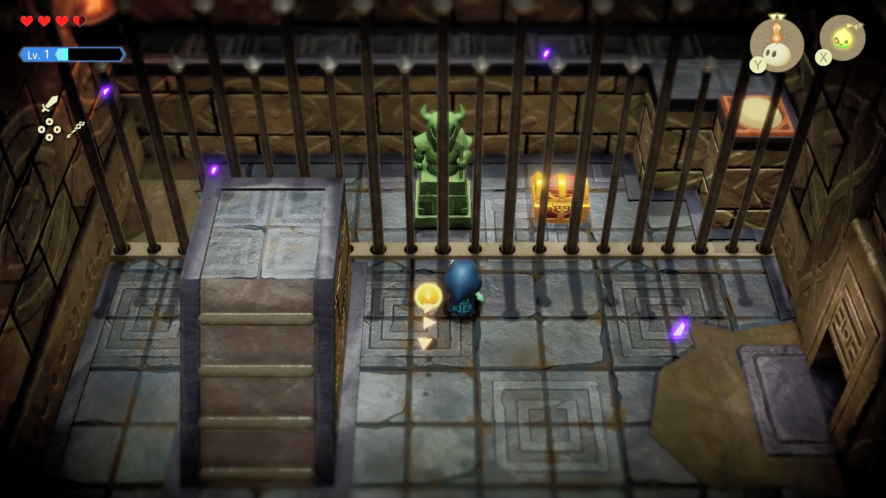
The Suthorn Ruins offered up both combat and puzzle-solving challenges. Being the first dungeon, it started off relatively easy, but further in we began to encounter new enemies, keeping us on our toes as we were forced to conjure up new strategies. There were several puzzles, usually in the form of figuring out how to gain access to a mechanism for opening a door or lowering a gate. We found Suthorn Ruins to be relatively linear with the only real exceptions being extra side rooms that offered extra puzzles and bonus chests. We’re sure things will get more complicated later on.
This is the closest we’ve seen to traditional dungeons since 2013.
During our adventures in Suthorn Ruins, we discovered a map, a small key, and a big key—the very staples of Zelda dungeon design since the early days of the franchise. There were also Waypoint stones within the dungeon to allow fast travel points to key locations, namely the dungeon entrance and just outside the boss door. The final dungeon staples we encountered were the mini-boss and boss.
Both the mini-boss and boss battles we fought were relatively open-ended. Unlike the traditional boss battles of yore, there’s no single special item that you must have in your inventory to win, and there’s no one special solution you must use to win. The mini-boss of this dungeon is a familiar face, and you will need to employ lots of strategy to defeat them. Facing someone who can vanquish most of your enemy Echoes in a single hit and block most frontal attacks was possibly the first real test of our wits and wisdom. While it wasn’t especially hard to get a single blow or two in, the challenge was finding a rhythm to ensure consistent progress.
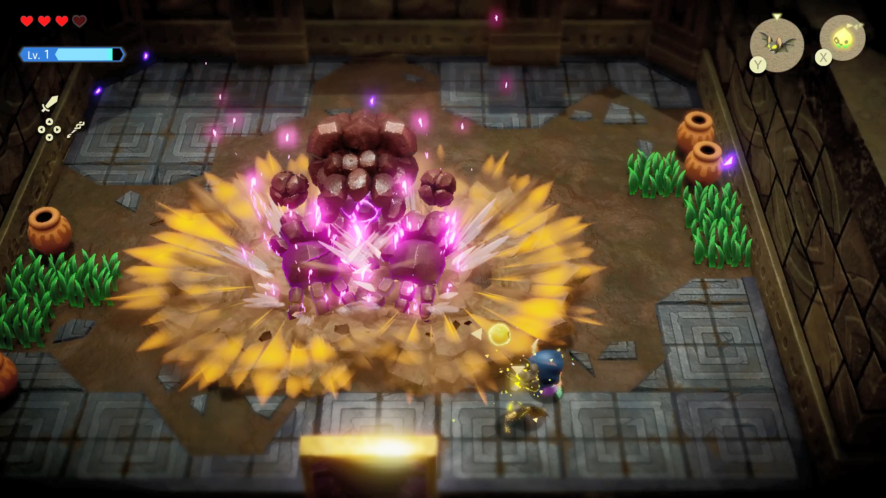
The boss, Seismic Talus, has a lot in common with traditional Zelda bosses, including multiple phases to the fight. After defeating it, our preview was complete, and we began chatting with the other journalist in the room, quickly learning that he had used a completely different strategy on the boss. Whereas we employed multitudes of minions to do our bidding, he didn’t use any Echoes at all. Knowing that there are multiple approaches means that you shouldn’t get blocked too easily by not knowing what to do.
You’ll definitely need to think on your feet as you figure out how to take down this sizable enemy.
Our final thoughts
It was hard to put down the controller and stop playing at the end of the preview. And as difficult as it was to do so, the silver lining is that we can clearly say that this game has that very special Zelda magic that has drawn players to the franchise ever since its dawn in 1986. It’s sure to be a delight regardless of your history with the franchise.
And we’ll be honest; it’s an absolute pleasure to play as Princess Zelda. In many of the games of yore—Ocarina of Time and Skyward Sword to name a couple—Zelda’s own quest would have been worthy enough of its own story. So it’s refreshing and exhilarating to finally get to see how she would save Hyrule using a method that leans into her strengths of magical prowess and wisdom.
While Echoes of Wisdom is certainly a new breed of Zelda game, what is clear is that Nintendo hasn’t completely given up on the “traditional” Zelda experience. Whether the rest of the game will completely follow suit or will be a hybrid experience, we can’t yet say. But we’re sure eager to find out.
Echoes of Wisdom launches on Nintendo Switch on September 26.
Shona and David Johnson
Shona and David are long-time fans of Zelda that met, fell in love, and got married thanks to the franchise. Shona is an aspiring writer and fitness enthusiast, while David is a software engineer with an unhealthy passion for the CD-i games. You can find more articles by Shona and David.


 by Shona and David Johnson on September 4, 2024