Make no mistake about it — a Legend of Zelda mobile game is eventually going to happen. It’s not a matter of if, it’s a matter of when we see Link, Zelda, and company take their adventures to our smartphones, tablets, and other portable devices.
The Legend of Zelda is a hotter commodity now than ever before, and Nintendo has had a pretty impressive track record in the mobile market since taking up the initiative just a few years ago. The quality of the games may vary, but they’ve consistently been huge commercial successes. Nintendo’s most popular franchises — Super Mario, Pokemon, Animal Crossing, Fire Emblem — have all had mobile titles, leaving The Legend of Zelda as the biggest name remaining that’s still on the outside looking in. With all due respect to Pikmin, if that series can get an upcoming mobile game, then it’s simply inevitable that a series as prestigious as Zelda will one day get the same treatment.
Endless Possibilities
Just what kind of experience that Legend of Zelda mobile game will provide is where the speculation goes sky high. Despite being Nintendo’s most ambitious property, with thrilling journeys across vast worlds, there are an endless number of small elements from throughout Zelda’s 35-year history that could feasibly be expanded into their own games. Mobile titles tend to thrive when they’re presented in bite-sized quantities with a greater pick-up-and-play nature than software from one of Nintendo’s handheld systems. They’re the kind of gaming experiences you want for those brief intervals like when you’re still laying in bed after hitting the snooze button, waiting out the intermission at a sporting event, or when you manage to find a few minutes of downtime during your shift at work.
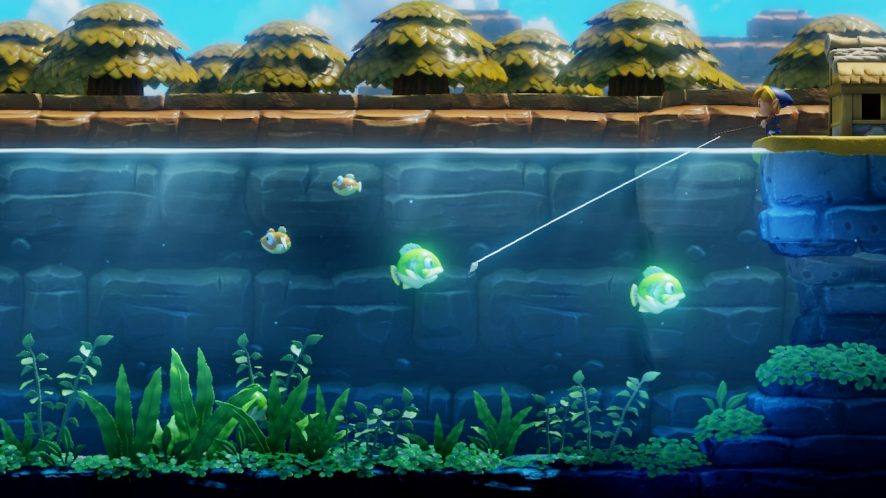
Spending a ridiculous amount of time just fishing is a requirement for being a Legend of Zelda fan.
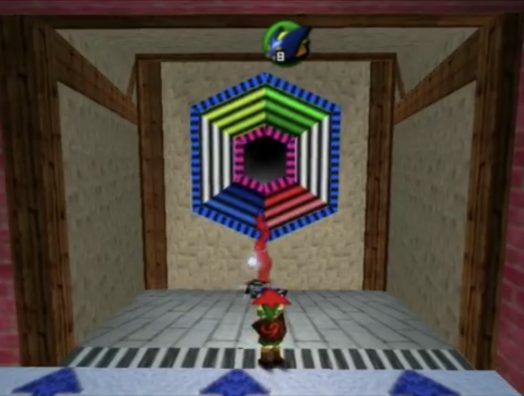
There have been more than enough minigames in The Legend of Zelda that have roped fans into spending an inordinate amount of hours playing what’s meant to be a one-note diversion, whether it be Bombchu Bowling, Fishing, Snowboarding, any of the Shooting Galleries, or any of the racing challenges. One of these quick, round-based minigames with high-score tracking would check all the boxes for something that you could pick up and play on the fly. Or maybe a compilation of several challenges would be even more ideal. It could be Nintendo’s way of trying their luck at a Mario-esque spinoff — a Zelda Kart, a Zelda Party — without the riskier approach of committing the resources required for a console release.
If Nintendo wanted their Legend of Zelda mobile game to be a shared experience, there’s actually a much longer history of multiplayer in the series for them to pull inspiration from than fans might realize. Between the Four Swordsgames, Tetra’s/NaviTrackers,Phantom Hourglass’ Battle Mode, Spirit Tracks’ Battle Mode, and Tri Force Heroes, The Legend of Zelda has dabbled in both competitive and cooperative multiplayer several different times over the years. Fittingly, all of those concepts fall under either the battle royale or PvE (Player Versus Environment) genres, which are two of the most widely played forms of gaming today. Battle royale has particularly become a mainstream trend; no matter what property, setting, or aesthetic it may feature, a battle royale game will attract an audience.
Should Nintendo prefer to take what was previously a single-player mode and build upon it to be a more connected experience, they have other options as well. In fact, they have a terrific candidate from not too long ago. The Chamber Dungeons in the Link’s Awakeningremake for Nintendo Switch badly needed an online sharing option, and mobile devices would be a great platform to give that creation mode the redemption it deserves. When that “aha!” moment for a dungeon idea hits you in the middle of the day, you could take out your phone right then and there to put it together, rather than have to wait until you got home to boot up your console.
Nintendo’s solid track record
If Nintendo were to develop a Legend of Zelda mobile game that only focused on a single gameplay element, it would be a serious departure from their previous efforts in the mobile gaming scene. Whenever Nintendo has taken one of their illustrious franchises to smart devices, they haven’t stripped away every and all elements that gamers have enjoyed on console software — they’ve merely scaled those elements down to fit into a more compact package.
Fire Emblem Heroes excels as a miniaturized version of the larger games for Nintendo consoles.
Mario Kart Tour currently boasts 59 courses and a whopping 119 playable characters, with both amounts being the most in any Mario Kart to date. Rather than be an Animal Crossing mobile game that revolved solely around the series’ fishing, crafting, or fashion elements, Pocket Camp includes all of those tasks and more, albeit in a simplified presentation. Super Mario Run is Mario’s take on platformers like Bit.Trip Runner and Sayonara Wild Hearts, where your character is always on the move and the challenge comes down to perfect timing and reacting to split-second changes to the environment. Fire Emblem Heroes has just about everything that fans are familiar with in the console titles: a massive roster of characters, a narrative-driven campaign, Skill systems, Support systems, countless maps, and fiendish difficulty on the harder settings.
Nintendo has also been dedicated to making their mobile games last, supporting them with frequent updates so there is always new content and improvements to return to. That ability to expand a game long past its original release is an inherent advantage to the mobile gaming sphere. Unlike most traditional video game consoles, mobile platforms and their gaming software aren’t retired every few years. We’ll eventually store away our 3DSs and Switches, but we’ll always have a smartphone handy. As a result, games on mobile devices have great shelf lives, providing the opportunity for developers to continue bolstering the experience over time.
Of Nintendo’s mobile efforts, Fire Emblem Heroes is the poster child for longevity. More than four years since debuting, that game and its community are as active as ever. Fire Emblem Heroes offers new missions on a daily basis, seasonal competitions, an ongoing story mode, and a steady stream of new characters from across the franchise’s 31-year history. The roster is now well over 600 characters, putting even Musou games to shame in that department. There’s a reason why Fire Emblem Heroes has made more money than most Hollywood blockbusters, bringing in more than $656 million to date.
A true adventure on the go
Technology has arrived at a place where smart devices are powerful enough to host games that couldn’t possibly run on the majority of Nintendo’s handhelds. Genshin Impact is a full-blown action RPG with a huge world to explore and deep roleplaying mechanics, yet you can experience it on your smartphone. A game that’s often referred to as a Breath of the Wild clone can fit into your pocket.
If Genshin Impact can run as a mobile game, it’s fair to assume that most traditional Legend of Zelda games could as well. Square-Enix has taken several iconic gaming properties to mobile devices, including Chrono Trigger, Ogre Battle: The March of the Black Queen, and numerous titles from Dragon Warrior and Final Fantasy. Nintendo’s mobile resume, however, suggests that simple ports of console games aren’t what they have in mind for the platform. They prefer to develop brand-new titles, and they may already have a blueprint or two ready for when they take The Legend of Zelda to Android and iOS.
With Phantom Hourglass and Spirit Tracks, Zelda has already done the point-and-click method of play that is commonly implemented for action/adventure titles and RPGs on mobile devices. Your phone/tablet screen and stylus (or fingers, if you prefer) simply replace the DS screen and its stylus. Nintendo even has experience with that control scheme for mobile after overseeing Dragalia Lost, an original action RPG developed by Cygames with real-time combat, an overhead camera view, and loads of dungeon crawling. There’s not a better playbook to follow if The Legend of Zelda’s first foray into mobile gaming is a 2D adventure in the style of A Link to the Pastor Link’s Awakening. The 2D plane is fairly painless to guide Link’s movement through tapping, and all of the usual Zelda items only function in a handful of directions for 2D games. Swords, the Bow, Bombs, the Boomerang, the Hookshot — these could all be managed by taps and swipes on the screen.
Now that the Switch has effectively merged Nintendo’s home consoles with their handhelds, there’s no longer a Game Boy, DS, or 3DS as the go-to platform for those Legend of Zelda games that command a smaller budget and are less cutting edge than the grandiose 3D epics. Perhaps Nintendo envisions mobile devices as the new home for such entries. While Nintendo still saw it fit to put the Link’s Awakening remake on Switch and price it at $60, they might not feel the same about a spinoff in the spirit of Four Swords, or even a traditional 2D Legend of Zelda that uses sprite graphics.
We need more Legend of Zelda games made with sprite graphics.
Before Cadence of Hyrule, the last time we had seen the classic visual direction for the series was all the way back in 2004 with The Minish Cap on the Game Boy Advance. A brand-new 2D Legend of Zelda adventure brought to life through vibrant sprites, dungeons, sidequests, and bosses that are frequently being added via content updates; an abundance of collectibles to acquire by delving into dungeons; and any kind of multiplayer functionality would be a very welcome addition to the franchise.
All the better if that adventure was accessible to us anytime, anywhere.
Jeffrey Pawlak
Jeffrey Pawlak is the Features Director for Zelda Universe, and has been a member of the website's community for more than 20 years. He is also a high fantasy author and an aspiring comic book artist.


 by Jeffrey Pawlak on May 19, 2021