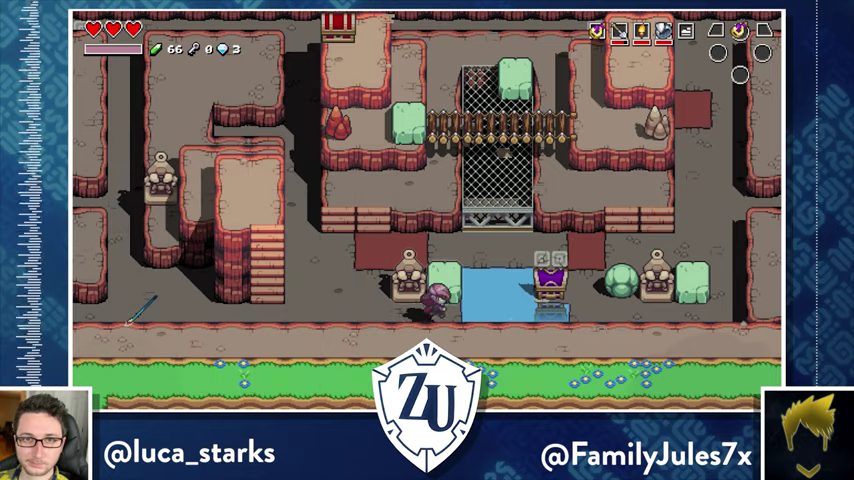
Yesterday, we released a new video on our YouTube channel where our very own Alex Rosenberg interviewed Jules Conroy, also known as FamilyJules. Jules is a musician, composer, YouTuber, and Twitch streamer, and his talent with various musical instruments, particularly electric guitar, has helped him create many incredible remixes of various video game music tracks.
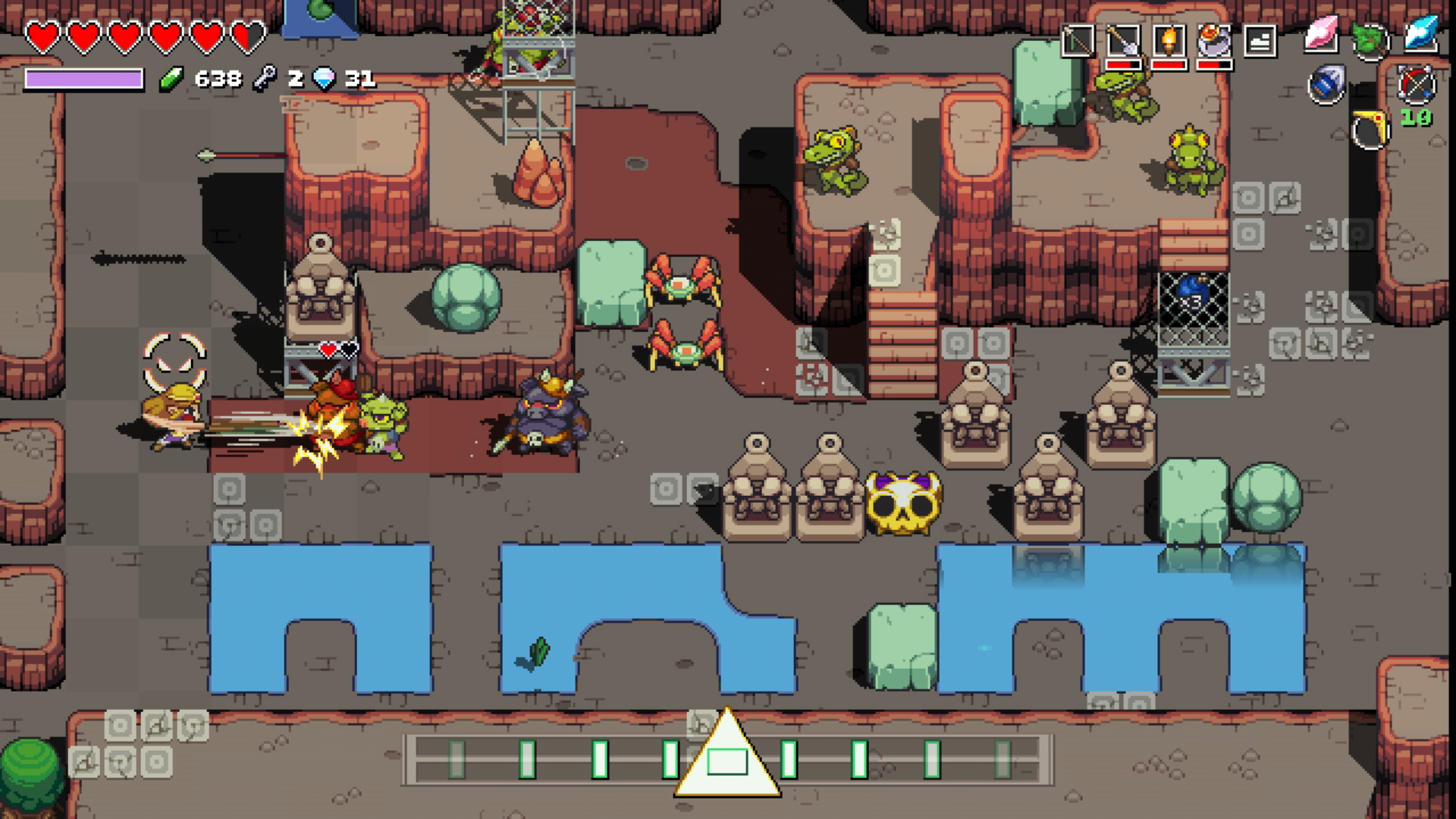
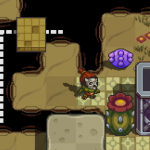
His success started on YouTube, and he eventually found his way into making music for video games. The latest of these were various songs he contributed to and remixed for the Zelda-centric indie game, Cadence of Hyrule, and its subsequent DLC season pass.
After the release of Cadence of Hyrule’s second DLC pack, which contained a bevy of remixes by Jules, Alex arranged an interview to speak with Jules about his work on the game, the journey he took to reach the point where he actually got the chance to compose for a Zelda game, and his thoughts on gaming in general.
The interview began with an introduction to how Jules goes about making music. There’s a lot to consider when composing any track, regardless of if it’s meant to be used in a game or added to a YouTube video.
Alex: So I kinda want to start in general with just explaining your process. When you look at a game track that you’re like “I wanna do this as an arrangement.” What’s your normal process for that?
Jules: Well, I do a lot, so templating is absolutely crucial. When I open up a project, making sure I have the same effects so I’m not reinventing the wheel every single time I do a new arrangement or anything [is important]. What really helps is essentially having all of my tones premade, all of my drums presets premade, all of my mixing moves usually premade. Usually what I’ll do is have one mix that I really like and I’ll just bypass all the effects and delete all the tracks and always record onto that one and try to build upon that, so that I’m constantly trying to get a better and better product every single time.”
Jules’ first step in his creative process is to choose a song to work on, one that is either a song he believes fans will enjoy or is a song from a newly released game. From there, he will compile his tools and work through a draft of the song:
Jules: What I’ll usually do is I’ll compile a big folder of sheet music and MIDI, from things that I can find online. Very seldom tabs, but you know if that’s the only thing I have I’ll usually go with that too. Then I use that and my own ear to compile a new arrangement of the song, and then I actually usually write everything out in MIDI first.”
Jules continues by explaining more of the tools he uses, such as how he’ll use Shreddage, a guitar VST (visual studio technology), to create his audio samples. He also explains how the process has various steps, but at this point he understands the process so well that he can find a design flow that helps him get through the work faster.
Jules: Usually, there’s one day where I’m just arranging the whole thing, writing out all the MIDI, and that’s it, that’s all I do that day because that is a hugely creative draining process. And then the next day, all I do is I record it. There’s no creative arrangement happening there, it’s just the brute force recording all the instruments and getting it down. And then the next day I usually film a video, maybe mix, maybe if I have energy, I’ll edit the video and that’s about it. Obviously, you know, I’ve got the process down from maybe like taking two weeks to a week to do one of these all the way down to maybe three or four days.
Alex: It sounds like you have it down pretty much to a science at this point.
Jules: Yes, definitely. Well, I mean, I’ve been doing it for 10 years now, so definitely.
From listening to him speak for just a few minutes, anyone can clearly see how passionate Jules is about music and how skilled he is at making it. This is led naturally into the discussion of his original involvement in Cadence and how the video game music composition first came to be.
Alex: I’m excited to hear more about how Cadence came into that in a second, but before we get into that, how did you get involved with Danny Baranowski, who did Crypt?
Jules: So in my early days of YouTube, probably 2011, I covered a song from Super Meat Boy, which he was also the composer for. I was a big fan of Super Meat Boy, and I did the cover of the hospital theme. … And I guess he was at a convention or something hanging out, and somebody was like, “Hey, have you seen this kid? He just did one of your songs.” And I guess he checked it out, he liked it, he commented on it. I fangirled and then we started loosely talking after that. And he would joke like, “Hey, when are you gonna do some of the Binding of Isaac tracks?” And I was like, “Tomorrow.”
From Jules’ first interactions with Danny, their friendship grew as Danny showed more appreciation for Jule’s work. This eventually led to Danny asking Jules to work on a project.
Jules: He was like, “Hey, do you want to play a guitar track on this?” and I was like, “Yeah,” and that was, was the Wrath of the Lamb. … So I did the guitar for that, and then I remember at this point we’re friends, so he actually invited me out to Seattle to hang out and get to know each other and just kick it. And I remember he was like. “Hey, do you want to see my next project? I’m working on a fun little game. It’s a rhythm-based game, and you know, don’t show anybody, don’t tell anybody about it, but I’ll show some of the first levels and stuff,” and that was Crypt of the Necrodancer. And I remember hearing the music and being blown away by it.
The work on Super Meat Boy and being given that sneak peek of Crypt of the Necrodancer were ultimately the first steps into complete and original composition work for Jules. After listening to the tracks, Jules decided to create his own arrangements of them. He knew he’d want to cover them after the game was released anyway, so this was a chance to get an early start on them.
After he made those remixes, he sent them to Danny, and his reception to them was incredibly positive. Danny’s interest in the music is what first gave him the idea to have Jules do a full metal soundtrack for the game. And it was that soundtrack that eventually led to Jules’ dream-come-true chance to create music for a Zelda game:
Jules: I sent it to him, he loved it, and because of that he got the idea: “Hey, what if we did a full soundtrack? Like a full metal soundtrack that was an alternative to it. And I was like, “of course, yeah, let’s do it.” And this set the stage for what Cadence of Hyrule ended up being too because I did all of the original guitars for Crypt of the Necrodancer, and when Cadence of Hyrule came around, Danny was like, “Wanna be in a Zelda game?” and I was like, “Yeah, OK, yeah. Let’s, uh, yeah, I think I could pencil that in. I think I could pencil in a Zelda game.”
Being able to work on an indie Zelda, one officially supported by Nintendo, came as a welcomed and exciting shock. But once he was underway with the project, Jules went on to create numerous amazing tracks for what has been a critically successful game. As anyone who has played Cadence of Hyrule can attest, Jules’ music was one of the highlights.
Following the recounting of those humble and out-of-the-blue beginnings, the story shifted to how the development process and timeline worked.
Alex: In terms of Cadence’s DLC, did you sort of know when you signed on originally that DLC was on the roadmap, or did that sort of happen again out of the blue after the fact?
Jules: With a Nintendo project, especially with being more of a contractor than being a part of the team, per se, part of the core development team, I was very much on a need to know basis, so it was like, “All right, here’s the next step. Can you do it?” And I was like, “Yes.”
Alex: When did you officially start that process?
Jules: I have no idea. It’s kind of a blur, honestly.
Alex: Sometime before March of 2019, I guess. (laughs)
Jules: Yes, definitely. I was probably wrapping up [from] March to April. I think the last recordings I did for Cadence of Hyrule was April 2019. But for the actual metal soundtrack, I’m not sure exactly when, but I know I wrapped that up around Halloween of last year. So about a year ago.
Going from there,the next questions were about the game’s music choices and the access Jules had to the extensive library of Zelda scores.
Alex: All of Cadence seems, at least for the music, going mostly off of A Link to the Past’s music with some exceptions of Song of Storms and stuff like that. When you started working on this with Danny, did Nintendo just sort of give you access to all of the Zelda library or were there specific songs that Nintendo was like, “We would like these songs.”
Jules: I didn’t really have contacts [with Nintendo]. My main contact was Danny. … For the original soundtrack, Danny would be like, “Here’s a track I want you to play on, here’s how much freedom you have on it.” Usually not much, but that’s fine. And then for the metal soundtrack, it was pretty much like, “Here’s the track, make a remix of it.” So that’s kind of where it began and ended for me.
Alex: Did your process of creating a remix of a Zelda song for an official Nintendo game… Did that change perspectives of everything, or was it like, “All right, same as before, but just a little bit more pressure now.”?
Jules: There’s kind of a point at which you can’t really think anymore. … I’ve done insane projects I would have never dreamed of doing. You know, working with Grant Kirkhope, the developer of Banjo-Kazooie, which was my childhood soundtrack. … I’m still stuck in that project. I’m still stuck back there, so everything that’s happened since then, I’m like, “All right, I’m on the ride.” … It’s hard to really feel the weight of it, in a way, when everything kind of happens in the way that it has. I think, for all intents and purposes, that’s been good, because I haven’t overthought it, and I’ve just been able to do it.
Alex: Did Nintendo have specific approval of everything? I’m assuming they did, right? Everything had to go through them?
Jules: I’m assuming.
With the music choices clear and the process and direction for how to compose them in order, the next question was about whether creating music for a rhythm game differs or doesn’t differ from any other game.
Alex: Now, because the nature of Crypt and Cadence, [they] have that continuous sort of beat, did that sort of affect anything either? It doesn’t seem like it did as much because it was basically already sort of created and they just said, “OK, now add your stuff onto it.”
Jules: I think anybody’s who’s played both Crypt and Cadence will attest that Crypt starts easier, but the skill ceiling is insanely high. … And with Cadence it feels like they wanted to have more of a universally accessible [game]. …I feel like Cadence is a little bit harder starting out, but it never gets nearly as hard as Crypt of the Necrodancer can get. … I feel like that was probably something they wanted to make sure [of]. It was more accessible than Crypt.
Alex: The fact that it had a very constant beat that had to be there just for the player mechanics, that didn’t affect any of your process in creating this stuff, right?
Jules: Nah, all the music is already there. So, you know, it’s all in 4-4, so I usually don’t have to worry about it. There are a few expectations in Crypt, where King Konga has a beat missing (hums the beat). So you don’t play on that beat, so that you get that feel. … That’s something I don’t recall them bringing over to Cadence.
The king of congas and unconventional beats.
Another important aspect of Cadence of Hyrule was that it was slated to be a Switch-exclusive title. Though not the case for every single game, there can be significant design challenges involved in creating material for a unique console rather than a PC, so it’s always a question of if a game has to deal with any hassles due to that.
Alex: Was the fact that the game was going to be on the Switch, in terms of the hardware, did that lead to any specific weirdness when it came to the actual creation of the music? Or was it pretty much easy because of how the switch was designed?
Jules: I kind of just did my own process. I didn’t really think about that stuff too much. I mixed it exactly the way that I would mix anything else until I thought it sounded good. And then I would send it off to Danny, and then I would hear back if I needed to make any changes.
Going from all that Jules had explained, it’s clear that he had a firm understanding of the process and had the appropriate strategies and techniques needed to create the songs. Still, projects rarely go without any problems or challenges. Succeeding over those hurdles, Jules knew, was going to be crucial for not just the success of the game, but the future of all other potential collaborations Nintendo would do with third parties.
Alex: Now, you said one of your favorite tracks to work on was Death Mountain. Were there any that you had a difficult time trying to figure out what was going to be the best for?
Jules: Yeah, the swamp dungeon [Lost Swamp] was extremely difficult because it’s a swing. And swing and metal don’t really mix very well. … When it works, it works really well, but it’s very hard to play. You usually play swing music with a lot cleaner instruments, so when you’re using a lot of distortion and stuff, it’s a little bit harder. You have to be insanely tight for those things to really articulate. … It’s a step in a very brave direction for Nintendo to not only give one of their IPs to an indie company to make a game out of, but [it be] Zelda.
Alex: That was the first thing I thought. … Last time Zelda was given to any third that wasn’t Capcom, we got the CD-i.
Jules: I was going to say, the last time that Nintendo gave Zelda to anybody — video games were an acquired taste, is what I’ll say. … I always, at every step of the way, understood the weight of [the fact that] Nintendo is allowing Brace Yourself, an indie company, to make a Zelda game. I knew what that meant. Being as deep of a Zelda fan as I was, I knew that this is history. … How this does will probably set the stage for how Nintendo deals with allowing their IPs [to be used by] any other company, indie or not.
Learning so much about Jules’ process and his involvement in Cadence of Hyrule was a pleasure. His understanding of the craft and his passion for the Zelda franchise ensured that his contribution to the game would propel it to the renowned success that it has achieved.
It was indeed a pleasure, but we could not leave the questions at just that, which is why Alex took the chance to have some fun and hit Jules with a few rapid-fire questions that all gamers love asking and answering.
Alex: What was the first game you ever played?
Jules: It was probably The Legend of Zelda.
Alex: What was the first console you ever purchased?
Jules: Xbox 360, I believe.
Alex: What’s your favorite console?
Jules: The Switch
Alex: Favorite video games?
Jules: It’s actually pretty much all N64 games except a few. It’s all tied between Banjo-Kazooie, Super Mario 64, Ocarina of Time, Kirby 64, and then just slightly above those is Jet Force Gemini for the N64. And then I love Dark Souls, Death Stranding, Near Automata, and currently, Ghosts of Tsushima might be one of my all-time favorite games. I’m playing through it right now.
Alex: Do you have any least-favorite video games?
Jules: Quest 64. It’s almost unfair, but that’s the one I always have prepared. I was really coming off of Ocarina of Time jumping into Quest 64, and having very, very high expectations. I didn’t give it a very fair shot, but I remember distinctly being very frustrated with that game. [But] it might be me instead of the actual game.
Alex: What is your favorite musical score of any video game?
Jules: Jet Force Gemini. That tied with Snowboard Kids 1 and 2 from the N64 probably has the greatest OST[s] of all time. Those bring me to tears every time I listen to them. Octopath Traveler is one my favorite OSTs of all time as well. I really love Persona V, and the Metal Gear series never fails to bring a tear to my eye. And I think the best guitar soundtrack of all time has to go to F-Zero.
Alex: Any other ones that are favorites within this last console generation?
Jules: Paper Mario: The Origami King is my OST of the year for sure so far.
Alex: Favorite Zelda game?
Jules: Keeps changing. I want to say Link’s Awakening.
Alex: What’s your least favorite Zelda game?
Jules: I really liked Spirit Tracks, so when I went back to Phantom Hourglass, I was a little let down.
Alex: Do you have a favorite and a least-favorite Zelda soundtrack?
Jules: My favorite Zelda soundtrack has to be Ocarina of Time. … Ocarina of Time as a whole pretty much defined a generation for video game music enthusiasts, and you can’t deny it. You can’t deny that that soundtrack changed lives, and many of them. So Ocarina of Time has to be it.
As far as least, honestly, again, it’s tough. I would say Phantom Hourglass because I don’t remember a single song from it. … I think a lot of people say Breath of the Wild, but I honestly think that’s one of the strongest soundtracks.
Alex: What was your most recent console?
Jules: Probably the Switch, honestly. I don’t think I’ve bought anything since then.
Alex: What’s the most recent game you’ve played? I think I know this answer. I feel like this might be Among Us. That or Banjo, based on your recent streams.
Jules: The last video game I played was … yeah, maybe Banjo-Kazooie? Since I speedrun that. Or Among Us or Ghost of Tsushima.
Alex: What has been your go-to video game as of late?
Jules: Ghost right now.
Alex: Last question. Say Nintendo gives you a call tomorrow and says, “Hey, we want you to make a soundtrack to any one of our IPs–
Jules: —F-Zero.
And that was our interview with Jules Conroy, aka, FamilyJules. Alex thanked him, and the rest of us at Zelda Universe would like to thank him again for taking the time to speak with us.
If you would like to learn more about Jules and check out his content, you can find him on YouTube, Twitch, Twitter, and Facebook. And, of course, you can hear his rockin’ Zelda soundtracks by playing Cadence of Hyrule for yourself.
Zac Pricener
Zac Pricener has been an avid Zelda fan for twenty years. The series has been a source of creative inspiration for him and fueled his desire to become a writer. That desire to write in turn led him to now serve as the Features Manager, Assistant Columns Manager, and Assistant News Manger for Zelda Universe.


 by Zac Pricener on October 30, 2020