If I were to say Breath of the Wild had divided reception, that’s mostly untrue; the game rang positively with the majority of critics and fans at release, and the general consensus remains favorable almost three years later. But when I say that Breath of the Wild‘s story had divided reception, that’s a more accurate statement.
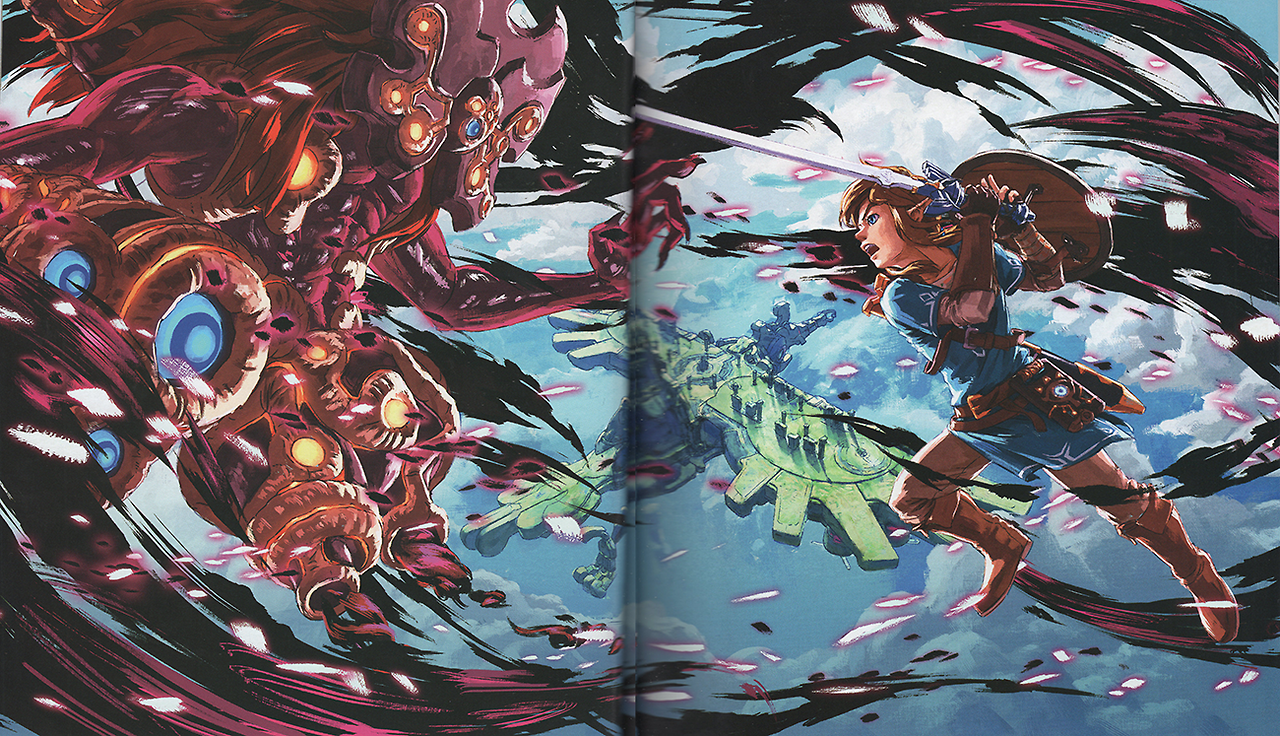
Ignoring complaints about the dungeons in comparison to past Zelda games and aside from functional problems like gyro puzzles and rain, the presentation of Breath of the Wild‘s story was the largest criticism of the game. Many players were thoroughly disappointed by the game’s “lack of a plot.” In my humble opinion, saying there is no plot is a little ungracious; I would argue that the plot is there, but it’s revealed by a method of storytelling that has never been used in The Legend of Zelda before, so it’s jarring for old fans of the series. I was introduced to the Zelda series with this latest entry, so I saw nothing wrong with the presentation; in fact, the storytelling trope that the game employs is one that I’ve been enamored with for as long as I’ve been reading fiction. So, together, let’s take a fresh, unbiased look at the execution of Breath of the Wild‘s story — to see where it fell short.
Telling a story in the past
The concept of presenting a narrative’s main plot through flashbacks and memories is not new; literature, film, and interactive media have been using the concept for years. It’s an effective way of instilling a sense of hopelessness in the partaker, with the plots typically transpiring in post-apocalyptic futures where the outcome of disaster is inevitable. It is also used when the main character has amnesia and must accept the task of recovering their memories. Breath of the Wild employs both of these catalysts, taking place in a land ravaged a century ago by a toxic demon king and starring a bleary-eyed hero with no recollection of his past life. On paper, this concept is well crafted, if a little dark: One young man must take back his kingdom and rescue his sole-surviving friend from her fate at the hands of evil; but first, he must remember who he truly is, and recall what placed him in a coma to begin with.
In the video game industry, this plot archetype is mostly used in small, narrative-driven indie games. Typically, tracking down the next flashback and revealing more of the story (often chronologically) is the goal of these games. In the character’s present day, there’s little or nothing to do other than keep searching, or maybe hunt for a small series of collectibles. The enjoyment of the game comes from the storytelling, bit by bit unveiling a poignant, slow-burning narrative.
The big problem comes when this realm of devoted storytelling is crossbred with one of the biggest, most colorful, and most adventurous AAA video game series ever.
The Legend of Zelda has established a very familiar formula over the years, which fans have enjoyed countless times. Breath of the Wild was created specifically to challenge that convention and offer a “breath of fresh air” to the players. It brought a sprawling, open overworld (one of the largest and most limitless maps in gaming), a new system of dungeons, and a lot of collectibles. Despite these changes, the goal remained the same: create an immersive adventure filled with action, puzzles, and exploration. These are what make a Zelda game a Zelda game, regardless of the coat of paint used or the details of the plot.
However, in a game with all of these requirements, a story that occurs in the past is inevitably going to lose priority when there’s so much to do in the present. How many times in your first playthrough did you find a memory, watch the cutscene, and keep exploring, only to be drawn in by a dozen side quests and shrines and forget what the plot was by the time you chanced upon the next memory? It doesn’t matter how good the plot actually is; the story becomes forgettable because of how little you’re reminded of it. In a game that lays its foundation on the concept of individual choice and interactivity, the story will only interest those who are interested in it.
How could it have been fixed?
There is a possible solution, one that I was surprised did not appear in the game: playable memories. In my opinion, this would be optimal for promoting player involvement and increasing the level of immersion and control the gamer experiences while being fed the story. Instead of sparse encounters with the narrative, there could be a handful of devoted “levels” that take you to the past and allow you to experience Link’s heroics firsthand. Of course, not all of the memories are suited to an exciting gameplay session, so stories of the past could be drawn from the journals of the Champions, king, and princess to be adapted into playable memories.
One area that I think truly needs this change, even more so than the base game, is The Champions’ Ballad DLC. The DLC was very fun to play, even if it was mostly a rehash of previous material. But those four Champions’ memories deserved better. Imagine if you could play as the Champions: taking control of Revali and flying about, shooting targets with bomb arrows; dispatching a conniving band of Yiga soldiers single-handedly as Urbosa; or launching into battle as Daruk to defend a precious dog (even if he’s deathly afraid of them). This was a large missed opportunity by the Zelda team, regardless of if the base game ever received that treatment.
Now, aside from the memories and narrative execution, one part of the plot that notably frustrated fans was the ending; almost everyone disliked the post-credits scene of the game, saying it was bland, inconclusive, and unsatisfying as a finale. Coupled with the lack of both a post game and a 100 percent completion reward, the end of the game is almost unanimously the worst part.
However, most of those opinions were formed collectively before Nintendo’s presentation at E3 2019, which makes a big difference, considering what we were shown. After an uproarious Nintendo Direct with two announcements for Smash Bros. and a release date for the Link’s Awakening remake, Nintendo ended the stream with their trademark “one more thing” tease, revealing a dramatic trailer for the sequel to Breath of the Wild. The sequel will apparently be crafted from a series of DLC ideas that the developers couldn’t fit into the first game. With the announcement of this continuation in Link and Zelda’s latest outing, fans disappointed with Breath of the Wild‘s ending can be optimistic that all will be resolved in the sequel. All that’s left to do is wait (im)patiently for more news and, hopefully, a sooner-rather-than-later release date.
Zelda‘s most unique story
Overall, I like Breath of the Wild‘s story. It has exciting twists, emotional moments, and great world-building qualities. The memories serve their main purpose effectively enough, telling the player, not necessarily about Link, but about Zelda and her struggles. It’s only disappointing to myself and others that we could not live inside these moments alongside Zelda. But now, I want to hear your thoughts: If playable memories could be incorporated in Breath of the Wild, which moments would you choose to play through? Be sure to share your answers in the comments below.
At the end of the day, I’m an easy gamer to please; I’m happy with Breath of the Wild the way it is, and I eagerly look forward to the release of its sequel.


 by Ben Connolly on January 3, 2020