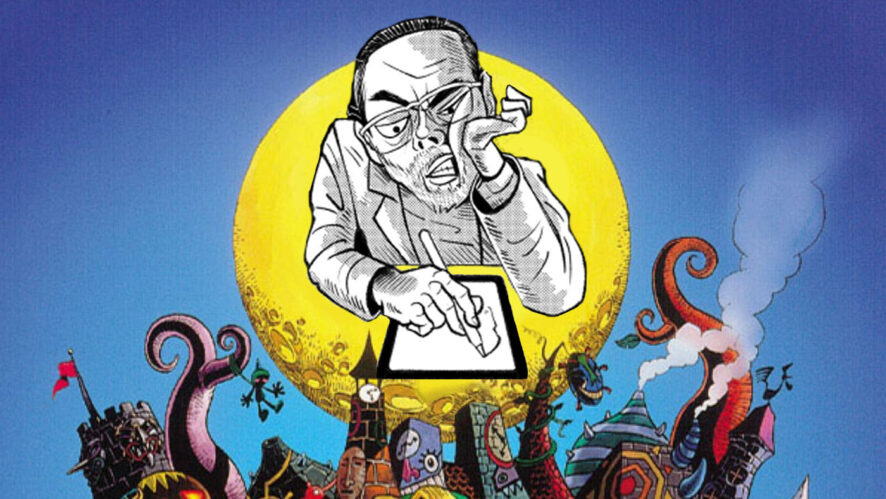
The legendary Zelda content creator Zeltik recently released an interview with Takaya Imamura, Art Director for the original Majora’s Mask and other Nintendo franchises like Star Fox and F-Zero. After 32 years at Nintendo, he moved on in 2021 to create his own game independently. He now lectures at the International Professional University of Technology in Osaka, in addition to working as a freelance illustrator. Imamura was responsible for the iconic designs of the Moon, Majora’s Mask itself, and Tingle, to name a few heavy hitters. While creating these memorable assets, he oversaw all of the other artists on the Zelda team for the game.
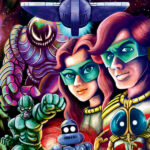
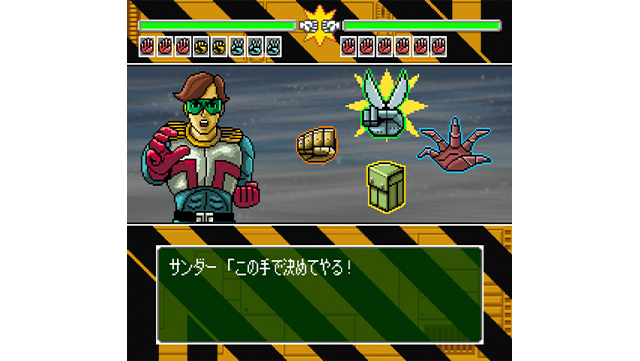
The bulk of the interview is focused on the release of Imamura’s new indie game Omega 6 The Triangle Stars, which is based on his manga Omega 6 that was released in 2022 in France. Despite his multinational experience with Nintendo, Imamura discusses the new appreciation he has for global launches. He also explained that the game’s pixel art style was not only inspired by the manga’s retro-futuristic setting but also called back to some of the games he’s best known for on the Super Nintendo. The premise of the story centers around Thunder and Kyla, two androids who are on a mission to find a new habitable home for the people of Earth.
Imamura stated that when it comes to game development, the story isn’t the most important thing, but as a player, he understands its importance. Game mechanics sometimes end up influencing the outcome of the story. When asked about what sort of advice he could give aspiring game developers, Imamura said:
“I think if you’re coming into the games industry or making games, then there’s been so many new ideas made into games up until now that I think it’d be very difficult to come up with something new, but rather than coming in with the idea that ‘I want to make a Mario-style game,’ ‘I want to make a Zelda-style game,’ the best advice I could give would be try to come up with something new, something other people haven’t done before.”
For example, one of the most unique things about Omega 6‘s gameplay is that it uses a turn-based combat system based on rock paper scissors.
When asked about Majora’s Mask, Imamura discussed some of the inspiration behind the game’s most iconic designs. Considering that this month marks the 25th anniversary of the release of Majora’s Mask, much of the information doesn’t come as too much of a surprise. For example, he confirms that Fierce Deity’s design was inspired by kabuki theatre makeup, which is meant to emphasize emotions. He also went on the record by dismissing the dream theory for Termina, saying that it’s more like a “different dimension” that is “connected” to Hyrule.
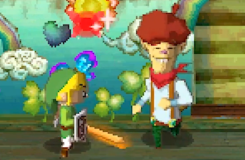
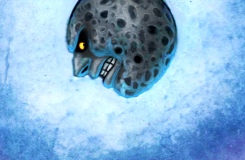
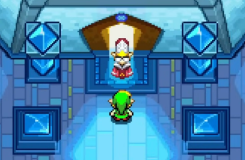
The idea behind the moon’s haunting design with its grimace of pain and anger was not his own idea, but more of the game’s direction in general. The Zelda team wanted to have an atmosphere that was creepy and odd to let the player know that something was not quite right. Imamura didn’t design the Link statue that is left behind after playing the “Elegy of Emptiness,” but he said that the artist who worked on it definitely thought that it fit the creepy theme. While he is responsible for Tingle’s timeless design, he wasn’t the person to come up with the backstory, so he wasn’t able to confirm or deny whether he is, in fact, evil or simply misunderstood. Imamura also mentioned that his former coworker who inspired Tingle’s design likely still does not know that he was the model to this day.
Majora’s Mask wasn’t Imamura’s first Zelda game, however. He was a fresh face at Nintendo when he was asked to work on A Link to the Past, focusing on dungeon maps and bosses. He discussed his design process by explaining that the director would tell him which items a player would have with them in the dungeon, along with what the dungeon’s key item would be, and he would design the bosses based on Link’s equipment. His favorite boss to work on was the Helmasaur King.
Imamura also had an incredibly insightful and hopeful outlook about the future of game development, art, and other creative industries with the rise of generative AI:
“I think—when it comes to creating art, that people that are doing it are enjoying it. So when another human looks at this art, they feel something from it—not just the face value. And looking at art, I think it’s in human nature to wonder who created it—not what created it. And so, if you had two identical pictures, two pictures of the same subject, one was drawn by AI and one was drawn by a human, I think people would go for the latter, they’d go for one drawn by the human… There’s a kind of warmth that a piece of art created by a human has that AI art doesn’t. And I think going forward, analogue—pen and paper art—that’s going to be the ultimate expression, because it’s something that AI cannot do—it’s not digital at all. This analogue expression will be even more valuable than it has been.”
You can watch Zeltik’s full interview on YouTube. Also, be sure to check out Omega 6 The Triangle Stars, which is available now on Nintendo Switch and Steam.