It’s a great time to be a fan of The Legend of Zelda.
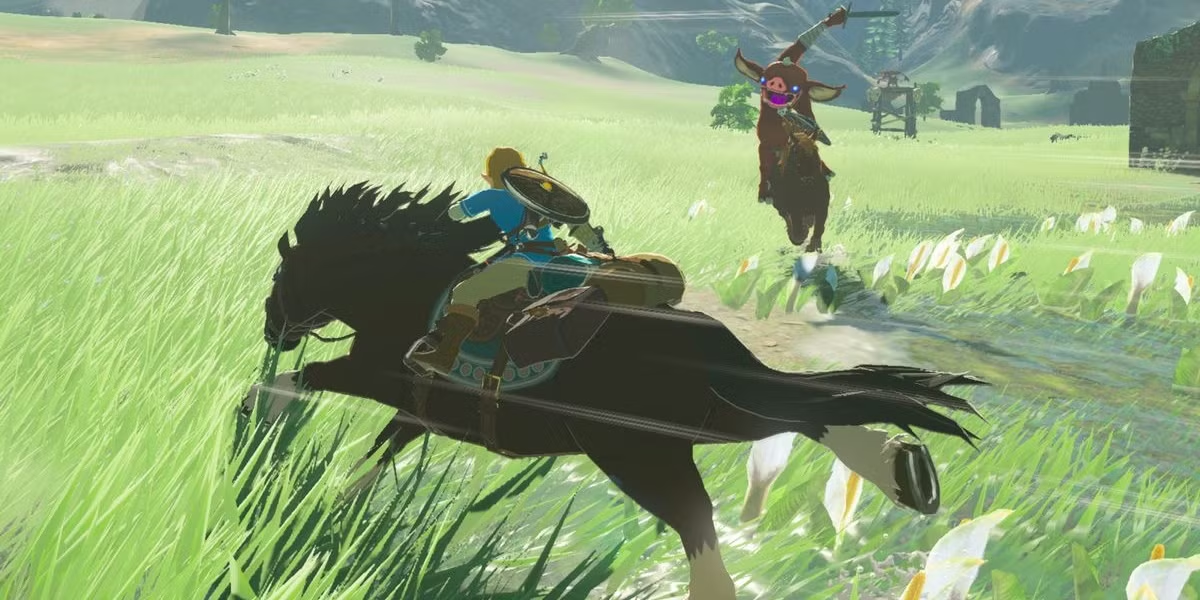
The gaming world is still basking in Breath of the Wild’s glow even more than two years after the landmark adventure released. Breath of the Wild continues to find its name in the headlines as it storms past sales records for The Legend of Zelda and as gamers somehow manage to discover new secrets in its enormous rendition of Hyrule.
For those fans who were eager to experience more of the series beyond its latest blockbuster entry, there has been plentiful releases to satiate the growing demand for The Legend of Zelda. Spinoffs like Cadence of Hyrule and the definitive version of Hyrule Warriors for Nintendo Switch provided experiences that deviated from the norm, while a remake like Link’s Awakening promises a new, updated way to play one of the franchise’s oldest and most respected titles. There has even been great reading material of late, as the manga adaptation for Twilight Princesshas printed one compelling volume after another since 2017.
Don’t forget an eagerly anticipated sequel to Breath of the Wild which is on the way; its reveal at E3 2019 sending just about every fan’s heart racing.
That’s a lot of Legend of Zelda to go around, especially compared to the franchise’s earlier days, when game releases were further apart and spinoffs were all but nonexistent. Fans waited four long years to get A Link to the Past following The Adventure of Link. The gap between Link’s Awakening and Ocarina of Time was even larger, being a five-year divide.
Those kind of droughts are poised to be lost to history, because The Legend of Zelda brand has never held more prestige than it does right now. When Breath of the Wild catapulted The Legend of Zelda to an unprecedented level of mainstream popularity, it signaled the beginning of an era where The Legend of Zelda would be anything but scarce to the masses. Nintendo appears intent to capitalize on the franchise’s momentum, emphatically declaring this at E3 2019 when three different titles were showcased: the Link’s Awakening remake, Cadence of Hyrule, and the sequel to Breath of the Wild. No Nintendo property enjoyed more representation than The Legend of Zelda did at the video game industry’s biggest gathering of the year.
If you have been a part of The Legend of Zelda community over the years, you probably know a few people who would not rejoice at the prospect of an abundance of games.
The Legend of Zelda brand has never held more prestige than it does right now.
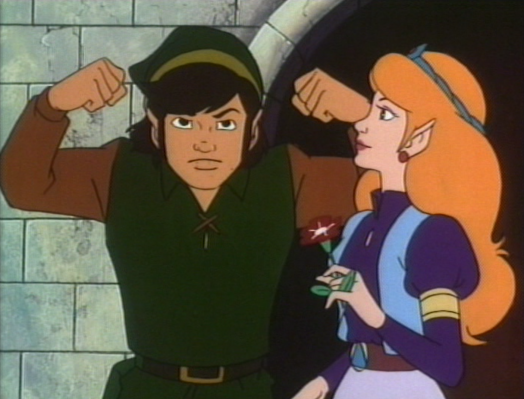
The Legend of Zelda occupies a rare position in the gaming industry as one of the most recognizable and acclaimed brands, yet with a very conservative release schedule of original games compared to many of its peers. In its 32 years of existence, the series has not explored anywhere near the same number of merchandising options as other gaming properties of similar renown have, whether that be the likes of Mario’s infinite forays into different genres, Pokémon’s ongoing television show and trading card game, Resident Evil’s multiple films, or Final Fantasy’s myriad of spinoffs. The Legend of Zelda’s extracurricular activities have not extended too far beyond an extremely quirky television show, a few comic adaptations, and the rare spinoff like Hyrule Warriors or Cadence of Hyrule.
Plenty of The Legend of Zelda’s most ardent followers would like to keep it at that. The enduring sting of the infamous CD-i games undoubtedly serves as a key factor behind widespread aversion from The Legend of Zelda community toward spinoff games. For much of the franchise’s storied history, its ventures into non-traditional games were associated only with a trio of reviled titles for the Phillips CD-i console that brought shame to the otherwise immaculate The Legend of Zelda brand. The animated series from 1989 certainly has its fair share of supporters, but it’s undeniable campiness also drew plenty of detractors. Responses ranged from thrill to sheer dread when rumors spread last year that Adi Shankar (from Netflix’s Castlevania) might head a new animated series.
The 1989 animated series is one of the very few times that The Legend of Zelda has stepped into another entertainment medium.
Notions like these derive from a perfectionist take on the series. For more than three decades, The Legend of Zelda has been hallowed ground in the video game industry. The series has regularly established itself as the standard of excellence for the action/adventure genre across nearly every generation of consoles. The series has committed so few universally agreed upon missteps that it almost has an aura of invincibility around it, like a championship boxer who strings together a perfect record as they tear through all title challengers with ease. Many would argue that The Legend of Zelda has never had a bad game that is canon.
Disinclination toward increased The Legend of Zelda merchandising ― particularly with video games ― has always been about the desire to see the franchise maintain its sterling reputation. For many, The Legend of Zelda’s relative scarcity is to be celebrated, and more prominence through an increased number of products dulls the luster from its seminal releases ― even if the products are not unanimously derided in the way that the CD-i games were.
The fear of what comes with a flooded market is perhaps shared more in the video game industry than other entertainment fields after the declines that multiple esteemed franchises went through in recent memory. Gamers vividly recall how spectacularly Guitar Hero (and the entire music genre) burned out once titles arrived at a relentless pace. While Call of Duty continues to see strong sales each year, its recognition as the premier action franchise faded long ago. Assassin’s Creed has come back down to earth with a hard landing after it attempted to thrive as an annual release.
At the same time, it could be argued that increased frequency does not inherently require a decrease in quality or popularity. Maybe it’s not so much the rate of the releases that forces a franchise to stumble, but the care that goes into their production and the capability of those behind the production. In Call of Duty’s case, its titles have not always been made in the span of a single year ― the games have largely been developed through a rotation of Activision studios that are allotted anywhere from two to three years to get their entry out. Assassin’s Creed has also recruited multiple studios to contribute to its line of games from over the years.
it could be argued that increased frequency does not inherently require a decrease in quality or popularity.
Disputing just how much harm truly comes from product saturation is the line of thinking that if the product is good enough, critics and consumers will be far less likely to tire of it. The concept of Western superheroes is a perennial crowdpleaser, one of the most popular forms of storytelling today despite its origins dating back nearly a century ago. Characters like Batman and Superman have seen literally thousands of issues printed since their respective debuts in the early 1900s. Between the efforts of DC and Marvel, multiple superhero blockbusters hit cinemas each and every year, and audiences continue to pack theaters for them. More than a decade since The Dark Knight elevated superhero film to newfound mainstream approval, the genre persists as the biggest draw at box offices.
There is also something to be said for just how little impact spinoffs have on the perception of mainline titles. A well-made spinoff does no damage to a core series, it only does the good of complimenting the orthodox entries in that series. Super Mario Odyssey was no less a Game of the Year contender in 2017 even though the number of Mario games had hit triple digits years beforehand.
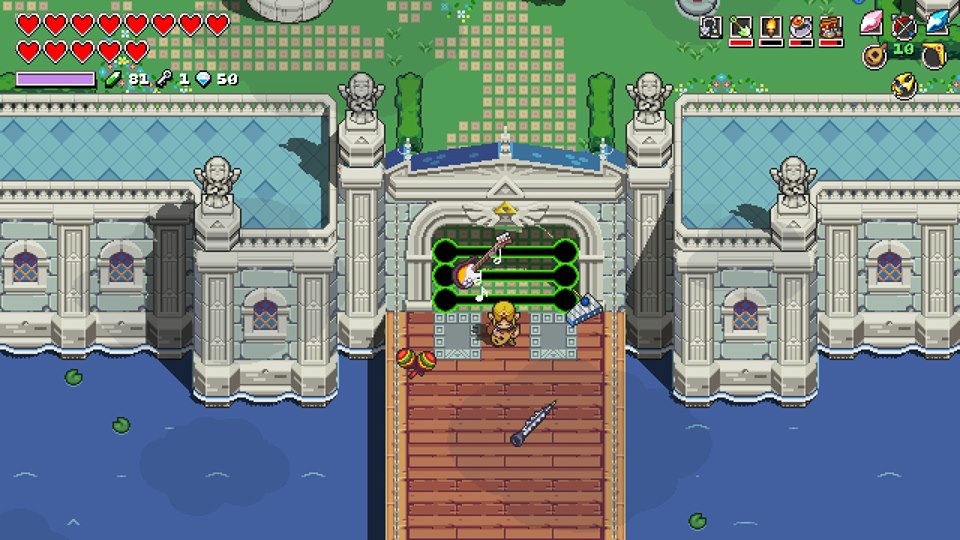
Cadence of Hyrule earned plenty of praise from The Legend of Zelda faithful.
Just the same, Hyrule Warriors never endangered the widespread appeal of Zelda Wii U, what would eventually be the groundbreaking Breath of the Wild. The Warriors-style gameplay may not be for everyone, but Hyrule Warriors garnered both a positive reception and strong sales. Whatever protest there may be to Cadence of Hyrule has been silent against the adulation that the unexpected little title has received.
The Legend of Zelda is a world whose sights and sounds are instrumental in why it has endeared itself to countless people.
One must remember that there is no daunting requirement to consider yourself a fan of The Legend of Zelda or of any entertainment property. You do not have to consume every single product in order to be passionate about a franchise. After all, do you think that everyone who considers themselves a diehard Star Wars fan has read each and every one of the seemingly endless tie-in comics and books while watching every cartoon series and playing every video game to completion?
If any new release should not appeal to you, whether it is a core title, a remake, a spinoff, or something that isn’t even a video game, there is nothing forcing you to take part in it. For those who are eager to indulge in whatever form The Legend of Zelda takes, increased output of games and merchandise are just opportunities to enjoy a beloved property in different ways.
For many, and perhaps most, fans, The Legend of Zelda is not strictly a game design philosophy. It is just as much a world whose sights and sounds are instrumental in why it has endeared itself to countless people over the course of more than three decades. Who we see and where we see them is paramount, not so much what they do. Dungeons, puzzle solving, open-world exploration, and adventurous and dramatic storylines ― no single element or any combination unequivocally define what The Legend of Zelda is.
The merit of spinoff games and multimedia productions like the comics or animated series is that they usually can offer a share of the spotlight to characters beyond Link that the traditional video games cannot. Super Smash Bros. allows us to play as Zelda, Ganondorf, and Sheik, but we would not get a chance to play as most characters anywhere. For beloved figures like Impa, Darunia, Midna, the Skull Kid, and many more, Hyrule Warriors was our only opportunity to take control of those heroes (or villains) and see them in action.
Remakes possess their own benefit to the series, that being their ability to show new fans why older titles enthralled longtime fans in years past. The Link’s Awakening remake for Nintendo Switch will likely be just the second The Legend of Zelda entry that a lot of gamers have played. The stage is set for it to persuade Switch owners to give their time to other previous The Legend of Zelda games. As noted by series director Eiji Aonuma, Link’s Awakening also provides a traditional Zelda experience while new entries like Breath of the Wild embark upon bold new directions, which may or may not be quite as appealing to some fans as what they became familiar with over the years.
Expect the artist duo of Akira Himekawa to tackle another manga adaptation of a game once they complete their work on the excellent Twilight Princess manga. Don’t be surprised if Netflix actually does someday order an animated series, and Nintendo may be quick to acquiesce if the upcoming Mario movie is successful. It is only a matter of time before yet another Nintendo mobile game that cleans up on app stores bears The Legend of Zelda name.
Not every fan would be excited by all of these prospects, and that’s completely fair. If your interest lies solely in the biggest hits coming our way, like Breath of the Wild‘s sequel, there are still great days ahead of you as a fan of The Legend of Zelda. But if you will embrace any opportunity to experience the series’ enrapturing charm no matter the package it arrives in, then the future is positively radiant for you.
All fans are welcome in this amazing era of The Legend of Zelda.
Jeffrey Pawlak
Jeffrey Pawlak is the Features Director for Zelda Universe, and has been a member of the website's community for more than 20 years. He is also a high fantasy author and an aspiring comic book artist.


 by Jeffrey Pawlak on September 29, 2019