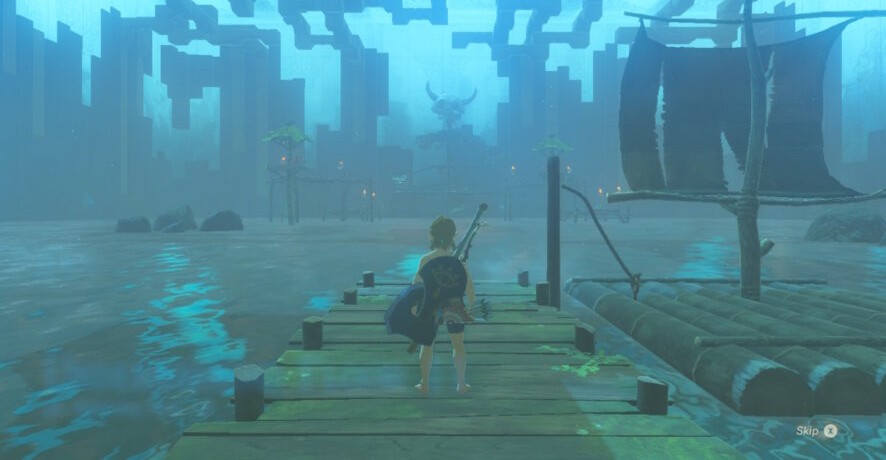
The Legend of Zelda franchise is a collection of stories about trials, adventure, and heroics; no game in the series quite deviates from this. Some of the most recent titles definitely lean heavier into the concept of trials for our Hero than other instalments. I’m referring to, of course, the shrine trials in both Breath of the Wild and Tears of the Kingdom. I have personally spent hundreds of hours across these two games, completing every shrine many times in each — though never finding all the Korok seeds.
Some of the trials presented in these titles stand out as memorable experiences; whether it be for their universal nature as mandatory challenges like the Rune Trials of Breath of the Wild; their uniqueness or infamy like the Myahm Agana shrine; or their difficulty — such as the Major Tests of Strength. For me, the most memorable challenges start with one infamous name: Eventide.
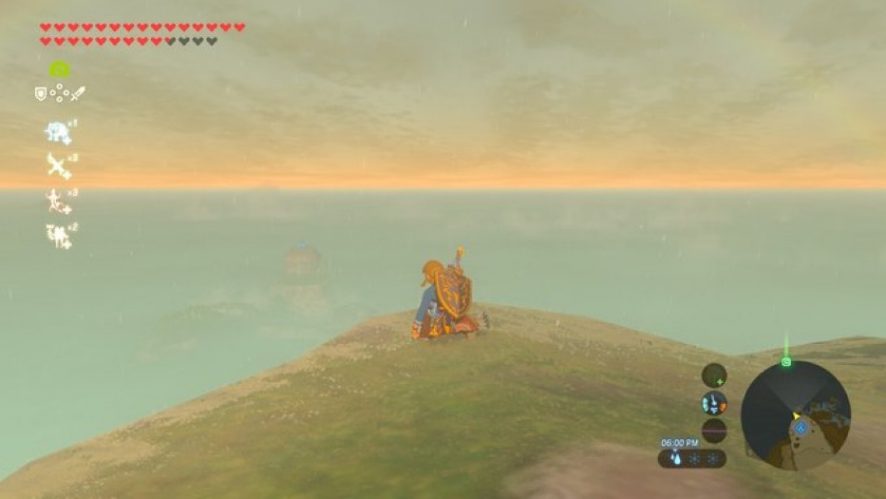
Back in 2017, Eventide Island broke my brain a little bit. It was Spring Break and I had just gotten a Nintendo Switch (and, of course, Breath of the Wild) as a birthday gift. Having little impulse control, any free hour I had was spent on exploring the new Hyrule. My first playthrough was fast; I played the main quests and didn’t take much time to truly dive into the world and investigate all the side quests (this wasn’t part of the formula that I was used to for Zelda titles). I realized upon defeating Ganon for the first time that so much of the map was still wide open, and I did what any fan would do: I started over. The second time around, I took my time; I spoke to people, explored well off the beaten path, solved Korok puzzles, and found mini bosses that I hadn’t even seen before. I found Lurelin Village and saw the ghostly outline of an island far off on the horizon when I stood atop Cape Cales.
I tried a few times to make it to Eventide, using many methods. Swimming with the Zora Armor (not nearly enough stamina), a boat and a Korok leaf (leaf broke), paragliding from Cape Cales (not enough altitude) and between the Lizalfos and the problems of stamina and durability, it seemed impossible. So, I did the unthinkable. In an effort that I wouldn’t replicate until Genshin Impact years later, I ice-walked using Cryonis all the way across the Necluda Sea. With the trip out being so difficult, surely the reward would be well worth it, right? … Right?
It was not. Doing my best Castaway impression, I ran Link up and down the beaches frantically looking for any tools, or maybe parts of my own purloined equipment that had been stashed away, to no avail. The Legend of Zelda is supposed to be a progressive power fantasy —what was I supposed to do to these Moblins and the Hinox without my Savage Lynel Sword and the Hylian Shield? The stripping of every element of progression (save your Heart Containers and Stamina Vessels) shook me to my core. It also most certainly didn’t help when one of my island orbs was lost to a deep mud pit when it got struck by lightning, causing me to restart after taking all that time to bomb the Hinox slowly into submission.
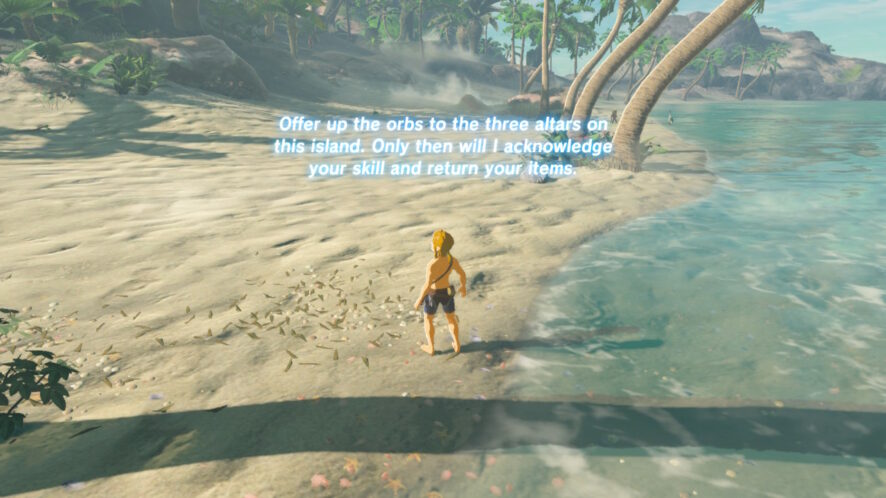
It was a relief, hours later, to reclaim my hard-won equipment and finally leave Eventide triumphant. I was proud of myself for facing a mid-game level challenge with less equipment than when I tackled the Great Plateau. Still, despite the handful of other times the franchise has pushed the player to work with a limited equipment set, this felt out of place. It was nothing at all like the stealth mission when Link lost his sword while raiding the Forsaken Fortress; or even when our equipment was lost after entering the Eldin Volcano in Skyward Sword, the objective was to reclaim it rather than make do without.
This type of challenge could only exist in Breath of the Wild and its sequel, which already incentivize creative approaches to combat the weapon durability system. I was surprised to find that Eventide received enough support (either by the fans or the developers) to warrant the Trial of the Sword, taking many pages from its book. It took me many times longer than Eventide to clear the Trials of the Sword for the first time; even then I was down to about half a heart against the last floor’s Lynel. The triumph that comes from using a limited number of tools started to grow on me — especially because I noticed myself falling into very specific patterns of how to deal with threats. I noticed tools that I wasn’t using, or ways to play the game that I found more fun but had ignored because I was set in my ways.
Tears of the Kingdom builds on this challenge with a number of shrine trials which challenge the player to tackle enemies in a variety of ways. Because the Zonai constructs tend to be incredibly versatile enemies, stealth is a little more emphasized, but the puzzles presented to the player always have a variety of solutions based on play style. These challenges are engaging puzzles and more refined than Breath of the Wild’s novel system — so much so that I would be lying if I said I had not stolen such ideas for my own Pathfinder games. They are short and contained, preventing the burnout that could come from facing the old challenges in Breath of the Wild’s Master Mode, but still rewarding that dopamine hit for, as my own players would say, “solving your robot puzzle”.
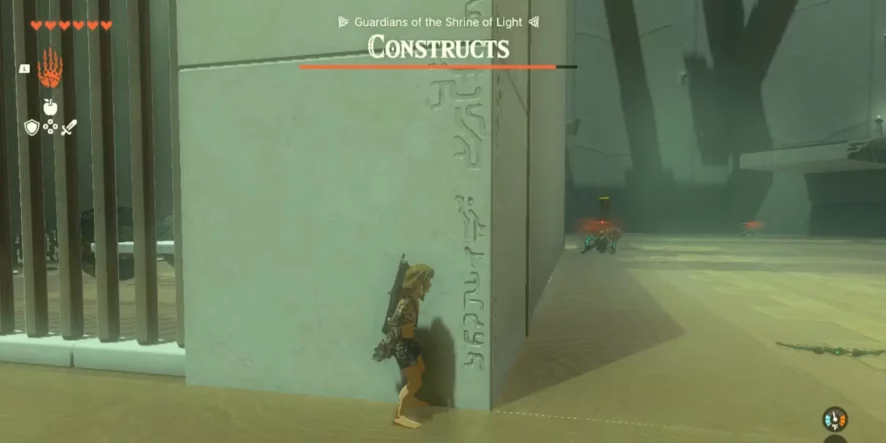
The equipment-less challenge may be something I hope for the next title to go without, simply because it has been used so much in these games, but I do look forward to the inspiration that goes into ideas like these, providing more unique and challenging inversions to the game in releases to come. It’s a turn that I think has brought the games around for the better, but I will need to finally complete the Trial of the Sword on Master Mode before I tackle this particular variety again.