Fans of The Legend of Zelda series are often spoiled with rich gameplay experiences that make the player’s efforts feel crucial within Hyrule’s truly epic history. Traveling though time, uniting entire races of people, and facing off against godlike villains – all are events which hold an intense emotional weight that players actively participate in. When recalling dungeons of such importance, like the Tower of the Gods from The Wind Waker or Twilight Princess’s Arbiter’s Grounds, it’s their plot-relevance of that makes them stand out. Not one to break that streak, Tears of the Kingdom presents the Stormwind Ark, also known as the Wind Temple.
Due to the Demon King’s resurrection, colloquially called the Upheaval, some stuff is going on up north. An enormous storm cloud swirls above Hebra Peak, causing a mass blizzard that is swallowing the region whole. It has forced all of Rito Village’s travel and trade to a harsh standstill. Though they are accustomed to cold weather, the Rito are powerless without access to food and other resources. The winds are too strong for them to get close to the storm, and without a plan, they’re practically sitting ducks (pun intended?).
Luckily, in a time where disregarded legends seem to be more immediately relevant than ever, the Rito have a small theory. Within the Rito mythos exists the story of the Stormwind Ark: Once, when the winds of Rito Village fell still, a god plummeted from the sky and longed to return home. After failing to carry the god on their wings, the Rito gathered materials to help assemble a giant ship that could sail on the wind. Though they were able to escort this god upon a fleet of floating ships, they had no permanent place high in the heavens. Thus, the villagers returned to the earth, taking with them the legend of the Stormwind Ark, and the wind blew once again.
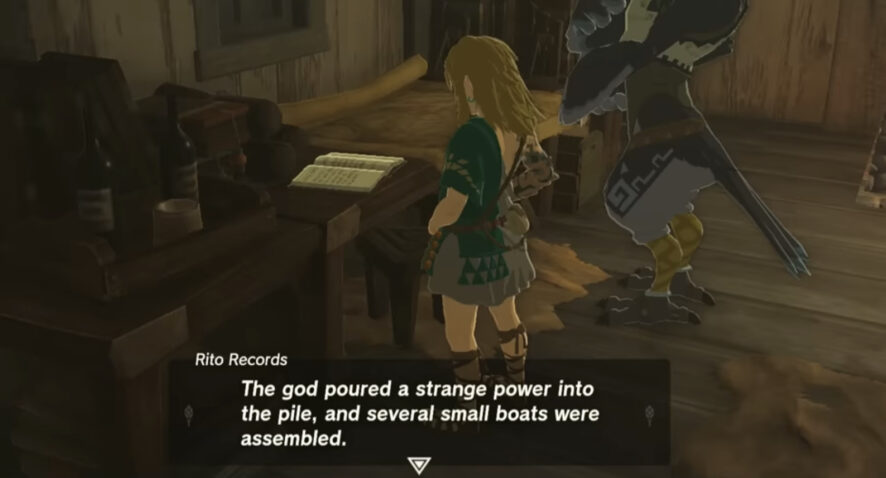
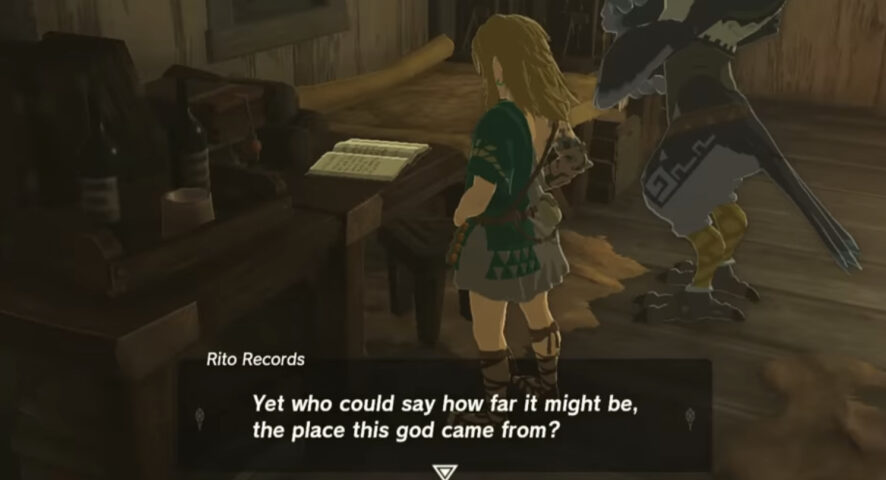
It can be inferred by the player that the “god” visiting the Rito may well have been a Zonai. In a notebook Link can find at the Hebra Trailhead Lodge, it’s explained that the fleet of boats, presumably along with the Ark, were assembled with a “strange power” – likely what Link now uses as the Ultrahand ability.
Between clashes of lighting and thunder, a shape is occasionally silhouetted amidst the Hebra cyclone. And… not going to lie, it looks a bit ship-like.
So, alongside Teba’s son Tulin, Link begins his journey into the eye of the storm. Tulin’s Gust proves to be a useful ability that somewhat replaces the functionality of Revali’s Gale from Breath of the Wild. Instead of propelling Link upwards, Tulin’s Gust blows him forward when gliding, providing a helpful mid-air boost.
The ascent to the Stormwind Ark is super fun from a player perspective, but from Link’s perspective, each step has increasing feelings of mystery, anticipation, and dread. A set of floating ruins make up what the map refers to as Rising Chain Island. Using a combination of the Ascend ability, Tulin’s Gust, some Zonai launching devices, and the paraglider, the pair jump from piece to piece. Carried by a windy, haunting musical score, they slowly wind their way upwards, until Tulin hears a mysterious voice from amidst the storm, asking him to come closer.
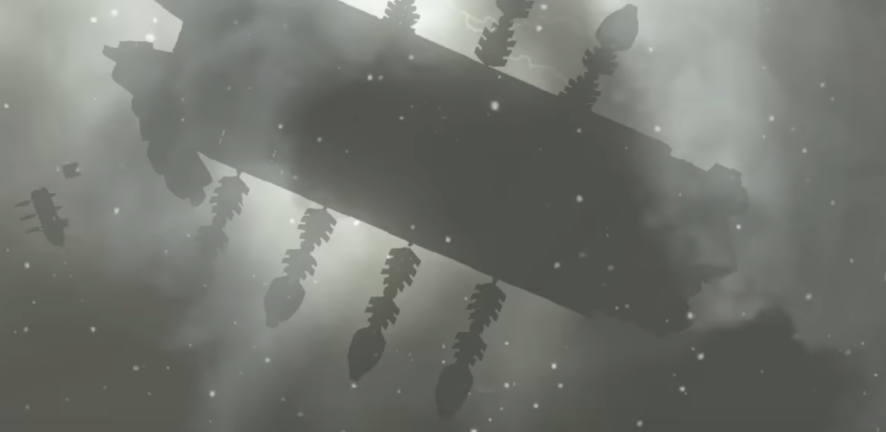
Super not weird. As Link and Tulin approach the Ark, they utilize the sails of several small ships that are dotted across the sky (hey, just like the legend!) to launch themselves upwards. This adds a layer of solid trampoline enjoyment as Link bounces from boat-to-boat, eventually reaching the storm’s peak as he fights the biting wind.
It’s this moment here, when Link and Tulin make the leap up and over the crest of the cyclone, that feels like we the player are about to accomplish something huge.
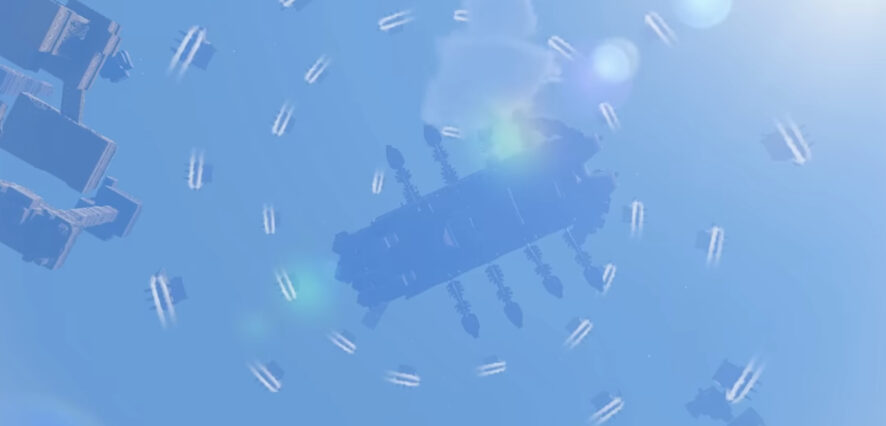
Completely in freefall, and with an insane amount of courage, Link dives straight into the eye of the storm. The Stormwind Ark slowly comes into view as bolts of lightning illuminate its form. Surrounded by its fleet of ships, iron-willed as an impenetrable storm surrounds it, this is Tears of the Kindom’s Wind Temple dungeon.
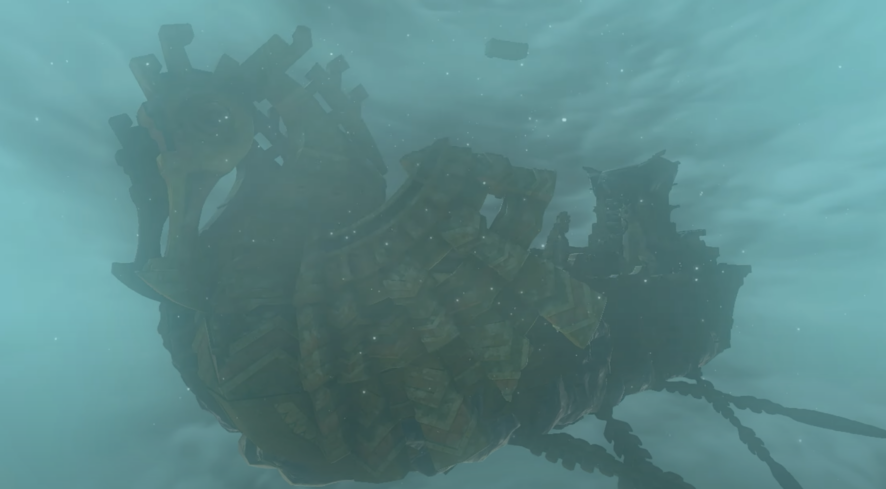
Upon landing, we witness Zelda (Zelda? What is she doing here? Isn’t she missing? Girl, get over here!) as she strides towards a large grate embedded in the floor of the main deck… before disappearing.
Depending on the player’s in-game order of events, they may have already put together that this isn’t the real Zelda, but a phantom puppet of Zelda controlled by Ganondorf. Her presence seems to be what activates an endless gust of icy wind, which erupts from below the grate. Whatever is causing this blizzard must be below it, but there is a complex lock mechanism keeping it shut.
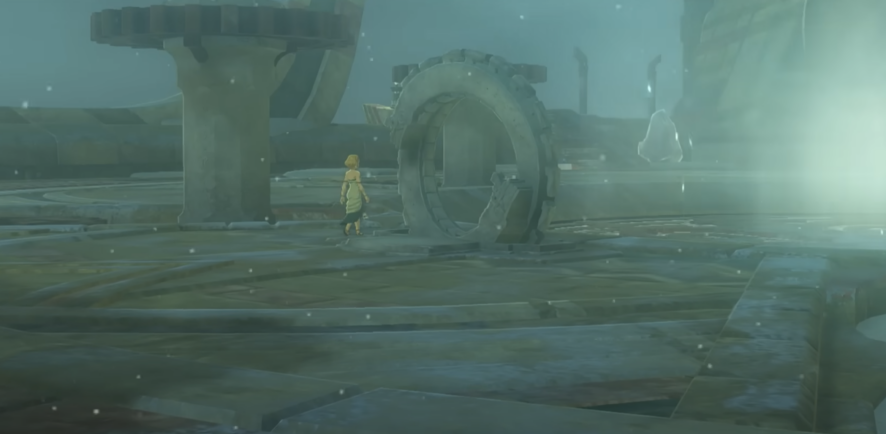
The grate at the center of the ship is made up of six segments, each of which are connected to a large wind turbine that has been shut off. To unfurl the grate, Link must locate the five wind turbines that power the gears. These are hidden throughout the ship, and can be accessed by thawing out frozen doorways, dodging laser traps, defeating construct guards, and using the various Zonai abilities (Ultrahand, Recall, Fuse, and Ascend). Additionally, the circling ships act as convenient pillows to jump from if Link accidentally falls off the ship. All of these elements combined make for a creatively interactive dungeon. With the Wind Temple likely being most player’s first Tears of the Kindgom dungeon, it provides several interesting ways to use each of Link’s new abilities. One gets the sense that they are restoring a giant, mythical machine back to working order, freeing the Ark from the cold grips of whatever has infested its hull.
Similar to some island pieces found on the ground near Rito Village, as well as the floating components of Rising Chain Island, the Ark is colorfully detailed. Within the costume, setting, and weapon design of the Rito people, bright stripes of paint mark everything. This includes arrows, shields, boots, hairpieces, and even their homes, which resemble hanging bird cages. A marvel of the ancient Rito, the Stormwind Ark contains similar elements, like geometrical carvings and stripes of old paint that resemble feathers. The model of the Ark has a figurehead that resembles the head of Devine Beast Vah Medoh, with a large beak and a plume atop its head. From a design standpoint, it serves to further immerse the player into the foggy history of the Rito. It’s also a dungeon that reflects its origin story well; the efforts of many Rito pulled into place with the godlike abilities of the Zonai.
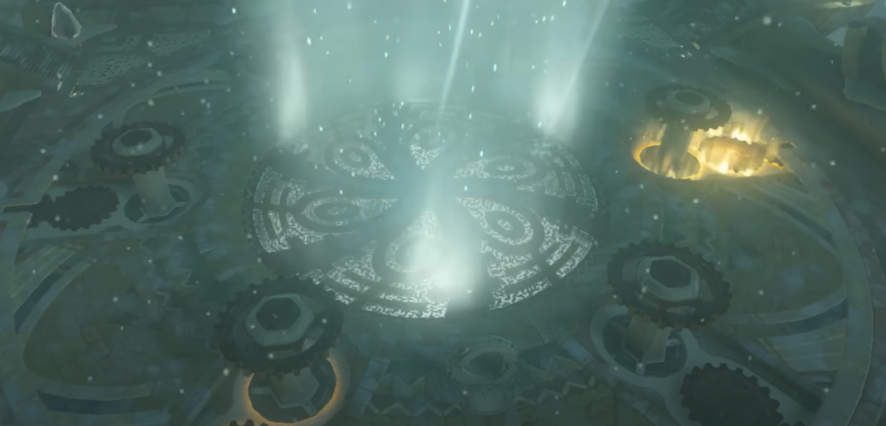

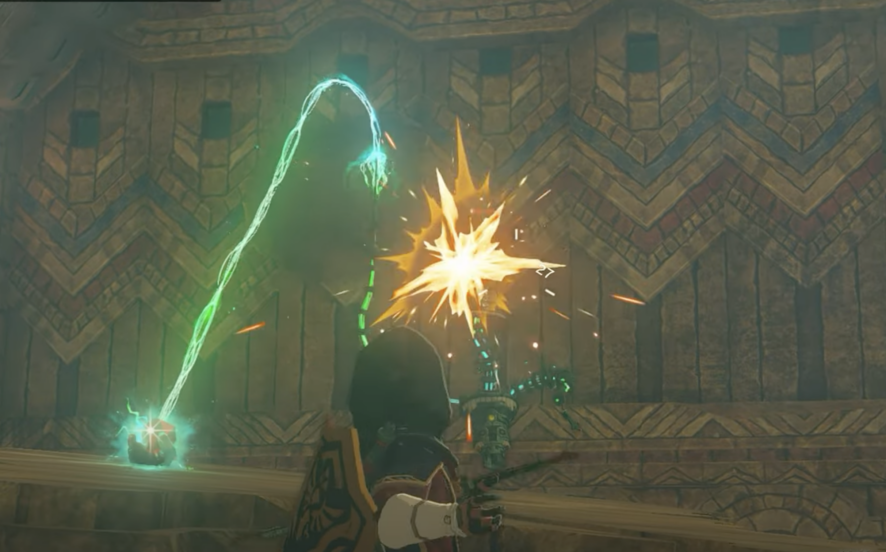
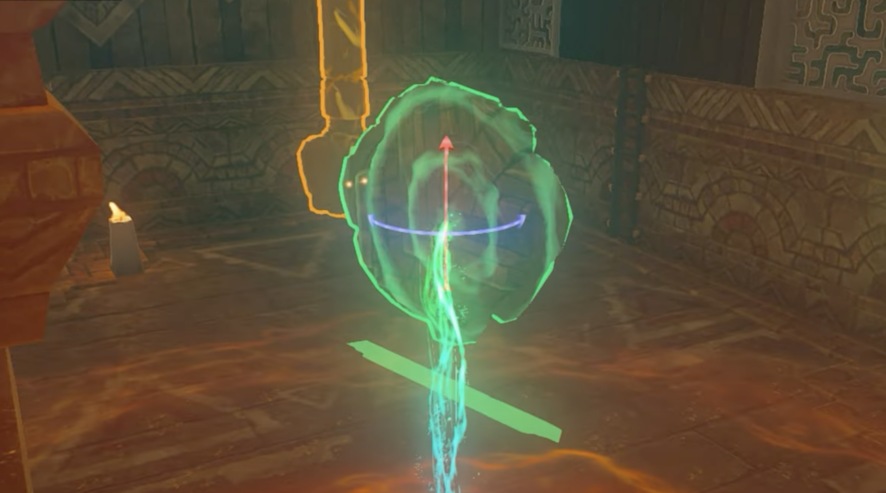
Since the turbines have been shut down, they need a new source of wind to activate them. Luckily, we know a guy. Each can be re-powered with a well-placed use of Tulin’s Gust. As opposed to Breath of the Wild’s use of the Sheikah’s blue aesthetic to indicate advancement through the Devine Beasts, the Zonai color scheme of green and orange signifies levels of completion throughout the Wind Temple.
Finally, Link can unlock the grate. It’s time to face whatever has overtaken the Ark and take it down. The final boss of the Wind Temple… Colgera.
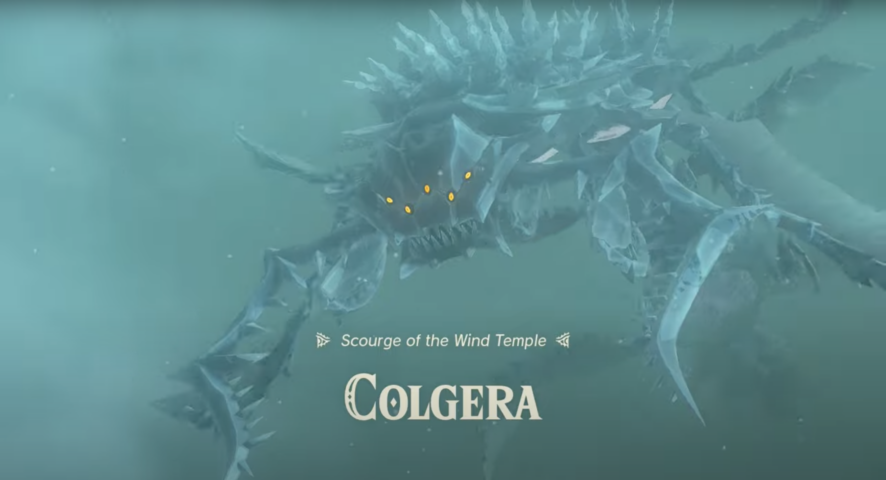
Bursting forth from the ships interior, blasting Link and Tulin into the sky with the sheer force of its wind, Colgera menacingly flies through the sky. Ready to defend its lair, Colgera stares down the pair of heroes, unimpressed. What follows is a visually stunning, emotionally compelling, totally awesome boss fight. Colgera is a spindly terror, an elongated icy arachnid that summons deadly icicles and big tornados that are hard to avoid. Beyond that, the majority of this fight takes place in midair. It has two obvious weak points: fragile parts of its body made of pure ice. All Link needs to do is blow them up for a few rounds. All while falling, gliding, diving, and avoiding airborne chucks of ice. Sure.
But this is Link we’re talking about, who can also take out the patches of ice simply by diving headfirst into them, because he is both crazy and indestructible. The hero is a catch, guys.
Throughout this battle a rendition of Rito Village’s main theme triumphantly returns. This music, which in turn is a new form of Dragonroost Island’s theme from The Wind Waker, is a great callback to previous titles. As is the case in moments like this throughout the series, the player feels here that through Link, the hero, the fate of the kingdom’s massive history hangs in the balance.
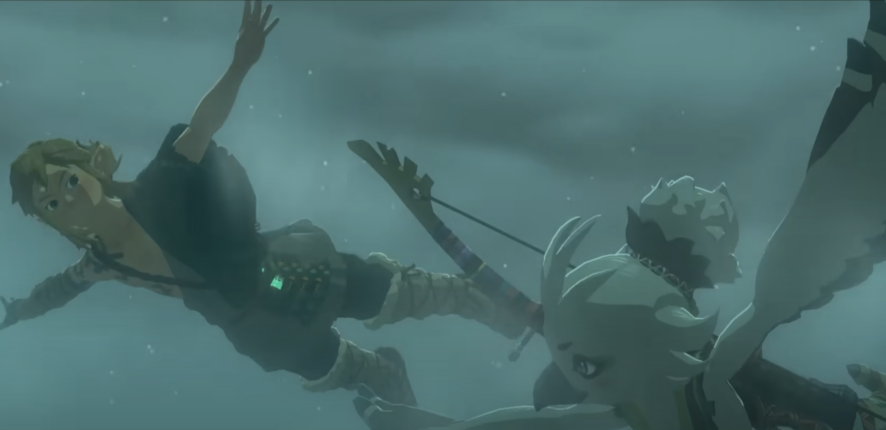
It’s surreal to see Tulin fight alongside Link, with so much courage balanced with level-headedness. It’s a stark difference from his characterization in the previous game, as an eager little kid who wanted to practice at the Flight Range every day with his dad. Now, he’s the Rito equivalent of a tween, who’s had to watch his people suffer now not just once, but twice in his young life. With gumption, he shouts a quick “Let’s go!” to Link before diving straight into battle, a moment so iconic that it was in the game’s official trailer.
Despite Colgera being an easier fight, it still feels like an insane accomplishment to watch it combust at the end of the boss sequence. The effects of Colgera’s defeat are almost immediate. The storm fades away, and a clear sky blesses the Ark and its surrounding ships as a glowing Secret Stone is released from a chunk of thawed ice. This is the prize for every dungeon in the game, corresponding to each companion accompanying Link. A cutscene is unlocked in which Link and Tulin meet face-to-face with the spirit of the Wind Sage from the Imprisoning War, and Tulin is revealed to be their descendent.
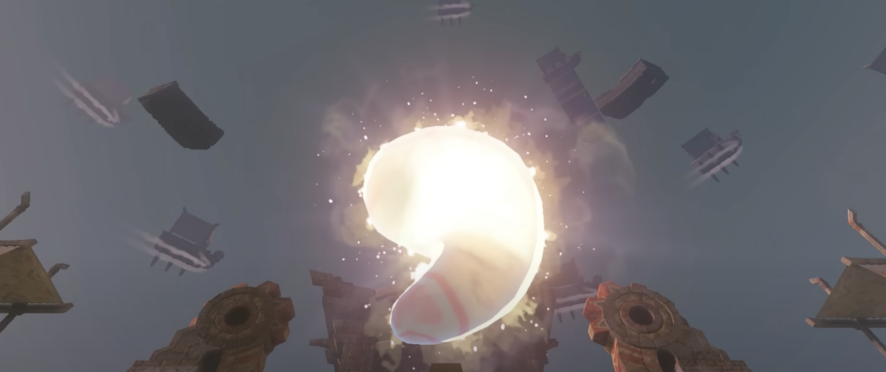
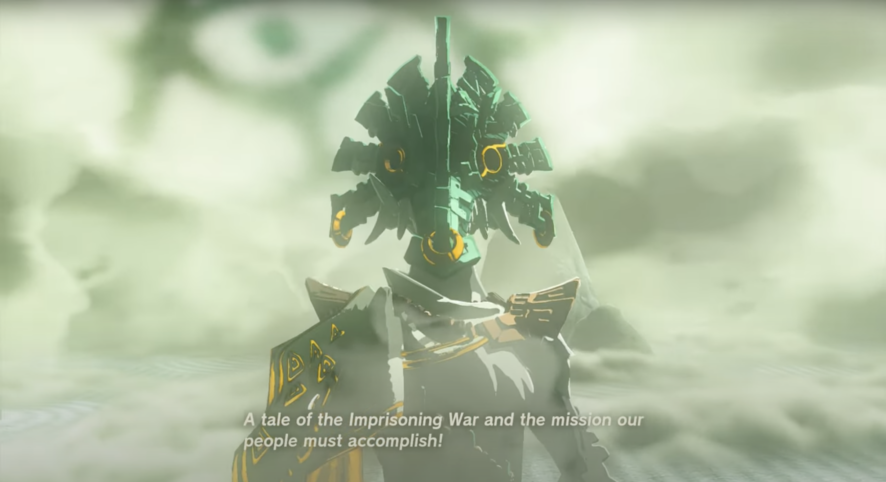
With that, the symbol of the newly-awakened Wind Sage etches itself onto one of Link’s fingers (meaning the player can access Tulin’s Gust at any time), and he and Tulin return to Rito Village to deliver the good news.
The Wind Temple, the Stormwind Ark, remains a fan favorite dungeon in Tears of the Kingdom almost a year after the game’s release. While it exists as a monument to the Rito, it has a bonus, its questline a tale of two heroes who ascended into the world of myth. After solving Hebra’s Regional Phenomenon, the Ark remains in the sky, circled by its fleet – a god sailing amongst mortal souls. The Ark represents the freedom provided first by Skyward Sword’s endless sky, continued with The Wind Waker’s endless sea, then finally by this Hyrule’s open world. The sky is where this monumental story really began, and where its fate continues to be decided. It looks on as Link tackles new challenges, stark amongst the now-reachable heavens.