A common complaint about Breath of the Wild that I often hear is that the open world is awesome until you play for more a couple hours and realize just how empty it is. A lack of people and towns to visit make the huge world too boring. Well, to all those haters, I say…I mostly agree. But that does not mean that there are not some awesome settlements for the Hero of the Wild to visit on his quiet quest, including my favorite place to visit and revisit: the tranquil Rito Village.

Probably the first thing your eye catches when you enter Rito Village – if not the giant mechanical bird floating in circles – is the tall pillar that acts as the center of this vertical village. The houses are connected by one continuous dark wood path that wraps around the central pillar in an upward spiral, with a few bridges that sprout to landing decks and even to a convenient shrine location. The placid vibe of the village is only obstructed by the several windcups found in every corner, providing information on the flight conditions for the Rito denizens. We find the shops towards the bottom of the pillar (easily accessible for tourists), while the residence area is closer to the top. I must also mention that one shop in particular, the Slippery Falcon, is the greatest name for any shop I have ever visited in any video game. A tiny detail I appreciate about all the villages in Breath of the Wild is that the pottery is unique to every village, perfect for picking up and smashing in classic Zelda style. The Rito settled on a more angular design and gives them a little pair of wings, which is a nice touch. My only issue is the color scheme, which reminds me too much of Burger King.
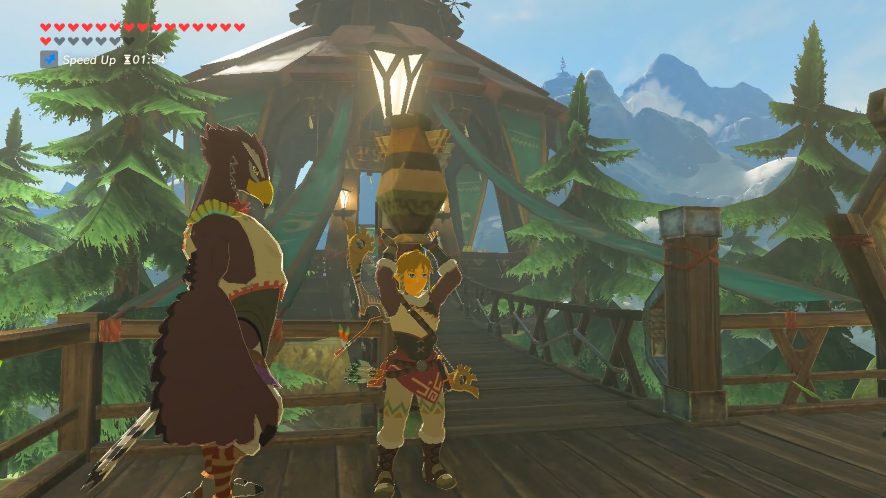
With all the citizens being frequent fliers, the village is nice and open, allowing anyone with wings to come and go from anywhere within the village. Building their village in the middle of the deep Lake Totori gives the Rito a very defensible location. A non-flying race would find it difficult to invade without a hanglider (though I think them taking an aerial fight to an aerial race would prove unwise). Because the village was built around flying, they are able to have far-reaching territory.
Just outside of the moat that is Lake Totori, we find Warbler’s Nest, a henge of unknown significance and the location of a Shrine Quest. Their domain spreads even farther to the north in the frosty Hebra region, to a flight range above Dronoc’s Pass used for archery and other combat training. Journeying to these various locations would prove strenuous for the average person, but it only requires a few minutes of flight travel for a Rito (or instantaneous teleportation for a Chosen Hero who possesses a Sheikah Slate).
Since the Rito built their village based around their aerial flight, it leaves much of the surrounding wildlife fairly untouched. A few bridges and natural paths are enough for travelers to navigate, but for the most part, the nearby areas are full of rows of pine tree forests, rocky landscapes, and snowy fields. It is nice and serene on the quiet road to Rito Village. Nothing beats the Vah Medoh view after climbing all the way to the top of the central pillar and looking out at all various environments that surround the Rito. They truly picked the best place to settle.
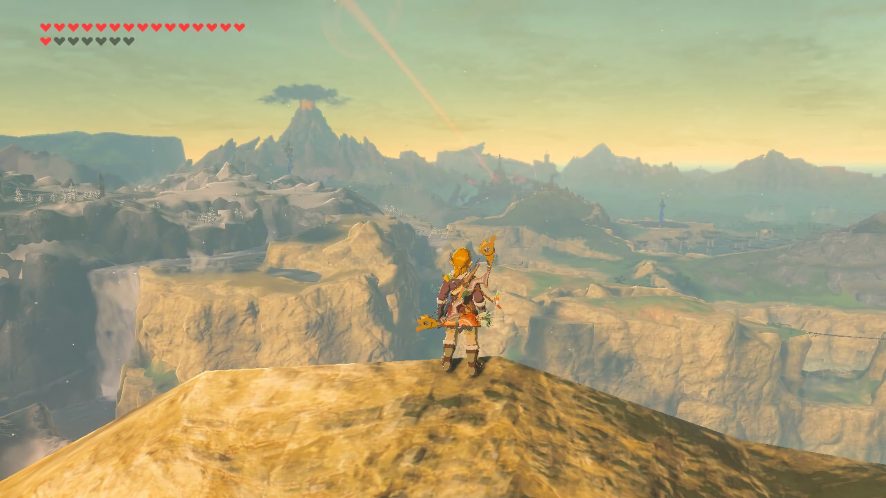
Some may argue that this ruined dystopian version of Hyrule is too empty. While I am inclined to agree, I do think that Breath of the Wild occasionally benefits from this vacant world. It’s a quiet, peaceful epic that differs from many other adventure titles I have played. Rito Village is full of cool, subtle details that add a lot of depth to this seemingly empty world.