Too many times have I cursed the screen when playing The Legend of Zelda due to losing the Sword Beam because I lost half a heart. This extremely powerful ability that allowed you to attack enemies far away with your sword was invaluable, especially in a game like The Legend of Zelda where being close to an enemy can mean great danger. Sword Beams as an ability have an interesting history in the Zelda series and have shifted back and forth from being in almost every title to being completely forgotten for a time. Up until Ocarina of Time, Sword Beams were featured in every Zelda title, and as a matter of fact, they were originally planned to be included in Ocarina of Time as well!
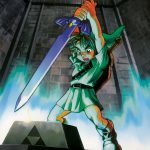
In a 1998 interview with Nintendo Insider after E3, it’s revealed that Sword Beams were, in fact, a feature in the demo of Ocarina of Time. However, some players at the conference didn’t notice the mechanic, as it was allegedly difficult to perform. As anyone who has played Ocarina of Time knows, this feature never made it to the final version, marking the last time it would make an appearance for many years, leaving many to wonder why. At that point in the Zelda series, the Sword Beam was as ubiquitous as the sword itself and, though it was limited to the upgraded swords in A Link to the Past and Link’s Awakening, acted as a powerful reward for staying at full health.

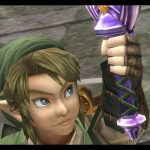
As many Zelda fans know, Sword Beams would make a triumphant return in Skyward Sword, taking it’s place as a core mechanic, though it’s power was separate from the player health this time. While it was wonderful to see them return, it begs the question: Why remove them in the first place? It’s very likely that the decision to cut the Sword Beams was largely due to difficulties with the transition to 3D. This drastically changed the nature of projectiles; they either have to be aimed awkwardly using the Nintendo 64 C-Buttons or have near perfect aim thanks to the new Z-Targeting feature. According to the interview, the Sword Beam mechanic was somewhat unintuitive to perform, so it’s also possible the developers weren’t able to think of a way to incorporate the mechanic that satisfied their goals for the feature. When Ocarina of Time was released, 3D games were nowhere near as common as they are today. It was often much more difficult for developers to implement simple mechanics due to how new the style was.

Since the return of the Sword Beams in Skyward Sword, both Breath of the Wild and Tears of the Kingdom have included Sword Beams in a truly classic form by having them once again be the signature feature of the Master Sword when at full health, just like in A Link to the Past. It’s interesting to note that almost all 3D Zelda titles that featured some form of Sword Beam have had them locked behind some form of charging mechanic, having to literally charge your sword to use the Skyward Strike in Skyward Sword and having to lift the sword up in a thrown position to utilize the Sword Beam in Breath of the Wild and Tears of the Kingdom.
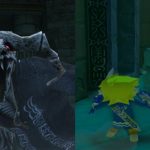
Considering the way that the Sword Beams were designed in future 3D titles, I personally believe the reason Ocarina of Time did not include the Sword Beams was due to balance issues. Having your blade become ranged, even for a short amount of time, might have trivialized a great deal of encounters in the game and ended up being much less fun to play with overall. To back this theory, Sword Beams did actually make one more brief appearance in 3D Zelda after Ocarina of Time before going away until Skyward Sword, and that was in Majora’s Mask as a key feature of the all mighty and difficult to procure Fierce Deity’s Mask. The Sword Beams of the Fierce Deity’s Mask were incredibly powerful, and using them against any boss of the game completely trivialized the battle which was the intention since the Mask was the single hardest item to acquire in the game. While the Fierce Deity’s Sword Beams were certainly overtuned, I look forward to next game where Link is once again allowed to fully harness the power of one of his most classic abilities.