Half a year removed from Tears of the Kingdom’s electrifying release, director Hidemaro Fujibayashi and series producer Eiji Aonuma have met with many gaming publications to give the general public more insight into their feelings about their newest game and the state of the Zelda series. Early this month, Game Informer’s Brian Shea spoke with the two about the Zelda timeline, future gameplay possibilities for the next open-world game, the DNA of a very special moment from Tears of the Kingdom’s finale (spoilers for the endgame ahead!), and what it’s like at Nintendo with multiple generations of developers bringing new ideas to an old series.
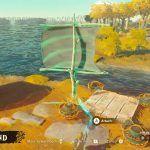
To start, Aonuma expressed how pleased he is that both Breath of the Wild and Tears of the Kingdom managed to keep a very active online fanbase long after their releases, compared to the relatively short spotlight that past games have received. “I’m so pleased to see that people are still putting up these unbelievable vehicles and different creations they’ve been making online,” said Aonuma. Fujibayashi added that he enjoys that the new Zelda formula has grabbed the attention of a much wider audience. Speaking on the direction that future games will take regarding this new kind of Zelda, the pair dismissed two notions proposed by the interviewer, those being the return of Ultrahand and the potential of a third game using Breath of the Wild’s Hyrule.
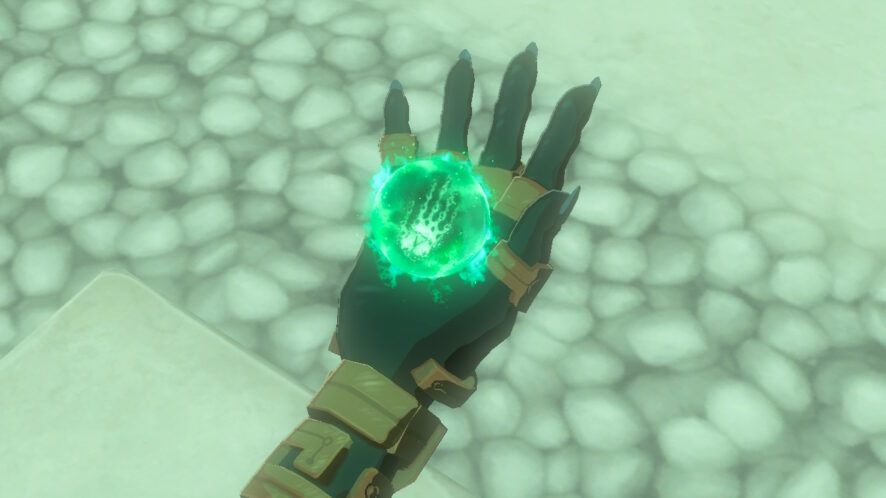
Fujibayashi said, “The crux of the experience in playing Tears of the Kingdom is Ultrahand and the freedom to create. As you mentioned, that is what Tears of the Kingdom is . . . If, for example, there was any continuation of Tears of the Kingdom and we were to bring in, say, Ultrahand, then I think to us, it would feel like, “Well, we’re just bringing in Tears of the Kingdom as is.” He feels that it would be hard to avoid making the new game redundant if this mechanic was brought over.
As for that hypothetical sequel, Aonuma had this to say: “Well that would be a sequel to a sequel, which is getting a little bit wild when you think about it! But as I’ve mentioned previously, with Tears of the Kingdom, we were seeking to build on top of the world we created with Breath of the Wild and really exhaust the possibilities of what we could put into that world. I think it is – to use a bit of a term – an apotheosis, or the final form of that version of The Legend of Zelda. In that regard, I don’t think that we’ll be making a direct sequel to a world such as that that we’ve created.”
Spoiler Warning:
The rest of this article contains significant spoilers for Tears of the Kingdom about the story, gameplay mechanics, etc. that you might not wish to see. Continue reading at your own risk.
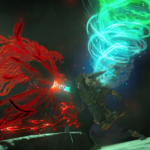
Next were some notes about the Zelda team’s creative approach, both for gameplay and story. During the final boss fight, Ganondorf concludes the first phase by flexing the magic of the Secret Stone and transforming into his Demon King form. But as his health bar refills, it doesn’t just stop at a central point for the player’s view, but dramatically extends all the way past the edge of the screen, a thoroughly entertaining and surprising moment for a first-time playthrough.
Fujibayashi agrees that it was a great moment, saying this: “At the core of what you mentioned is really the DNA of Nintendo. If we want to express the power level or ability of something visually, how can we do that? For example, if you look at a turtle shell and it has spikes, you intuitively know that you can’t step on it. It’s that same concept; we wanted to express how much of a level-up or power-up Ganondorf is experiencing, and we thought about how can we express that visually. How can we do it in a way that again subverts expectations and gets a reaction like you had?” He added that they at Nintendo always strive to “take the diagonal approach, not the straightforward approach,” which is what led to the idea of a comically lopsided health bar.
Referring now to story, and in particular the Zelda timeline, Fujibayashi makes it clear that, while the timeline is very fun for fans to discover and theorize about, it only informs their writing process to a certain extent. The developers will always prioritize their creative freedom over a rigid set of parameters in such cases, but they also allow and encourage their worlds to be open to interpretation. When faced with such conundrums as the many references to Ocarina of Time, or the question of Tears of the Kingdom’s Hyrule being founded before or after the creation story in Skyward Sword, Fujibayashi promotes the perspective of analyzing the lore from the subjective lens of the game itself. “I kind of want to pose the idea that, like in real-life history, you define by the artifacts and by the data that you currently have. So within what we have, there might be a correct answer, but it could be a different answer. So, I guess my answer would be that it could be both. Both could be correct.” Aonuma jokes that, “The Legend of Zelda is a series of games that focus on puzzle solving, so this is just another sort of puzzle that the users will have to see if they can solve.”
Lastly, Aonuma and Fujibayashi were asked about their history at Nintendo, individually and as a pairing. On working together, Aonuma says that their working relationship hasn’t changed much over the course of the most recent games they’ve collaborated on. He references Fujibayashi taking over his role as director for a number of Zelda games, from the Oracle duology to Skyward Sword and the open-world Zeldas, stating that in this arrangement, his main responsibility is to oversee and provide feedback. He speaks very highly of his colleague in this leading role in the series’ development: “The only thing I can say is that now, I am 100 percent confident that if I leave it up to Mr. Fujibayashi, he’s going to make it work.”
Having worked at Nintendo for 18 years, Fujibayashi is still younger than a lot of the developers who continue to make games there. Aonuma, Shigeru Miyamoto and Takashi Tezuka, now in their sixties and seventies, stand behind a talented new generation of directors and artists who are taking charge of Mario, Zelda, and the company’s more recent mainstays, Animal Crossing and Splatoon. The influx of fresh perspectives, with Fujibayashi directing Tears of the Kingdom and Shiro Mouri directing Super Mario Bros. Wonder, is something that they are confident will spell success for the company going forward. “I think those younger developers don’t always show up in the most noticeable ways, but they will continue to contribute those ideas,” says Aonuma.
The rest of the Game Informer interview can be read in full here.