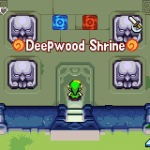
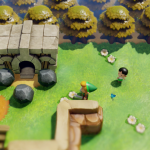
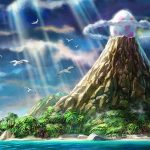
The Face Shrine is the sixth of Link’s Awakening’s eight dungeons. It is where you find the Powerful Bracelet, a tool used for lifting exceptionally heavy objects, and the Coral Triangle, one of the shimmering musical instruments that Link will need to perform the Wind Fish’s symphonic ballad. Functionally, it is a rather standard Zelda dungeon, with short combat trial rooms, observational puzzles, and some brain-teasing, map-wide barrier arrangements.
But it is also atypical in a crucial way. It is the dungeon with the most emotional baggage, as it comes shortly after Link has suffered a terrible blow to his perception of reality. It is the first time in the game when someone finally tells Link the blunt truth: Koholint Island isn’t meant to last, and our hero must be the one to shoulder responsibility for its fate. He must end the dream, no matter the cost.
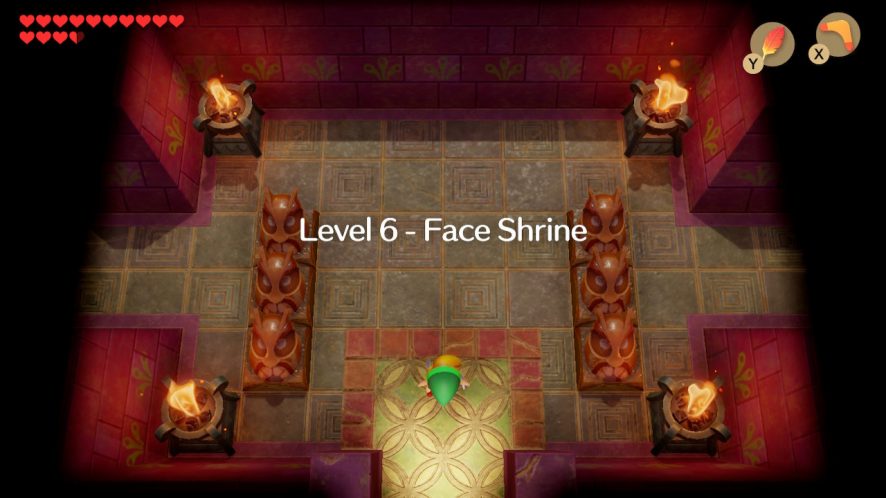
Before launching into the deeper significance of the events surrounding the Face Shrine, we shouldn’t forget to examine the dungeon’s mechanical features, which are often overlooked due to the shadow of existential dread looming over us at this point. Granted, it won’t be a terribly in-depth examination (the Powerful Bracelet is a far less complex dungeon item than, say, the Hookshot), but the Face Shrine has a number of design elements that pique my interest.
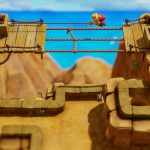
A unique feature of the dungeon’s puzzles is the use of chess pieces, namely Knights, to unlock certain doors. When thrown, they bounce and change trajectory, exhibiting their trademark L-shaped movement pattern, which will force you to consider where you should be throwing them from. There’s a chest in one of the far corners of the dungeon that is opened in a very specific manner: instead of Link opening the chest with his hands, the nearby owl statue tells him to “use the pots around it”. Lo and behold, smashing the chest with a clay pot yields the Nightmare Key required to face the dungeon’s boss. Another feature I quite like is a completely optional diversion, which sees Link poking his head out of the dungeon briefly to nab a Secret Seashell, only to find himself right in the middle of the Rapids Ride he participated in earlier! It’s a neat moment that gives the player a more complex perspective of Koholint Island’s layout.
But sadly, Link won’t be able to savor his time on the island for much longer.

Now that the cute stuff is out of the way, it’s time to “face” the hard truth. This dungeon introduces the ability to heave incredibly heavy stone statues above one’s head, which serves as an appropriate metaphor for the grave matters that Link must now grapple with. Minutes before entering the Face Shrine, while fetching the key required to open it, Link discovers a relief that betrays the island’s secret. Koholint exists inside the Wind Fish’s dream and continuing his quest will result in the demise of everything and everyone that Link has encountered thus far. The dungeon’s snarling final boss, Facade, reiterates this in extremely plain language, making it impossible for Link to continue hiding from this grim reality.
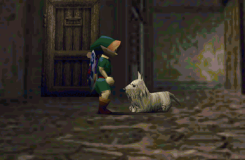
The Link’s Awakening manga is able to focus more closely on Link’s reaction to what he has learned and explores his emotional state. Even in the original game, though, a feeling of profound anguish can easily be construed. The information affects not only Link, but the player as well. We think back on the adventures we shared with Marin and BowWow, the playful exchanges with Tarin and Prince Richard, the joyful (and sometimes frustrating) times spent at the fishing spot, and even the Trendy Game. Every fond memory, every close bond, every last piece of the experience hangs in the balance, which is a far deeper and darker concept than you would expect such a cutesy game to tackle.
With this heartbreaking revelation, an otherwise typical dungeon becomes a place of serious contemplation, and the dismal atmosphere is strongly reinforced by the music. The Face Shrine’s theme reflects the burden of Link’s responsibility, with a chilling, almost baroque chord progression that, as this online user observes, can trace its roots back to the works of Johann Sebastian Bach. It bears a particular resemblance to the pieces “Cello Suite No. 1 Prelude” and “Minuet and Badinerie”, albeit with a more dominant presence in the minor scale. The orchestrated 2019 version hammers this connection in further, with dense layers of harmonic strings that accompany the original chiptune melody and give the piece so much more gravity. Modern interpretations of baroque music tend to paint it as unsettling or foreboding, and no doubt this was leveraged, intentionally or not, by composer Kazumi Totaka and remake arranger Ryo Nagamatsu to deliver the striking end product we hear in the game.

The Face Shrine is a huge turning point for Link’s Awakening in a number of ways. As Link becomes more cognizant of the island’s true nature, the Nightmare creatures that stand to oppose him become more fierce and determined. While Link initially fended off silly-looking genies and rotund blobs of slime, he now contends with giant, disembodied faces and massive eagles with skeletal riders. As per the Wise Owl’s warning, the monsters’ power is dangerous even within the bounds of a dream, and the escalating threat further highlights the importance of the decision Link must make.
This is why I’ll always say that this Link is one of the most courageous iterations of the hero we have seen in the Zelda series. Instead of fighting to save a kingdom or a princess, he fights to save himself — even though the sacrifices he must make along the way will likely weigh on him for the rest of his life. The stakes of this seemingly silly, inconsequential game are high in a way we rarely get to see. It’s a far more personal conflict, driven not by a sense of duty or heroism, but by the contemplation of what our experiences mean to us, especially when all we have left of them are memories. I hope that, despite the bittersweet ending that awaits him, Link can carry his memories onward with a sense of renewed hope, just as I will with my memories of this game.