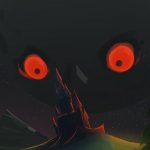
The demon Majora may just be the most terrifying villain in the entire Zelda series. Using the Skull Kid as a conduit for mayhem, this sadistic creature wreaks utter havoc on Termina, and the majority of the game is spent reversing all of the suffering that it caused. Many characters in the game directly inform Link that they are frightened by the falling moon, but even those who seem stubbornly confident on the surface secretly cower in fear. Not a single soul can steel itself against the ever-looming terror that is Majora. It is this element of fear that makes the demon stand out as an absolute maniac, even when compared to the likes of Ganondorf. Ganondorf is definitely a menace, but at least he’s working towards an ultimate goal: gaining infinite power. Majora, on the other hand, doesn’t care for such trivial things. It spreads chaos for the sake of enjoyment, and all it desires is total annihilation.
When Link finally confronts Majora on the Moon, the battle is split up into three different phases, and each phase puts its own distinct spin on Majora’s iconic theme music. The first track, “Majora’s Mask”, is slow, chilling, and rather mournful, representing the inescapable wave of sorrow that Majora unleashed on the people of Termina. The second piece, “Majora’s Incarnation”, is rather infamous for being offbeat and goofy, making it abundantly clear that Majora has not a shred of remorse. This second phase of the battle showcases the demon’s sociopathic side, and this sets the stage for Majora’s third and final form perfectly. The player is led to believe that this creature is completely devoid of emotions (other than a mad thirst for chaos), but when it transforms into Majora’s Wrath, they quickly realize that it does comprehend one emotion: fury.
The final battle theme opens with multiple orchestral hits, mimicking the way Majora’s Wrath wields its dual whips. This track incorporates elements from both of its predecessors, and it serves as a perfect encapsulation of Majora as a whole. Many of the instruments in the arrangement embody panic, from the charging bass to the frantic trumpets. There are soft strings in the background that likely represent the people of Termina, who helplessly await their demise. The melody itself is chaotic and unpredictable, refusing to stay in any one key for longer than two seconds. This musical instability perfectly reflects just how erratic Majora is; you can never know what its next move is going to be.
There are a plethora of things that Majora’s Mask does right, but many of them would’ve fallen flat if the game didn’t have such a horrific villain that brought despair to every corner of the world. Majora simply being heartless would’ve been enough to serve its purpose, but what makes it so memorable is just how bonkers it is. I’ve never known anything as freakishly terrifying as Majora, and its boss themes are equally bizarre in the best possible way.