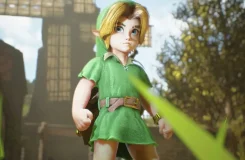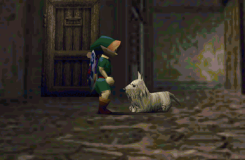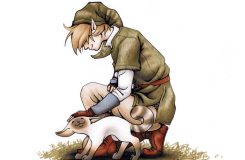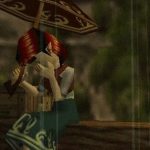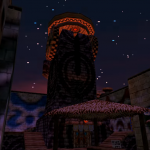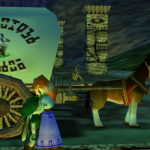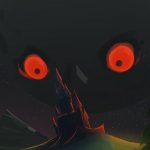
Much is said about Majora’s Mask’s atmosphere and mood. It’s so dark, featuring moments of terror and extreme sadness as the people of Termina literally deal with the moon crashing down. It’s rough, buddy, but more than anything, Majora’s Mask is about healing.
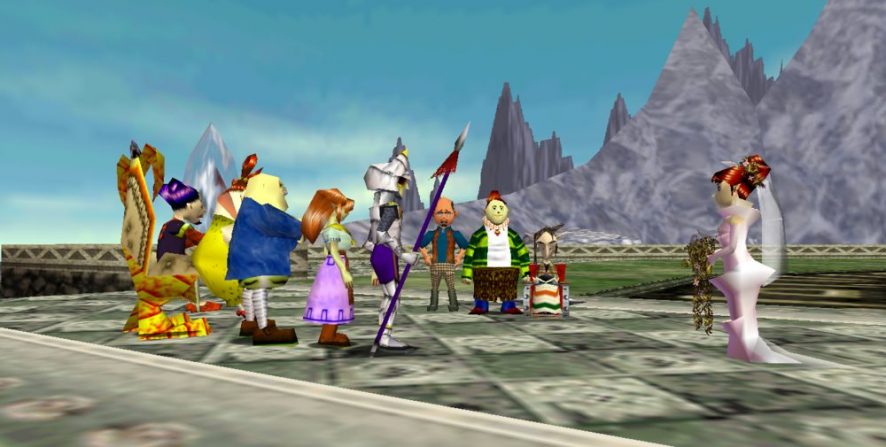
While they are still waiting for the oncoming moon, many of the characters’ emotional worlds have already crashed. Cremia and Romani are still reeling from the death of their father only to have to deal with the threat of the Gorman Brothers. Kafei has been cursed into the body of a child by Skull Kid, costing him his fiancée and leaving Anju bereft. Even Link and Skull Kid are acting for peace and destruction respectively because of the intense pain of losing a friend. Almost all the characters in the game are actively seeking something to heal them. It’s this journey that Mikel & GameChops capture in their version of the “Song of Healing” from the Zelda and Chill II album.
The song starts with a simple and pure version of the familiar melody from the game. It almost reminds me of a ballet performance. I can imagine each of the characters from the game going through their steps, seeking some solace in the pain. When the beat bursts in around the 30-second mark, it’s easy to paint it with a negative feeling. It’s aggressive and loud in contrast to the simple melody from earlier. It’s like the cause of the injury is bursting through a door and shouting “Here comes the pain!” Upon closer analysis, there is something quite different going on.
The strong, aggressive beat doesn’t sound discordant with the melody. It melds and works with the purity of the melody to create something stronger. It’s as if the clean tones of the melody represent the very best of each of the characters, and the deep tones of the beat are all the actions they take in pursuit of healing themselves. Every beat is a step Link takes towards finding Navi. It’s Cremia taking care of her sister, it’s Anju searching for her lost love, and it’s Skull Kid discovering that his friends can actually forgive all he’s done (which is a lot) because he’s their friend. The beat is aggressive, not because it’s dark, but because healing can be hard. It takes work, a lot of work. It takes a strength of will and belief — that every scheme by the Gorman Brothers will fail, that every day is another step closer to Kafei, that helping the people of Termina will lead to Navi, and that your friends can recognize when your pain has made you do horrible things, but still love and stand by you as you repent and try to turn it around. Continuing to seek out healing and to work towards it is a defiant act of strength even while everything seems to be crashing down.
Listening to this version of the “Song of Healing” brings a profound peace to me because it reminds me that sometimes trouble will interrupt the melodies of our lives. Yet even during those struggles, Mikel’s remix reminds us that when that happens, we have to just drop the beat, pick ourselves up, and keep going because as long as we keep working towards healing, we will always beat whatever struggles come our way.