When we look at some of the blockbuster gaming hardware platforms down through the years, a number of platforms come to mind. Notable among them are basically the entire Nintendo handheld family of systems along with the Nintendo Wii, with the Nintendo Switch seemingly also on that same trajectory. The Wii and DS both sold over 100 million units for each of their respective platforms with the DS selling about 50 million more across its incarnations. The Wii, in particular, had shortage issues on-and-off for years after its release because demand was just so high.
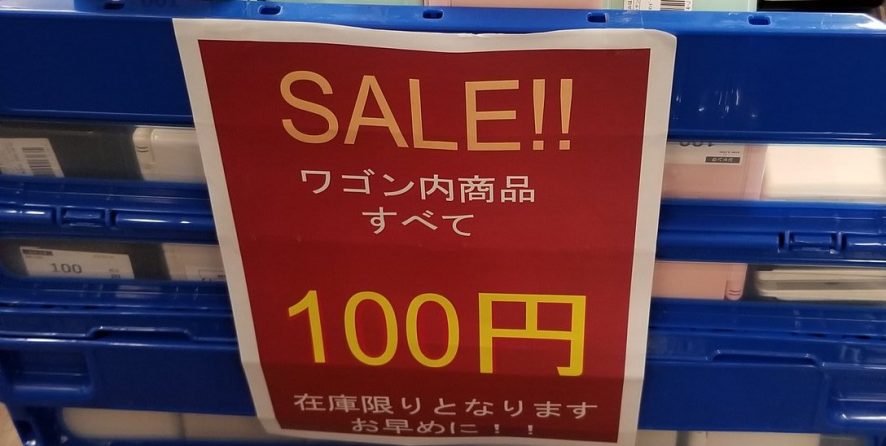
A recent tweet by a Japanese shopper (which has since been removed) highlighted the potential dark end to these sorts of hardware booms, however. The tweet had contained photos showing a number of pieces of gaming hardware that were currently on sale. Included among the devices were numerous PlayStation 2, Nintendo Wii, and Nintendo DS units.
These pieces of hardware, once in very high demand, are now selling for as little as ¥50, which is equivalent to just under half a USD.
Having sold so many units during their original lifespans, these platforms now have a significant surplus of units that are no longer anywhere close to the demand for these on the second-hand market. There are a number of factors that could contribute to this situation which are going to vary wildly from market to market. For instance, I looked up some prices for these types of items in the U.S. and the prices were generally between $50 and $100 for items that were not new-in-box or sealed units.
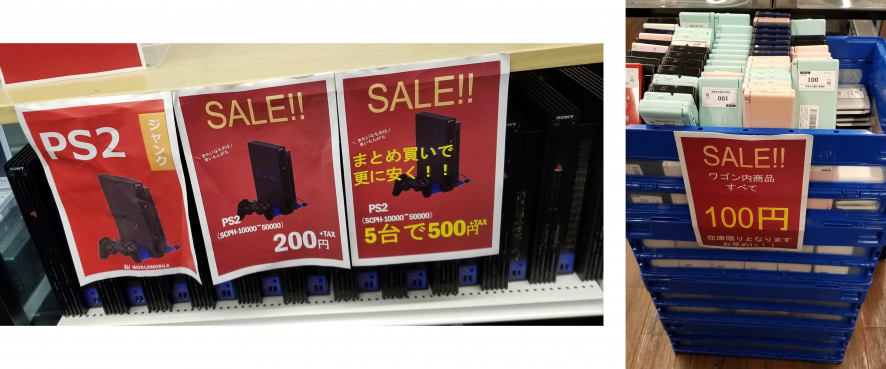
Right: Sale flyer for Nintendo DS Lite units stacked up by the hundreds at ¥100 each
Of course, the absolute torrent of units sold contributes to the overall supply, but it could actually factor into the lack of demand as well. There are so many units out there that, since there are so many people that already own a system, they do not need to buy another. There is also the case of backward compatibility for a number of these devices, including the Nintendo 3DS and Nintendo Wii U. While Wii U sales were nowhere near the levels of the Wii, it may well be that people who would want a Wii already bought a Wii U, or that the Wii U may well be considered the better purchase due to its backward compatibility (though Wii is backward compatible with GameCube).
The PlayStation 2 is the highest-selling console of all time and only just beats out the Nintendo DS in terms of overall sales. Despite their comparable sales, though, the PlayStation 2 seems to higher in demand as the cheapest model shown is on sale for ¥200, compared to the Nintendo DS at ¥100. This could be a factor of that backward compatibility issue as PlayStation has a rough track record in that regard. Additionally, the Nintendo DS had multiple iterations and the ones in the photo were mostly Nintendo DS Lite variations, which were probably the most widely distributed version. It is possible a rarer variation, particularly the late-coming Nintendo DSi, would be more comparably priced, but the DS was approximately half the price of the PS2 at their respective launches, so the prices actually track for the most part.
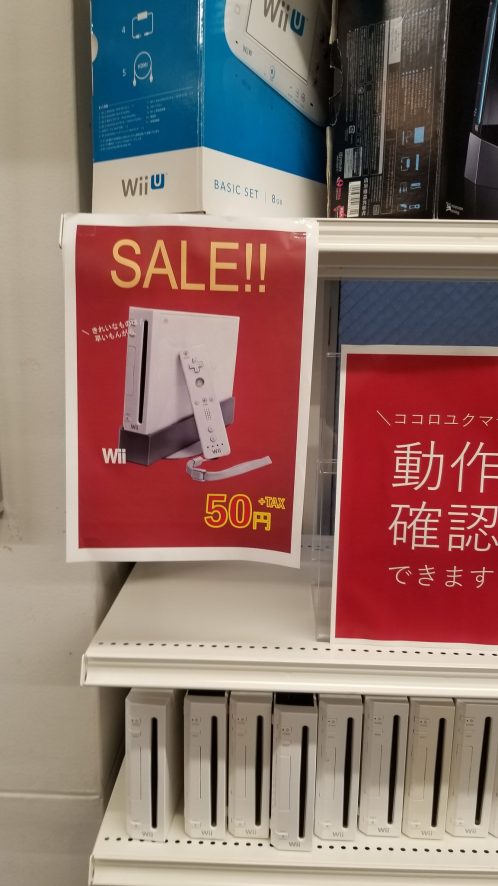
The saddest part, however, is the Nintendo Wii and its meager ¥50 sale price. This may again be attributed to the backward compatibility scenario, but may also be exacerbated by the relatively weak software lineup for the Nintendo Wii. Many consider the Wii to be a “one-trick pony” in that a lot of the demand for the console came from non-gamers. For many units sold, the only game ever used may well have been Wii Sports which was packed in with the unit itself. Outside of that, it may have been a much more casual experience with the only software being others in the Wii family, like Wii Fit or Wii Sports Resort.
Nintendo Wii was also fairly notorious for its shovelware as well. These were games that were just quickly and carelessly dumped on the system because they assumed a large player base due to the units sold or because developers knew that expectations were not as high due to the lower specs of the Wii in comparison to its contemporaries. This is even true with AAA developers as many multiplatform games on the Wii were either majorly handicapped to fit the specs or were simply ports of last-gen or even handheld versions of the game instead.
Another unseen factor of this level of supply surplus is that it could impact the longterm conservation of some of these sorts of items. It is not quite as bad as it once was as many people these days understand and work towards conservation efforts from day one.. Having such an excess of units that no one currently wants, however, may result in an eventual difficulty in finding these devices once they have cycled back around to being high-demand items because people may ultimately decide to just throw them out rather than have them take up storage space.
So, does this mean we should hoard our old hardware more, or let it go because we might get it cheap again later? What is going to happen to excess units and will they be properly handled if discarded? We will just have to wait and see how things turn out.