The map of Breath of the Wild’s Hyrule is the most expansive one to date, having numerous amounts of locations to visit. Whether prominent villages or tiny landmarks, some of these areas are named after previous events, areas, or characters from The Legend of Zelda series, and that is precisely what we will be looking into. Here is every location name reference in The Legend of Zelda: Breath of the Wild. Probably.
There’s a lot of areas, alright? I could very well miss some, but I’m going to do my best.
Akkala
We’ll start with the Akkala region: Akkala consists of the north-east highlands of Hyrule, home to Tarrey Town and the Ancient Akkala Tech Lab. Many of these location names are in homage to the game Link’s Awakening.

• Kaepora Pass: Kaepora is a reoccurring character within the Zelda series. He is generally a wise sage taking the form of an owl, as seen in Ocarina of Time, Majora’s Mask, and Four Swords Adventures. Luckily for many players, he does not actually make an appearance in Breath of the Wild, so you do not have to worry about button mashing through his tediously long dialogue this time.
• Kanalet Ridge: Kanalet Ridge is named after Link’s Awakening’s Kanalet Castle, a mini-dungeon once owned by Prince Richard before being overrun by monsters. In Breath of the Wild it’s just a ridge. That’s it.
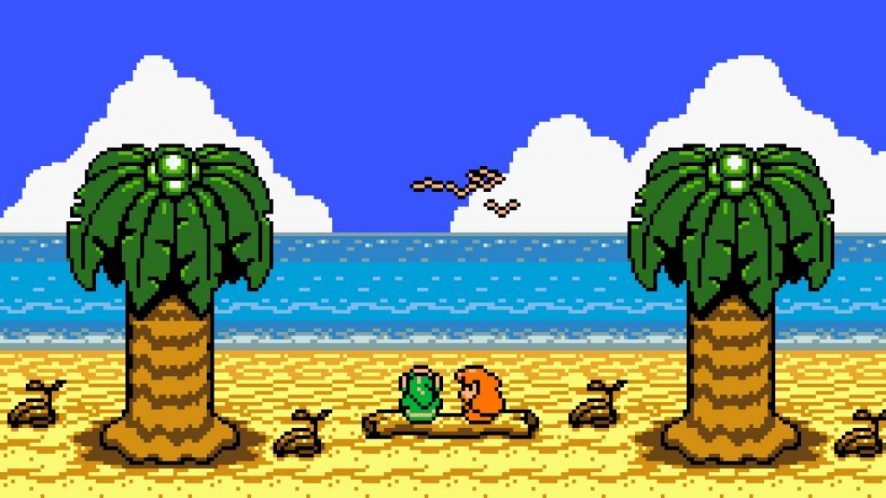
• Malin Bay: While at first, it may seem that Malin may be referencing Malon from Ocarina of Time (among other titles), this body of water is actually a reference to Marin from Link’s Awakening. It would make sense as there is a plethora of other Link’s Awakening characters referenced in this region as well as the area being a bay, connecting Marin’s relationship to her island and the sea.
• Rok Woods: A Rok is a common fantasy monster that usually takes the form of a giant bird. The Legend of Zelda has adapted this beast into many of its enemies such as The Wind Waker’s King Helmaroc. It has also been items used by Link in various titles such as the Roc’s Feather or Cape. There are also many rock-related (yes, R-O-C-K) enemies, puzzles, and items found in this location so it could also very well be a play on that.
• Torin Wetlands: While it is spelled somewhat differently, it is well believed that this location was named after Tarin from Link’s Awakening. Tarin is the father of Marin, who as we previously saw, had an entire bay named after her.
• Ulri Mountain and Ulria Grotto: Old Man Ulrira gets not one, but two locations named in his honor. Again, the spelling varies (as will most other locations named after familiar faces), but the inspiration is there.
Central Hyrule
We now move on to Central Hyrule, which is located in the middle of the map, as you probably could have figured out by the name. These landmarks have many references to the first two Legend of Zelda titles and the Oracle games.
• Aquame Bridge and Aquame Lake: Both these areas are in reference to the Zelda 1 and Oracle of Seasons boss, Aquamentus. While Aquamentus holds the appearance of some sort of a cross between a horse and a dragon, I believe that this name was chosen for these locations as “aqua” is another term for water, which both of these locations contain.
•
• All Castle Town Locations: Castle Town is a reoccurring village in the Zelda franchise, generally being the entry point before Hyrule Castle. It is usually bustling and full of life; though in several games many terrible incidents have also occurred at this location as well. Luckily, we didn’t have to experience whatever horrible things may have happened this time around. Being asleep for 100 years does have its perks.
• Digdogg Suspension Bridge: Another reference to a Zelda 1 boss, Digdogger. Though if you want to be fair, yes, this monster did appear in Oracle of Seasons as well.
• Forest of Time: The Forest of Time has appeared in one other title aside from Breath of the Wild. You can also visit this area in Oracle of Ages. It is here that Link meets Nayru as well as Ralph and Veran.

• Gleeok Bridge: Another bridge, another boss. Gleeok’s are dragons with multiple heads that have been popping up in Zelda titles for years. Such titles include Zelda 1, Oracle of Seasons, and Phantom Hourglass.
• Helmhead Bridge: Who’s that boss? It’s Helmet Head from Adventures of Link! The guardian of Midoro Palace is given the honorary title as guardian of the bridge. Does that mean he got demoted?
• Kolomo Garrison and Lake Kolomo: Kolomo is a play on the word “Lokomo.” Remember those little train people in Spirit Tracks? Yup. That’s what these locations are referencing.
• Mabe Prairie and Mabe Village Ruins: Mabe Village originally appeared in Link’s Awakening, being the first village Link visits upon arrival at Koholint Island. Seeing that there are ruins of this village in Breath of the Wild, was Link’s Awakening really a dream after all?
• Manhala Bridge: A bridge must mean another boss, and that’s exactly what this is named after. Manhandla, the multi-headed, carnivorous plant has been seen in multiple Zelda titles such as Zelda 1, Oracle of Seasons, and Four Sword Adventures.
• Mount Daphnes: A mountain named in honor of his majesty, King Daphnes Nohanson Hyrule. There have been many rulers of Hyrule, but King Daphnes is the King of the sunken Hyrule we meet in The Wind Waker.

• Mount Gustaf: Just as the bridges are named after monstrous foes, the mountains all seem to be named after the Kings of the past. King Gustaf is Princess Zelda’s father in The Minish Cap.
• Orsedd Bridge: This one might be a little harder to figure out, but if you know the pattern by now (which I really hope you do, as we’ve covered a lot of bridges), you’ll know that this bridge is named after another Zelda II boss, Horsehead.
• Ranch Ruins: It’s unknown why this location was not given the full title of “Lon Lon Ranch Ruins,” but that is precisely what it is referencing. The structure of the ruins is eerily similar to that of Ocarina of Time’s ranch.
• Romani Plains: The Romani Plains refer to the Romani Ranch and Romani, Cremia’s younger sister who helps runs the ranch found in Majora’s Mask. Technically she’s found as child Malon in Ocarina of Time as well, but it’s okay, Nintendo, we won’t tell anyone that you recycled character models.
• Sage Temple Ruins: This Temple acknowledges the many sages of Zelda past. In various titles, there are sages (usually seven) who Link must gather together in order to progress with his journey. Such sages include Ocarina of Time’s Saria, Wind Waker’s Medli, A Link Between Worlds Seres, and many iterations of Princess Zelda.
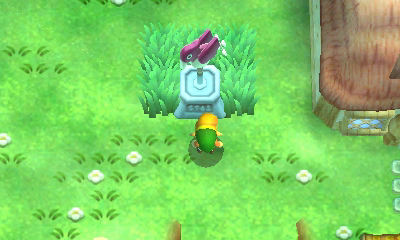
• Windvane Meadow: This may just be a guess of mine, but I can’t help but feel that Windvane Meadow is in reference to the Weather Vanes found in A Link Between Worlds. You know, those little save points with the birdies on them? Am I the only one who remembers what they’re called?
Dueling Peaks
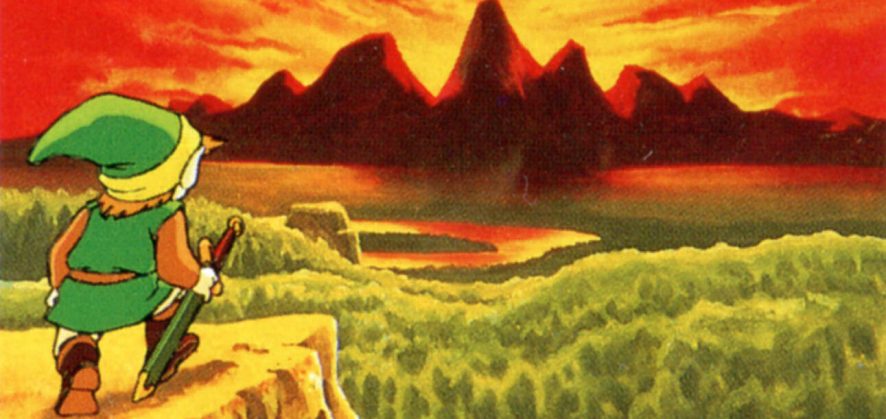
Dueling Peaks itself is a reference to the very first Zelda game. It’s a visual nod to a piece of artwork released for the original game of Link looking over a cliff with a large mountain in the background, seemingly split down the middle. However, this is not the only hidden Easter egg in this region. Many Skyward Sword allusions make their
• Batrea Lake: Batrea lake is named after the friendly demon Batreaux from Skyward Sword. No need to worry about demons here, though. Just a few Bokoblins and Chuchus.
• Bonooru’s Stand: While at
• Eagus Bridge: Eagus is a clear-cut nod to the captain of the Knight’s Academy in Skyward Sword of the same name. Sky Octoroks can actually be found here as well. Fitting.
• Horwell Bridge: Another bridge directly named after a character from Skyward Sword, the second instructor at the Academy actually. Why these names were left as is, I suppose we’ll never know.
• Hylia River: Naming places “Hylia” has always been a reoccurrence in The Legend of Zelda, including places such as the famous Lake Hylia. However, I believe it was included in this region specifically because we learned that Zelda is a direct link to the goddess Hylia in Skyward Sword.
• Kakariko Bridge: Kakariko is another village that is constantly appearing in the Zelda series, but Kakariko Bridge, in particular, may be referring to the bridge in Twilight Princess that was missing when first arriving in Kakariko Gorge. Not 100 percent on that, but it’d be cool if it was a callback to that.
• Lake Siela: This lake is named after Link’s fairy companion and spirit of time and courage in Phantom Hourglass, Ciela. This is not the only lake to be named after a fairy in these parts.
• Lantern Lake: While it may not seem like anything significant to name a lake after camping equipment, lanterns have actually been a reoccurring item found throughout several Zelda games. With all the big gadgets like
• Mable Bridge: Mable Bridge is named after the witch Maple who appears in A Link to the Past. Syrup, on the other hand, is nowhere to be found. I mean the character, not the breakfast food. Though I can’t find that either.
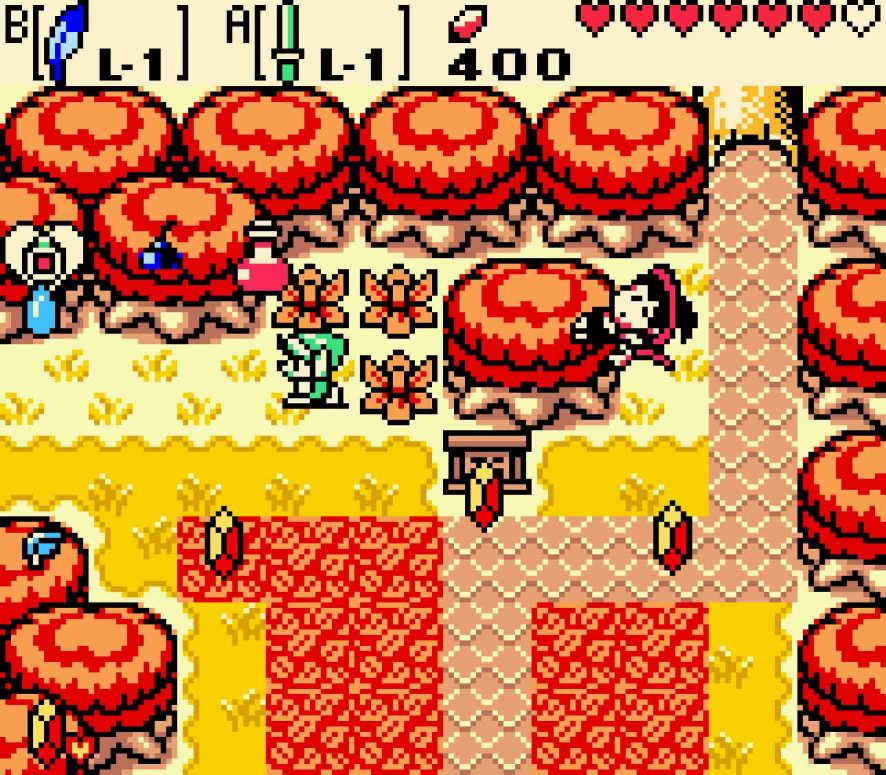
• Nabi Lake and South Nabi Lake: Hey! Listen! This lake was named after Navi the fairy! This was probably as obvious as the information she gives you in Ocarina of Time.
• Owlan Bridge: The third and final instructor of the Knight’s Academy has a bridge named after him as well.
• Pillars of Levia: Levias, the great Spirit of the Sky in Skyward Sword, is the inspiration around these mighty pillars. Such a grand landscape is fitting of the name of such a spectacular creature.
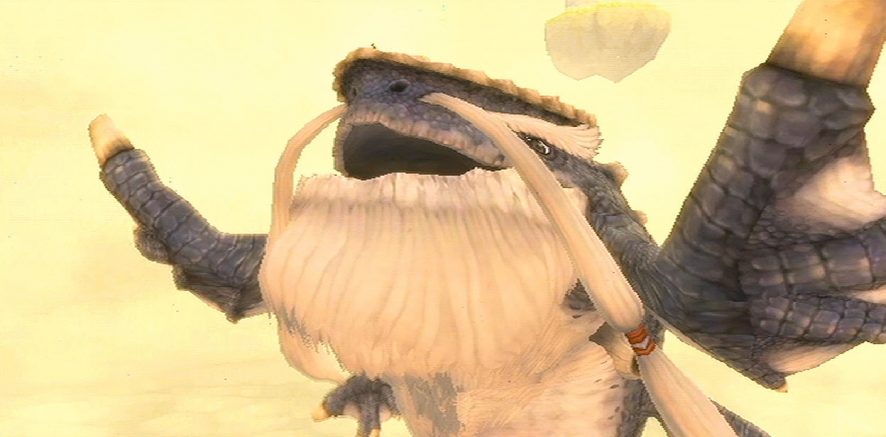
• Sahasra Slope: Sahasra Slope is named after Sahasrahla, a sage found in both A Link to the Past and A Link Between Worlds. This interpretation of his name is actually a lot easier to say. Can we keep it this way?
Eldin
Eldin is another reoccurring region in the Zelda series starting in Twilight Princess. It’s generally the “fire” area with a hot climate and usually the home of Death Mountain. That being said, there are quite a few Goron related landmarks.

• Darunia Lake: A direct name shout-out to our favorite dancing Goron Chief, Ocarina of Time’s very own Darunia. I should probably mention that this is a lake of molten lava. That’s hot. HOT!!!
• All Death Mountain Locations: Death Mountain has been in The Legend of Zelda since the very beginning. As the series progressed, Gorons became more and more associated with the volcano, just as is the case in Breath of the Wild.
• Bridge of Eldin: As a huge Twilight Princess fan, I couldn’t miss this from a mile away. This location originated in said game and was the arena for one of the most intense duels in Zelda history: Link vs King Bulblin.
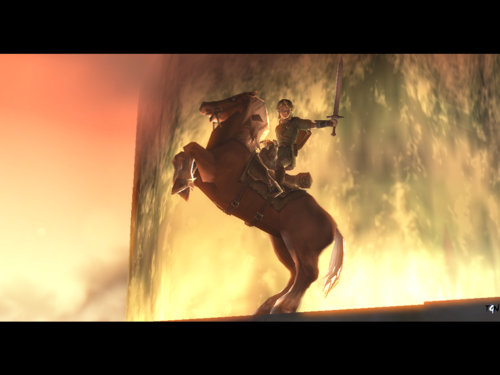
• Darb Pond: Going back to Twilight Princess, Darb Pond was inspired by Darbus, the Goron Patriarch. Just as you fight Darbus in his corrupted form of Fyrus, here is where you can do battle with a fiery Igneo Talus.
• Gero Pond: This hot spring may be a nod to Don Gero’s mask, which was always being worn by the Cold Goron in Majora’s Mask. I suppose if he knew about this location he wouldn’t be the Cold Goron, though, would he?
• Golow River: Another lava flow named after another Goron. Golo is a Goron found in Skyward Sword. Either that or how the so-called river “golows.” I’m bad at puns.
• Gorko Tunnel & Gorko Lake: Both of these areas are definitely named after Skyward Sword’s Gorko. I actually thought he was the only one until I was reminded of Golo in that last location reference.
• Goro Cove: This location isn’t referencing any character in particular, but rather a fictional copula used by Gorons at the end of their sentence. Not all Gorons do this, but in games such as Ocarina of
• Gortram Cliff: A third Goron from Skyward Sword has a location named after them. Why don’t I remember any of these Gorons?
• Lake Darman: Lake Darman was named after the fallen Goron warrior of Majora’s Mask, Darmani (or Darmani the Third). Interestingly enough, this lake is connected to Darunia Lake, just as Ocarina of Time is connected to Majora’s Mask. Did this get deep?

• Medingo Pool: Medingo Pool derives its name from Medigoron. You might not remember him, but I’m sure you remember his brother, Biggoron.
• Trilby Valley: Here’s a location named after another location. Trilby Valley is named after the Trilby Highlands from The Minish Cap. It’s good to see that Nintendo didn’t forget about that game.
You thought that was a lot of information?
Want to see more? Check out part 2!