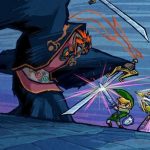
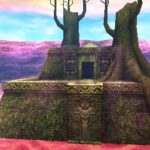
For 34 years, dungeons have served as the backbone to The Legend of Zelda’s many exciting adventures. When the time for unimpeded exploration through the wilderness is over, and Link must complete a new task on his way to saving the land from certain doom, Zelda games have directed the hero into bastions of elaborate puzzles, hazardous traps, and formidable foes. Dungeons have come in countless shapes and sizes over the decades. Players have ventured into enemy fortresses, sacred temples, ancient ruins, below the earth, and even high in the sky.
Link has conquered well over 100 dungeons in The Legend of Zelda’s illustrious history, but which are the very best? That’s what the Zelda Universe community came together to decide last month. Voting took place on our forums, and after tallying up the results, we can proudly present Zelda Universe’s ranking for the top 20 dungeons of all time. Read on to see the complete list below.
20. Ganon’s Castle (Ocarina of Time)
The last leg of what many The Legend of Zelda fans consider the most iconic entry in the series throws a bevy of challenges at players before they finish the adventure. Ganondorf’s dark citadel is filled with as many puzzles as it is with enemies to battle, tasking players to complete a series of hazard-laden rooms that echo the themes of the dungeons Link conquered as an adult. Once the central tower is opened, the climb up its long stairway has pairs of the game’s most fearsome enemies lying in wait, including Dinolfos, Stalfos, and even a tag team of Iron Knuckles. Ganon’s Castle is particularly memorable for the way it ends, forcing Link and Zelda to flee for their lives as it collapses around them. Escaping the crumbling stronghold may very well be the most thrilling sequence in Ocarina of Time ― or, for some, probably the most nerve-wracking.
19. Lakebed Temple (Twilight Princess)
Not all dungeons have to be gloomy caverns or crumbling ruins. With an interior comprised of spangling stonework, glistening shell arrangements, vivid coral formations, and pristine water currents, the Lakebed Temple is stunning to behold from start to finish. The calming, tranquil atmosphere that pervades the vibrant chambers pairs excellently with the dungeon’s methodical design as you coordinate the network of water flows to access new areas. Your actions have far-reaching effects in the Lakebed Temple, with distant rooms often being altered by Link’s manipulation of the currents. Underwater sections are no issue to explore thanks to the Iron Boots, Zora Armor, and Twilight Princess’s near-perfect swimming controls. In open air, the Clawshot is ideal for latching onto lofty targets and dangling from rotating platforms. All of these items and abilities must be utilized wisely during the Lakebed Temple’s conclusion, where Link confronts the battleship-sized leviathan known as Morpheel.
18. Lanayru Mining Facility (Skyward Sword)
After a pair of relatively compact dungeons to open the game, Skyward Sword takes players to a sprawling set piece meant to be anything but concise. Through its use of the Timeshift Stones, the Lanayru Mining Facility continues the Lanayru Province’s theme of juxtaposing rundown and bustling environments. A dusty, barren hall can instantly come alive with color, noise, and activity by switching to a bygone era when the Lanayru Mining Facility was operational. The Gust Bellows proves a useful tool no matter the age or technology at hand, able to clear away centuries of built up grit and sediment, or rotate mechanisms to move platforms and activate machinery. Varying stages of Moldarach creatures are just as much at home in the Lanayru Mining Facility as the Beamos, Armos, and flying Sentrobes are, while ravenous quicksand fills certain rooms as frequently as the mechanical assembly lines do. It’s a bastion of clashing concepts that manage to work together as effectively as the automated systems from Lanayru’s ancient past.
17. Goron Mines (Twilight Princess)
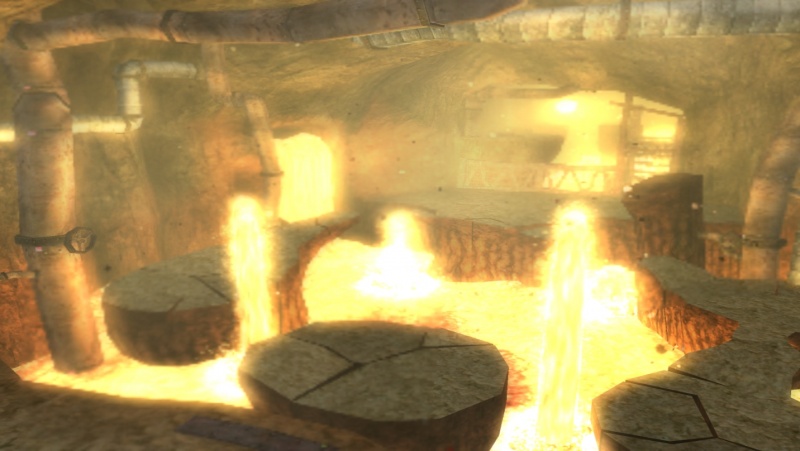
If you thought that The Wind Waker would be the last game to use the Iron Boots in new, unconventional ways, the Goron Mines has some surprises in store for you. Twilight Princess gets very creative with its second dungeon by having Link take advantage of the metallic footwear’s magnetic properties to traverse otherwise unreachable sections of the fiery caverns within Death Mountain, including walls, ceilings, moving cranes, and even that platform where Dangoro tries to knock you into a pool of lava. The Iron Boots are occasionally combined with the Hero’s Bow as the solution to puzzles, most notably those moments where Link is forced to hit his target while hanging upside down from a magnetized foothold. This item combo coexists all the way to the very end, where both were instrumental in defeating The Legend of Zelda’s version of a Balrog ― the Twilit Igniter: Fyrus.
16. Tower of the Gods (The Wind Waker)
Bursting forth from beneath the waves, the Tower of the Gods makes a grander entrance than even most bosses do. It’s a long ascent up the magnificent spire, commencing with a partially submerged first floor that the King of Red Lions actually joins you in. Even after leaving the talking boat behind, Link has company for much of the dungeon as he guides the Servants of the Tower to their intended altars. Sometimes this meant summoning them with a simple “Come on!” from Link; other times it meant taking control of them through the “Command Melody” ― a song that would be central to two more dungeons in The Wind Waker. The Tower of the Gods is also one of the rare cases where its dungeon boss isn’t some malicious monstrosity that needs to be vanquished. Rather, Gohdan resides at the pinnacle only to test Link’s abilities, and returns to its slumber upon defeat. The Tower of the Gods concludes just as spectacularly as it began ― with a stirring, momentous scene where Link opens a portal to Hyrule leagues below, the bell tolls echoing from one corner of the Great Sea to the other.
15. Temple of Time (Twilight Princess)
Twilight Princess reveals that there is much more real estate to the sacred structure that played such a pivotal role in Ocarina of Time. The Temple of Time is a contender for the largest dungeon in the entire series, with a whopping eight floors of puzzles, traps, and enemies meant to halt your advance. What’s more, getting to that top floor is only half the battle. The Temple of Time becomes one giant puzzle as you escort a lone, massive statue back to its counterpart at the dungeon’s entrance by going through the litany of obstacles that you overcame once before. It’s a similar concept to what fans saw in The Wind Waker’s Tower of the Gods, but on a much larger scale and with smoother execution thanks to the Dominion Rod’s more straightforward use. The Dominion Rod should earn the approval from anyone who is none too fond of spiders, as it eventually provides the satisfaction of dropping a Biggoron-sized statue’s fist onto the Temple of Time’s boss, Armogohma.
14. Fire Temple (Ocarina of Time)
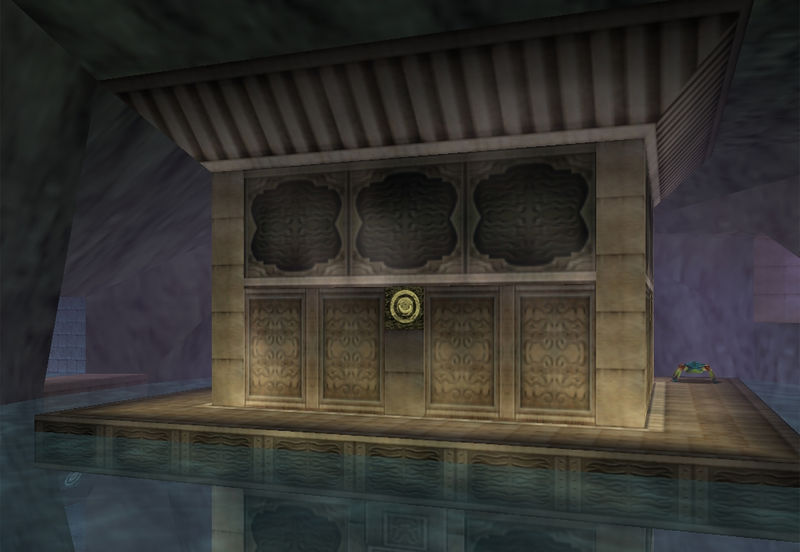
With the fate of the Goron race hanging in the balance, there is a sense of purpose to the Fire Temple well beyond simply finding the next sage and getting their medallion. Every time you free one of the friendly creatures from a prison cell, you rescue them from a horrible, sacrificial doom to the Subterranean Lava Dragon, Volvagia. The stakes are higher than normal as you descend deep below Death Mountain Crater’s molten core, where a fiery veil from the temple’s unquenchable flames is ever-present in the air. No matter the music track that your copy of Ocarina of Time includes, the Fire Temple’s ambiance is beautiful and ominous. The chants seem to serve as both reverent praises as well as grim warnings to those who step foot in a sanctified place built to honor the volcano. A recurring theme among the puzzles and platforming hazards is how they test your reflexes while under pressure. There are numerous obstacles that can only be completed in a limited amount of time, forcing you to move with urgency, but also with care, as an improper step will ensure that you meet with dangers like a long fall or walls of fire.
13. City in the Sky (Twilight Princess)
After venturing through forests, into fiery caverns, beneath a lake, across a desert, and over a snowy mountain, there’s very little left of Hyrule for Link to explore in Twilight Princess. The quest literally shoots players into the sky, dropping them off at a dungeon hovering within the clouds. The City in the Sky is a technological marvel unlike anything on the surface of Hyrule that was built by the Oocca tribe’s peerless knowledge of magic and engineering. The huge propellers and fans that help keep the city aloft simultaneously serve as some of the many obstacles that Link must overcome, testing the hero with their powerful winds, spinning blades, and, most often, yawning gaps that will send any unlucky soul plummeting countless miles back to Hyrule. Journeying throughout the City in the Sky becomes immensely fun once players defeat the Aeralfos miniboss and discover a second Clawshot. The Double Clawshot produces some of the very best platforming sequences in The Legend of Zelda, turning Link into the Hylian version of Batman as he grapples his way between targets that could never be reached by foot. The City in the Sky concludes on an electrifying note with the battle against Argorok, pitting Link against the winged terror high in the air as a thunderstorm rages around the two combatants.
12. Water Temple (Ocarina of Time)
Love it or hate it, the Water Temple is one of the most famous dungeons in The Legend of Zelda. The mere mention of its name can draw any number of different reactions from fans. For some, it’s the bane of their playthroughs of Ocarina of Time; for others, it’s a satisfyingly tricky dungeon that gives players the ability to have a great influence on the environment. Manipulating the varying water levels drastically alters where you can go in the temple and how you can traverse the rooms available to you. The Water Temple demands awareness of your surroundings, as well as a little bit of foresight into how your control over the water levels will affect other areas, lest you find yourself lost in the labyrinthine layout like so many gamers have over the years. But the Water Temple isn’t strictly an exercise in brain teasers; the midpoint clash with Dark Link has endured as one of the most popular miniboss fights in the series, and it still holds up as an exciting encounter more than 20 years later.
11. Earth Temple (The Wind Waker)
Link is usually a one-man wrecking crew when it comes to completing dungeons, but The Wind Waker’s Earth Temple is a two-person job that demands Medli join him as he seeks to restore the Master Sword’s true power. They become a puzzle-solving tag team while they explore the dungeon that houses an array of ghostly dangers deep below Headstone Island. Medli’s wings allow her to fly to out-of-reach areas, and her harp doubles as an instrument to play the “Earth God’s Lyric” and to break down Sage Stones, as well as a reflective surface to redirect beams of light in any direction. Light proves to be the most effective weapon in the Earth Temple, being able to cut through curtains of paralyzing Blue Fog, petrify Dark ChuChus, weaken the gargantuan conglomeration of Poes known as Jalhalla, and stun ReDeads (which somehow have even more blood-curdling shrieks than those in Ocarina of Time do). By illuminating the dark recesses of the Earth Temple ― whether with the harp or the Mirror Shield ― Link returns some of the Master Sword’s old strength and Medli successfully realizes her duty as the new Sage of Earth.
10. Hyrule Castle (Twilight Princess)
Whether it’s his own castle or one that he commandeered, any place that Ganondorf calls home is sure to be a perilous abode. Although Twilight Princess‘s rendition of Hyrule Castle has some of the most impressive architecture in the series, its majesty is buried beneath an air of dread. The surrounding courtyards — likely once lush and lavish — are filled with enemy fortifications manned by both living and undead troops. The castle keep’s empty chambers are not peaceful but rather eerie in their unnatural stillness. Its musical theme is incredibly chilling, beginning with a distant, sedate version of the Hyrule Castle tune from A Link to the Past before slowly transitioning to Ganondorf’s menacing theme the higher you ascend through the central tower. Twilight Princess‘s Hyrule Castle has always received credit for its haunting atmosphere, but what it hasn’t received nearly enough credit for is its nonlinear design. There are varying paths that you can take to the climatic, four-phase encounter against Ganondorf, with unique challenges along each route. Long before Breath of the Wild presented its take on the royal family’s citadel, Twilight Princess gave players a remarkable measure of choice when exploring Hyrule Castle.
9. Sandship (Skyward Sword)
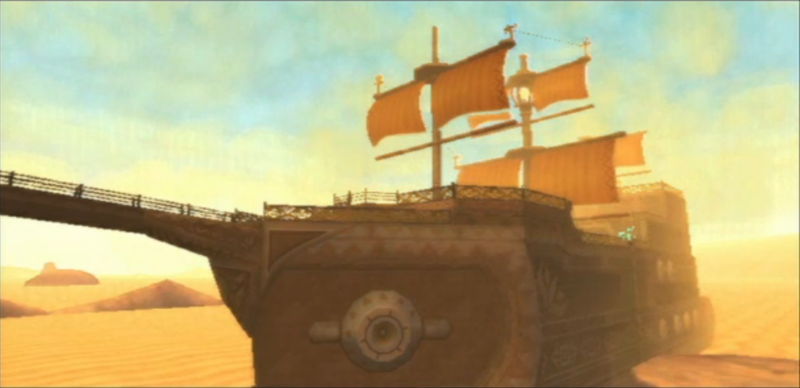
A realm as fascinating as the Lanayru Sand Sea deserves a dungeon that matches its imagination and creativity. The Sandship is more than up to that task, delivering another dose of time-fluctuating puzzles as Link searches for Nayru’s Flame while also freeing Skipper’s shipmates. The robot’s crew are imprisoned in the brig after the Sandship was taken over by LD-002G Scervo and his pirate crew, who serve as the most frequent enemies that Link encounters. A terrific sequence occurs atop the galleon’s masts, where Link engages in a shootout with Bokoblin archers high above the waves. Once the arrows stop flying, you can take in a sweeping aerial view of the Lanayru Sand Sea as the Sandship sails on. The central mast holds a Timeshift Stone, which Link must regularly activate to make his way over the decks, within the hull’s cabins, and around the engine room’s enormous, moving pistons. The Sandship is one of the few dungeons that is worth returning to upon completion, if only to see Technoblins locked up in the brig, and the crew of robots manning their prized vessel once again. Skipper and his shipmates resume their life at sea, unaware that the Sandship is merely a pocket of their era that is meandering through Hyrule countless years later.
8. Shadow Temple (Ocarina of Time)
Said to hide some of the bloodiest secrets in Hyrule’s long history, the Shadow Temple remains one of the most unnerving stages in The Legend of Zelda ― or, perhaps the most unnerving. Running into the bowels of the earth behind the Kakariko Village Graveyard, the Shadow Temple’s murky, dingy chambers house whirling scythes, enormous guillotines, falling beds of spikes, and all other forms of cruelly shaped paraphernalia. The most dangerous features of the gruesome catacombs, however, are what cannot be seen. Much of the Shadow Temple’s design revolves around illusions meant to deceive players, hiding surfaces and targets from plain view, or suggesting that objects exist where there is nothing but thin air. Sometimes these deceptions mean having to make daring leaps of faith while wearing the Hover Boots, crossing chasms that otherwise would swallow Link up in a deadly descent. Even the boss Bongo Bongo cannot be seen without the helpful Lens of Truth. Whether viscerally or thematically, the Shadow Temple is never short on ways to rattle players.
7. Hyrule Castle (Breath of the Wild)
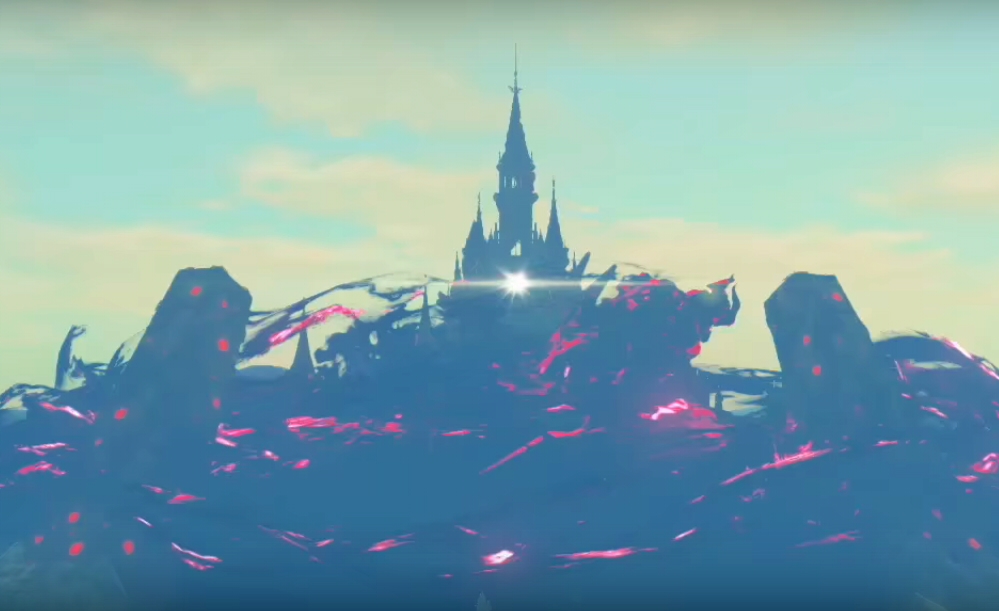
Championing freedom like very few other games ever have, the vast majority of Breath of the Wild‘s enormous overworld is optional. What areas you visit, what order you journey to them in, and what you do in them is largely at your discretion. But one constant all fans experience in Breath of the Wild is where the adventure comes to an end: within the sprawling, malice-infested Hyrule Castle. The royal family’s devastated stronghold is an absolutely massive stage, awe-inspiring for its scale even when in ruins and overrun by villainous forces. Just like the wilderness, players can explore Hyrule Castle in whatever manner they please. There are no keys, invisible walls, artificial barriers, or even puzzles impeding your progress. Redefining what a The Legend of Zelda dungeon could entail, Hyrule Castle tasks players with a simple, yet daunting objective: to traverse the gigantic, elaborate architecture while weaving through waves of enemies. Guardian Turrets line the ramparts, Guardian Skywatchers patrol high overhead, Moblins reinforce the halls, and Lynels guard the gatehouses. All paths inevitably lead to the citadel, where Breath of the Wild‘s finale against Calamity Ganon awaits.
6. Ancient Cistern (Skyward Sword)
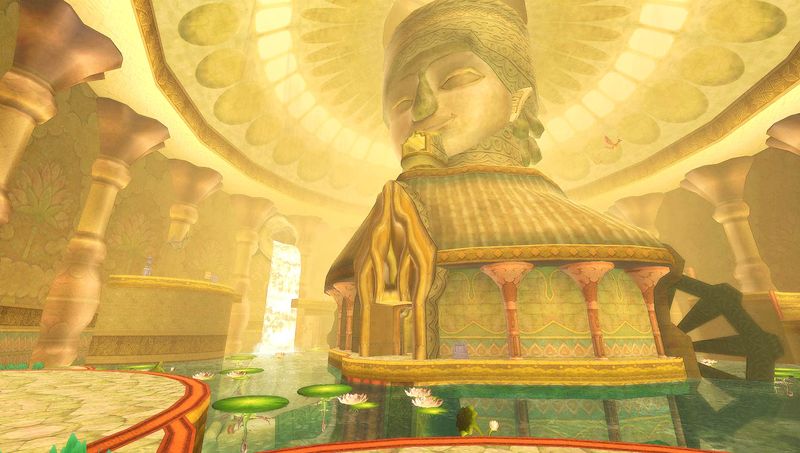
Skyward Sword is arguably the first game in the series to feature abundant imagery and aesthetics influenced by East Asian cultures. This is seen in the Earth Temple’s and Fire Sanctuary’s architecture and in the three dragons, but most notably, it is seen in the wondrous Ancient Cistern. The dungeon mesmerizes players the moment they first step into the central chamber, where lotus designs are carved into the walls, giant lily pads rest upon serene water, and a huge Buddha-like statue overlooks the sheer beauty. Even the hellish basement appears to have Asiatic inspirations. The Ancient Cistern is believed to be based on the short story “The Spider’s Thread” by Japanese writer Ryunosuke Akutagawa, in which Buddha considers allowing a former criminal to escape Hell and enter Paradise. The dichotomy is not just for visuals and atmosphere, but also for the challenges that players face. The top floor is characterized by calm, unhurried exploration through watery chambers, while the basement pressures players with numerous environmental hazards meant to deliver a grisly fate unto Link. The temple’s final obstacle is a battle with the Ancient Automaton, Koloktos, a multi-armed giant who is a strong contender for the greatest boss in the franchise.
5. Spirit Temple (Ocarina of Time)
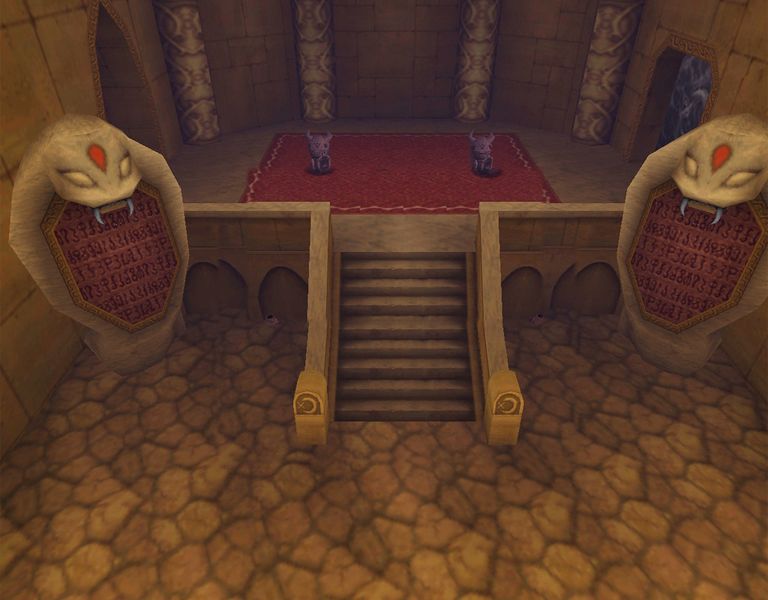
Ocarina of Time has one last task in store for the adolescent Link before his adult self defeats Ganondorf once and for all. In a far corner of the Haunted Wasteland stands the breathtaking Desert Colossus, ready to welcome the Hero of Time at two different stages of his life. The Spirit Temple is best remembered for seeing Link explore one wing of the dungeon as a child and another wing as an adult. In his youth, Link faces adversaries who would normally be pitted against his adult form, like towering Stalfos and an Iron Knuckle. Upon returning to the Spirit Temple as a young man, and with the Silver Gauntlets in his possession, Link can effortlessly move stone blocks the size of a Moblin. The later stages of the desert dungeon focus on light-bending puzzles through use of the Mirror Shield’s polished surface ― a concept that would influence the dungeons of later The Legend of Zelda games such as Majora’s Mask and The Wind Waker. The Mirror Shield is eventually utilized more akin to its earliest implementations in the franchise, as you use it to thwart Twinrova’s attacks by reflecting blasts of ice and fire right back at the witches. On a bittersweet note, the Spirit Temple marks the last time that Kaepora Gaebora greets Link and imparts advice onto the young hero. The next time we see the wise owl is during the ending credits as he soars over Gerudo Valley and into the horizon.
4. Snowpeak Ruins (Twilight Princess)
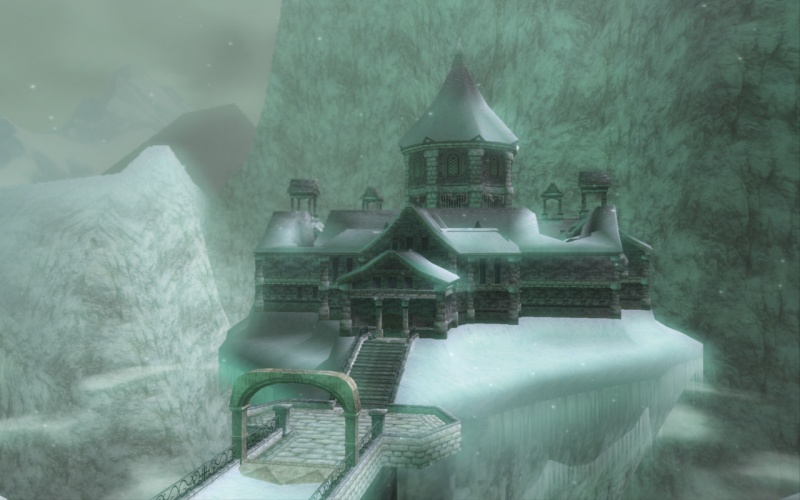
It’s not often that a dungeon feels like the perfect place to kick up your feet and relax, but most of Snowpeak Ruins is as cozy as dwellings come in The Legend of Zelda. The lavish mansion was seemingly home to people of aristocratic status in a past age, but in the Era of Twilight, its residents are the amusing couple Yeto and Yeta. Rewriting the script on what’s typically expected for the objectives in a dungeon, your efforts in Snowpeak Ruins essentially amount to a grocery run. The ailing Yeta mistakenly directs you to various food items when trying to send you after the key that leads to a shard of the Mirror of Twilight. Thankfully, Yeto uses those ingredients to cook a soup that reinvigorates his wife. It’s sometimes easy to forget that you’re completing a dungeon as you wander throughout Snowpeak Ruins, with its delightfully laid-back atmosphere and believable setting. You’ll walk through bedrooms, pantries, lounges, chapels, armories, and other familiar rooms that any estate would have. Rather than solve death traps and elaborate puzzles, you’re more likely to leap between swinging chandeliers, Clawshot into new rooms through destroyed floors and walls, or figure out how to transport a cannonball throughout the dilapidated ruins so that you can break down frozen barricades with a cannon. That’s not to say that danger is absent, however. Snowpeak Ruins is home to formidable enemies like White Wolfos, Freezards, Chilfos, the hulking miniboss Darkhammer, and eventually Yeta’s corrupted form called Blizzeta.
3. Arbiter’s Grounds (Twilight Princess)
From the outside, the Arbiter’s Grounds is an extraordinary structure, rising proudly over the sands in a far corner of the Gerudo Desert. But you don’t need to tread far into its gloomy interior before you realize that this dungeon holds plenty of dark secrets. The Arbiter’s Grounds was once a prison that held some of Hyrule’s most vile criminals ― many of whom were executed or exiled to the Twilight Realm. These vengeful spirits are felt in the sinister air within the crypts, and it’s reasonable to assume that many of the undead foes that accost Link were once nefarious prisoners who perished in the Arbiter’s Grounds. Link’s Wolf form is put to perhaps its greatest use in this dungeon, as you track down a quartet of Poes to open the areas buried deepest below the earth. The quadruped hero must follow their scents through any and all barriers, whether they be carpets of sand, stone walls, execution devices, or any other part of the decrepit tombs. Wolf Link’s efforts culminate in a clash with the baleful wraith Dark Sword, where victory yields the Spinner. The pace to the Arbiter’s Grounds’ challenges heightens in a big way during the second half, as Link rides along the Spinner tracks at high speed like the most wicked, wild form of skateboarding imaginable. The greatest adrenaline rush is saved for the boss fight against Stallord, who relentlessly attacks Link no matter how little of his body is intact. Sliding along the walls and leaping between Stallord’s fire blasts remains one of Twilight Princess’s most memorable sequences, and one of the series’s most thrilling battles.
2. Stone Tower Temple (Majora’s Mask)
The penultimate challenge in Majora’s Mask looms on the horizon as Link journeys throughout Termina. The Stone Tower is an absolutely titanic structure, so big that it can be seen from Goron Village and even as far away as Romani Ranch. Climbing the tower and reaching its dungeon is an arduous undertaking, with players having to evade raining boulders and surmount a stairway of steep cliffs. Appropriately, the Stone Tower Temple is just as vast in scale, feeling like multiple dungeons packed into one. In addition to his skills and equipment as a young Hylian, Link is required to transform into his Deku, Goron, and Zora forms at various points during his exploration of the dungeon. The Stone Tower Temple gathers a myriad of gameplay concepts that were featured in prior stages of Link’s mission while adding plenty of new ones. An iconic twist is flipping the dungeon upside down by shooting the large Red Emblems with Light Arrows. This memorable mechanic essentially doubles the already sprawling layout, while dramatically changing your surroundings and the tasks you must complete. The dungeon is so huge that a single miniboss wouldn’t suffice, as both a Garo Master and Gomess must be dealt with along the way. The end boss encounter even better embodies the Stone Tower Temple’s scope and scale. In the showdown against the colossal Twinmold, Link has the opportunity to become a colossus himself when he dons the Giant’s Mask.
1. Forest Temple (Ocarina of Time)
Link’s first glimpse of the Forest Temple comes not when he steps foot into it as an adult but rather when he visits his dear friend Saria and learns her eponymous melody in the Sacred Forest Meadow. As a child, Link and the player can only look up along the crumbling stairway to the Forest Temple’s entrance and wonder what lies inside its ancient halls. After the journey through time that takes Link seven years into the future, they finally can venture into the dungeon, where they find what is truly one of the most memorable locations in The Legend of Zelda. The Forest Temple is a thematic masterpiece, where nature’s embrace melds with the supernatural. The Lost Woods is slowly reclaiming the secluded structure, as waves of ivy run over the stone makeup, and familiar foes to the woodlands such as Skulltulas, Deku Babas, and Wolfos await daring explorers. The open-air courtyards offer a view to the immaculate sky canopying Kokiri Forest. They’re a welcome reprieve from the temple’s shadowy interior, where spectral elements reign. The Forest Temple introduces the Hero of Time to ghoulish enemies like Stalfos, Floormasters, and Wallmasters. Even the architecture holds oddities, as hallways literally twist down their length, and in one chamber the ceiling collapses, only to rise back into place. Paintings frequently adorn the vine-covered walls, serving as both ideal portals for the four Poe Sisters and as a brilliant combat mechanic for the Forest Temple’s eventual boss, the Evil Spirit from Beyond ― Phantom Ganon.
What do you think of the list? Did your favorite dungeons make appearances? What would your personal top 20 list look like? Let us know in the comments below, or on any of Zelda Universe’s social media channels!
Jeffrey Pawlak
Jeffrey Pawlak is the Features Director for Zelda Universe, and has been a member of the website's community for more than 20 years. He is also a high fantasy author and an aspiring comic book artist.


 by Jeffrey Pawlak on March 16, 2020