“Hyah! Tsee! Jum haaa!” These words of wisdom have graced the ears of all who ever played a Legend of Zelda game. No, they don’t come from Zelda, mind you. They’re spoken by Link, the beloved sword-wielding boy protagonist. And no, we have no idea what he’s really talking about.
All kidding aside, Link’s communication methods are an artistic marvel when one stops to ponder the silly notion in earnest. Surely a character who travels all over the world and is more than thirty years old would be able to express something in some shape or form. How in the world does Link communicate, anyway?
In order to answer this question, it’s important to grasp what Link’s main purpose is in the series. That purpose is why our beloved Hero of Hyrule is named Link in the first place. According to Shigeru Miyamoto, Link got his name because he “connects people together” and essentially helps them engage with the fictional game world. As a result, Link has garnered many different versions over the years to become a wonderfully complex green tapestry of heroes who all of us can personally relate with. He is our eyes and ears, our childhood joys and sorrows, the personal tour guide of our minds, and a safe outlet where we can grow and become our own heroes and save the day. Thus, it makes sense for Link to not talk and become a “blank slate” in order for us to project our experiences onto him. And yet at the same time, Link himself has developed his own personality to the point where like the song “Believer” by Imagine Dragons implies, we can see his “beauty through the pain” and hear the “words” inside his head. This is his story spoken out through silence across the generations.
The strong, silent type
Link’s humble beginnings were akin to many video game heroes in the 1980’s: simple pixelated icons entertaining thousands of players on an eight-bit screen. Even back then, the land of Hyrule was already a vast landscape teeming with magic, monsters, and labyrinths. In order to keep all this data running smoothly with the Nintendo Entertainment System’s technology at the time, the developers decided to make Link completely silent in his debut The Legend of Zelda. Not much technology or interest in voice acting video games existed back then. Besides, there weren’t many people in Hyrule for him to talk to, anyway. This decision was made again with the sequel Adventure of Link. By the time Link continued his heroic role in A Link to the Past and Link’s Awakening, his reputation of being a ‘silent hero’ stuck. Link made no sound whatsoever except for the occasional sword swishing, even though clunky sound technology had improved somewhat with the succeeding Super Nintendo Entertainment System. Link’s destiny as a silent warrior was made clear.
Or, was it?
Link finds his voice
In contrast to his silent video game protagonist version, Link was much more talkative in his short-lived limelight on the television screen in 1989. Who doesn’t remember his whiny pipes belting out “Excuse me, Princess!” voiced by Jonathan Potts in the Legend of Zelda cartoon? The joke itself is a legend at this point. Let’s not forget the infamous Captain N episodes, either. It’s a wonder that no one in the episodes bothered to stuff soap into the boy’s mouth. Yikes.
We’re not going to mention this. Nope. Zilch. Nada.
Not surprisingly, the fan community at large lent a deaf ear to Link’s televised quips in their canon interpretations of his speech. Link’s voice in the Philips CD-i games proved to be somewhat tolerable, but was still cringeworthy all the same. This too was eventually passed over in the canon. It seemed that Link was much better off to keep his mouth shut. Thus, many Zelda fans (and Nintendo) paid more attention to Link’s silence as interpreted by A Link to the Past released in 1991. But the dawn of a new era for Link’s voice was on the horizon. That era emerged in 1998 and became the Hero’s branding staple so many fans came to know and love: Ocarina of Time.
Ahh…much better!
This first three-dimensional title in the series was a huge milestone for Link’s voice. For the first time ever, Link received not just one voice actor, but two. Fujiko Takimoto was hired in Japan to portray Child Link, and Nobuyuki Hiyama as Adult Link. Though the Hero of Time spoke no audible words, his voice sprung to life and became as iconic as his green floppy hat. Nintendo loved Link’s set of pipes so much in Ocarina of Time, it was repeatedly reprised and recycled in later games such as Majora’s Mask, Super Smash Bros. Melee, The Minish Cap, and even ALink to the Past for the Game Boy Advance.
It is interesting to note that even though Link’s words are not technically spoken aloud in the games, he occasionally has his own text boxes where the player can control his reply to another character, thus keeping true to Link’s original role serving as the player’s personal avatar in their adventures within Hyrule.
Cracking the mold on traditions
Despite Link’s vocal presentation in Ocarina of Time, the interpretation of him as a “silent hero” remained dominant across the fan community. This persisted in part due to Link having no set textbox scripts like the other main characters. Even with different voice actors portraying Link over time, many Zelda titles such as Twilight Princess followed a similar pattern to Ocarina of Time and carried over Nintendo’s wishes to broadcast Link’s silence. Cracks dared to poke through the traditional mold, however. Link’s “silent” conversation with Rusl in the beginning of Twilight Princess is a great example of him portrayed as “talking.”
Believe it or not, The Wind Waker was the first game to have Link speak audible words! Listen for it the next time you’re exploring the Earth and Wind Temple dungeons. Voiced by Sachi Matsumoto, Link says “come on!” when the player beckons Medli or Makar to come closer if they’re further away. We’re not certain if this is an adlib, but it’s a great little detail that helps players get to know the Hero better (and it’s even more remarkable that a Japanese voice actor took the time to perform it in English, no less).
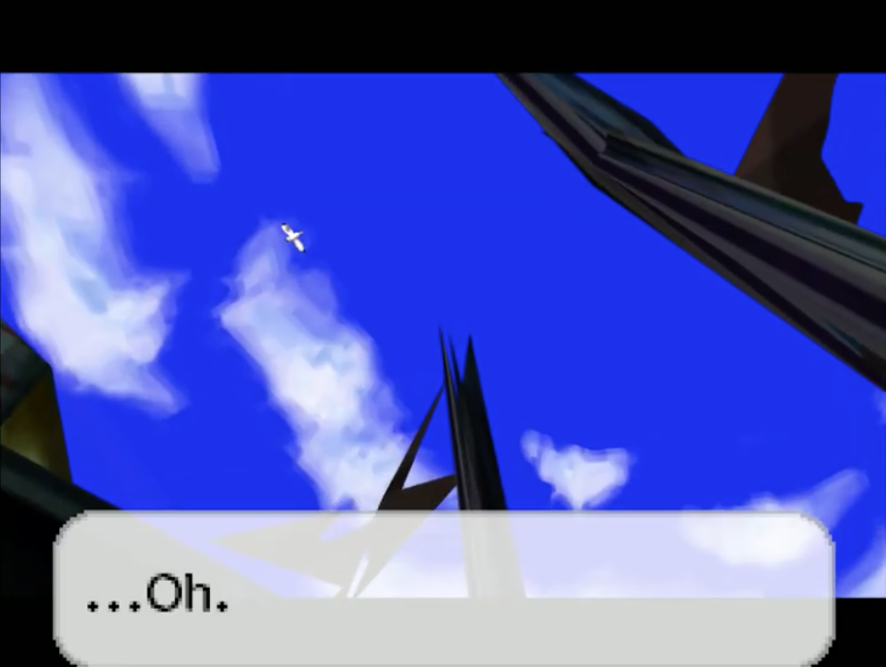
Phantom Hourglass also contains a small but significant breakthrough. It happens so briefly at the story’s epilogue, it can easily be overlooked. The scene begins in Link’s first-person view when he wakes up after defeating the final boss. Text saying “Oh…” and then, “Hey!” appears on the DS screen. The camera shifts to Link, lying awake on the Ghost Ship with an unconscious Tetra beside him. Then, Tetra comes to and speaks. After the text box. The two are alone on the Ghost Ship until Tetra’s pirate crew arrives later on the scene, and the cutscene rolls on.
Wait a minute! Did Link just talk? If Tetra was not awake, who said those beginning lines? The interpretation is up to the player to figure out. But with a little deductive reasoning, the answer is clear. No one else could have possibly said those words but him!
A silence that speaks louder than words
Discovering Link’s breakthroughs of audible speech in the canon is a delightful thrill for any Zelda fan. But from a creative perspective, perhaps it’s even more exciting to experience Link’s remarkable ability to communicate in the game narrative without any words at all!
Consider for example Link’s facial expressions in various Twilight Princess cutscenes. They may be subtle, but oh, do they tell us everything. Link smiles when he lends a helping hand, rages when he chases after Colin, and mourns at the thought of losing a loved one. He is even distraught with fear when a Ganondorf-possessed Zelda addresses him to get ready for a fight. With all of these expressions taken into account, how can the Hero of Twilight not have his own unique personality? Let’s not forget the sheer goofy smile on his face when he lays his eyes on Midna’s royal form for the first time.
Thanks to the game’s vibrant comic book-like graphics, Link’s body language is even more expressive in The Wind Waker. In fact, his character model has so many different facial expressions, he carries entire conversations with other characters with nothing but body language. Take his confrontation with Ganondorf at the Forsaken Fortress, for example. That’s no monologue coming from the Evil King. From beginning to end, Link and Ganondorf are actually engaged in a spirited conversation with each other. The player can understand exactly what they’re saying, even though Ganondorf is the only one with the text dialogue. Now that’s creative storytelling!
True communication goals right here.
All the words inside his head
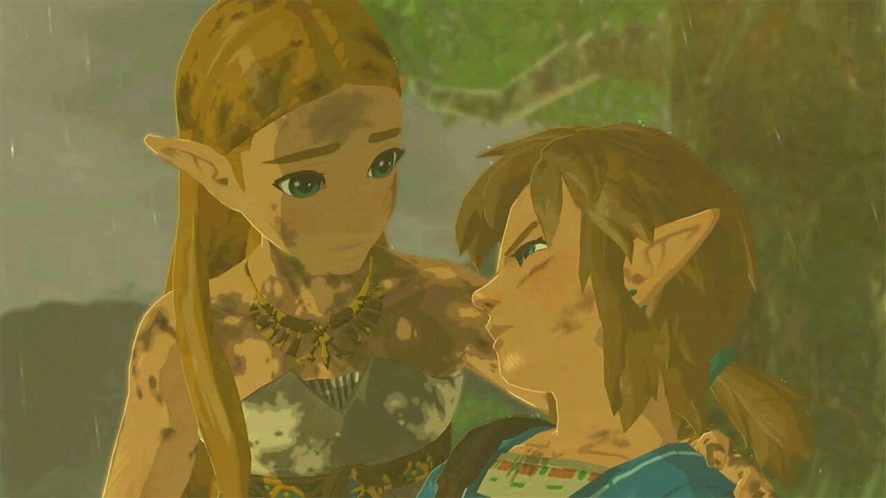
In Breath of the Wild, Nintendo decided to try something new and utilized Link’s silence as a story mechanic in the canon for the first time. Here we see Link as a stoic, quiet hero who bears the heavy burdens as the Master Sword’s chosen knight. Link gradually warms up in the story as he forms a bond with Princess Zelda, but it’s not until after he is revived from his defeat that he becomes talkative. A lot more talkative! Without the burden of his harsh memories, the amnesiac Link is no longer afraid to speak his mind. He may even come across as brash or rude to other characters in the game text, and it’s hilarious.
This transformation of Link’s character from a selective mute to a confidant victor is a brilliant retelling of his silence. The concept has awkward execution, however, because Link’s actual avatar shows little change in expression as the player progresses in the game. The player is left on their own to cobble Link’s story together with fragmented pieces of text, Link’s memories, and their imagination. Granted, this is due to the fact that certain mechanics must remain flexible within Breath of the Wild’s open world format. But by doing so, Link’s character development didn’t get the chance to bloom into his full visual potential, and that’s incredibly sad. It feels unnatural and stifling, almost like a slap in the face compared to the progress of Link’s story expressed in his previous installments.
The retrograde of Link’s stoic avatar in Breath of the Wild is just as tragic as the burdens of his past. Ouch.
Thankfully, the development team could redeem the Hero of the Wild’s perspective to some degree in the spinoff prequel Age of Calamity. But as we get ready to return to an open world Hyrule with full-fledged voice acting in Tears of the Kingdom, we can’t help but wonder. How will Link communicate in the future? How will we continue to connect with him? What will he tell us? How many more painful memories does he have to bear? Will the words inside his poor head ever come out?
Okay, maybe I’m being melodramatic. But perhaps I’m not too far off from my poetic rant. Each of us can relate our hopes, dreams and struggles with our favorite young boy Hero to the point where we often say “I” instead of “Link” when describing a Zelda playthrough to our friends. If you catch yourself doing this, good. That’s precisely what Mr. Miyamoto had in mind. After all, he was the first individual to connect to Link himself.
Chelsea Reed
I’m a ZU writer and author of an up-and-coming sci-fi fantasy novel. All credit of my nerd prowess goes to a dear friend of mine, the true master of Forsaken Fortress.


 by Chelsea Reed on February 3, 2023