Symphony of the Mask, the latest DLC for Cadence of Hyrule, takes you back to a rhythm-based realm of Hyrule, and you also get to play as Skull Kid — making this his second playable appearance in the whole Zelda series. Although the DLC is set in the same Hyrule, it takes place in the future timeline, and its new story and the introduction of masks alters the game enough to make it feel like a whole new campaign. You’ll feel enticed to dance through the world once again.
FULL DISCLOSURE
Nintendo of America graciously gave Zelda Universe a review code for Symphony of the Mask.
In fact, we see one of the dungeons return to a classic Zelda style, which was a pleasant surprise. The dungeons in the standard mode of Cadence of Hyrule mostly focus on beat-based exploration and killing all the enemies in your way, but in Skull Kid’s story, the dungeons are a real change of pace.
Plus, the world is tougher, as it’s set in the future that you briefly traversed in the standard version of the game when Ganon succeeded and ravaged the world. It’s up to Skull Kid to use his array of masks to acquire two magical instruments from the dungeons and use them to access Hyrule Castle and defeat Ganon.
So, how does it compare to the original campaign? Let’s explore this DLC’s version of Hyrule, its enemies, gameplay mechanics, music, and dungeons.
Play as an unlikely hero in a bleaker, harsher, beat-based Hyrule
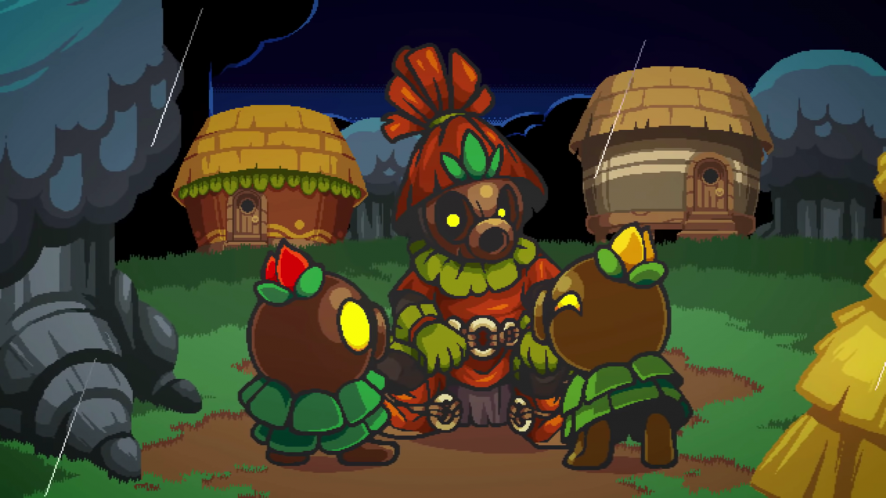
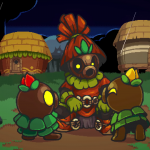
In Symphony of the Mask, the new playable character and unlikely hero of the story is Skull Kid, who lives in Deku Village, one of the last surviving towns in the explorable world. You quickly learn that the world is in peril, as Ganon has succeeded in taking over Hyrule. After an Ocarina of Time-esque encounter with the Great Deku Tree, it becomes your destiny as Skull Kid to save Hyrule. You must venture out of the safety of your village, explore the bleak expanses of the world, and find a way to defeat Ganon.
He finally found the friends and family he always wanted, then it became his destiny to save Hyrule.
This Hyrule is much more perilous than the one you explored as Link, Zelda, and other characters. It is completely barren, aside from monsters and harsh terrains. Enemies are in greater numbers per screen and all hit hard. In this withered, dying world, Ganon’s minions have thrived and toughened up, and they do everything within their power to stand between you and their master. I’ll talk more about the enemies in a bit, but suffice to say that they don’t go easy on you in Symphony of the Mask.
The world as a whole is much smaller than the standard version of Cadence of Hyrule. What was once a 10 x 12 grid-based map is now 8 x 6 — almost half its size. Many key locations remain, with Death Mountain and Gerudo Town being your two main destinations to traverse in the story, though most of the world looks very different to how it did in the past version of Hyrule.
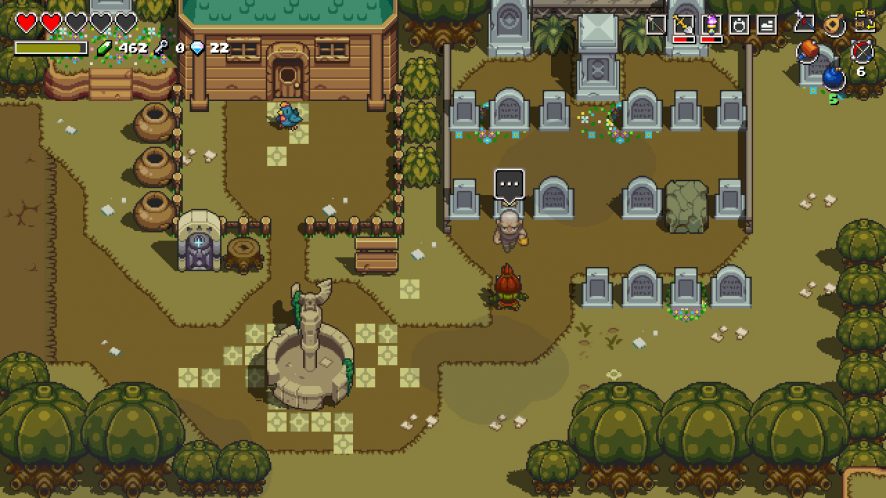
Gerudo Town now has a fighting arena, giving off real Mad Max vibes, and the Gerudo Ruins are even more ruined than before. The Lost Woods is nowhere to be found — that is, in its previous form. The mini-dungeon in the Deku Village appears to be remnants of the Lost Swamp, so perhaps the Lost Woods survived in some way after all. Lake Hylia also remains, but most of its water is deeply frozen and riddled with enemies, though the Frozen Grotto still stands. Kakariko Village is now Kakariko Graveyard, with only the spirit of Dampé, the classic gravedigger, and a Cucco remaining. Death Mountain is much harder to navigate, with dangerous rocks tumbling from the peak, much like in previous Zelda installments, and a whole host of enemies blocking your path.
You can always count on Dampé to haunt Hyrule’s graveyards.
Much like Death Mountain’s past version, you’ll find a dungeon after crossing the mountain safely, but in the DLC it is a very different dungeon compared to the Temple of Storms from the original. It’s in fact much more reminiscent of classic Zelda dungeons, being primarily puzzle-based and not often restricted by the beat-based movement. But I’ll talk more about the dungeons later, especially this unique one.
Story-wise, we can see that this harsher, ravaged world has led to more locations becoming inaccessible and left in ruins, hence the smaller map. Design-wise, this choice was no doubt to allow you to work through the story easier. After all, with enemies swarming you more aggressively and hitting harder — as well as supportive items like bottles being more scarce — you’d have a much harder and slower time getting around if it was the same size as before.
I wish I had an over-sized Hylian shield to protect me.
Nevertheless, this post-apocalypse Hyrule is just as fun to dance through as Skull Kid as it was to play as Link and other heroes in the original story. Much of this not only owes to the classic rhythm-based gameplay that I never get sick of, but also to the new mask-based combat that — combined with the tougher enemies — encourages you to change up the usual way you might play.
Find new masks, a-la Majora’s Mask, to use various weapons and abilities
Skull Kid may not be a natural fighter, but — as we’ve seen throughout the Zelda series — he is excellent at acquiring and utilizing the capabilities of magical masks. In the DLC, you will acquire a variety of masks. Each of them allows you to fight in a unique way and even navigate the world differently.
Yes, the empty spaces do bother me. A lot.
There are six you can collect in total, though only two are needed to beat the game (the Deku Mask and the Skull Mask).
Deku Mask: this is your starting mask. It allows you to shoot a Deku Nut and headbutt your enemies. It’s the weakest of them all, but it definitely has its charm as a clear callback to Majora’s Mask.
Skull Mask: this is the mask entrusted to you by the Great Deku Tree when he explains it is your destiny to use it to defeat Ganon. While wearing it, you wield a spear that allows you to attack two spaces ahead of you, as well as have a chance to insta-kill enemies. It also has the ability to life drain, which costs magic.
Zora Mask: you find the Zora Mask in the Frozen Grotto mini-dungeon. While wearing it, you can swim freely in deep water and walk through shallow water without being hindered. You wield a rapier, which allows you to attack two spaces ahead of you and lunge forward when you do. The magic ability it provides is to shoot two ice balls.
Goron Mask: you find the Goron Mask in the Gerudo Ruins mini-dungeon. Wearing it allows you to wield a flail, which has a short range when you attack directly in front of you, but it can hit enemies that are diagonal from you when you move, offering a greater attack range. The mask’s magical ability allows you to roll as a Goron in a fixed direction. You stop rolling once you hit an enemy or a wall. You’ll be invulnerable to damage while rolling, though if an enemy hits you before you hit them, you will be redirected and roll in a different direction.
Darknut Mask: you find the Darknut Mask in the crypt underneath Kakariko Graveyard. When wearing it, you wield a broadsword that hits up to three enemies in front of you, and you’re immune to attacks that hit you head on — though, this does drain your magic. If you’re hit head-on while you have no magic, you will be stunned. Its special ability allows you to swing a much broader attack at the cost of magic.
Mask of Truth: the Mask of Truth is given to you by the fisherman in what was once Lake Hylia, after you give him a Golden Fish (which you can find randomly by swinging your bottle near deep water). Wearing it gives you full item sight, meaning you can see what items are hidden in places like chests and walls. You wield a Titanium Dagger, which does two damage but has a short range, only allowing you to hit an enemy directly in front of you. Your magic ability is to shoot a laser beam after one beat onto an auto-targeted enemy nearby.
As is apparent, all the masks are very different and offer unique playstyles. I mostly stuck to the Skull Mask and Darknut Mask, as the long and broad ranges allow me to keep enemies at a safe length, which what I’m used to from playing the standard version and Crypt of the NecroDancer — the spear is always my weapon of choice in both. After all, enemies hit really hard and take longer to go down. It’s best to stick to what you know so you can react and attack efficiently and safely.
Doesn’t feel good being hit by a spear, does it, Mr. Moblin?
Many of the items from the standard mode reappear, which you can find throughout Hyrule, but you have a limited arsenal and cannot acquire everything. This limited inventory forces you to use your items wisely, as well as use your masks. In terms of the story and world, it made sense that many items have been lost in this bleak Hyrule, and gameplay-wise it was clearly a decision designed to make the mode harder — which it definitely is.
Prepare to be beaten down as you move to the melody — a lot
I consider myself a veteran of Crypt of the NecroDancer and Cadence of Hyrule. I’ve completed the standard modes multiple times with little to no deaths (after all, Crypt of the NecroDancer is a perma-death rogue-lite, so you gotta learn to live), but in Symphony of the Mask, I died 19 times.
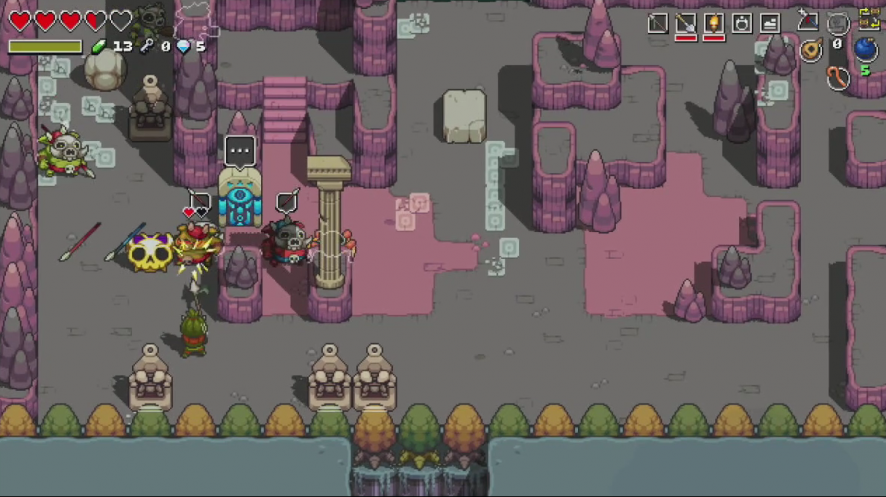
As I’ve already said a lot — perhaps the trauma of being defeated so much has sent me mad — enemies hit super hard in this mode. They also have a lot more health, and there are more of them on each screen. It’s easy to become quickly overwhelmed as enemies attack you from everywhere. Some strike you head-on, some attack diagonally, some shoot projectiles, and some throw ranged weapons and bombs. You have to watch everything closely, and play it safe and smart, all while managing your rhythm-based movement. You gotta plan to attack while maintaining the beat, pay attention to which beat you are going to be hit on, and decide when to move or when to stay put.
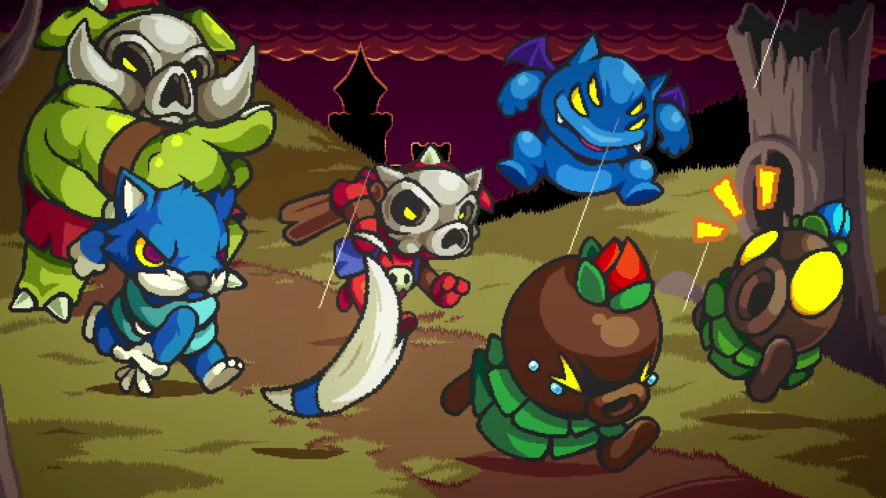
Those poor innocent Deku Scrubs … all this time they weren’t even on the monsters’ side.
Plus, Ganon’s forces have diversified, adding the additional challenge of having to relearn how to face your enemies (being good at this game is mostly about enemy prediction. You might even say it’s the Dark Souls of rhythm games). I’ll talk about the new bosses in more detail later when I discuss the dungeons, as they’re awesome reprisals from the Zelda series. But in terms of the standard enemies, we see new additions alongside recurring enemies from the standard mode of Cadence of Hyrule.
You’ll face new boomerang-throwing enemies, snakes that charge at you, enemies with wider attack ranges, and Dodongos that spit fire, just to name a few. For a seasoned Crypt of the NecroDancer and Cadence of Hyrule player, these really threw me off my dancing feet and challenged me to rethink my movement patterns and strategies.
It’s a heck of a lot to manage mentally, but it was a welcome new challenge. It’s so rewarding when you get good at moving like a well-oiled killing machine. Your perfectly-timed attacks and dodges are literally like a dance choreography, though you’ll feel more like you’re in a rave when listening to the awesome music.
Speaking of which, let’s talk about the music in this DLC.
Enjoy some old and new head-bopping beats
The DLC uses many tracks from the original, especially the Dark World music that played in the future Hyrule in the original, which was a classic remix of a recognizable, classic Zelda melody. I really appreciated this, because you don’t actually get to hear it as much in the standard version of Cadence of Hyrule, and it’s a damn good track that deserved more time.
I know this has nothing to do with the music, but I just had to show this cute Majora’s Mask reference.
But the highlight of the soundtrack is the five new tracks that the DLC introduces (well, actually ten if you count the paused menu versions), which are scattered throughout the overworld and dungeons.
“Deku Village.” This is a cute and catchy remix of the “Deku Palace” theme from Majora’s Mask. With its heavy use of the oboe and piano, it’s a simultaneously calming yet knee-slapping beat that’s perfect for a starting location. It makes you feel safe yet also pumped to get moving through the world.
“Gerudo Colosseum.” This absolute banger brings those intense electro vibes that I just love and know the series for. It’s an intense remix of the Gleeokenspiel boss music that turns the beat up to not just 11 but 15. It plays on certain floors of the Gerudo Arena, filling you with unstoppable energy as you beat down every single enemy that dares to face you. It also contains hints of what’s to come when you face the boss, with the intermittent bongo beats.
“King Dobongo Boss Theme.” Firstly, how damn good is this pun name, Dobongo. An immediate classic. I’ll talk more about the bosses when I discuss the dungeons, but this is a solid boss fight. The music is pretty low key to be honest, probably because it wants to allow you some breathing space as it’s quite a tough fight. But it has a crazy bit where the bongos beat rapidly, allowing you and enemies to move quickly for a short period of time.
“Temple of Brainstorms.” You’ll hear both the combat and peaceful versions of this song a lot while traversing the Temple of Brainstorms. Both are equally catchy and low key pretty intense — much like the dungeon itself. It’s a complex and diversified remix of the “Temple of Storms” from the original, with a lot of techno and at times chiptune vibes, which really separate it from the crowd.
“Synthrova Boss Theme.” As far as I can tell, this is a completely unique composition aside from the occasional “Song of Storms” riff, though I think it might also borrow from a boss theme in an older Zelda game. Like the dungeon leading up to it, it’s rife with synth and chiptune. Its intensity and electrical energy match the boss itself, while is one you won’t easily forget.
Speaking of unforgettable dungeons and bosses, let’s discuss the two main dungeons of this game: the Gerudo Arena and the Temple of Brainstorms.
The Gerudo Arena tests your brawn and the Temple of Brainstorms tests your brain, classic Zelda-style
Man, these two dungeons are such unique experiences compared to both the original Cadence of Hyrule and the game that it’s all based on (Crypt of the NecroDancer). The Temple of Brainstorms in particular though — oh boy, I have a lot to say about this one, both positive and not so positive. Let’s talk about the Gerudo Arena first though.
The Gerudo Arena
This was unquestionably a callback to the Gerudo Training Grounds and Arbiter’s Grounds from Ocarina of Time and Twilight Princess respectively. The arena consists of 5 floors, each of which throws a variety of enemies at you that you must defeat to progress. After each floor, you reach the final boss, Dobongo — who is basically King Dodongo from Ocarina of Time, as you defeat him by throwing bombs in his inhaling mouth. (Still not over that amazing pun).
My name is Skullimus Kidius Meridius, and you will be entertained.
It’s as simple as that really, as it’s designed to test your endurance and physical capabilities. Each floor is a pretty small arena, so you have to be smart with your movement to avoid getting killed. Health is sparse, so you need to come prepared with a potion, ideally.
The Temple of Brainstorms
This dungeon. Oh my god. Anyone who’s played it can understand my feelings before I’ve even dug into it. It’s simultaneously the best and most flawed part of the DLC.
Firstly, I love its name. It’s a reimagining of the Temple of Storms from the original, but this time the dungeon is entirely puzzle-based, so throwing “brain” into the title is just genius. You really will need to brainstorm in this dungeon, because the puzzles are numerous and varied, and require a surprising amount of concentration. It’s incredibly reminiscent of classic 2D Zelda dungeons, where you move from screen to screen figuring out the room’s puzzle to proceed. This is a welcome reprisal, as puzzles are at the heart of the series and were quite sorely missed in the original Cadence of Hyrule, I must say.
But I think they really overcompensated with puzzles in the Temple of Brainstorms.
I can hear the music in my sleep and see the puzzles in my fever dreams.
It is a long dungeon. Oh, so very long. There are so many puzzles; your brain will be fried from all the brainstorms you have to endure throughout it. It’s far too long and far too intense with puzzle after puzzle.
This is why I’m so torn on it. It brings back a staple of Zelda with the puzzles — and I think they’re even random for every gameplay from what I’ve seen, so you can experience new puzzles every time. But it’s like they had to cram them all in this dungeon because there was no room elsewhere for puzzles. It makes for a really tiring dungeon that you’re glad to see the back of once you’re done.
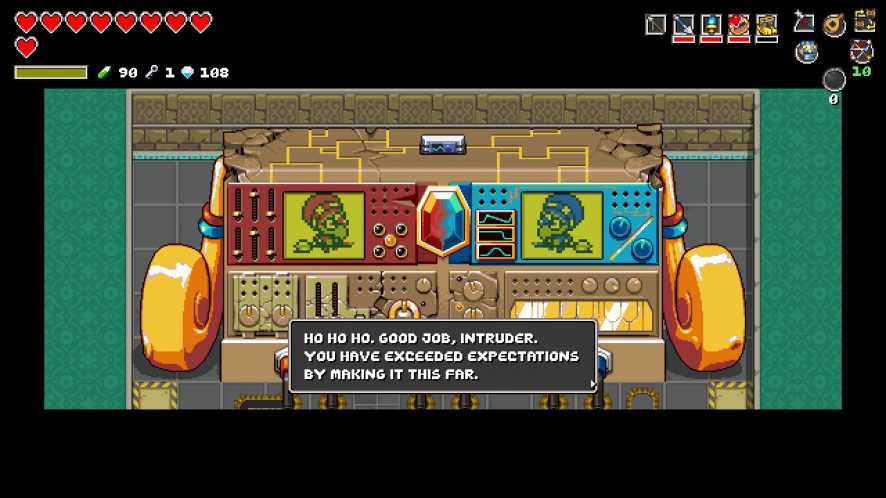
Having said that, it also redeems itself with one of the best boss designs: Synthrova. It’s based on Twinrova, Koume and Kotake, the two Gerudo witches that recur throughout the series. Now, I’m pretty biased as I love these two and Twinrova especially, but I just love the idea that they’ve somehow become fused with a huge machine. They’re at least 100 years old each and still refuse to die, finding new life in a computer.
I like to think of Koume and Kotake as cool grannies who low key just love some synth and techno.
The battle itself is also pretty cool, as it brings back one of the puzzles from within the dungeon but on a much bigger scale. It’s challenging yet delightful at the same time, all while you’re enjoying the synth vibes from the battle theme.
Final verdict: it’s a refreshing and unique addition to the Cadence of Hyrule story
Symphony of the Mask is an excellent addition to Cadence of Hyrule that is worth playing if you love the original and are looking for a new challenge. It’s definitely more of the same, but it also includes new elements that increase the difficulty and will appeal to anyone who loves Zelda. I originally didn’t know what to expect when they announced this DLC as a new storyline. I wondered if they would completely overhaul the map and create a new world for Skull Kid to have an adventure in. But blending it with the original story was the right choice. It makes it feel new yet familiar.
Now, I’m off to replay this excellent piece of DLC and hopefully beat it quicker and better this time around. I’ll hopefully only die once or twice rather than my shameful 19 deaths. Skull Kid’s had a hard enough life without me constantly dropping the beat and letting him take a beating from Bokoblins.
I hope you’ll all give it a go too, so you can enjoy all the different masks, the new music and dungeons, and the awesome rhythm-based gameplay, which hits that dopamine spot just right.
Score: 8/10
Liz Burton-Hughes
Liz is the Assistant Columns Editor and Writer at Zelda Universe. If you see any articles about the Gerudo or Koroks, she's most likely the one who wrote them. She's probably writing about them somewhere right now. Liz is also in the process of trying to steal Beedle's heart from Hyrule.


 by Liz Burton-Hughes on October 6, 2020