Pokemon adventures in the Galar region are far from over. The Isle of Armor, the first of two expansion passes for Pokemon Sword and Pokemon Shield, takes players off the main continent and drops them in a brand new area with fresh challenges, loads of collectibles, and plenty of returning Pokemon to catch and train.
Lots to see and do
The Isle of Armor is a sizable stage in the sun-drenched seas off the east coast of the Galar region. It’s essentially another Wild Area, but one where the lead Pokemon in your party will follow behind you in your treks across the map. Players have free range of movement and full camera control as they explore the island’s beaches, caves, cliffs, fields, and all other environments. Just like the original Wild Area in Galar proper, the Isle of Armor has a variety of wild Pokemon roaming about in the open. There are also numerous Pokemon dens to engage in Max Raid battles.
One hundred and seven Pokemon from the seven previous generations make their return through this DLC pack, including several Gen 1 favorites like Squirtle, Bulbasaur, Jigglypuff, and Psyduck. There are also new Gigantamax forms that you can acquire for the Galar starters’ final evolutions, Venusaur, and Blastoise.
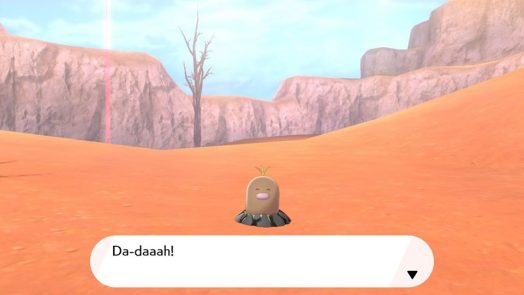
Pokemon’s version of “Yahaha! You found me!”
Most of the Pokemon debuting in Sword and Shield can be caught somewhere on the Isle of Armor, while others are obtained through more amusing methods. Taking a page out of Breath of the Wild’sbook, The Isle of Armor offers a huge collection quest by scattering 150 hidden Alolan Digletts all across the map. These Digletts belong to a trainer visiting from the Alola region, and as you find and return more to him, he gives you the Alolan forms of other Pokemon as a reward. Should you put in the effort to find at least 100, you’ll earn one of the Gen 7 starters: Rowlet, Litten, or Popplio.
Unfortunately, you don’t get to choose which one. You’ll simply be given the Pokemon that matches the type of your chosen starter from the Galar region. For example, if you picked Scorbunny (Fire) at the beginning of Sword or Shield, you’ll receive Litten, and so on and so forth.
Getting to the Isle of Armor is easy. After you purchase the expansion pass ($29.99 USD), and as long as you have access to the Wedgehurst Station and the Wild Area, you can head on over. This means that you can visit the Isle of Armor well before you finish the main game, although the battles that take place in the expansion’s light story will likely be insurmountable for someone who hasn’t acquired all of the Galar gym badges. At the very least, visiting the Isle of Armor early offers players the opportunity to collect any of the countless items that litter the map and to catch Pokemon not native to Galar proper. Prior to The Isle of Armor’srelease, Nintendo representatives revealed that the island’s wild Pokemon would feature level scaling according to your progress in the main game. There is a cap on their levels, however. If you have become the Galar champion, the vast majority of wild Pokemon will be at level 60, with an occasional one maxing out at level 80.
Training yields rewards
The Isle of Armor’s narrative centers around the Master Dojo, an elite training institution headed by the elderly but highly skilled Dojo Master Mustard. You’ll complete Mustard’s trials, engage in a few battles against a new rival trainer (Klara the Poison-type specialist in Pokemon Sword, and Avery the Psychic-type specialist in Pokemon Shield), and uncover some new details to the Dynamax phenomenon during a quest that your old pal Hop joins you for.
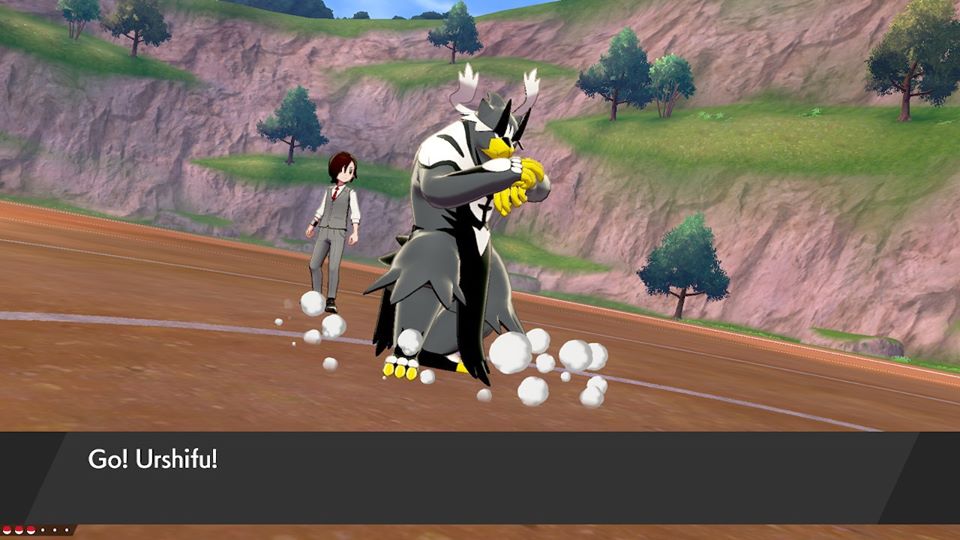
One of those trials asks that you train a brand-new Pokemon named Kubfu, a tiny, bear-like Pokemon with a flair for martial arts. He will eventually evolve into the much bigger, stronger Urshifu, and you’ll even get a say in what type he becomes. To complete his evolution, you’ll need to conquer either the Tower of Darkness or the Tower of Waters with only Kubfu in your party. Fighting your way through the former will make Urshifu a Fighting/Dark-type, while the latter will turn him into a Fighting/Water-type. Make sure you are happy with your decision, because the tower you don’t pick will be closed forever before you can step foot in it.
If it sounds disappointing that you cannot complete the opposite tower even as an optional challenge, you’ll soon realize that you’re not missing out on much. Neither the Tower of Darkness nor the Tower of Waters last very long, as the meager five battles meant to test you and Kubfu are pretty easy. Still, Urshifu is such a cool Pokemon that the reward of adding him to your party makes up for the less-than-memorable journey to get him. His martial arts inspiration (especially his Water-type form, which we can assume is influenced by Bruce Lee’s famous quote “Be water”), fits in perfectly with the DLC’s overall theme. Where the Galar region was clearly meant to evoke the British Isles, the Isle of Armor aims to evoke East Asia.
Urshifu is one of the best Pokemon to be introduced in Gen 8.
Much like the tower you ascend with Kubfu, The Isle of Armor’s narrative is fairly short. You can easily complete it in just a few hours, although you’ll likely be distracted along the way by the allure of catching new Pokemon or combing the island for collectibles. You may even want to make a return trip to the Galar mainland once you unlock numerous new clothing options that can be purchased at Boutiques. If you have ever wanted to battle and train Pokemon while looking positively dapper in a dress shirt, dress pants, vest, and tie, The Isle of Armor gives you that opportunity.
Many challenges await
Upon finishing the story, you’ll access a new challenge known as Restricted Sparring, which plays out similarly to the Battle Tower in the city of Wyndon. You’ll engage in a series of three-on-three battles, though you can only use three Pokemon of the same type. Every Pokemon type has its own series of battles against the Master Dojo’s students. Each victory nets you Battle Points (which can be used to purchase rare items), and earning five victories in a row marks your completion of that type’s “training.”
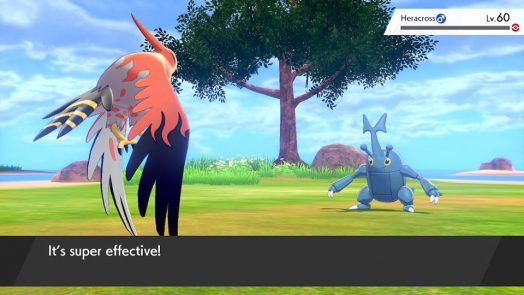
Just as the Battle Tower ensured that you couldn’t win simply with vastly over-leveled Pokemon, Restricted Sparring level scales the participants to 50. It takes a combination of supremely trained Pokemon, strategic item assignments, and reliance on the Dynamax ability to see consistent success. Most importantly, your Pokemon will require a diverse moveset, not just attacks related to their type. Your team will rarely be pitted against Pokemon that yours have the inherent type advantage over. In fact, you’ll often come across Pokemon with moves that are super effective against yours. Don’t be surprised to see a Dusknoir with Ice Punch during the Restricted Sparring for Flying-type Pokemon, or a Starmie with Thunderbolt in the Water-type trial.
Some of the same tedium seen in the Battle Tower carries over to Restricted Sparring; namely, the fact that you cannot either alter the order of your Pokemon after you have set your roster of three or switch out Pokemon after an opposing one has fainted. This means that if you get through a round using only your first Pokemon, but it’s down to its last bit of health, you’re going to start the next round with that weakened Pokemon, like it or not. It’s an annoying limitation that keeps you from smartly maximizing the two and only two chances you have to restore your Pokemons’ health (no healing items are allowed in battle, just two heal-all opportunities in between rounds).
Restricted Sparring is probably the most challenging mode to appear in the Sword and Shield games thus far, and with each of the 18 types getting their own trial, players who appreciate the fine details of Pokemon mechanics can certainly pour many hours into it. Most fans probably won’t be able to tackle a majority of the trials at the present time, however. Seeing as how the original Sword and Shield releases didn’t feature half of the total Pokedex, it’s hard to imagine that very many players have expertly trained three Pokemon of each type, particularly rarer types like Ice, Ghost, and Fairy. No Mythical Pokemon are allowed, as well. With over 100 Pokemon returning in The Isle of Armor, and another army arriving in the next expansion, The Crown Tundra, Restricted Sparring’s full potential will likely be realized down the road.
Traveling is always better with a companion.
The Isle of Armor is an enjoyable stepping stone to what should be a more ambitious experience. Implications are that The Crown Tundra will be a larger DLC pack with a greater emphasis on narrative; there are even a few instances where The Isle of Armor seemingly alludes to future, momentous events.
When you consider that you get both expansions for $29.99 USD, The Isle of Armor is essentially a $15 payment. Those players who got their fill with the base Sword and Shield games or felt any kind of Pokemon fatigue by the end of them probably don’t have too much reason to linger in this first expansion. But those who are interested in further romps through the Galar region will find that there is plenty of fun to be had with The Isle of Armor’sample content.
Score: 7.5/10
Jeffrey Pawlak
Jeffrey Pawlak is the Features Director for Zelda Universe, and has been a member of the website's community for more than 20 years. He is also a high fantasy author and an aspiring comic book artist.


 by Jeffrey Pawlak on June 25, 2020